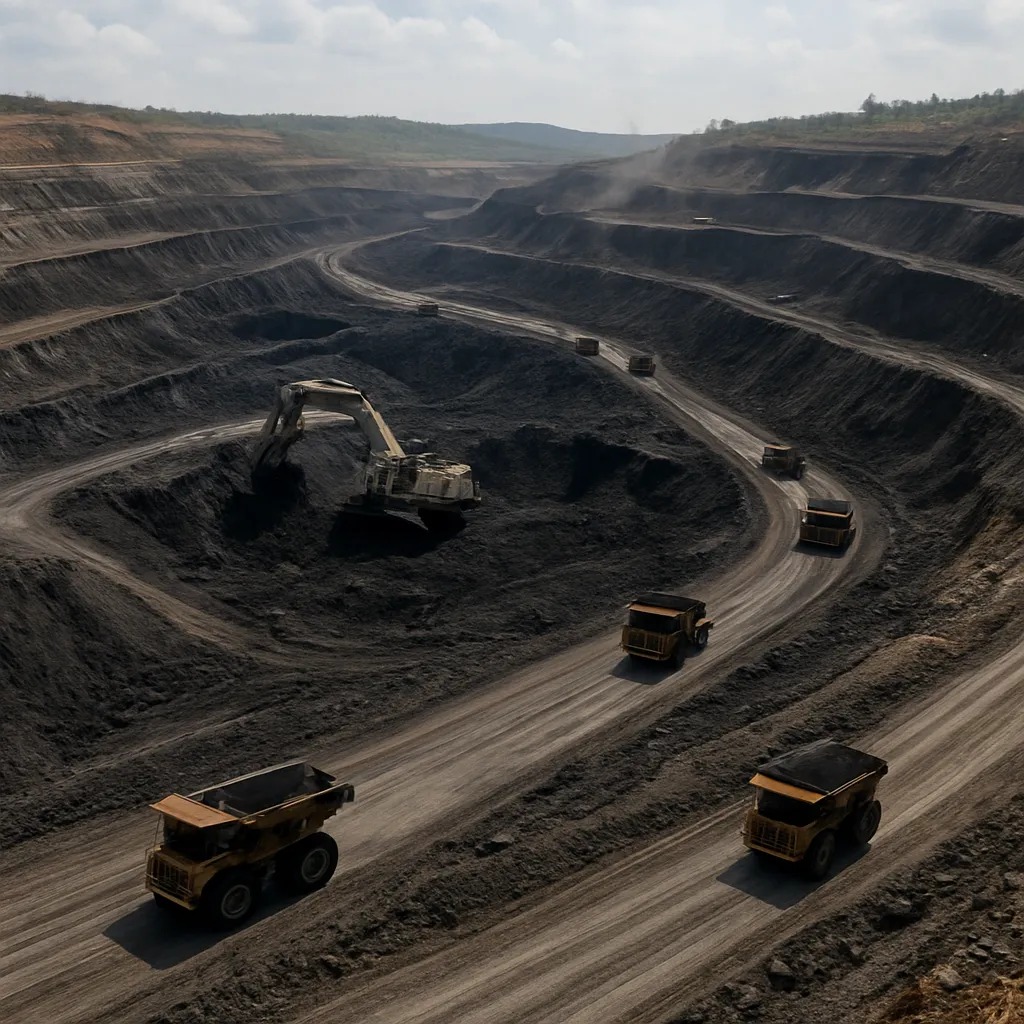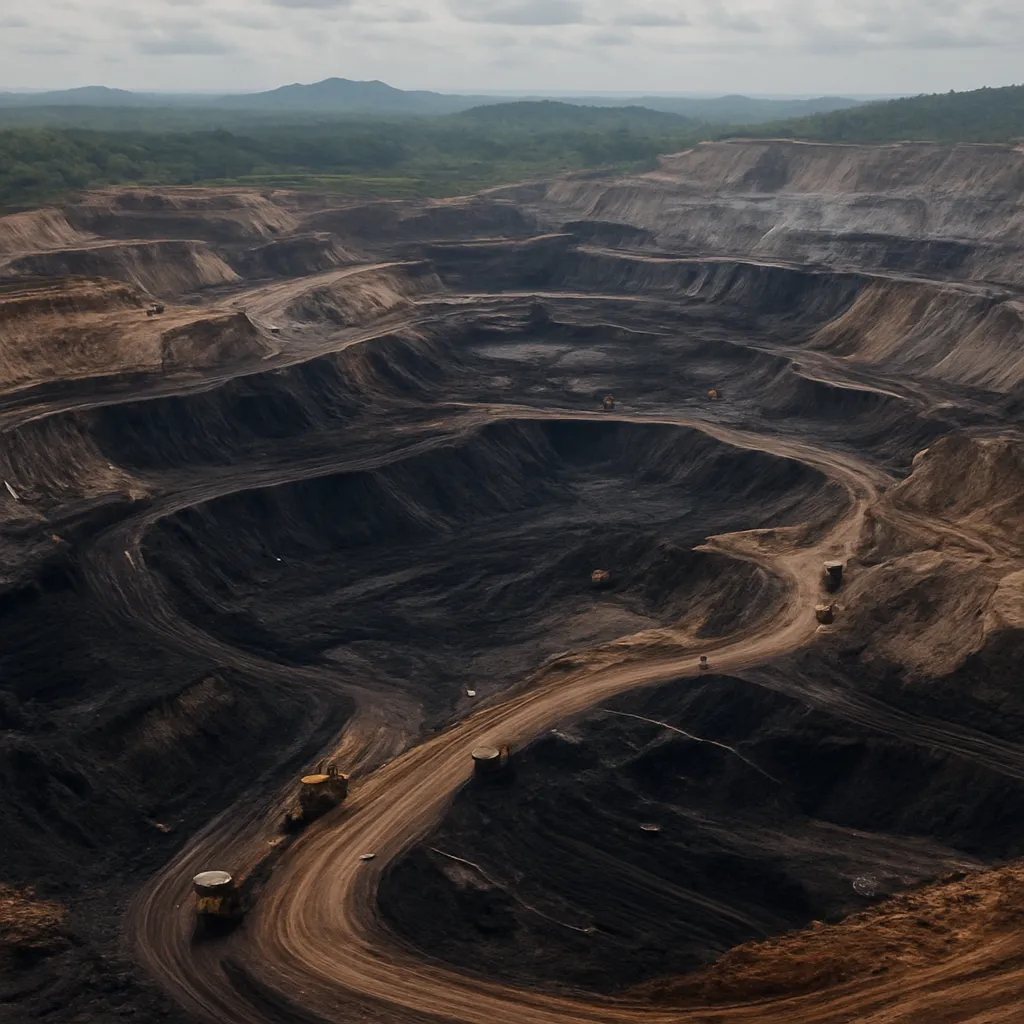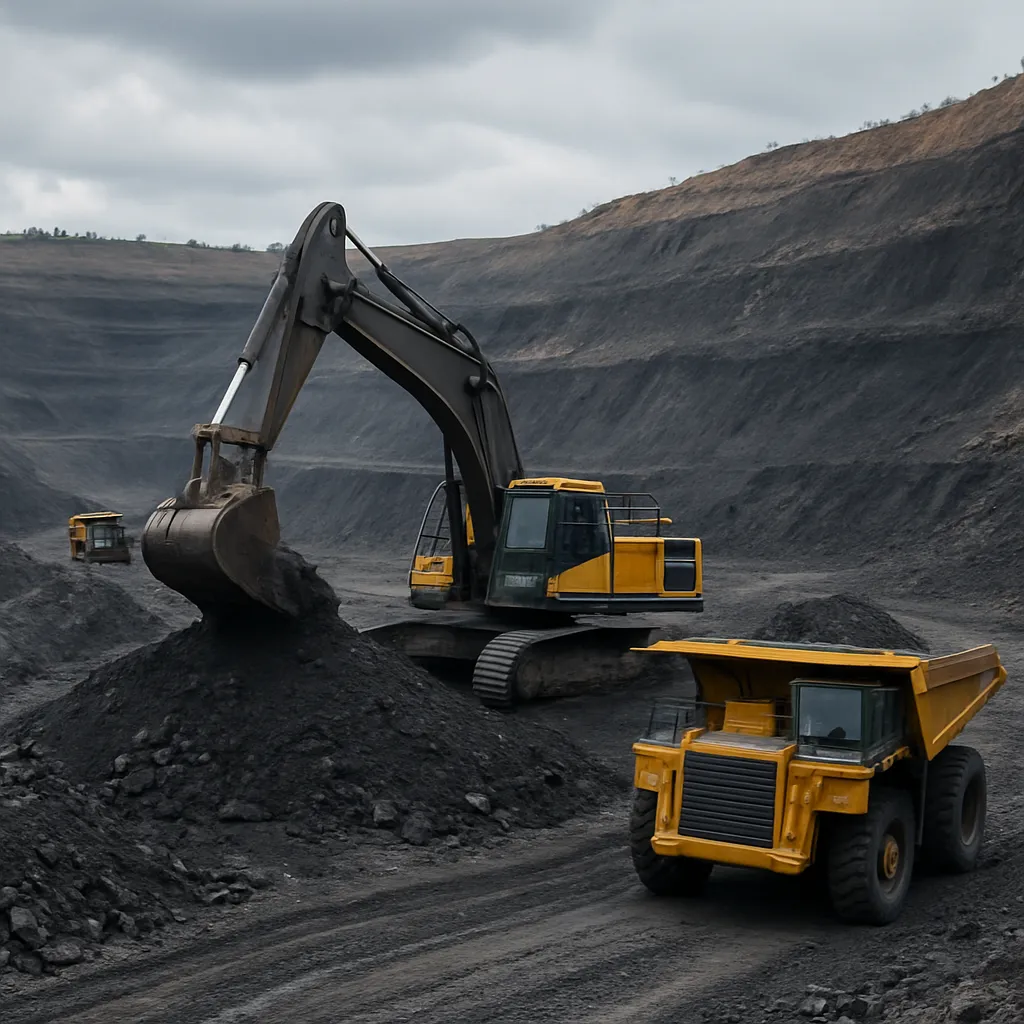
The Donkin Extension coal project, located on Cape Breton Island in eastern Nova Scotia, Canada, represents a modern effort to mine high-quality coal within one of the country’s oldest coalfields. Developed beside the historical deposits of the Sydney Coalfield, the Donkin and Donkin Extension operations have drawn attention for their potential economic benefits, their technical approach to underground mining, and the environmental and social debates they have generated. This article surveys the mine’s location and geology, its development and ownership history, the types and quality of coal produced, economic and statistical information where available, environmental and regulatory context, and the broader significance of Donkin Extension for the coal and steel value chains.
Location and geological setting
The Donkin Extension site is situated near the small community of Donkin, on the northeastern coast of Cape Breton Island in eastern Nova Scotia. The project lies within the historic Sydney Coalfield, a Carboniferous-age basin that has hosted commercial coal extraction since the 19th century. The geological succession in the area comprises Pennsylvanian sedimentary rocks with multiple coal seams of variable thickness and depth. These seams formed in coastal plain and deltaic environments during the Late Carboniferous and are generally classified as bituminous coals.
Coal at Donkin and the adjacent extension zones is typically described in company and technical reports as medium- to high-volatile bituminous coal, with suitability for both thermal and metallurgical (coking) applications depending on processing and blending. The coal-bearing strata are overlain by relatively thin overburden in places, allowing access by underground development rather than large-scale open pit extraction. The deposit geometry and continuity are adequate for standard underground coal methods.
History, development and ownership
The modern Donkin project was advanced by a Nova Scotia-based operating company, historically known as Kameron Collieries, a subsidiary within the Cline Group portfolio. Development of the Donkin mine and the adjacent Donkin Extension followed decades of declining coal activity in Nova Scotia; the project was positioned as a revival of industrial mining activity in Cape Breton, combining local investment with international market ambitions.
Initial development and capital construction for the mine accelerated in the mid-2010s. By late 2017, the operation reported the first coal production from underground workings, marking the return of commercial-scale coal extraction in the region after many years. The mine targeted export markets for higher-value coal products and was designed to employ modern underground mining equipment and processing facilities.
The operating history has included periods of active production, temporary suspension, and re-evaluation tied to global commodity prices, logistics challenges, and regulatory considerations. These fits and starts are common in small, export-oriented coal ventures, which are sensitive to steel-sector demand and shipping costs. Throughout, the mine’s ownership and operational responsibilities remained closely associated with Kameron and its corporate partners, with local contracting and employment emphasized as community benefits.
Coal type, quality and products
Donkin Extension’s coal has been marketed principally as a low-sulfur, medium- to high-volatile bituminous coal that can serve both metallurgical and thermal purposes. Company technical descriptions have emphasized qualities attractive to steelmakers and other industrial consumers, including relatively low sulfur and trace element levels compared with some global coal supplies. Because metallurgical users require specific coke-making characteristics, coal from the Donkin area has been considered suitable as either a semi-soft coking coal or as a blending component to produce blast-furnace coke.
The exact quality parameters—such as calorific value, volatile matter, fixed carbon, ash yields, and swelling index—vary by seam and by the degree of washing/processing. Typical commercial approaches include beneficiating the run-of-mine coal to reduce ash and impurities and to produce a product tailored to buyer specifications. That flexibility enables shipments directed either to power and thermal markets or to metallurgical consumers in regions where maritime logistics allow competitive delivery.
Mining methods, infrastructure and logistics
Donkin Extension was designed as an underground operation using established modern techniques. Underground development generally includes portal access, drift or decline construction, development headings to access targeted seams, and then mechanized extraction methods. Depending on the stage and targeted production rate, methods include continuous miners and longwall systems; project plans and technical reports have discussed conventional mechanized underground mining and sequential extraction of blocks with roof control measures and ventilation systems appropriate to the Sydney Basin geology.
Logistical arrangements for export are critical for the economic viability of Donkin. Coal extracted underground is transported from the mine to on-site or nearby processing facilities for screening and washing. From there, coal is trucked or railed to marine terminals for transshipment. Historically, proposals and operational plans referenced the Port of Sydney and nearby marine handling facilities as the primary export route, with additional smaller-scale barge or transshipment options considered where direct port capacity was constrained. Transportation costs and port access have been recurring considerations affecting the mine’s commercial performance.
Economic impact, employment and regional significance
On a local scale, Donkin Extension represented a material economic opportunity for Cape Breton communities that have experienced industrial decline over recent decades. Company-reported estimates and regional economic analyses associated with the Donkin project generally projected:
- Direct employment in operating phases measured in the low hundreds—jobs in mining operations, maintenance, and site services—supplemented by temporary construction employment during development.
- Indirect employment and economic multipliers across the supply chain: trucking, equipment fabrication and maintenance, port services, and local procurement.
- New or renewed sources of royalty and tax revenue for municipal and provincial governments tied to production volumes and commodity prices.
Proponents emphasized the social importance of stable industrial employment in a region with a strong coal-mining heritage. The mine also supported local businesses and contractors, and contributed to community programs and local procurement priorities when operating at scale.
Production volumes, reserves and statistics
Quantifying the exact reserves and historical production of the Donkin and Donkin Extension properties requires reference to company technical statements and regulatory filings. Publicly available documents and corporate disclosures have described the resource base in terms of tens of millions of tonnes of coal in measured, indicated and inferred categories, with proven and probable reserves commonly reported in the multi-million-tonne range. Planned annual production rates for a fully developed underground operation have commonly been presented in feasibility studies and project materials with figures on the order of around one to two million tonnes per annum (Mtpa) of run-of-mine production, subject to market conditions and phased development.
Actual production since initial start-up was smaller and intermittent, reflecting commissioning, market access, and pricing realities. Commodity prices for metallurgical coal and shipping logistics largely determined whether full production scenarios were economical. Because the mine entered care-and-maintenance phases at points in its early life, total cumulative tonnages extracted to date have been limited relative to the full-life mine plan.
For broader context, the Donkin project represents a modest share of national Canadian coal outputs but an important local employer. The Sydney Coalfield’s historical output over many decades was substantial within Nova Scotia; contemporary operations like Donkin aim to leverage remaining reserves with modern environmental standards and mechanized extraction techniques.
Environmental, regulatory and social considerations
Like all modern mining projects, Donkin Extension has been subject to environmental assessment, permitting, and community consultation. Key environmental considerations include:
- Greenhouse gas emissions associated with coal combustion and the lifecycle emissions from exported coal—issues that attract public scrutiny in jurisdictions committed to carbon reduction objectives.
- Management of mine water and any potential for acid rock drainage, which requires engineered water treatment systems and ongoing monitoring to protect groundwater and downstream aquatic ecosystems.
- Air quality and dust controls during material handling, trucking, and port operations.
- Reclamation planning to restore disturbed areas at the end of mine life and reduce legacy liabilities.
Regulatory authorities in Nova Scotia and Canada required permitting, baseline environmental studies, and community engagement processes. The project provoked debate locally and nationally: proponents emphasized jobs, royalties, and the controlled, modern approach to mining; critics raised concerns about fossil-fuel extraction in a warming climate, potential impacts on coastal ecology, and the prudence of investing in new coal capacity given global decarbonization trends.
Market dynamics and industry context
Donkin Extension’s commercial rationale rests on export demand for higher-grade coals, particularly metallurgical coal used in steelmaking. Global steel production—driven by construction, manufacturing and automotive sectors—directly influences demand for coking coals and coke-making blends. The volatility of metallurgical coal prices can be significant: supply disruptions elsewhere, shipping cost shifts, or changes in steel demand can create rapid swings in price and thus project profitability.
For a relatively small, maritime-export coal operation such as Donkin, competitiveness depends on:
- Quality of product and ability to meet buyer specifications;
- Reliable access to marine export infrastructure and competitive freight rates;
- Stable regulatory and permitting status to assure buyers of supply continuity;
- Cost control in mining and logistics relative to competing coal suppliers from other regions.
In the longer term, global decarbonization pressures and steel-industry shifts toward low-emissions steelmaking (electric-arc furnace use of scrap, hydrogen-based direct reduced iron technologies) will shape demand for coking coal. However, as of the most recent operational years, metallurgical coal remained a core feedstock for a large portion of global steelmaking, sustaining markets for producers who can deliver reliable, quality product at competitive cost.
Significance for the local community and heritage
Beyond immediate economic metrics, Donkin Extension carries symbolic weight in Cape Breton. The Sydney Coalfield underpinned regional development for more than a century, shaping communities, culture and local identity. The reactivation of mining activity through projects like Donkin is therefore more than an industrial act; it reconnects contemporary economic life to deep local histories of labour, technology and social networks.
Local stakeholders—municipal governments, labour organizations, community groups and Indigenous communities—have sought to maximize local procurement, training and participation, while ensuring environmental protections and meaningful consultation. In many cases, donor contributions to community projects, formal partnerships on training, and commitments to reclamation have been part of the operational narrative for modern mining projects in Atlantic Canada.
Challenges, opportunities and future outlook
Donkin Extension faces a series of practical challenges that determine its near-term fate: commodity price cycles, shipping and port logistics, regulatory timelines, and community acceptance. Opportunities exist, however, particularly when metallurgical coal markets are robust. Specific levers that could influence future activity include:
- Market recovery in steelmaking demand leading to improved coking coal prices;
- Investment in port handling capacity to lower transshipment costs and increase export reliability;
- Operational optimization and phased development to align production with market windows;
- Adoption of best-practice environmental management, which can reduce community resistance and speed permitting.
Sustainability pressures remain central. Projects that demonstrate strong environmental stewardship, transparent engagement with affected communities, and credible reclamation and closure planning will be better positioned to operate in an environment where public scrutiny of fossil fuel projects is increasing. Innovative approaches—such as methane capture in underground coal operations, electrification of site equipment, or collaboration on regional economic diversification—can help reconcile local development aims with broader climate commitments.
Notable additional information and technical curiosities
– The Donkin/Donkin Extension deposit is an example of how historically mined basins can host economically recoverable coal many decades after earlier operations cease, particularly when new market conditions or technologies become available. Reactivation of old coalfields often requires careful inventory of legacy workings and modern geotechnical analysis.
– Underground coal operations in Cape Breton contend with geology and hydrology shaped by glacial and coastal processes; ground control and water management engineering are therefore important design elements.
– In many modern coal projects, product differentiation (producing a washed, low-ash, low-sulfur product) is a key competitive advantage. For Donkin, the ability to supply quality blending coal for metallurgical customers increased its strategic value versus lower-grade domestic thermal coals.
– The mine illustrates a tension common to fossil-fuel projects in resource regions: balancing immediate socio-economic benefits against long-term environmental and climate concerns. How that balance is managed at Donkin has implications for policy discussions in Nova Scotia and across Canada.
In summary, Donkin Extension is a contemporary chapter in the long story of the Sydney Coalfield: a technically feasible, regionally important coal project with potential to provide employment, export revenue and industrial activity, while also facing market volatility and environmental scrutiny. Its future trajectory will be shaped by commodity markets, logistical arrangements, regulatory frameworks, and evolving societal priorities about energy and industry.