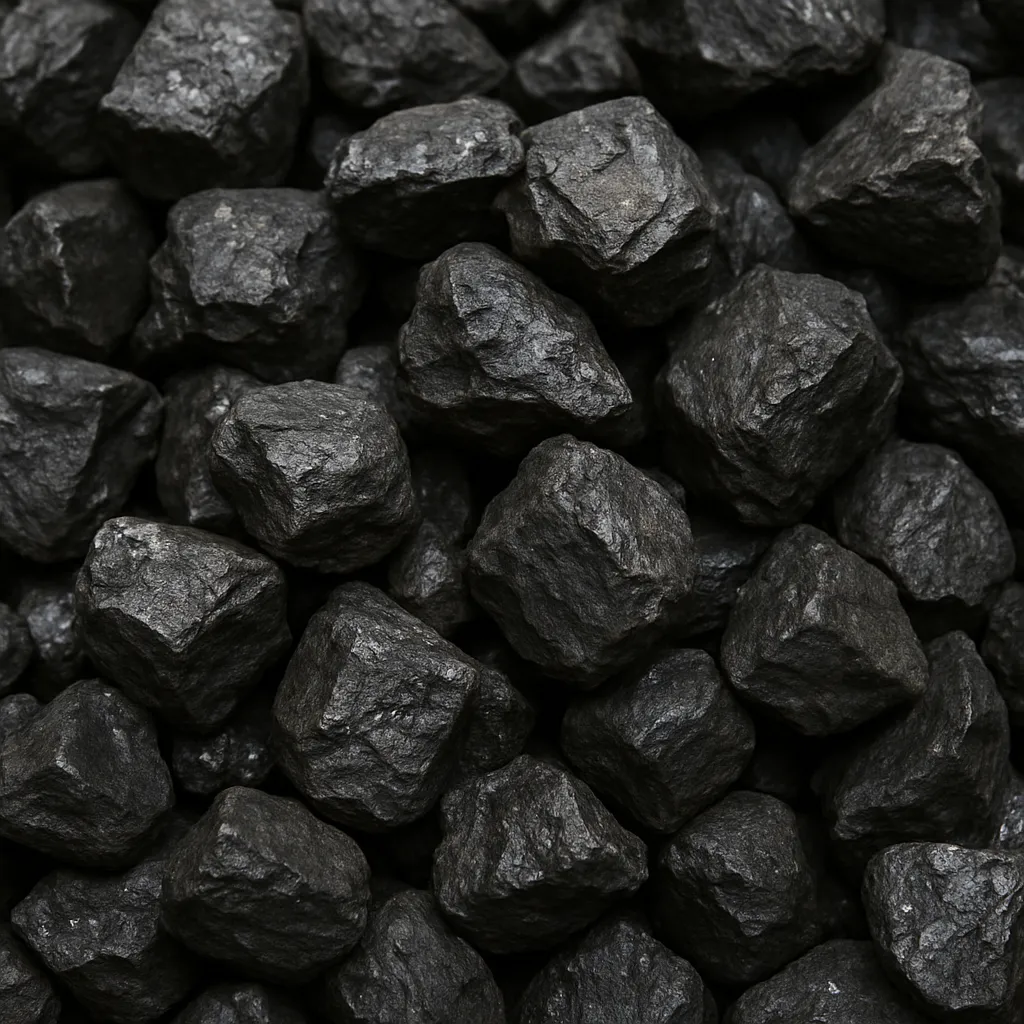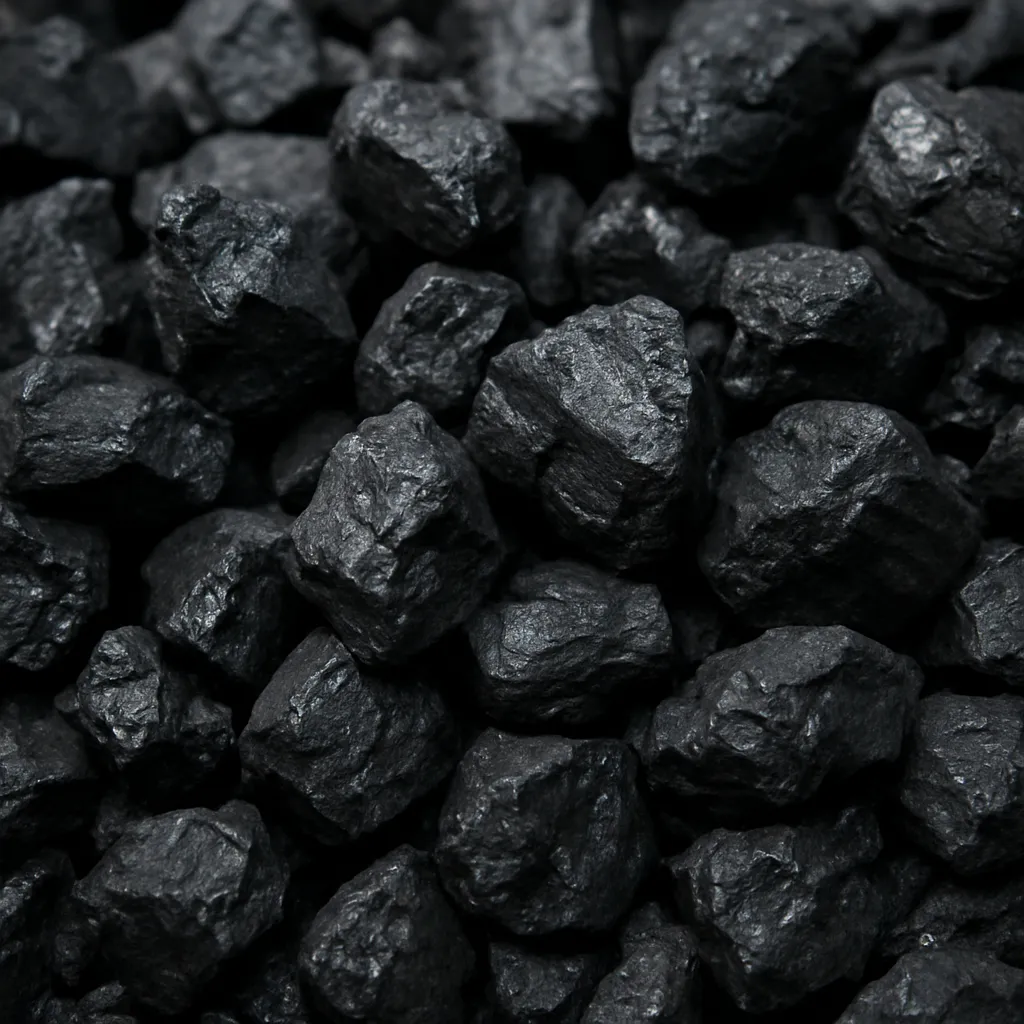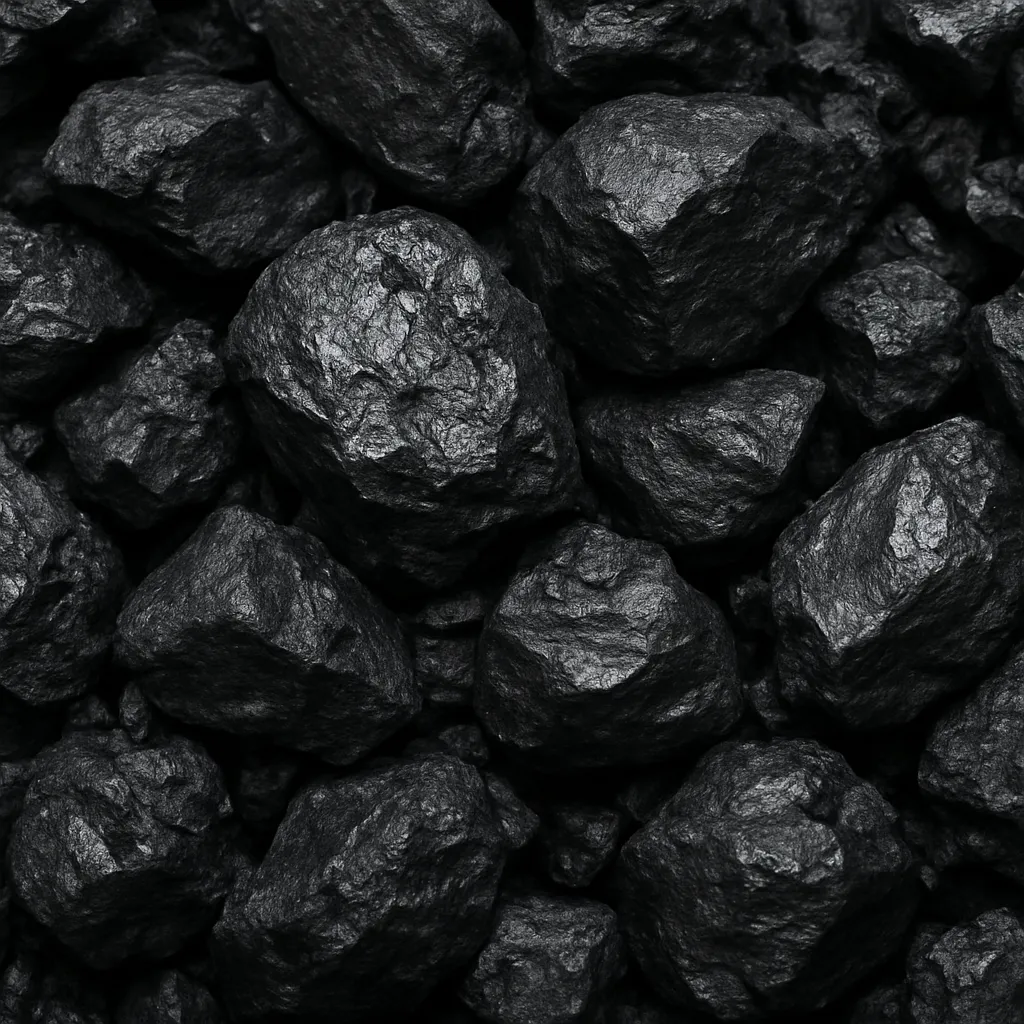
Raw anthracite is one of the highest-ranking coals in terms of carbon content and energy density. It has been valued for centuries for its distinctive physical and chemical properties, and it continues to play a role in specialized industrial processes and certain regional energy markets. This article examines the geology, global distribution, mining practices, economic significance, statistical context, industrial applications, and future perspectives for raw anthracite, with attention to both long-standing uses and recent developments.
Geology, Composition and Physical Characteristics
Anthracite represents the final stage of coalification, where plant-derived organic matter has been subjected to intense heat and pressure over geological time. Compared with lower-ranked coals such as lignite and bituminous, anthracite has a much higher fixed carbon content and a correspondingly lower proportion of volatile matter. Typical carbon contents range roughly from 86% to 97% on a dry, ash-free basis, depending on the seam and locality, while volatile matter is commonly under 10% and moisture is low. Because of its dense structure and reduced porosity, anthracite exhibits a glossy, hard appearance and produces little smoke when burned.
Key physicochemical traits that make anthracite distinctive include:
- High carbon content and high calorific value per unit mass.
- Low volatile matter, which reduces smoke and soot during combustion.
- Relatively low sulfur and ash content in many deposits, though this can vary by region.
- Increased hardness and density compared with lower-ranked coals, making it more durable for mechanical uses.
Anthracite forms in regions where peat and earlier coal seams have been deeply buried and metamorphosed. The process involves coalification and regional metamorphism: the higher the temperature and pressure applied over time, the greater the aromaticity and carbon concentration of the resulting coal. This metamorphic pathway explains why anthracite is often associated with folded mountain belts and other tectonically active areas where deep burial and deformation have occurred.
Global Occurrence and Major Producing Regions
Although anthracite is globally less abundant than lower-rank coals, notable deposits are found on every inhabited continent. Its occurrence tends to be localized where geological conditions promoted deep burial and metamorphism of older peat and coal seams.
Well-known anthracite fields and countries
- Pennsylvania, USA — Northeastern Pennsylvania hosts the classic American anthracite fields, historically central to domestic heating and early industrial uses. Production in the U.S. is now a fraction of its 19th–20th century peak but remains an important historical and regional resource.
- United Kingdom — South Wales and a few other areas historically contained important anthracite seams used for domestic heating and industry.
- Ukraine and Russia — The Donets and adjacent basins in Eastern Europe and the Kuznetsk Basin in Russia include anthracite or semi-anthracite seams that have been mined for industrial and domestic uses.
- China — China hosts substantial anthracite and high-rank coal resources in provinces such as Shanxi and Guizhou; Chinese production dominates many regional markets and is crucial to domestic industrial energy needs.
- Vietnam — Vietnam is a notable exporter of anthracite, supplying East Asian markets (including Japan, South Korea and China) with high-rank thermal anthracite for power plants and industrial uses.
- North Korea — Known for sizable anthracite reserves that form a significant part of domestic energy supply, though international trade is constrained by political factors.
- South Africa, Australia and Kazakhstan — These countries host deposits of high-rank coal including anthracite in localized regions, contributing to domestic industry and export markets.
Distribution and mining intensity are shaped not only by geology but by economic demand, infrastructure and trade patterns. Regions with older industrial bases may still mine anthracite for local uses, while export-oriented producers (e.g., Vietnam and Russia) supply international markets where anthracite’s properties—high energy density, low smoke—are valued.
Mining Methods and Processing
Anthracite is typically mined using underground techniques because the seams are often deep and narrow. Common mining methods include conventional room-and-pillar and longwall systems adapted for the higher rock strength associated with anthracite-bearing strata. Surface mining can occur where seams outcrop or lie near the surface, but this is less common.
Processing and quality control
- Sorting and sizing: Raw anthracite is crushed and screened to produce sizes suited to specific end-uses—lump coal for industrial burners or residential stoves, coarse grades for filtration media, and fine powdered grades for pulverized fuel applications.
- Washing and beneficiation: In many deposits, coal is washed to remove ash-forming minerals. Beneficiation enhances calorific value and reduces transport costs per unit of energy.
- Blending: Producers often blend seams or batches to meet customer specifications for calorific content, ash, and sulfur.
- Conversion to value-added carbon products: Selected anthracite grades are processed into activated carbon, carbon black precursors, or other specialty carbon materials following chemical or thermal activation.
Mining anthracite poses technical challenges: its hardness increases wear on cutting equipment; the low volatile matter influences ventilation and spontaneous combustion behavior in ways distinct from bituminous seams; and ground control must address strata stability in high-stress environments. Modern mechanization, improved ventilation, and remote-control technologies have reduced certain risks and improved productivity in many operations.
Economic and Statistical Overview
Quantifying anthracite within broader coal statistics is complicated because many international datasets aggregate coal types differently. Nonetheless, some broad observations are possible.
- Global coal reserves (all ranks) are very large, exceeding roughly one trillion tonnes of proved reserves according to major energy reviews. Anthracite represents a relatively small subset of those reserves because high-grade metamorphism required for anthracite formation is geographically limited.
- Production volumes of anthracite are considerably smaller than those of thermal bituminous coal and sub-bituminous coal. Many countries characterize production simply as “hard coal” vs. “lignite,” and detailed subgrouping varies by reporting agency.
- Export markets for anthracite are important for certain producers: for example, Vietnam has consistently been one of the region’s notable exporters of high-rank coal, supplying industrial and power-generation clients in East Asia.
Prices for anthracite reflect its premium quality and limited supply. Compared with low-rank thermal coals, anthracite typically commands a higher price per tonne because of:
- Higher energy content per unit mass, lowering transport cost per unit of energy.
- Cleaner combustion characteristics—less smoke and often lower sulfur—making it attractive for certain urban and industrial applications.
- Specialized industrial demand (e.g., filtration media, specialty carbon products) that supports higher margins.
Economic importance is often regional: in coal towns and districts where anthracite mining is established, the industry can provide significant employment, infrastructure investment and export revenue. Conversely, as some industrialized countries decarbonize, domestic markets for anthracite as a heating fuel have contracted, shifting the commodity’s commercial focus toward specific industrial uses and export markets.
Industrial Uses and Technological Applications
Anthracite’s combination of high fixed carbon content, low volatility and mechanical durability supports a range of applications:
- Energy and heating — Historically prized for domestic heating because it burns cleanly and hot, producing little smoke. In modern contexts, its role as a municipal heating fuel has declined in many developed countries due to electrification and emissions regulations, but it remains important in some regions.
- Metallurgical and industrial processes — Though metallurgical coke is primarily derived from selected bituminous coals, anthracite is used in some smelting and metallurgical contexts as a reducing agent or as a supplemental fuel. It can be used in pulverized form for injection into blast furnaces and in certain ferroalloy furnaces where a dense, hot-burning fuel is needed.
- Water and wastewater treatment — Anthracite is widely used as a filter medium in municipal and industrial water treatment because of its hardness, abrasion resistance and favorable specific gravity when used in multi-media filters (typically layered with sand and garnet).
- Activated carbon and carbon products — Certain anthracite grades are precursors for activated carbon, used in air and water purification, solvent recovery and other adsorption applications. Research and industrial processes also investigate conversion of anthracite into higher-value carbon materials such as graphite and carbon fibers under specialized treatment.
- Specialty fuels — Where low smoke and high heat output are required (e.g., certain industrial boilers or dryers), anthracite can be preferred or blended with other fuels.
Technological advances have enabled new uses and improved the efficiency of anthracite in established roles. Examples include more efficient pulverized-coal burners adapted to high-rank fuels, improved beneficiation methods yielding low-ash products for filtration or chemical conversion, and research into gasification and coal-to-chemicals pathways that might employ anthracite as a feedstock for synthesis gas under specific high-temperature processes.
Environmental, Social and Regulatory Considerations
Though anthracite burns cleaner than lower-rank coals with respect to smoke and particulates, it is still a fossil fuel and produces carbon dioxide when combusted. Life-cycle greenhouse gas emissions remain a central concern where coal use persists. Key environmental and social considerations include:
- Climate impacts — Per unit of energy, anthracite may yield slightly different CO2 emissions characteristics than lower-rank coals, but the net climate impact from continued coal combustion is substantial. This reality has driven policy shifts away from coal in many jurisdictions.
- Local pollution — While anthracite combustion tends to produce less visible smoke, emissions of NOx, SO2 and particulates still require control technologies (scrubbers, burners optimized for low emissions) to meet modern air quality standards.
- Mining impacts — Underground mining can cause subsidence, water-table changes and worker safety risks; reclamation and community engagement remain important for minimizing social harm.
- Regulatory context — The global trend toward decarbonization affects demand for all coal types. However, where anthracite is a feedstock for critical industrial processes or for water treatment media, regulatory systems may permit continued use under strict emissions and stewardship guidelines.
In some regions, the environmental impact of anthracite mining has been mitigated through improved mine planning, reduced surface disturbance techniques and more rigorous water management. At the same time, social transitions are necessary for coal-dependent communities facing mine closures and market contraction; workforce retraining and economic diversification are recurring policy challenges.
Market Dynamics, Geopolitics and Trends
Anthracite markets are shaped by a mix of long-term structural trends and short-term geopolitical events. Supply-side constraints (limited geology, regional concentration of deposits) make anthracite prices and trade flows sensitive to political instability and transport disruptions. Examples of market dynamics include:
- Regional export dependence — Some countries with significant anthracite output (e.g., Vietnam and certain Russian regions) export to neighboring industrial economies. Logistical connectivity and shipping capacity strongly influence competitiveness.
- Geopolitical shocks — Trade sanctions, armed conflict or port closures in producing regions can reduce supply and push buyers to diversify suppliers or to seek substitutes.
- Demand shifts — Declines in residential coal use in developed countries have diminished domestic demand, but industrial and filtration markets have provided a stable niche that supports ongoing trade.
- Technological substitution and value chains — Advances in alternative materials (e.g., synthetic adsorbents), electrification, and the expansion of renewables for power generation alter long-term demand patterns for anthracite.
Because anthracite occupies both commodity and specialty-market roles, price behavior can differ from bulk low-rank coals. Buyers seeking low-ash, high-energy coal for specific industrial processes may be willing to pay premiums, while broad power-generation markets have been shifting toward gas and renewables in many regions.
Research, Innovation and Possible Futures
Research on anthracite spans both incremental improvements to existing applications and more speculative conversion pathways:
- Improving filtration media through optimized grading and surface treatments to extend life and increase efficiency in water treatment plants.
- Developing activation and chemical treatments to convert anthracite into higher-value carbon products—activated carbons, specialty graphites, and engineered carbon fibers—making better use of a limited natural resource.
- Investigating coal gasification and coal-to-liquids/chemicals processes that could, with integrated carbon capture, repurpose anthracite for chemical feedstocks rather than combustion for heat, though such technologies face economic and environmental hurdles.
- Applying precision mining and digitalization (remote monitoring, automation) to reduce operational costs and improve safety in anthracite mining operations.
The future role of anthracite will depend on how these technical avenues are balanced against climate policy, carbon pricing, and the pace of energy transitions. In niche industrial and filtration applications, anthracite’s material properties will likely preserve demand for the foreseeable future. In broader energy markets, substitution and decarbonization will continue to diminish coal’s role unless carbon-neutral technologies become economically viable at scale.
Summary and Key Takeaways
Anthracite is a high-rank coal with distinct geological origins and material properties that make it valuable for a range of specialized applications. Major occurrences are geographically concentrated, and the commodity plays an outsized role in certain regional economies and export markets. While its overall share of global coal use is smaller than that of lower-ranked coals, anthracite remains important for filtration, some industrial processes, and niche fuel markets. Economic and geopolitical forces—together with environmental policy and technological developments—shape the market opportunities and constraints for anthracite going forward.
Anthracite, with its high carbon content and low volatility, continues to be prized in contexts where quality, hard coal durability, and cleaner-burning properties matter. Key producing regions such as China, Russia and export-oriented suppliers like Vietnam influence global availability, while historical fields such as Pennsylvania remind us of anthracite’s long industrial heritage. As the world moves toward decarbonization, anthracite’s future will hinge on its ability to provide specialized industrial value and on innovation that can reconcile its use with environmental goals.