The Abinsky Coal Mine occupies a notable place among Russia’s many mining sites, combining regional economic importance with the technical and environmental challenges typical of modern coal operations. Located within the broader industrial landscape of southern Russia, the mine is tied to local transport networks, labor markets and energy supply chains. This article provides an overview of the mine’s location and geology, the type and scale of coal production, its economic and social role, available statistical information and forecasts, as well as environmental and infrastructural aspects that shape its present and future. Where precise public data are limited, estimates and contextual comparisons with better-documented Russian mining districts are used to give a balanced picture.
Location and Geological Setting
The Abinsky deposit is situated in the southern administrative divisions of Russia. The name is commonly associated with the Abinsk area of Krasnodar Krai, a region better known for agriculture and industry than for major coal basins such as Kuzbass or the Pechora coal fields. Geologically, the coal occurrences in this part of southern Russia are typically related to smaller, localized seams rather than the vast, continuous deposits found in western Siberia.
The local geology around the mine commonly comprises sedimentary rock sequences that include sandstones, siltstones and shales interbedded with coal seams formed during the late Carboniferous to Permian periods in many Russian coal regions. The coal seams at Abinsky are generally of limited lateral extent and variable thickness, which influences mining method selection and cost-efficiency. Hydrogeological conditions and overburden characteristics determine whether underground or surface mining is economically viable; smaller deposits in the south often use a combination of both methods depending on seam depth and quality.
Production, Coal Type and Mining Methods
Coal produced at the Abinsky site is typically used for regional energy needs and industrial feedstock rather than being a major export commodity. The coal quality at small southern deposits tends to include a mix of low- to mid-rank coals — commonly classified as lignite (brown coal) to sub-bituminous or low-volatile bituminous types in many southern Russian occurrences. These coal ranks are suitable for power generation and certain heating applications. In some cases, higher-grade pockets with elevated calorific values or lower ash and sulfur contents can be present, providing material for local industry or limited metallurgical use.
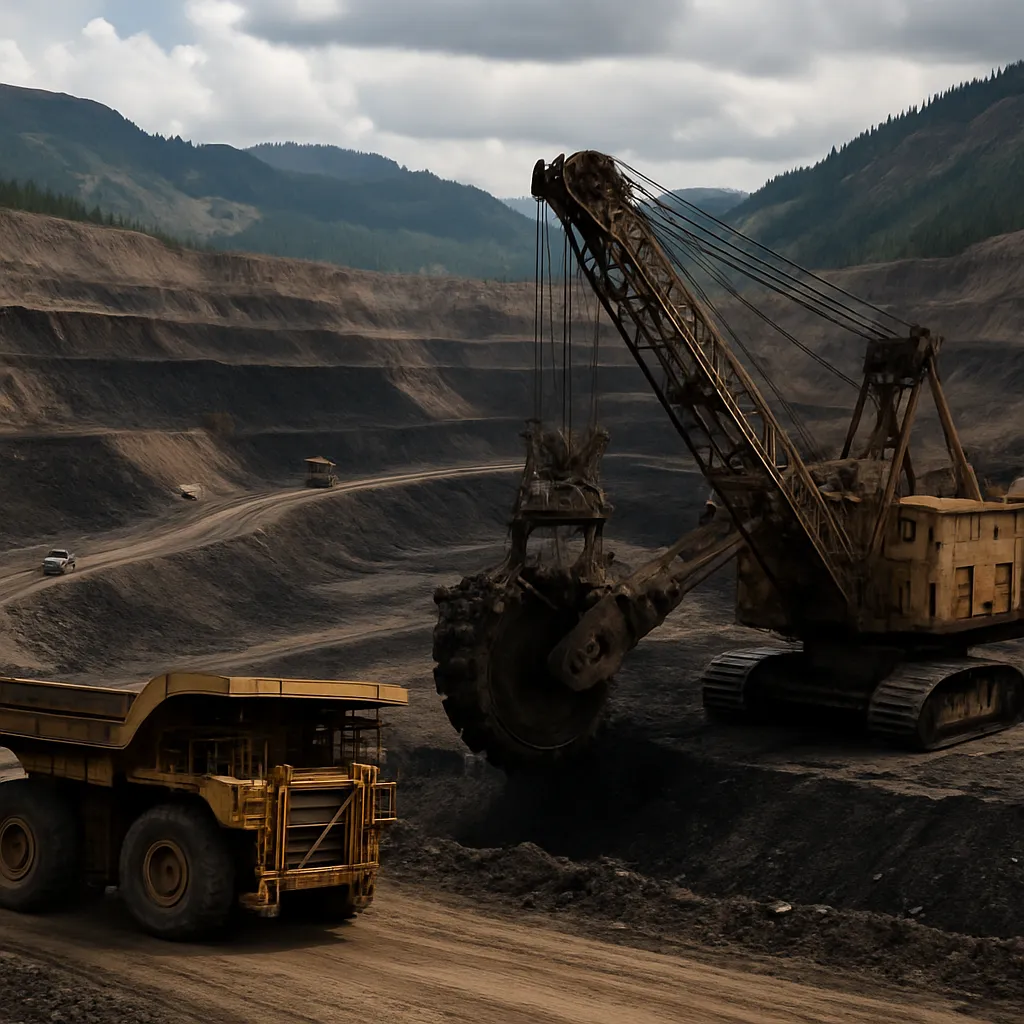
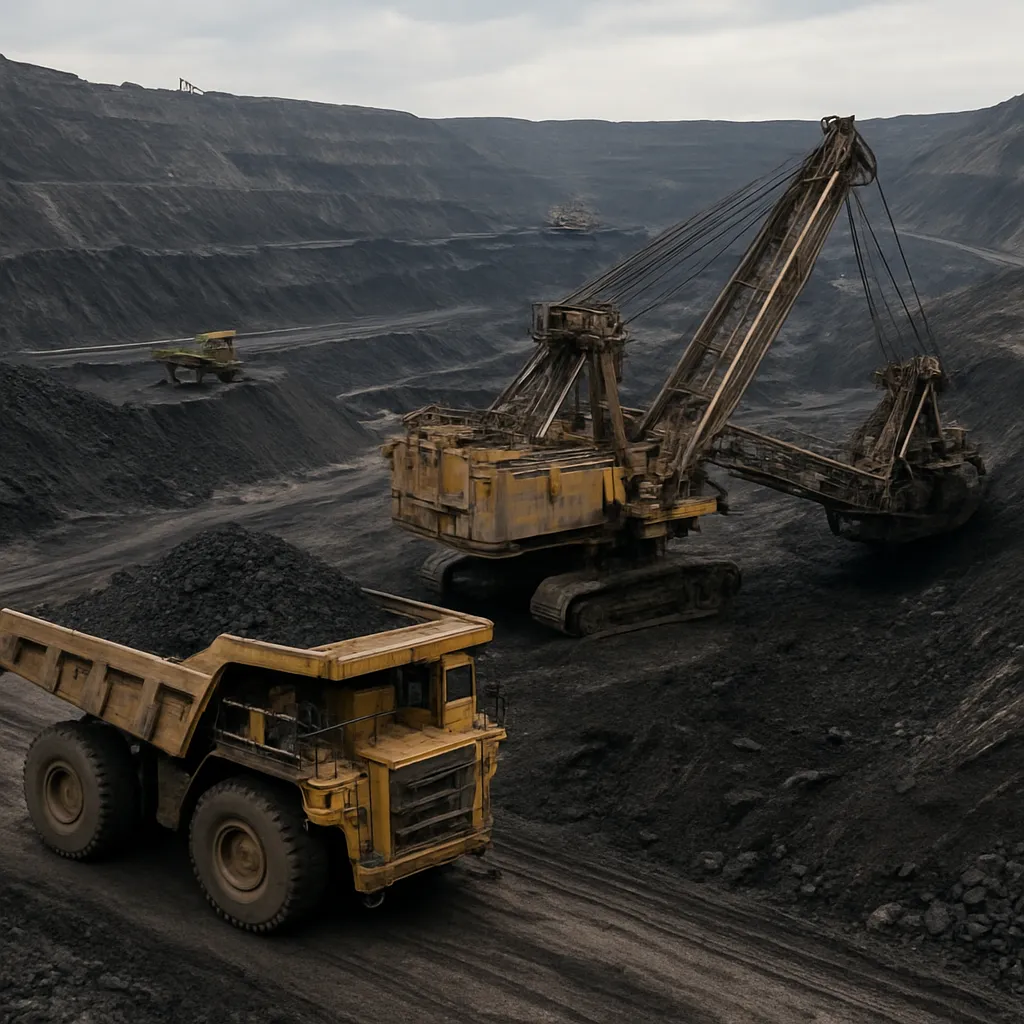
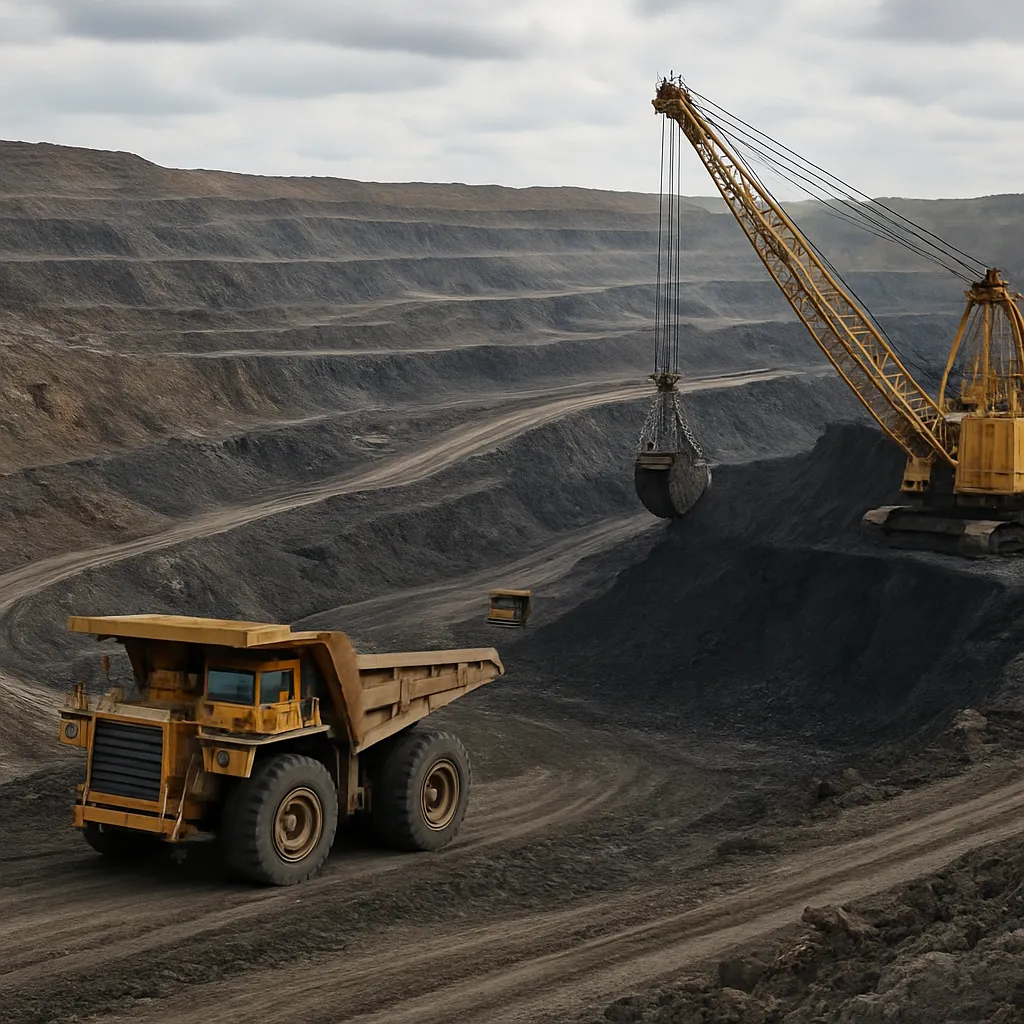
Mining methods reflect the deposit geometry and economic constraints. For relatively shallow seams, open-pit (surface) mining can be the preferred approach due to lower extraction costs and simpler logistics. Where seams are deeper or more fragmented, underground mining techniques — including room-and-pillar or longwall if seam continuity supports it — may be necessary. Modernization efforts at many Russian mines, including medium-sized operations, have focused on mechanization, conveyor transport and improved ventilation and safety systems to increase productivity and reduce labor intensity.
Economic and Regional Importance
The Abinsky Coal Mine contributes to the local economy primarily through direct employment, procurement of services and materials, and providing a fuel source for nearby power plants, industrial facilities and district heating systems. In regions where energy networks rely on local coal, the mine supports energy security and can reduce dependence on imported or long-distance supplies. On a district level, coal operations can anchor secondary industries such as coal preparation plants, transportation services and equipment maintenance businesses.
Employment at a medium-sized regional mine typically includes a mix of underground and surface workers, engineers, geologists, shift managers and administrative staff. Indirect employment in logistics, retail and municipal services often multiplies the economic footprint of the mine. While the Abinsky site is not among Russia’s largest producers, the cumulative socio-economic effects can be significant in a district where alternative industrial employers are limited.
Statistics, Reserves and Production Estimates
Publicly available, granular statistics for the Abinsky Coal Mine specifically are limited compared to major Russian coal fields. Nationally, Russia is one of the world’s top coal producers, with annual output often exceeding 400 million tonnes across all basins in recent years. In contrast, mines in smaller southern deposits typically produce from several hundred thousand to a few million tonnes annually depending on seam size, market demand and investment levels.
Reserve estimates for smaller deposits are frequently presented as proven, probable and possible categories. For the Abinsky deposit, reserve figures reported in regional planning documents and company reports (when available) may range from several million to tens of millions of tonnes in total coal in place, with economically recoverable reserves depending heavily on market prices and mining costs. Because of the narrower seam continuity and variable quality, achievable annual production is usually limited relative to major basins.
Production statistics, where published, should be treated cautiously: short-term output varies with seasonal demand, equipment availability and regional energy policy. If the mine serves local heat and power plants, production often peaks in autumn and winter. For planning and investment, analysts often compare reserves-to-production (R/P) ratios to assess longevity: an R/P ratio of 20–40 years is common for many long-lived regional mines with modest annual output, whereas large-scale mines in Kuzbass and similar basins can exhibit much higher ratio stability due to vast reserves.
Infrastructure, Transport and Markets
Efficient transport links are crucial for any coal mine’s viability. The Abinsky site’s proximity to regional road and rail networks determines its competitiveness. Rail access enables bulk shipment to domestic thermal power plants, coastal export terminals (if distance permits) and industrial consumers. For southern operations, proximity to Black Sea ports (for Krasnodar Krai) can facilitate limited export flows, but typically larger basins dominate export volumes due to greater scale and more favorable logistics.
Local infrastructure investments often accompany mining activity: upgrading access roads, expanding rail spurs, and building coal handling and washing facilities increase the quality and market value of mined coal. Coal beneficiation (washing) reduces ash and sulfur content, improving calorific value and reducing environmental impacts during combustion. Surface stockyards, conveyor systems and loading terminals are standard infrastructure components that influence turnaround times and freight costs.
Environmental and Social Aspects
Coal mining carries environmental responsibilities that are increasingly central to project planning and community relations. Typical concerns at the Abinsky site include land disturbance, subsidence risk (for underground operations), water management (both dewatering and runoff), and the handling of mine waste and tailings. Air quality impacts from dust and emissions during handling and transport are often managed through dust suppression systems, covered conveyors and washing facilities.
Reclamation and land rehabilitation practices are a crucial part of long-term environmental management. Progressive rehabilitation of exhausted open-pit areas, secure containment of overburden, and post-mining land use planning (such as converting pits to reservoirs, industrial parks or recreational areas) are increasingly adopted to mitigate legacy impacts. Social responsibility programs commonly include workforce training, local procurement policies, healthcare and infrastructure support in nearby communities.
Safety, Regulation and Workforce
Russian mining operations, including smaller regional mines, operate under national safety regulations that cover ventilation, roof support, explosion prevention, and emergency response. Investment in mechanization and remote monitoring can significantly reduce accident rates and improve productivity. Workforce composition at the Abinsky site typically combines experienced miners with newer technical staff trained in modern mining equipment operation, geotechnical monitoring and environmental compliance.
Regulatory oversight includes permitting for mining operations, environmental impact assessments, water use licenses and reporting obligations. Compliance with these frameworks affects the mine’s social license to operate and its ability to secure financing for modernization projects. Training and safety culture are critical elements, particularly where underground operations expose workers to higher risk profiles.
Future Prospects and Modernization
The future of the Abinsky Coal Mine depends on a mix of geological potential, investment climate, regional energy policy and market demand. Modernization priorities include mechanized cut-and-fill or longwall systems (where seam geometry allows), improved coal preparation plants, and digitalization steps such as fleet telematics, real-time monitoring of gas and ventilation parameters, and predictive maintenance systems to reduce downtime. Such upgrades can improve unit production costs and environmental performance.
Energy transition dynamics also affect long-term prospects. While global shifts toward lower-carbon energy sources can reduce thermal coal demand over decades, regional demand for coal in Russia remains significant for power generation and district heating, especially where natural gas infrastructure is limited or price-sensitive. Diversification options for mine operators include producing higher-value beneficiated coal, exploring new markets, or repurposing mine infrastructure for alternative industrial uses.
Interesting Facts and Historical Notes
Smaller coal operations like Abinsky often have deep links to their local communities, sometimes tracing back several decades. They can serve as focal points for local identity and employment. Mines of this scale frequently undertake incremental expansions rather than the large-scale, rapid growth seen in major basins, creating a distinctive pattern of development linked to regional economic cycles.
Another noteworthy aspect is the role of regional geology in producing a mosaic of coal qualities even within short distances: a single district can yield lignite used for local heat, sub-bituminous coal for medium-range power plants, and occasional higher-grade pockets that find niche industrial uses. This heterogeneity makes geological mapping and careful resource assessment particularly valuable for operational planning.
Concluding Remarks
While comprehensive public statistics for the Abinsky Coal Mine are limited compared with Russia’s largest coal fields, the site’s profile is that of a regionally important operation providing energy feedstock, jobs and localized economic activity. Its long-term trajectory will be shaped by investment in modernization, regional infrastructure, environmental management and the broader evolution of energy markets. For stakeholders — from local communities to regional planners and industry participants — understanding both the technical constraints and the socio-economic opportunities of the mine is essential for informed decision-making and sustainable development.