This article provides a comprehensive profile of the Zonnebloem Mine as part of South Africa’s coal mining landscape. Publicly available, mine-specific data for Zonnebloem are limited, but by placing the operation in the context of the national and regional coal industry, geological setting, and economic framework, we can outline the likely characteristics, production profile, and broader significance of this site. The text covers location and geology, the types of coal mined, operational and economic aspects, environmental and social impacts, and statistical context for South African coal mining. Throughout the article key terms are highlighted to emphasize important concepts and actors.
Location and geological setting
The name Zonnebloem (Afrikaans for “sunflower”) appears in multiple local place names across South Africa. Mines bearing this or similar names are typically located within the country’s major coal-bearing basins: the Highveld and the Waterberg in Mpumalanga and Limpopo, respectively, and occasionally in the adjacent eastern parts of the Free State. Although specific geocoordinates and owner disclosures for a single Zonnebloem Mine may not be widely published, many smaller collieries and mining operations in the region share common geological and operational characteristics.
South Africa’s coal occurs primarily in the Permian-age Karoo Supergroup sequences, deposited as extensive peat swamps. The main coalfields are:
- Witbank/Highveld coalfield (Mpumalanga) — major thermal and some metallurgical coal deposits;
- Waterberg coalfield (Limpopo) — large, lower-rank reserves with potential for new developments;
- Ermelo basin and northern Free State areas — pockets of both thermal and higher-grade coal.
Geologically, Zonnebloem-type sites generally exploit coal seams that range from a few meters to over 10 meters in cumulative thickness. Coal seams in these basins are layered with mudstones, sandstones and occasional dolerite intrusions. The presence of dolerite can affect coal quality through oxidation and ash increase where contact has altered the seam.
Types of coal and quality
Coal from typical Zonnebloem mines is likely destined for both domestic consumption and export markets, depending on quality. In South Africa the two principal markets are:
- domestic power generation and industrial heat (dominantly using thermal coal);
- steelmaking and metallurgical users (requiring higher-grade coking or metallurgical coal where available).
Most collieries in the Highveld and Waterberg regions produce bituminous to sub-bituminous coal suitable for electricity generation. Typical characteristics include:
- Gross calorific value commonly ranging from roughly 15 to 30 MJ/kg depending on rank and washability;
- Ash content that may vary from below 10% (washed product) to above 25% (run-of-mine in some seams or where contamination by dolerite is present);
- Sulphur content typically moderate to low (0.5–2% by weight), but can be higher in some seams;
- Volatile matter and moisture content that influence combustion performance at power stations.
If a Zonnebloem operation produces thermal coal, its most important customers would be South African power utility Eskom, independent power producers, and local industrial users (cement, brickworks, and some heavy industries). If the mine has access to higher-grade seams or undertakes beneficiation, it could produce export-grade coal sent via rail to terminals such as the Richards Bay Coal Terminal.
Mining methods and operational profile
Operations at mines named Zonnebloem are likely to use methods that match seam depth and geometry. Two dominant methods are employed across the South African coalfields:
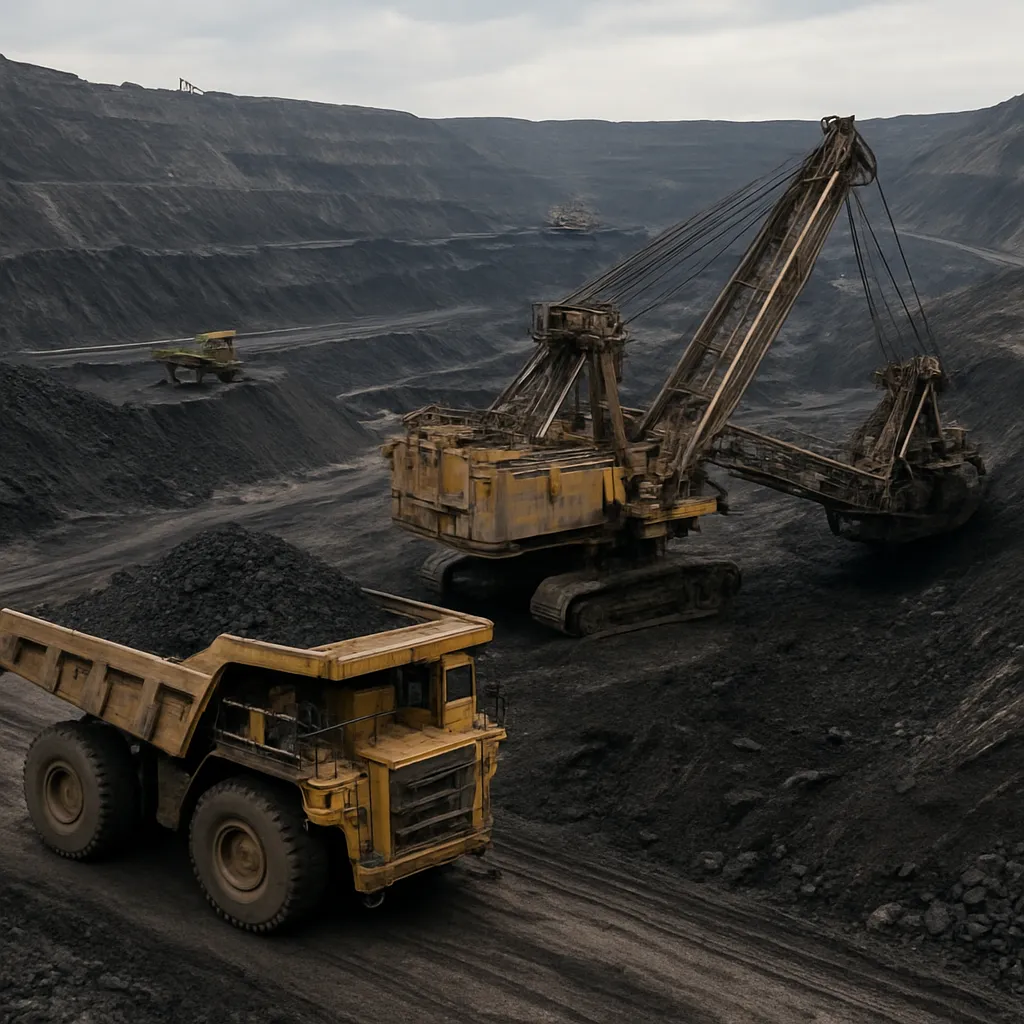
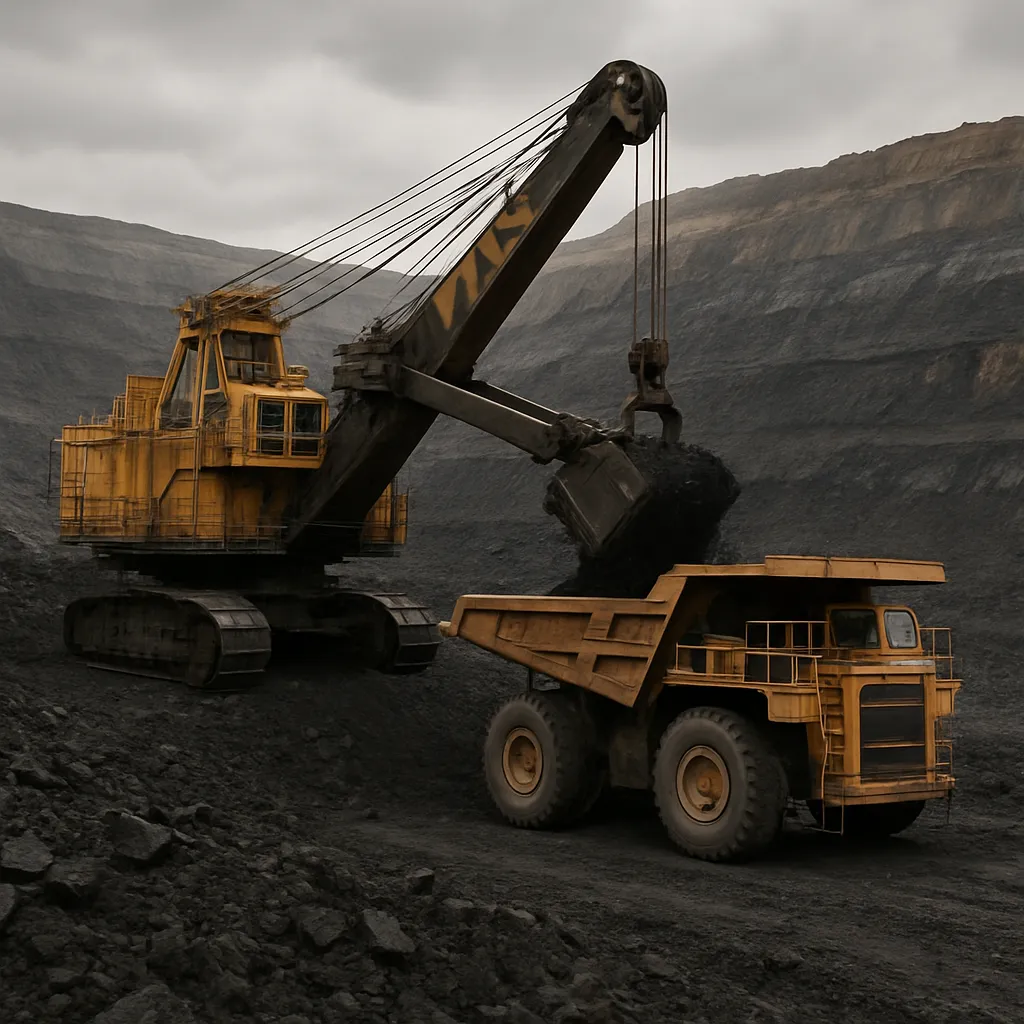
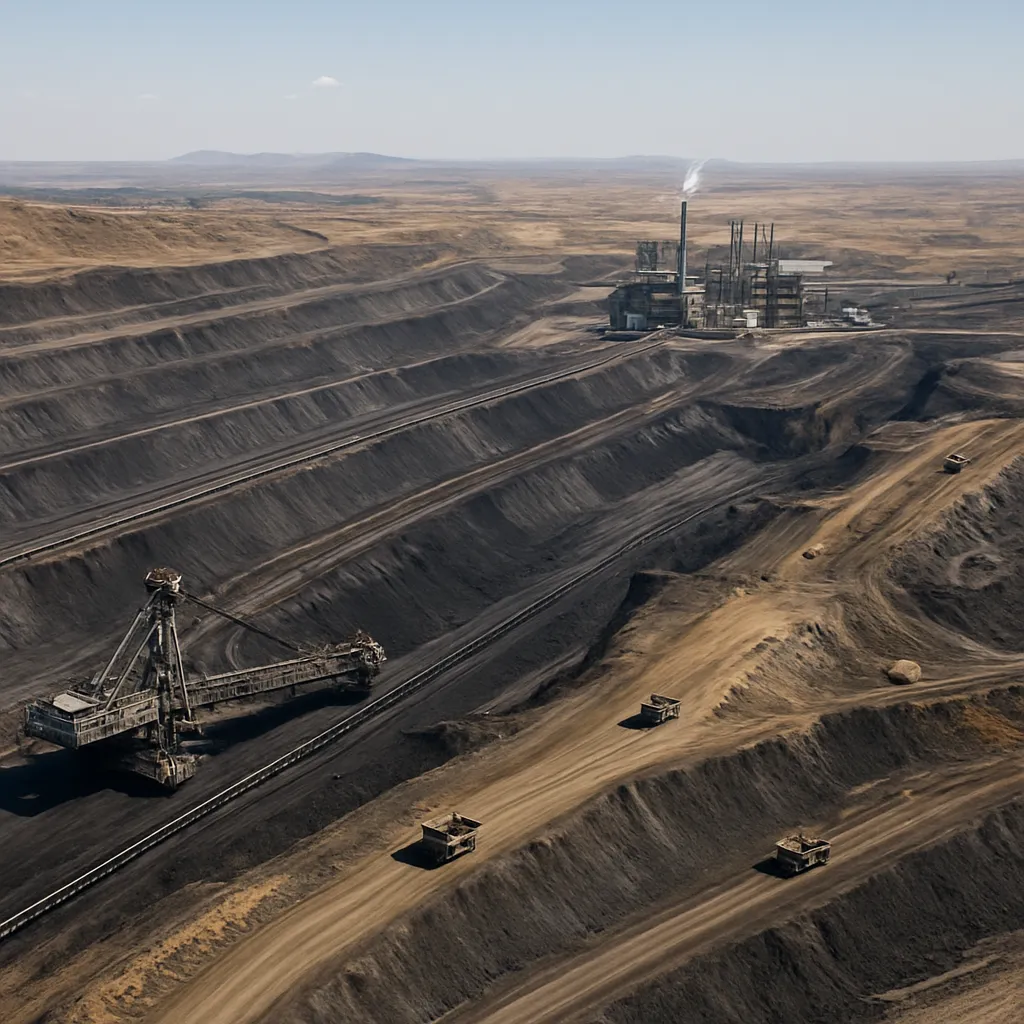
- Open-pit (opencast) mining — used where coal seams are at shallow depth or occur as flat-lying deposits; equipment includes shovels, draglines, and trucks; high throughput but significant surface disturbance;
- Underground mining — longwall or bord-and-pillar techniques used where seams are deeper; lower surface footprint but more capital- and labor-intensive.
Many smaller collieries use a combination of surface and shallow underground workings, and contract out heavy earthworks and haulage to local contractors. Mechanization levels vary: large operations are highly mechanized and capital-intensive, while smaller mines may rely more on manual and semi-mechanized methods. The choice of method directly affects employment levels, safety profiles, and operational costs.
Economic and financial significance
Even smaller mines such as Zonnebloem-type sites can have outsized local economic impacts. The coal sector in South Africa plays a critical role in national energy security, industrial feedstock supply, and employment. Key economic aspects include:
- Revenue generation — coal sales to Eskom and export markets bring cash flow to operators and royalties to government;
- Employment — direct jobs in mining, processing, maintenance and administration, and indirect jobs in transport, services and local supply chains;
- Local economic multipliers — wages and supplier contracts support small businesses and municipal income via rates and taxes;
- Tax and royalties — mining companies contribute corporate tax, mining royalties, and social levies which fund public services at provincial and national levels;
- Capital investment — mines require upfront capex for infrastructure, mechanization and environmental controls, attracting both domestic and foreign investment in some cases.
At a national level, South Africa historically produced around 230–260 million tonnes of coal per year in the late 2010s and early 2020s, though production has fluctuated with demand, operational constraints at power stations, and export market dynamics. Exports historically have been in the order of 60–90 million tonnes annually, making coal one of the country’s important commodity exports. The exact contribution of a single site like Zonnebloem to these totals will depend on its annual tonnage: small collieries might produce under 1 million tonnes annually, while larger operations produce multiple millions.
Logistics, transport and markets
Coal logistics are a strategic aspect of South African mining economics. Key elements that affect mines such as Zonnebloem include:
- Rail — Transnet Freight Rail (TFR) is the principal bulk rail operator, transporting coal from inland collieries to export terminals such as Richards Bay or to coastal and inland power stations;
- Road haulage — shorter distances to local customers or to railheads are often serviced by truck fleets, but road transport is more expensive per tonne-kilometre;
- Export terminals — Richards Bay, and to a lesser extent Maputo and Cape Town historically, handle export volumes; logistical bottlenecks at terminals and on rail can constrain export growth;
- Domestic offtake — Eskom is the dominant domestic customer, but contracts with private power producers and industrial users diversify demand.
Supply chain reliability—port access, rail capacity, and power availability—directly affects mine profitability. For a Zonnebloem-level operation, proximity to rail and road infrastructure greatly enhances value by lowering logistics costs and expanding market access.
Employment, communities and socio-economic impacts
Coal mining remains a significant source of jobs in mining regions, providing direct employment in extraction, processing and maintenance, and indirect employment in support services. Social and economic aspects related to Zonnebloem-type operations include:
- Job creation — both skilled and semi-skilled positions, with training opportunities for local communities;
- Community investment — many mines undertake corporate social responsibility (CSR) projects such as schools, clinics and local infrastructure;
- Black Economic Empowerment (BEE) — South African mining law and policy encourage ownership participation by historically disadvantaged South Africans, leading to joint ventures and community trusts;
- Labour relations — the sector has a history of strong trade unions and occasional industrial action affecting production;
- Health impacts — occupational hazards include respirable dust, noise, and risks associated with heavy equipment; companies must comply with safety and health regulations enforced by the Department of Mineral Resources and Energy and the Department of Employment and Labour.
Environmental considerations and regulatory context
Coal mining carries significant environmental responsibilities and legacy issues, which are tightly regulated in South Africa. For a mine like Zonnebloem, the major environmental concerns and compliance areas are:
- Water management — dewatering, groundwater drawdown, and acid mine drainage (AMD) risks require careful monitoring and treatment infrastructure;
- Air quality — dust suppression, particulate emissions, and compliance with ambient air quality standards;
- Land rehabilitation — closure plans, progressive rehabilitation and ecosystem restoration to meet the Mineral and Petroleum Resources Development Act (MPRDA) and related environmental legislation;
- Waste and tailings — management of overburden, rock dumps and discard fines to avoid erosion and pollution;
- Carbon and climate policy — while direct mine emissions are small relative to combustion emissions, coal mining and use are central to climate debates; operators face increasing pressure from financiers and buyers to reduce greenhouse gas footprints and demonstrate sustainable practices.
Regulation is enforced through environmental impact assessments (EIAs), water use licenses, and mine closure guarantees. Recent policy trends in South Africa emphasize environmental compliance, rehabilitation funds, and closer scrutiny of water-intensive mining projects.
Statistical context and notable figures
While firm-level statistics for Zonnebloem are not widely published in open national datasets, the following national and regional statistics provide useful context for understanding the scale and importance of individual coal operations:
- South Africa’s annual coal production historically ranged from about 200 to 260 million tonnes per year in recent years, with fluctuations due to demand, pricing and operational issues;
- Exports have historically accounted for roughly 20–35% of production, with major destinations including India, Europe and East Asia;
- Recoverable coal reserves in South Africa are often cited in the range of several dozens of billions of tonnes, providing a long-term resource base—though recoverable volumes depend on economics and environmental constraints;
- Employment across the coal sector is significant: directly several tens of thousands of workers in mining alone, with many more in associated transport and industrial sectors;
- Coal accounts for the majority of South Africa’s electricity generation, historically supplying over 70–80% of the nation’s power through coal-fired plants operated by Eskom.
For a single mine, production can range widely: small collieries might produce tens or hundreds of thousands of tonnes annually, mid-sized mines produce between 0.5 and 2 million tonnes, and major operations can exceed several million tonnes per year. The economic footprint of a specific Zonnebloem operation would therefore depend on its annual tonnage, resource quality, ownership structure and market orientation.
Industry challenges and future outlook
The South African coal sector, and by extension mines like Zonnebloem, faces a mixture of short- and long-term challenges and opportunities:
- Energy transition — global and domestic decarbonization trends create pressure to reduce reliance on coal-fired generation. However, the pace and sequencing of transition in South Africa are shaped by energy access, reliability concerns and social considerations;
- Infrastructure constraints — rail and port bottlenecks, and aging power systems (including intermittent supply and load shedding) affect mine operations, logistics and offtake;
- Capital access — lenders and international buyers increasingly require robust environmental, social and governance (ESG) credentials, affecting project financing;
- Technological shifts — improvements in coal beneficiation, dust control, water treatment and methane capture can lower environmental impacts and increase product value;
- Local development — mines that invest in skills, supply chain localization and community development can deliver longer-term socio-economic benefits even as industry dynamics evolve.
Prospects for individual mines will depend on their ability to adapt: implementing efficient logistics, improving environmental performance, diversifying markets (e.g., supplying industrial users or pursuing higher-value coal products), and aligning with policy and finance expectations.
Interesting facts and wider significance
Several wider points are useful for contextualizing Zonnebloem within the South African coal story:
- Coal mining shaped South Africa’s industrialization: many towns and transport corridors grew up around collieries and power stations.
- Richards Bay Coal Terminal remains one of the world’s largest coal export facilities; inland collieries depend on its capacity for export revenues.
- Employment models and community ownership vehicles are common: many mines host employee housing, local procurement programs, and community trusts that share royalties.
- Innovation in mine rehabilitation and water treatment is an increasing priority; successful projects can convert former dumps into grazing or agricultural land and reduce environmental liabilities.
Concluding summary
Although detailed, publicly available statistics for a specifically named Zonnebloem Mine are limited, situating such a mine within South Africa’s coalfields provides a clear picture of likely geology, coal type, operations and socio-economic importance. A Zonnebloem-type colliery would typically produce thermal or mixed-grade bituminous coal for domestic power generation and possibly for export following beneficiation. It would operate within a tightly interconnected system of rail logistics, power offtake agreements (often with Eskom), and regulatory oversight focused on environmental protection and community benefits. National statistics show that coal remains a strategic resource for South Africa, providing a major share of electricity, significant export earnings and employment, even as the sector navigates the global energy transition and increasing demands for environmental stewardship.