The Heihe Coal Mine, located in the border region of northeastern China, represents a component of the country’s vast and historically important coal sector. This article reviews the mine’s location, geological setting, the types of coal extracted, and the mine’s role in the regional economy and national energy mix. It also addresses operational methods, infrastructure links, environmental and safety challenges, and technological and policy trends likely to shape the future of the site and similar coal mining operations in China. Wherever available, broader statistical context is provided to situate Heihe within provincial and national coal production and to highlight its economic significance.
Location and Geological Setting
The Heihe Coal Mine is situated in the Heihe area of Heilongjiang Province in northeastern China, near the Sino-Russian border. The region is part of the physiographic and geological transition zone between the Northeast China Plain and the Greater Khingan Range. Heihe’s proximity to key transport corridors and border trade routes gives it strategic significance beyond local energy supply.
Regional Geology and Coal Formation
The geology of Heilongjiang and neighboring basins is characterized by Paleozoic and Mesozoic sedimentary sequences interspersed with later Cenozoic deposits. Coal in this part of China typically formed in lacustrine and swamp environments that existed during various geological periods. In the Heihe area, coal-bearing strata are commonly associated with continental sedimentary layers that yield coal seams of variable thickness, depth and quality.
Coal seams in northeastern China commonly include both lignite and bituminous ranks, with local variability depending on burial depth and thermal history. Heihe’s deposits are generally consistent with this pattern: several seams of low- to medium-rank coal, with higher-rank coal occurring in deeper, more thermally matured sections.
Reserves and Resource Estimates
Public, mine-specific reserve figures are often not widely published for many regional mines. For Heihe, detailed audited reserve figures are limited in open sources. Broadly speaking, coalfields in Heilongjiang contain resources ranging from modest to substantial, often measured in the tens or hundreds of millions of tonnes for larger fields. Heihe is best characterized as a regional mine with economically exploitable reserves sufficient to support multi-decade operations under current extraction rates, though precise estimates require access to company or government geological surveys.
Mining Operations and Coal Characteristics
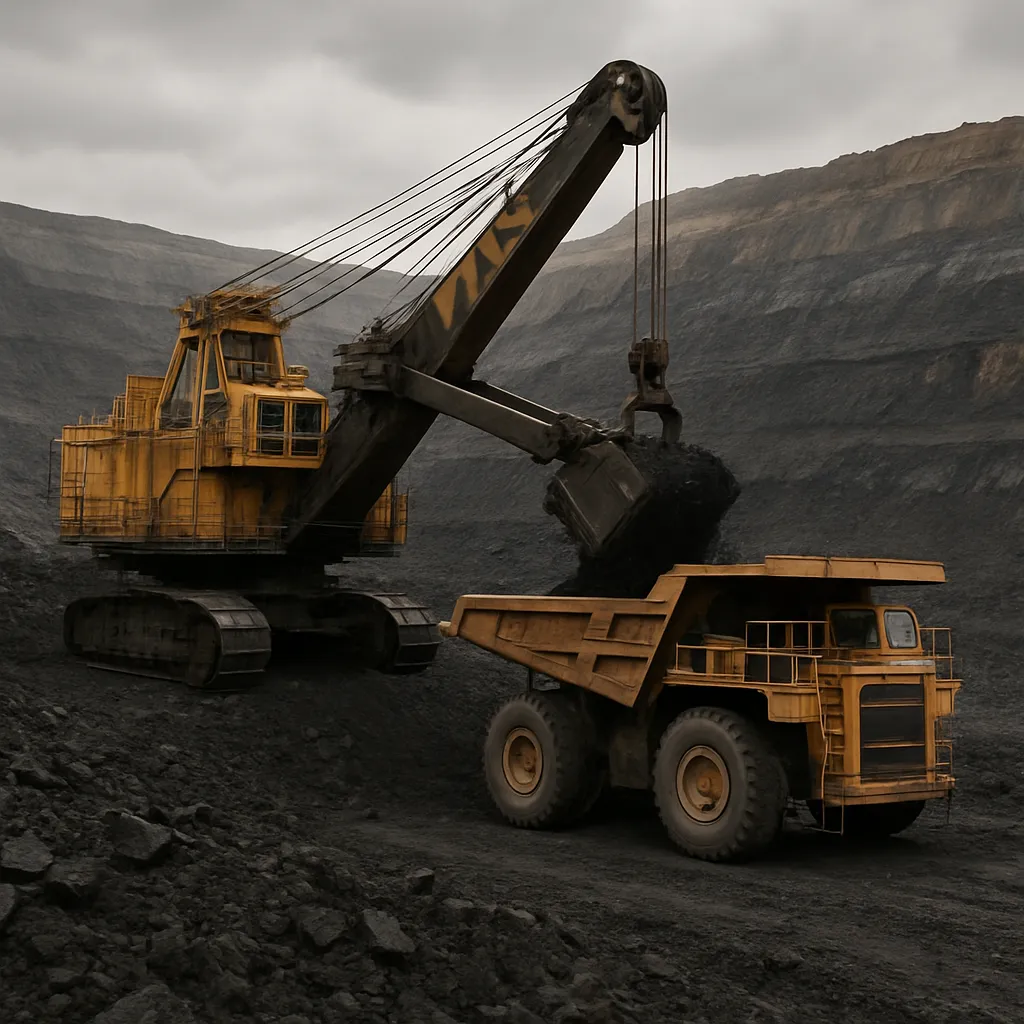
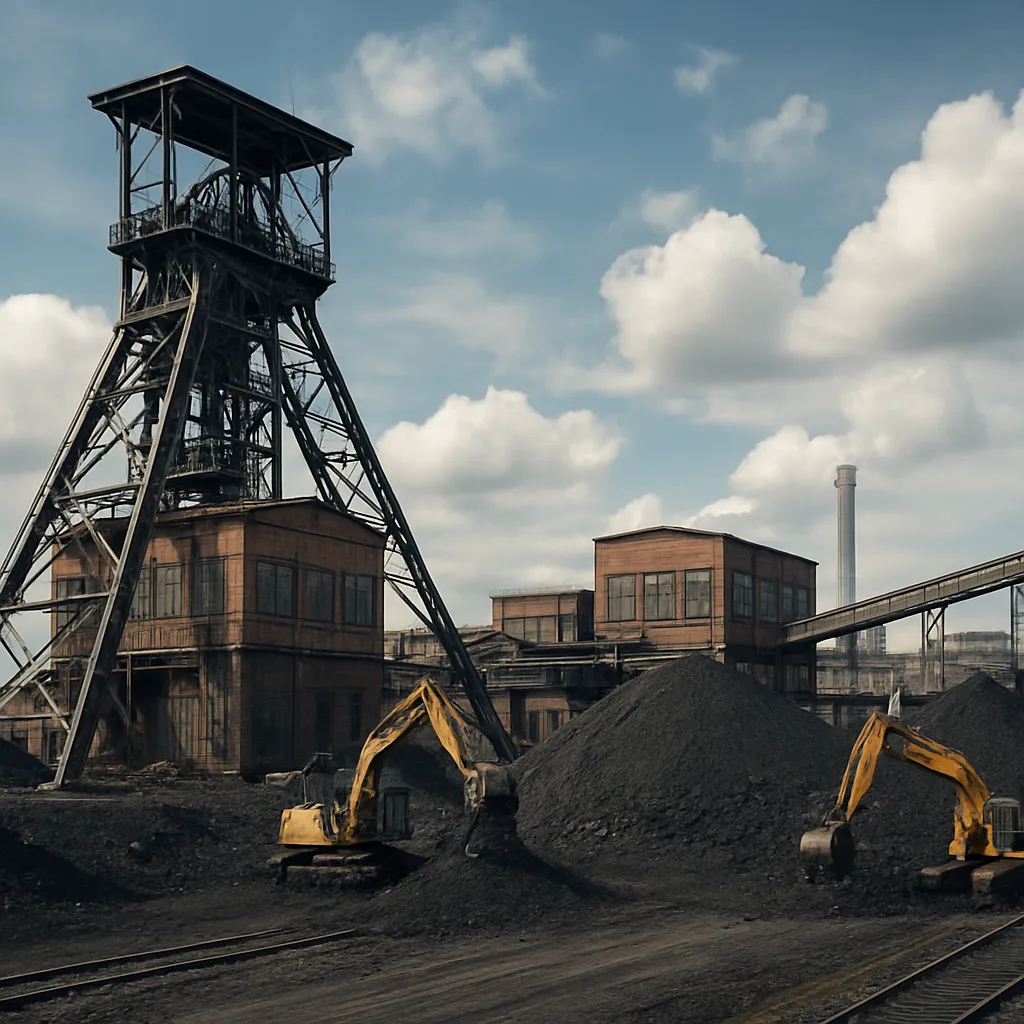
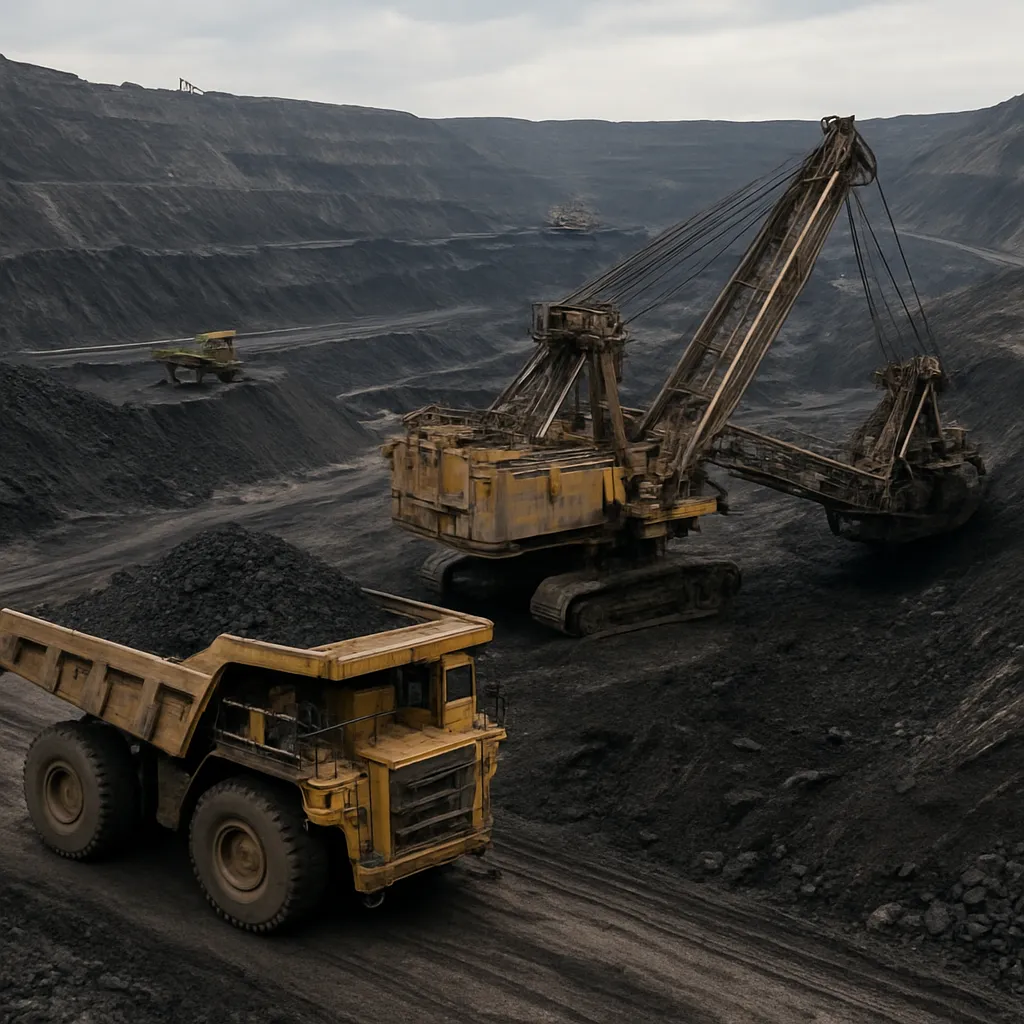
Operations at the Heihe Coal Mine typically combine surface (open-pit) and underground methods depending on seam depth and local topography. Mines in the region have been modernizing, gradually shifting towards mechanized underground faces and more efficient overburden management in surface operations.
Types of Coal Produced
- Lignite (brown coal): common in shallow, younger deposits; higher moisture content and lower calorific value; used primarily for local power generation and district heating.
- Sub-bituminous and bituminous coal: found in deeper seams and valued for higher calorific values and broader industrial uses including power generation, steel and coke production when suitable.
- Coal quality can vary across seams in a single mine, affecting the processing routes and end-user markets.
At Heihe, coal quality is typically suited for thermal power generation and some industrial uses after appropriate beneficiation (washing and drying). Where coal exhibits higher fixed carbon and lower volatile matter, it can feed into coking or coal-chemical processes; however, most Heihe output is directed to power and local industrial fuel markets.
Mining Methods and Processing
Common mining methods used include room-and-pillar and longwall techniques for underground extraction, and conventional truck-and-shovel drilling and blasting in open pits. Increasingly, the mine has adopted mechanized shearers, conveyors and automated support systems to improve productivity and safety.
Coal processing at the mine site or nearby preparation plants typically includes crushing, screening, washing and dewatering to reduce ash and sulfur content and improve calorific value. Beneficiation also helps meet transportation cost-efficiency and environmental regulations applied by power plants.
Economic and Regional Significance
The Heihe Coal Mine contributes to the local and regional economy through direct employment, supply-chain linkages and the provision of a stable energy source. Coal mining towns in Heilongjiang often rely on mines for a large share of jobs, local fiscal revenue, and infrastructure investment.
Employment and Local Economy
Mining operations directly employ miners, engineers, geologists and support staff, while indirectly supporting transport, equipment maintenance, processing plants, and service industries in nearby towns. A single regional mine like Heihe may provide hundreds to a few thousand direct jobs depending on scale, with multiplier effects increasing total employment supported in the local economy.
Employment can be a major factor in municipal budgets where mining-related payroll taxes, land royalties and corporate contributions fund local services, schools and health facilities. However, economic dependence on a single industry can also create vulnerability when commodity prices or policies change.
Infrastructure and Market Links
Heihe benefits from proximity to rail connections, river transport routes and cross-border logistics to Russia. These links facilitate the movement of coal to power plants, industrial users and, occasionally, international markets. The mine’s logistical advantages reduce transportation costs, improving competitiveness relative to more remote deposits.
At the provincial level, Heilongjiang’s coal supports thermal power generation, district heating systems, and industrial processes such as cement production and small-scale metallurgy. Some coal may also be consumed locally in coal-to-chemical projects that convert coal into synthetic fuels or chemicals—technologies that have been explored across northern China.
Production Statistics and Market Context
Precise, mine-level production data for Heihe are limited in public sources. At the national level, China remains the world’s largest coal producer and consumer. In the early 2020s, Chinese annual coal production consistently exceeded several billion tonnes, supporting a large share of the country’s electricity generation and heavy industry.
- Heilongjiang Province contributes a meaningful share of northeastern China’s coal output. Provincial production is measured in the tens of millions of tonnes annually across numerous mines and collieries.
- Heihe’s output is best viewed within this provincial aggregate: it is a regional supplier that complements larger mining basins in Shanxi, Inner Mongolia and Shaanxi.
- Market destination: coal from Heihe primarily supplies local and regional power plants, district heating systems and industrial users; some volumes may be shipped to other provinces or exported via cross-border trade routes when commercially favorable.
The economics of coal production at Heihe are influenced by coal price cycles, rail and port tariffs, and national policy shifts toward cleaner energy. In recent years, China’s efforts to balance energy security with emissions reductions have created both opportunities (investment in premium, low-ash coal and coal-to-chemicals) and constraints (closure of inefficient mines and stricter environmental standards).
Environmental, Safety and Social Issues
Coal mining inevitably carries environmental and social impacts, and Heihe is no exception. Key concerns include land disturbance, water quality, air emissions, mine subsidence and occupational safety. Chinese mining authorities have progressively tightened regulation, requiring better reclamation, pollution controls and workplace safety measures.
Environmental Impacts
- Air pollution: dust emissions during mining and transport, and particulate and sulfur emissions when coal is burned.
- Water: runoff and acid mine drainage risks; dewatering operations can affect local groundwater levels.
- Land: open-pit scars, spoil heaps and the need for post-mining land reclamation and re-vegetation.
- Greenhouse gases: CO2 from coal combustion contributes to national emissions; methane released during mining is also a greenhouse gas and an occupational hazard.
Mitigation measures practiced at modern operations include dust suppression, wastewater treatment, progressive backfilling of pits, and restoration of disturbed lands. Where possible, methane capture and utilization systems reduce greenhouse emissions and provide a supplementary energy source.
Safety Record and Practices
Historically, China has made substantial improvements in coal mine safety through regulation, technology adoption and consolidation of smaller, unsafe mines. Heihe’s safety measures include mechanization of underground faces, improved ventilation, gas monitoring, emergency response planning and worker training. Nonetheless, mining remains hazardous, and continuous investment is needed to reduce risks.
Social Dimensions
Communities near Heihe benefit from employment and infrastructure but can suffer from pollution and health effects. Managing the social license to operate involves community engagement, local procurement, social investment programs and planning for economic diversification in the long term—especially as national energy transitions may reduce coal demand over decades.
Technological Developments and Future Outlook
Technological modernization is reshaping coal operations in northeast China. The Heihe Coal Mine has been part of broader regional trends that include automation, digital mine management, efficiency improvements and pollution controls.
Automation and Digitalization
- Conveyor automation and remote-controlled mining equipment reduce onsite labor needs and improve safety.
- Real-time monitoring systems for gas, temperature and equipment health help prevent incidents and optimize production.
- Data-driven maintenance and scheduling increase operational uptime and lower unit costs.
Cleaner Coal Technologies
Investments in washing plants, flue-gas desulfurization at power stations, and higher-efficiency combustion systems reduce the local environmental footprint of coal utilization. Additionally, mines exploring methane capture can both improve safety and provide feedstock for local power generation.
Policy and Market Trends
China’s energy policy aims to secure reliable energy supplies while meeting emissions reduction targets. This has created a nuanced outlook for regional mines like Heihe: in the near to medium term they remain important for energy security and local economies; over the longer term, demand trajectories will depend on the pace of renewables deployment, electrification and potential carbon constraints.
Local and provincial authorities are likely to emphasize:
- Upgrading and consolidating smaller operations to meet environmental and safety standards.
- Support for workforce retraining and economic diversification in mining-dependent communities.
- Incentives for cleaner coal use and adoption of efficient technologies to extend the viability of resource regions in a lower-carbon future.
Interesting Facts and Broader Context
Heihe’s location on the Sino-Russian frontier gives it some unique commercial and geopolitical dimensions. Cross-border trade, seasonal fuel demand (driven by harsh northern winters), and regional infrastructure investments amplify the mine’s role beyond mere extraction.
- Strategic placement: Heihe’s proximity to railways and border crossings can facilitate export of coal and import of mining equipment and materials.
- Cold-climate demand: Northern China’s extended heating season sustains high seasonal demand for thermal coal and local energy supplies.
- Energy transition pressures: While coal remains essential for energy security, national and international pressure to reduce emissions influences investment decisions and the pace of technological upgrades at mines like Heihe.
Summary and Outlook
The Heihe Coal Mine is a representative example of a regional Chinese coal operation: grounded in local geology, integrated into provincial supply chains, and important for employment and energy security. Although mine-specific public data are limited, the mine’s role must be read alongside provincial and national patterns—China’s immense coal production base, ongoing modernization, and evolving policy priorities.
Key takeaways:
- The mine produces primarily thermal coal with variable ranks from lignite to bituminous, serving regional power and industrial needs.
- Economic contributions include employment, fiscal revenues and support for local infrastructure, though dependence on coal creates longer-term socioeconomic risks.
- Environmental and safety challenges are being addressed through mechanization, pollution control measures and improved regulatory oversight, but ongoing vigilance is required.
- Technological trends such as automation, methane capture and coal preparation improvements will determine short- to medium-term competitiveness.
Looking ahead, Heihe and similar mines will need to balance immediate energy and economic roles with longer-term sustainability goals. Successful navigation of this transition depends on investment in cleaner technologies, strong environmental management, and planning to diversify local economies as the global energy landscape evolves.