The Highvale Mine, located in the western Canadian province of Alberta, is an important example of large-scale surface coal mining in North America. The operation extracts predominantly thermal coal that has played a meaningful role in regional energy supply chains, local employment and Alberta’s mining sector. This article summarizes the mine’s geological setting, mining methods, coal characteristics, economic and social significance, environmental management, and the challenges and opportunities the operation faces in a changing energy and regulatory environment.
Location and geological setting
Highvale Mine is situated in Alberta’s foothills and plains region within the broader Western Canadian Sedimentary Basin. The basin hosts thick sequences of sedimentary rocks that include multiple coal-bearing strata. These coal deposits are relatively shallow and laterally extensive in places, which makes them well suited to surface mining methods rather than deep underground operations.
The geology of the deposit is characteristic of many Alberta thermal coal occurrences: seams of lower-rank coal with variable thickness interbedded with sandstone, siltstone and minor shale units. These seams formed from ancient peat deposits that were buried and underwent coalification under modest pressures and temperatures compared to higher-rank coals such as bituminous or anthracite. The result is coal that typically has a relatively moderate calorific value and higher inherent moisture than higher-rank types, properties that influence its industrial uses and marketability.
Mining methods and operational layout
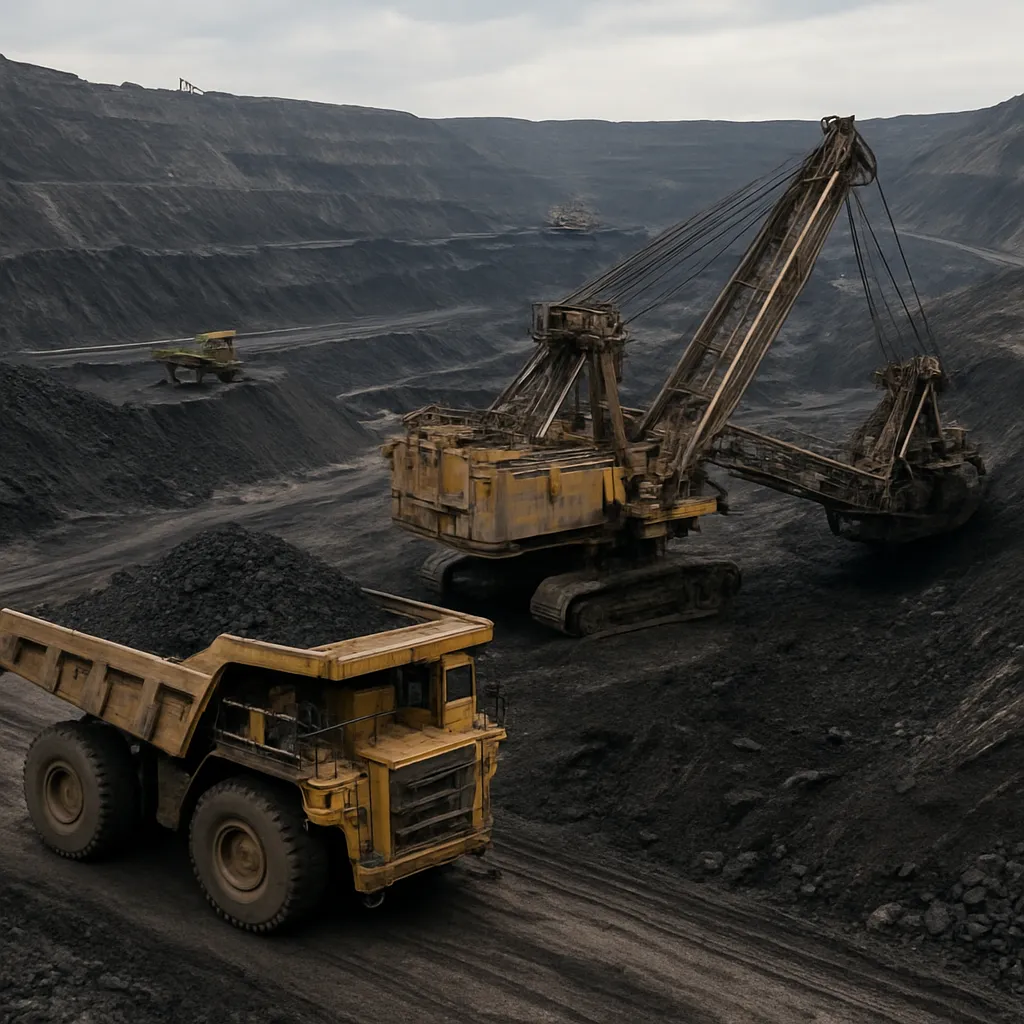
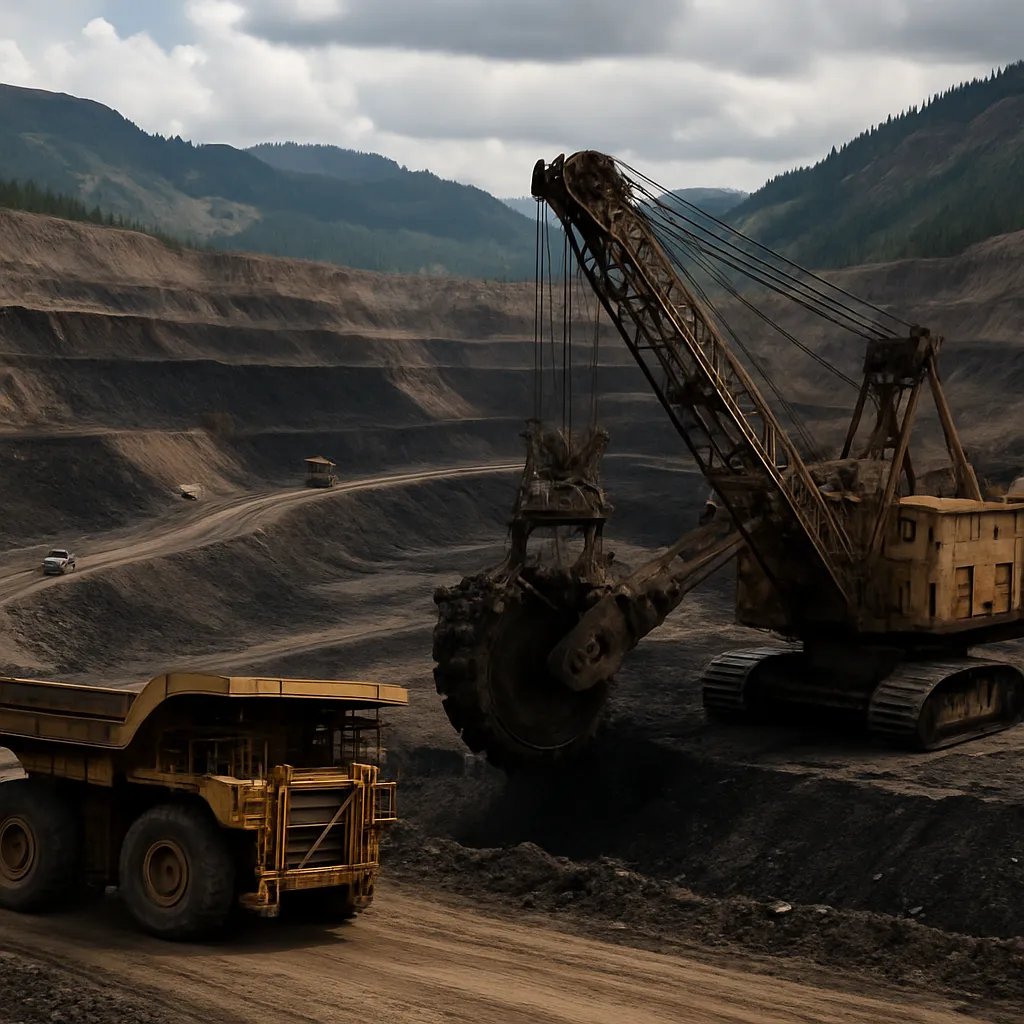
Highvale is operated as an open-pit (surface) mine. The typical life cycle of surface mining at Highvale follows these steps:
- Overburden removal — Vegetation, soil and rock above the coal seam are stripped and stored for future reclamation.
- Drilling and blasting — In harder material zones, rock is loosened by drilling and controlled blasting.
- Bulk excavation
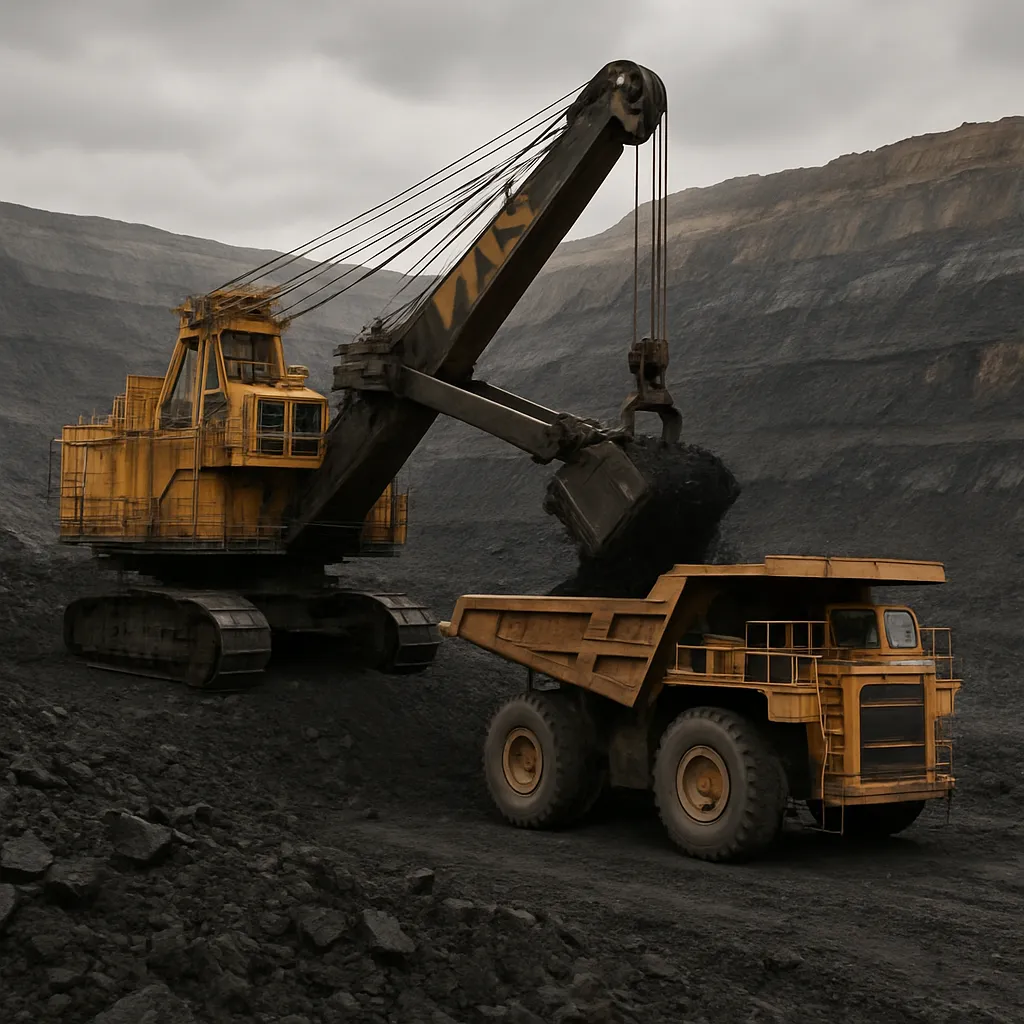
- Coal extraction — Large shovels and draglines or excavators load haul trucks or feed conveyor systems that transport coal to on-site preparation facilities.
- Coal processing — Run-of-mine coal is crushed, screened and sometimes washed to improve product quality by reducing ash and impurities.
- Progressive reclamation — Overburden and topsoil are managed and placed back on mined areas to restore landforms and revegetate progressively as mining advances.
At modern surface operations similar to Highvale, the mining fleet typically comprises electric or diesel-powered shovels, hydraulic excavators, ultra-class haul trucks, draglines in some sections, and conveyor infrastructure linking pits to processing plants or stockpiles. Operations are organized into pits and benches with substantial earth-moving equipment working on coordinated schedules to maintain production and safety.
Coal type, quality and main uses
The coal produced at Highvale is predominantly sub-bituminous thermal coal (a lower-rank coal), which is primarily intended for combustion in electric power generation. Sub-bituminous coal typically features lower sulfur content than many higher-rank coals, which can make it attractive for utilities seeking to meet emissions targets for sulfur dioxide while still relying on coal-fired generation.
Key physical and chemical characteristics that define the coal’s industrial suitability include:
- Calorific value — moderate energy content per unit mass relative to bituminous coal.
- Moisture content — higher than in high-rank coals, which affects transportation economics and combustion efficiency.
- Ash content and composition — influences boiler performance and disposal of combustion residues.
- Sulfur and trace element concentrations — relevant for emissions control and regulatory compliance.
Highvale’s coal historically has been used mainly by domestic power plants in Alberta and, depending on market conditions and logistics, has formed part of export streams to international customers. Because it is primarily thermal (not metallurgical) coal, it’s less directly relevant to steelmaking, where higher-rank coking coals are required.
Economic impact and industry significance
Highvale Mine contributes to the regional and provincial economy through direct and indirect channels. Direct impacts include employment opportunities at the mine and in associated on-site activities such as processing, maintenance and administration. Indirect effects include jobs in supply chains (equipment, transport, services), and induced impacts from employee spending in local communities.
Some principal economic roles include:
- Providing a stable source of fuel for electricity generation when sold domestically, helping meet baseload and seasonal demand.
- Creating local employment and business opportunities in a region where mining and related services are a key part of the economic base.
- Generating provincial royalty revenues and corporate taxes that support government programs and infrastructure.
- Supporting transport and logistics sectors through the movement of coal by rail or conveyor systems to customers and ports.
From an industry perspective, Highvale has been regarded as one of the more significant surface coal operations in Canada by production capacity and footprint. It has historically helped demonstrate the economic viability of surface mining for low-rank coals in Alberta’s geology and contributed to the development of mining techniques and reclamation practices tailored to the region.
Statistics, production and workforce
Concrete annual production and employment figures for any mine can vary year to year with operational schedules, market demand and regulatory circumstances. Publicly available reporting for mines of this type often indicates annual output in the range of several million tonnes of saleable coal per year, and a workforce consisting of several hundred direct employees with additional contractors and indirect jobs supported throughout the supply chain.
Key statistical aspects typically monitored and reported by mining operations include:
- Annual saleable coal production (commonly measured in million tonnes per year).
- Coal reserves and resources — economical quantities of coal that define mine life under prevailing economic conditions.
- Workforce numbers — direct employees, contractors, and seasonal labor.
- Safety performance — lost-time injury frequency rates and other occupational health metrics.
- Environmental performance — water use, greenhouse gas emissions, reclamation progress and compliance statistics.
For readers seeking precise, up-to-date production figures, reserve estimates and workforce numbers for Highvale, the most reliable sources are official operator reports, provincial regulatory filings and government resource assessments. These documents typically provide audited numbers for annual tonnage, proved and probable reserves, and employment totals.
Transport, logistics and markets
Coal from Highvale is typically moved from the mine to customers by a combination of on-site conveyors, truck haulage within the mine perimeter, and longer-distance rail transport for delivery to thermal power stations or export terminals. Rail connectivity is a critical element in the supply chain because it allows large bulk shipments to be moved economically over long distances.
Markets for thermal coal such as that from Highvale include:
- Domestic power utilities that rely on coal for baseload and flexible generation.
- Industrial customers with large heat or steam requirements.
- Export markets where demand for thermal coal exists and where logistics and product quality match buyer specifications.
Market dynamics for thermal coal have been influenced in recent years by global decarbonization trends, commodity price fluctuations, and regional energy policies. These factors affect pricing and long-term contracting and thereby influence mine planning, investment and production levels.
Environmental management, reclamation and community responsibilities
Environmental management is an integral part of modern mining operations. At Highvale and similar surface mines, environmental programs typically address:
- Progressive reclamation — restoring landform stability, soil profiles, and vegetation as mining progresses so that disturbed lands are rehabilitated rather than left to long-term dereliction.
- Water management — controlling surface water and groundwater impacts, maintaining water quality in streams, and managing runoff and sediment.
- Dust and air quality control — using water sprays, vegetation covers and operational practices to minimize particulate emissions.
- Waste rock and tailings management — safe storage and ongoing monitoring to prevent contamination.
- Wildlife and biodiversity — measures to mitigate impacts on habitats and to implement offsetting or restoration where appropriate.
Progressive reclamation is often a regulatory obligation and a community expectation; reclaimed landscapes may be converted to agricultural use, forest, wetlands or wildlife habitat, depending on the reclamation objectives and local conditions. Financial assurance mechanisms such as reclamation bonds are typically required by regulators to ensure funds are available for reclamation even if ownership changes.
Greenhouse gas emissions associated with coal use (both from combustion and from on-site operations) present a strategic challenge. Operators and regulators increasingly explore emissions reduction measures, including improved operational efficiency, reduced fugitive methane, electrification of mobile fleets where feasible, and participation in broader carbon-management approaches such as carbon capture utilization and storage (CCUS) at downstream emission points like power plants.
Regulatory framework, Indigenous engagement and community relations
Mining in Alberta operates within a multi-layered regulatory framework that includes provincial mineral and environmental laws as well as federal statutes where fisheries, species at risk, or cross-border impacts are implicated. Regulatory oversight covers permitting, environmental assessment, water licensing, reclamation planning and ongoing compliance monitoring.
Indigenous communities and local municipalities are key stakeholders. Modern project development and operations generally require active consultation and often collaboration with Indigenous groups that have asserted rights or interests in the area. Community benefits can include employment, contract opportunities for local businesses, and investment in local infrastructure or social programs. Transparent communication, local hiring and procurement strategies, and culturally appropriate consultation processes are central to maintaining social license to operate.
Safety, technology and innovation
Safety is a paramount concern in mining operations. Surface mining safety programs address vehicle movements, heavy equipment operations, slope stability, explosives handling and occupational health hazards. Continuous training, fatigue management, and use of technology such as proximity detection systems and automated mine scheduling enhance safety outcomes.
Technological innovations increasingly adopted in surface mining include:
- Fleet management and telematics for optimizing haul truck and shovel productivity.
- Automation and remote operation of equipment to reduce exposure of workers to hazardous tasks.
- Advanced geological modelling to improve resource estimation and mine planning.
- Improvements in coal washing and processing to maximize saleable product and reduce waste.
Investments in such technologies can help reduce unit costs, improve safety, and decrease environmental footprint per tonne of coal produced.
Economic and strategic challenges; future outlook
The future of thermal coal operations like Highvale is shaped by several intersecting forces:
- Energy transition — global and regional shifts toward lower-carbon electricity systems reduce long-term demand for coal in many markets.
- Regulatory pressure and carbon pricing — policies aimed at reducing greenhouse gas emissions increase the economic burden on coal-fired generation and can accelerate closure or conversion decisions.
- Market volatility — prices for thermal coal are subject to international demand, freight costs and competition from alternative fuels (natural gas, renewables) and energy storage.
- Operational costs and capital requirements — sustaining competitiveness requires ongoing investment in productivity, environmental controls and reclamation obligations.
Operators that can adapt through cost control, product diversification, participation in low-emission value chains (for example, by supplying coal to operations pursuing carbon capture at plant level), or rehabilitation and land repurposing strategies are better positioned to manage transition risks. For the regional economy, mine closure planning and economic diversification are important to manage socio-economic impacts over the long term.
Interesting facts and broader context
Some points that illustrate the broader importance and context of a mine like Highvale:
- Surface mines such as Highvale have historically enabled economical recovery of large volumes of coal due to favorable geology and proximity to rail infrastructure.
- Low-rank coals from Alberta tend to have lower sulfur than some other thermal coals globally, which has influenced their use in regional power generation where sulfur limits were a concern.
- Progressive reclamation at modern surface mines means that post-mining landscapes can be restored for productive uses or enhanced ecological function, transforming former disturbance footprints into managed habitats, forests or other land uses over decades.
- Highvale and comparable mines illustrate trade-offs between regional economic benefits and environmental emissions; their future underscores the broader policy and market choices societies make about energy supply mixes and climate objectives.
Concluding perspective
Highvale Mine represents a prominent example of Alberta’s surface coal industry, producing thermal coal that has supported regional electricity needs, local employment and economic activity. Like many thermal coal operations worldwide, its prospects are being re-evaluated in the light of energy transition pressures, regulatory change, and market dynamics. The operation’s future will be determined by a mix of factors including global thermal coal demand, provincial and federal energy and environmental policies, the mine’s ability to continue improving operational and environmental performance, and meaningful engagement with affected communities and Indigenous stakeholders. Regardless of the long-term trajectory, the technical, social and environmental management lessons from Highvale and similar mines remain relevant for resource stewardship and sustainable community planning in mining regions.