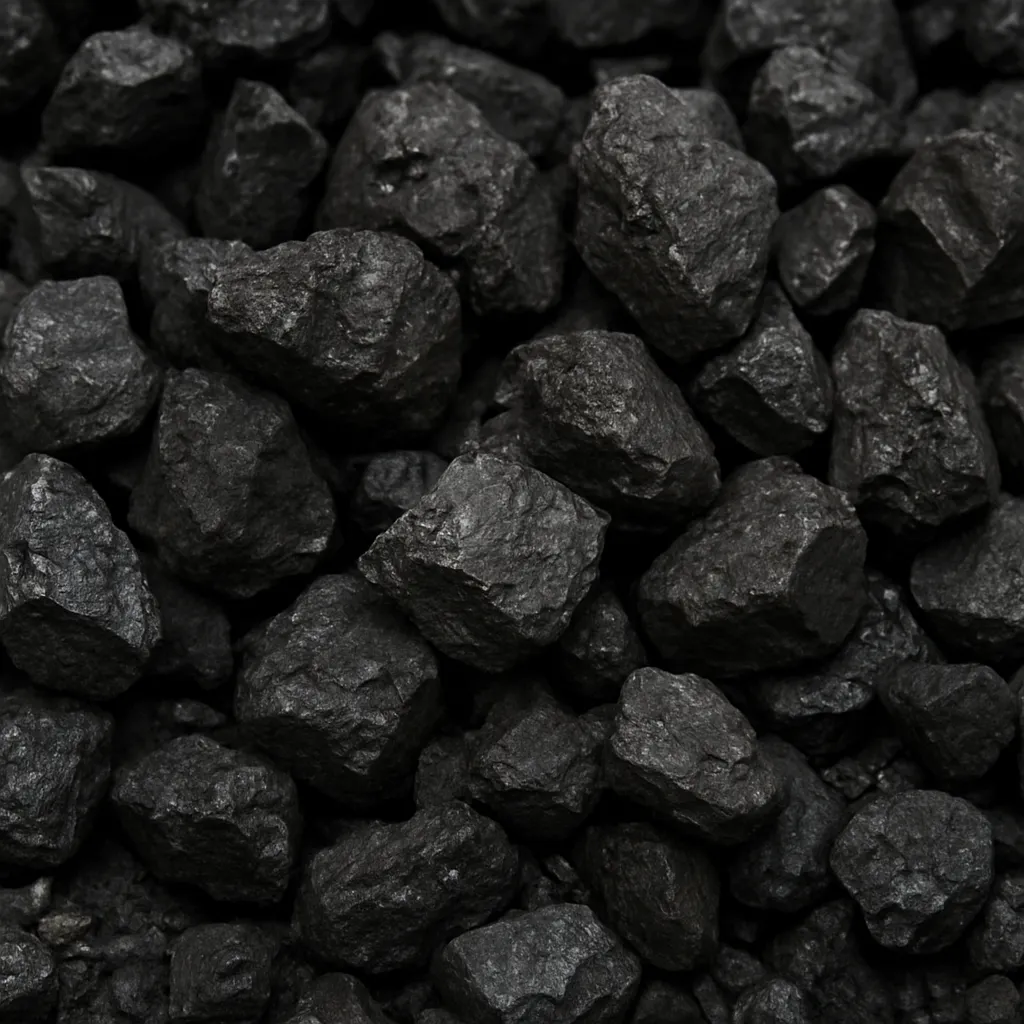
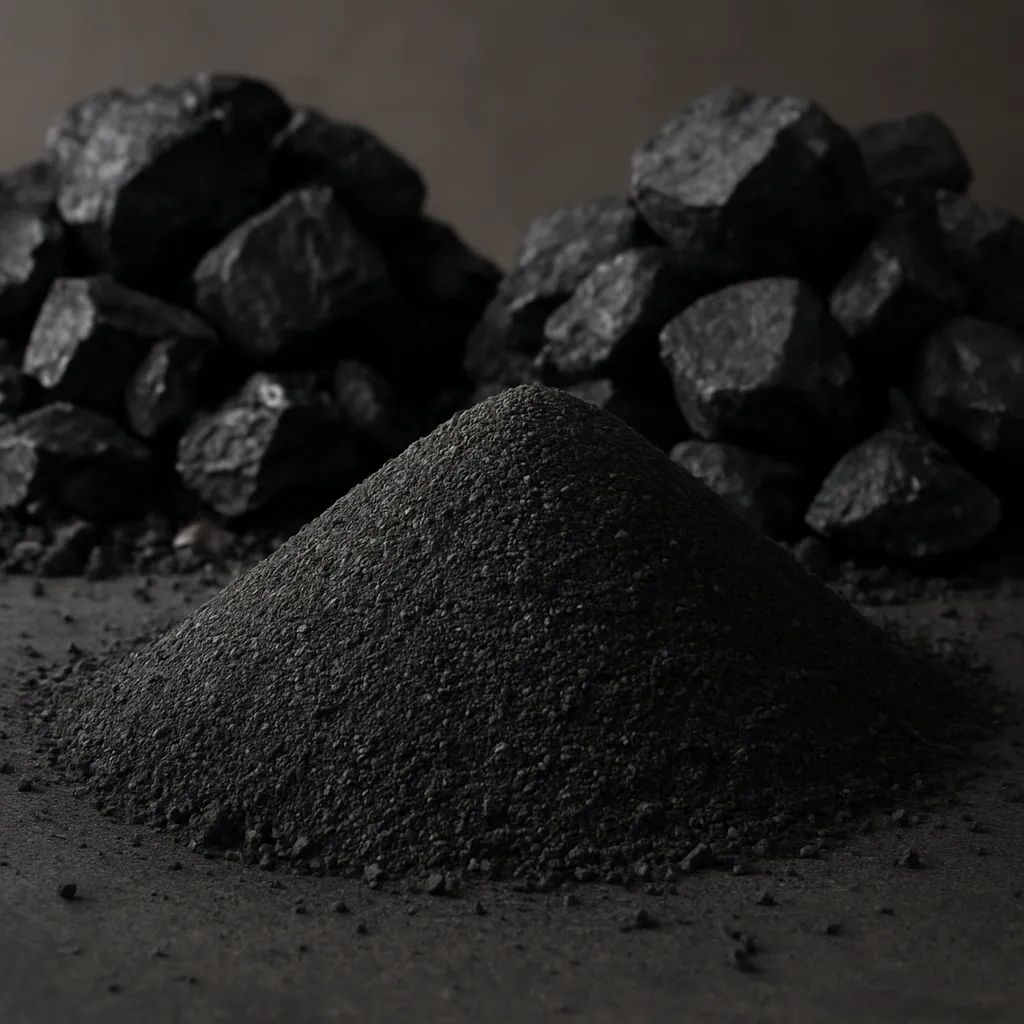
This article examines the specialized category of coal commonly referred to as metallurgical or coking coal — a commodity that plays an indispensable role in contemporary metal production, especially the manufacture of iron and steel. The text explores the geological characteristics and classification of this coal, outlines where it is found and mined, analyzes economic and trade dynamics, presents selected statistical perspectives, and discusses technological and environmental trends that are reshaping demand. Throughout the article, I highlight key aspects of quality, production, and global significance that make metallurgical coal a strategic raw material for heavy industry.
Geology, Classification and Key Properties
Metallurgical coal is distinct from thermal coal used primarily for electricity generation because of its ability to be converted into coke — a porous, carbon-rich material essential for the blast furnace route of ironmaking. The most prized metallurgical coals are the ones that exhibit strong coking properties: when heated in the absence of air they soften, agglomerate and resolidify to form a coherent, low-volatile mass that provides mechanical strength and permeability in the furnace.
Key quality parameters include rank (commonly high- to medium-volatile bituminous coals), plasticity and caking behavior, coal petrographic composition, volatile matter, fixed carbon, ash content, sulfur content, and the coal’s Gieseler plastometer or Free Swelling Index (FSI). Different market categories are typically defined as:
- Hard Coking Coal (HCC) — highest value for coke production
- Semi-Hard and Semi-Soft Coking Coal (SHCC / SSCC) — blended with HCC for coke quality
- Pulverized Coal Injection (PCI) coal — used to partially replace coke in blast furnaces
High-quality metallurgical coal typically has low ash and sulfur and demonstrates strong caking and swelling during carbonization. These attributes determine its suitability for producing metallurgical-grade coke and its price on international markets.
Where It Occurs and Major Mining Regions
Geologically, metallurgical coal deposits are typically found in Carboniferous- to Permian-age basins where organic-rich sediments were buried, thermally matured and altered. Deposits occur on most continents; however, the economically important mines are concentrated in certain countries and basins.
Major producing and exporting regions include:
- Australia — the largest global supplier of seaborne metallurgical coal, primarily from the Bowen Basin in Queensland and the Hunter/Bowen complexes in New South Wales. Australian mines export both HCC and SSCC to Asia, Europe and beyond.
- Russia — significant production from Siberian and Far Eastern basins; a major exporter to Europe and Asia, with large state and private mining companies active in the sector.
- Canada — substantial metallurgical coal exports, especially from British Columbia, serving markets in Asia.
- United States — Appalachian basins (eastern US) produce premium metallurgical coals; the Powder River Basin is more focused on thermal coal.
- Colombia — an important exporter of higher-quality coals to global steelmakers, with strong links to US and European markets.
- Mongolia — rapidly growing supplier, particularly to China, where proximity matters for logistics and price competitiveness.
- Smaller producers in Europe, South Africa, India and China (which also consumes much of its domestic production) contribute to regional supply balances.
Because metallurgical coal is a specialized commodity, the economics of export rely heavily on proximity to steelmaking centers, port infrastructure, and the presence of high-quality seams that require less blending and processing.
Mining, Preparation and Quality Control
Metallurgical coal is extracted through both underground and surface (open-pit) mining methods depending on seam depth, geology and environmental or regulatory constraints. After mining, coal undergoes a range of preparation steps: crushing, screening, washing and density separation to reduce ash and remove impurities. The objective is to deliver a feedstock with physical and chemical properties that will yield consistent coking behavior.
Modern preparation plants use dense medium separation (DMS), froth flotation and fine coal dewatering technologies to produce high-quality product. In addition to physical cleaning, coal blending is a routine practice: individual coals with complementary properties are mixed to meet a coke oven’s spec for strength, reactivity and ash profile. Quality control uses petrographic analysis, proximate and ultimate testing, and rheological tests to ensure coke yield and performance.
Economic Importance and Trade Dynamics
Metallurgical coal sits at the nexus of natural resource economics, heavy industry and global trade. Its value is driven by steel demand, which in turn follows construction, manufacturing and infrastructure cycles. Some key economic features:
- High-value raw material: Metallurgical coal commands a premium compared with thermal coal because it cannot be substituted easily in BF-BOF steelmaking.
- Exports and seaborne trade: Around a few hundred million tonnes of metallurgical coal are traded seaborne annually, with the bulk shipped from Australia, Canada, Russia, the US and Colombia. Australia typically accounts for the largest share of seaborne exports.
- Price volatility: Prices are susceptible to rapid swings driven by supply disruptions (miners’ strikes, floods, port constraints), abrupt changes in steel output, and transport cost spikes. Benchmark indices tracked by providers such as Platts and Argus can swing dramatically in stressed markets.
- Integration with steel industry cycles: Investment and capex in mining often lag demand changes, producing periods of tight supply and price spikes followed by expansions and eventual oversupply.
In the context of national economies, metallurgical coal revenues can be a significant export earner, providing foreign exchange, employment in mining regions and tax receipts. For steel-producing countries without domestic high-quality coking coal, imports are a critical input cost affecting competitiveness.
Role in Steelmaking and Industrial Applications
The primary use of metallurgical coal is to produce metallurgical coke for the blast furnace, where coke serves three functions:
- It is the chemical reducing agent (carbon source) that reduces iron ore to iron.
- It provides the necessary heat when combusted at high temperatures.
- It supplies the mechanical support and permeability of the furnace burden, allowing gases to flow and reactions to proceed efficiently.
Approximately 60–70% of global crude steel historically has been produced via the blast furnace-basic oxygen furnace (BF-BOF) route, which depends on coke. The remaining share is produced in electric arc furnaces (EAF) using scrap steel or direct reduced iron (DRI). The proportion varies by region: developed economies with abundant scrap often rely more on EAF, while developing economies with heavy investment in primary steel capacity use BF-BOF and thus rely more on metallurgical coal.
Technological developments — such as increasing pulverized coal injection (PCI) rates, coke oven improvements, and alternative reducing agents (natural gas-based DRI, hydrogen) — can reduce coke intensity per tonne of steel but do not eliminate the need for metallurgical coal in many existing plants. PCI coals are a distinct category and are valued for their grindability and combustibility rather than caking properties.
Statistical Snapshot and Market Figures
Providing precise annual figures will depend on the reporting year and agency, but a reasonable snapshot based on recent historical trends is:
- World crude steel production: roughly 1.8–1.9 billion tonnes annually in 2022–2023, with some annual variation.
- Share of steel from BF-BOF: historically around 60–70%, which implies a material global dependence on metallurgical coal for primary steelmaking.
- Seaborne metallurgical coal trade: on the order of a few hundred million tonnes per year, with Australia providing the largest share of exports — often cited at around one-third to one-half of seaborne volumes depending on the year.
- Major consuming markets: China, Japan, South Korea, India and Europe are key importers; China is both a large producer and importer, with domestic needs often exceeding domestic high-quality supply.
On pricing, benchmark hard coking coal prices have shown wide variability: during market tightness episodes they have risen sharply, while during periods of oversupply or demand weakening they have fallen back. Prices are quoted in US dollars per tonne on both spot and contract bases and are influenced by freight rates, port fees and currency movements.
Environmental and Policy Considerations
Metallurgical coal and its primary product, coke, are carbon-intensive. As climate policy and decarbonization pressures intensify, the steel sector faces significant transformation:
- Direct emissions: Traditional BF-BOF routes using coke produce substantial CO2; the sector accounts for roughly 7–9% of global energy-related CO2 emissions.
- Alternative technologies: Electric arc furnace (EAF) steelmaking (using recycled scrap) and direct reduced iron (DRI) processes (using natural gas or hydrogen as reductant) can reduce or displace metallurgical coal demand over time.
- Transitional strategies: Higher PCI rates, improved coke oven efficiencies, carbon capture and storage (CCS) on large integrated mills, and fuel switching are among intermediate measures to lower emissions while maintaining steel output.
Policy measures — carbon pricing, emissions caps, green steel procurement standards — could re-shape demand for metallurgical coal. However, because steel is a strategic material with long asset lifetimes, the transition is gradual, allowing metallurgical coal to remain important for years to come.
Economic Risks, Supply Chain and Geopolitical Factors
Supply of metallurgical coal is exposed to operational risks (mine accidents, geological issues), natural hazards (flooding, cyclones affecting port operations) and geopolitical events (sanctions, export controls) that can quickly tighten global availability. Logistic chokepoints — port capacity, rail access and shipping availability — play outsized roles in final delivered cost.
Geopolitical factors also matter: changes in trade relations, sanctions on major producers, or domestic policy changes affecting mining royalties and permitting can redirect trade flows. For import-dependent steelmakers, diversification of supply and long-term contracts are typical risk mitigation measures.
Trends, Innovation and the Outlook
Several trends are worth noting for the medium term:
- Decarbonization will progressively shift the demand mix away from coke-intensive production, but the pace depends on policy, steel demand growth and capital turnover.
- Investment cycles in mining and steelmaking mean that periods of tight supply and high prices are frequently followed by expansions that moderate prices.
- Technological improvements in coke quality, blast furnace efficiency, and alternative reducing technologies (notably hydrogen DRI) present both threats and opportunities for the metallurgical coal market.
- Regional trends: Asia, especially China and India, will remain core drivers of demand, while Western markets may increasingly shift toward EAFs, affecting seaborne trade flows.
Interesting and Practical Notes
– Not all coal labelled “metallurgical” is interchangeable: steelmakers routinely blend coals to meet specific coke oven and blast furnace needs, which creates differentiated market niches and pricing.
– The metallurgy of coke matters: strong coke improves furnace productivity and reduces coke consumption per tonne of steel, which can have significant operating cost and emissions implications.
– Mines producing metallurgical coal often require specialized marketing and logistics compared to thermal coal producers, because customers demand consistent quality and long-term supply assurances.
– Investment in mine safety, environmental controls and reclamation is increasingly important to access capital and maintain social license to operate in producing regions.
Conclusion
Metallurgical coal remains a strategically important resource for the global steel industry. Its geological rarity relative to thermal coal, combined with specific physical properties required for coke production, give it a distinct economic profile: higher value, more specialized supply chains, and sensitivity to steel-demand cycles. While technological change and decarbonization present a long-term challenge to coke-based ironmaking, the inertia of existing steel assets and the scale of current steel demand suggest that metallurgical coal will remain central to many steelmakers for at least the coming decades. The balance between supply adaptations, market pricing and policy-driven transitions will determine how quickly and extensively the role of metallurgical coal evolves.