The following article examines the Xilinhot coal mining area in northern China, exploring its location, geology, mining methods, production statistics, economic role, and broader implications for regional development and the energy sector. Emphasis is placed on both the physical characteristics of the coal and the socioeconomic context that shapes extraction and use. The article brings together geological, industrial and environmental perspectives to provide a comprehensive portrait of this important mining district.
Location and Geological Setting
The Xilinhot mining area is situated in the vicinity of Xilinhot (also spelled Xilingol or Xilinhot City), located in the central part of Inner Mongolia Autonomous Region, northern China. Xilinhot serves as the administrative seat of Xilin Gol League, an extensive steppe and semi-arid region that stretches between the Ordos Basin to the southwest and the expansive grasslands to the north. The region’s relative remoteness from China’s major coastal urban centers is offset by its strategic proximity to interior industrial consumption centers and to key rail and road corridors that connect Inner Mongolia with the rest of China.
Geologically, the Xilinhot area lies within a broad sedimentary landscape where Mesozoic and Cenozoic deposits host multiple coal-bearing strata. Coal in this zone is primarily associated with continental fluvial and lacustrine sediments deposited under varying climatic conditions in the Cenozoic and late Mesozoic eras. These sequences have been subjected to differential burial and thermal maturation, producing a range of coal ranks from low-rank lignite and sub-bituminous seams to locally higher-rank bituminous coal. Structural features such as gentle folds and low-angle faults are typical, which commonly facilitate large, laterally extensive seams amenable to surface mining.
Types of Coal and Mining Methods
The coal found around Xilinhot is characterized by variability in rank and quality. Much of the region contains low-rank coals—lignite and sub-bituminous—that are relatively young in geological terms, with higher moisture content, lower calorific value, and higher volatile content compared with high-rank anthracite. In some local depressions and deeper seams, coal of higher rank (bituminous) occurs due to greater burial and thermal alteration.
Important attributes of Xilinhot coal include:
- Moderate to high ash content in some seams, requiring washing or beneficiation when used for metallurgical or high-efficiency thermal applications.
- Relatively high moisture in lignite seams, which affects transportation economics and combustion efficiency.
- Presence of sulfur and trace elements in varying concentrations; environmental controls are necessary depending on end-use.
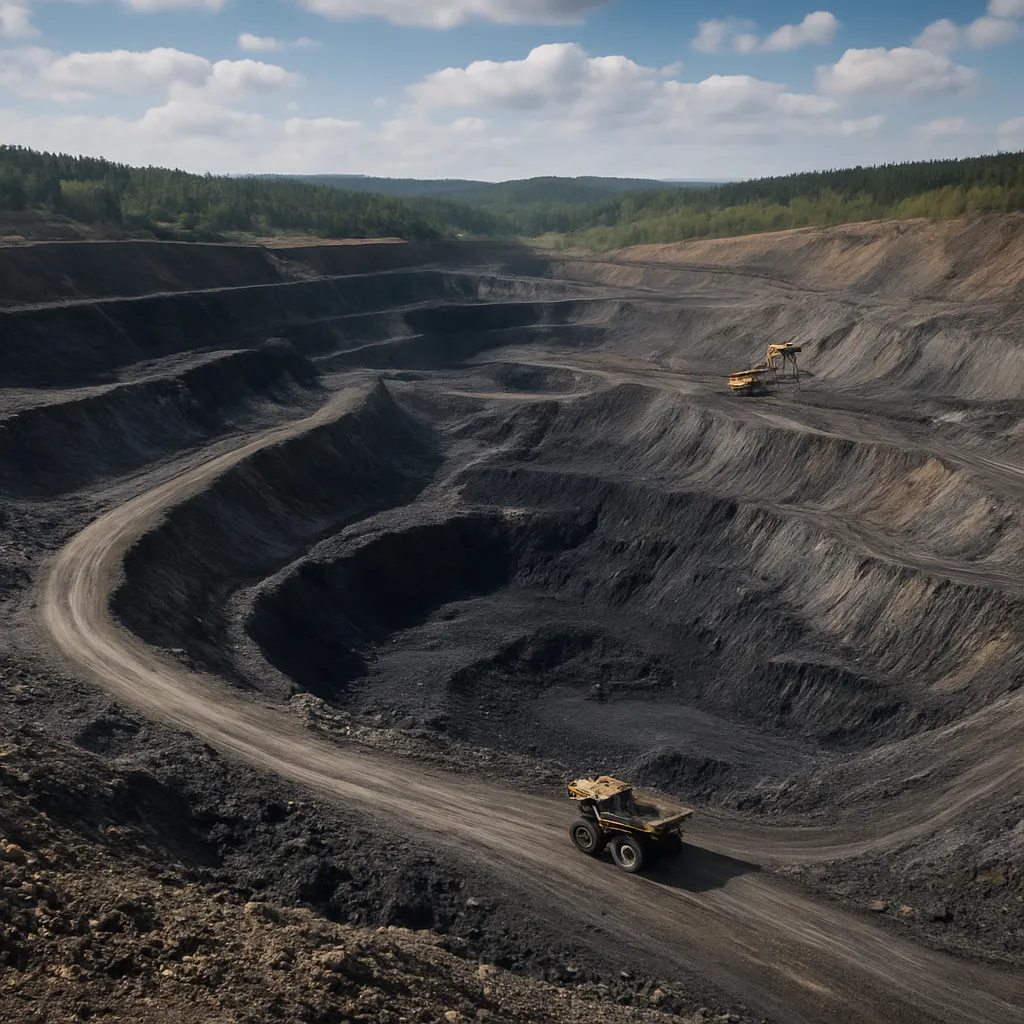
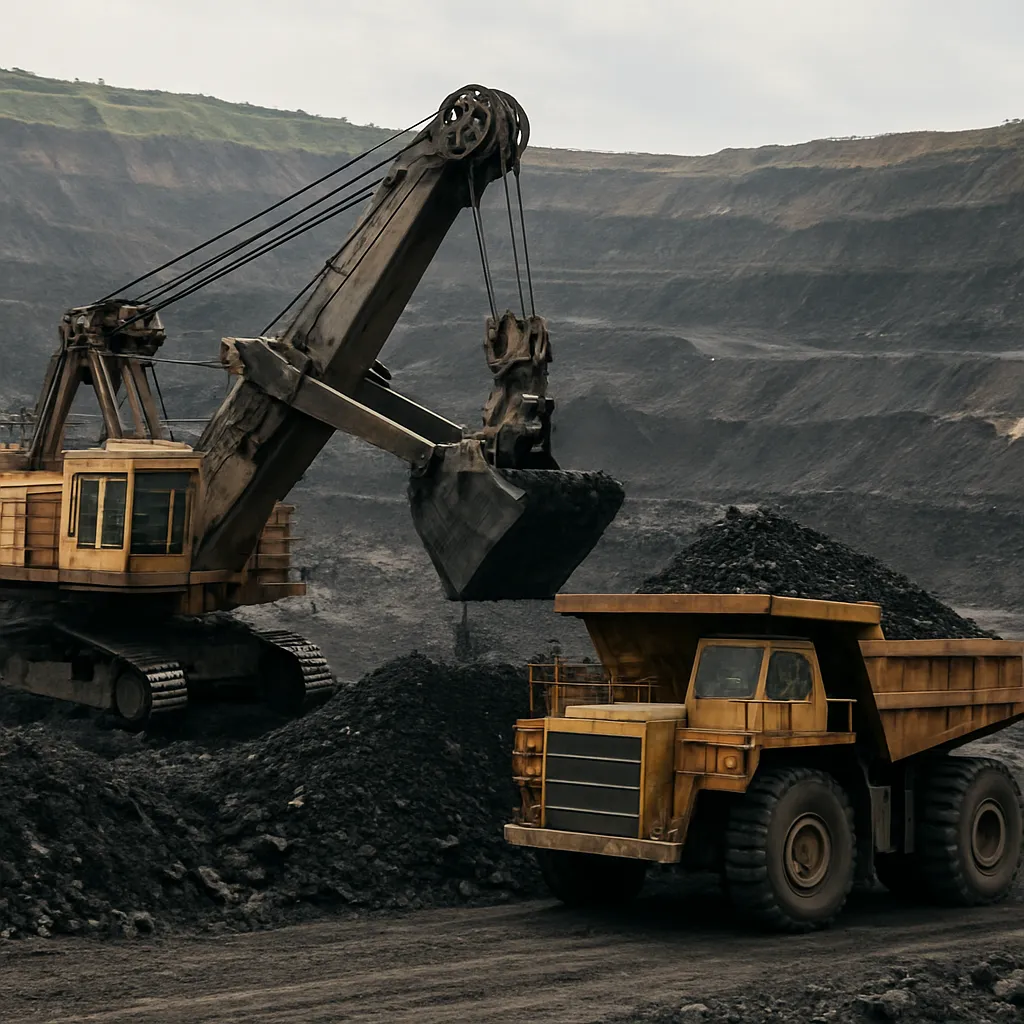
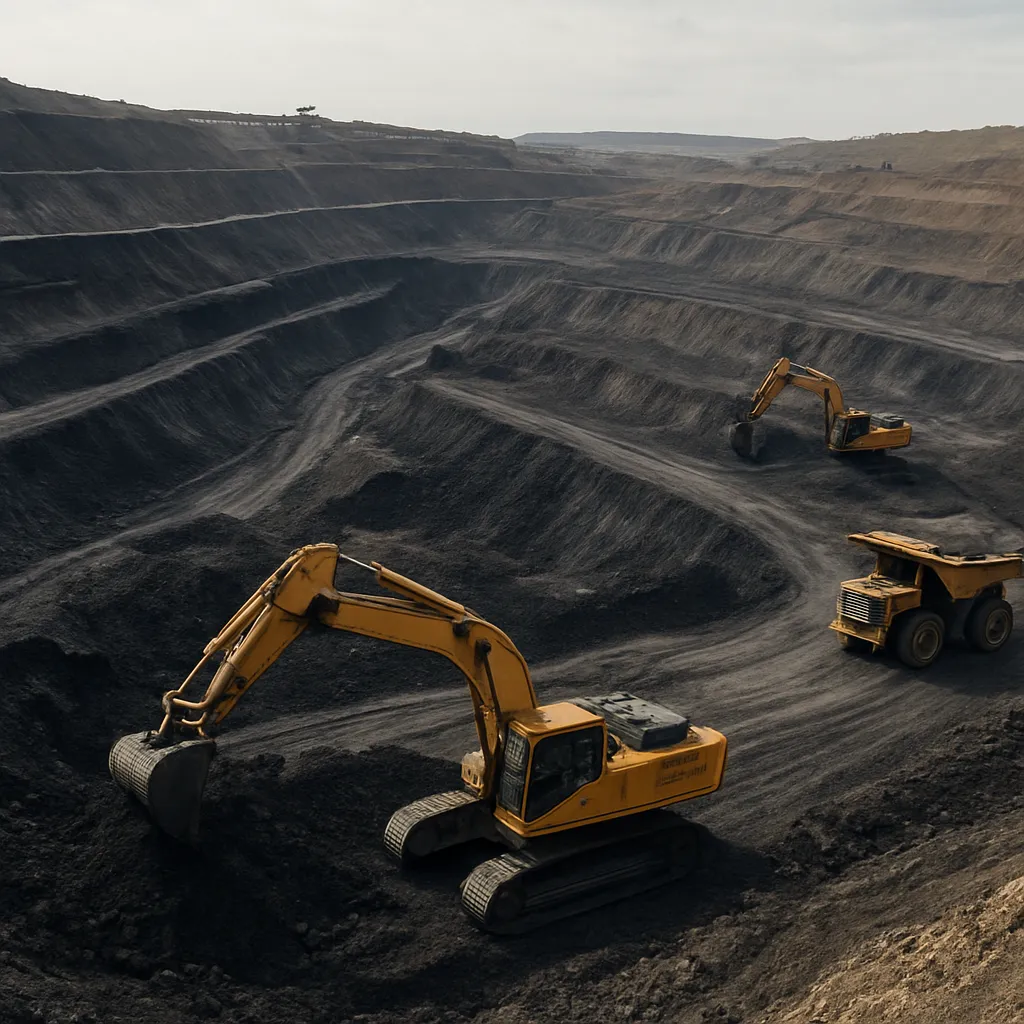
Given the geology and seam geometry, most commercial extraction in the Xilinhot area has historically favored open-pit (surface) mining where seams are shallow and laterally continuous. Open-pit operations permit high production rates and cost-effective extraction. Where deeper or more structurally complex seams are present, underground mining methods—such as room-and-pillar or longwall techniques—may be applied, though these are less widespread in the Xilinhot vicinity compared with surface operations.
Production, Reserves and Statistical Overview
Precise, mine-specific production and reserve figures for Xilinhot are subject to variation across company reports, provincial statistics, and national compilations. However, the general statistical landscape is clear: Inner Mongolia is one of China’s most important coal-producing regions, and Xilinhot contributes to that status as a local hub of coal extraction and processing.
Regional production context:
- Inner Mongolia contributes a substantial share of China’s annual coal output, supplying thermal power plants, industrial users, and coal-to-chemicals plants across the country.
- Xilin Gol League, while not as prolific as the Ordos Basin, hosts multiple mines and coal companies extracting both thermal and low-grade industrial coal.
For the Xilinhot mining area specifically, commonly reported statistical features include:
- Multiple medium- and small-scale mining operations combined with a few larger, more mechanized pits and collieries.
- Annual production volumes variable by year and company; individual larger mines may produce several million tonnes per year while smaller pits produce hundreds of thousands of tonnes.
- Estimated coal reserves in the district that support multi-decade extraction under current production profiles; reserve estimates typically run into the tens to hundreds of millions of tonnes depending on the defined boundary and classification (proven, probable, possible).
Because national statistics aggregate provincial outputs, the precise share of production attributable to Xilinhot shifts with commodity prices, local investment cycles, and regulatory controls (such as mine capacity consolidation and safety-driven production caps). Nevertheless, Xilinhot’s coalfields are an important component in the supply chain that delivers coal to regional power stations, industrial users, and local coal-processing enterprises.
Economic and Industrial Significance
Xilinhot coal contributes to both local and broader economic activity in several ways:
Employment and local economy
Mining operations and related services (equipment maintenance, transport, coal washing, and administration) are significant employers in the area. The mining sector supports direct jobs at the face and in processing, as well as indirect employment in logistics, retail, and public services. For many smaller towns and townships surrounding Xilinhot, coal revenues and wages underpin local budgets and household income.
Industrial integration
Coal extracted around Xilinhot feeds into a regional industrial system that includes:
- Thermal power plants supplying electricity to regional grids.
- Coal-fired boiler systems in manufacturing and district heating.
- Coal beneficiation and chemical processing units that produce coke, coal chemicals, and synthetic natural gas in some provincial hubs.
Revenue and fiscal impact
Taxation and royalties from coal production provide revenue to county and league-level governments, financing public infrastructure, healthcare, and education. Mining operations often invest in local infrastructure—roads, water supply, and communications—in exchange for operating permits and social concessions.
Infrastructure, Logistics and Market Linkages
Transport and logistics are critical for making Xilinhot coal commercially viable. Key points:
- Rail connectivity: Rail lines that extend through Inner Mongolia link coal-producing districts to major consumption centers in North and Northeast China. Rail remains the most cost-effective long-haul transport mode for coal in China.
- Road access: Local and regional highways facilitate short-haul delivery to nearby power plants and industrial users.
- Coal beneficiation plants: Where raw coal has high ash content, washing plants near mine sites improve quality before shipment.
- Stockpiling and blending: Mines and terminals maintain stockpiles and blending operations to meet specific calorific and quality specifications demanded by users.
Seasonal factors such as winter demand for heating can create pronounced spikes in local transport flows. Additionally, national energy policies that prioritize certain coal supply corridors influence investments in rail and port capacity that indirectly affect Xilinhot’s market access.
Environmental and Social Considerations
Coal mining in Xilinhot, as elsewhere, entails environmental and social impacts that require management:
- Land disturbance: Open-pit operations alter surface topography and remove vegetation, affecting grassland ecosystems that are sensitive in the Xilin Gol steppe.
- Water resources: Coal washing and dust suppression systems increase demands on local water supplies in a semi-arid environment. Proper wastewater treatment and water recycling are essential to reduce stress on aquifers and surface streams.
- Air quality: Dust from mining and coal transport, plus emissions from coal combustion, can affect local air quality. Implementation of dust mitigation measures and emission controls is standard practice in regulated mines.
- Reclamation: Progressive land reclamation—backfilling, contouring, and revegetation—is increasingly required by Chinese regulations and company environmental plans to restore post-mining landscapes.
- Community impacts: Mining operations influence local livelihoods—both positively through employment and negatively through ecological change. Coexistence with pastoral and agricultural uses of the grasslands is a recurrent policy challenge.
Regulatory frameworks at provincial and national levels mandate environmental assessments, pollution controls, and safety standards. Recent years have seen heightened enforcement and investment in cleaner coal technologies as China balances energy security with environmental commitments.
Technological Practices and Safety
Mining technology in the Xilinhot area ranges from traditional mechanical excavation to highly mechanized systems in larger operations. Common technological and safety features include:
- Large-scale excavators and truck fleets for open-pit extraction, enabling high daily tonnage.
- Coal washing and screening plants to upgrade product quality and lower ash content.
- Dust suppression systems, water misting, and covered conveyance to limit fugitive dust emissions.
- Mine safety protocols and emergency response equipment, reflecting China’s stringent mine-safety regime following historical accidents.
Investments in automation and remote monitoring are gradually transforming operational practices, improving productivity, and reducing occupational risks. Nonetheless, achieving consistent safety performance across all operators—especially small-scale mines—remains a policy priority.
Strategic and Policy Context
Xilinhot’s coal mining operates within wider national strategies governing energy security, regional development, and environmental policy. Key policy influences include:
- Energy security: Domestic coal remains a cornerstone of China’s energy mix; mines in Inner Mongolia help diversify and secure supply away from coastal dependence.
- Capacity consolidation: Central and provincial authorities have pushed for consolidation of small, unsafe mines into larger, regulated enterprises to improve safety and environmental performance.
- Air pollution control: Policies to reduce sulfur dioxide (SO2) and particulate emissions encourage deployment of cleaner coal technologies and ultra-low-emission standards at power plants.
- Carbon commitments: Longer-term carbon reduction targets and the growth of renewables introduce planning uncertainties for coal investment and stimulate interest in carbon capture, utilization, and storage (CCUS) in some industrial corridors.
Future Outlook and Challenges
The future of Xilinhot coal mining will be shaped by interacting economic, environmental, and policy forces:
- Market dynamics: Domestic demand for thermal coal may fluctuate with overall economic activity, the pace of renewable deployment, and regional heating needs. Short- to medium-term demand is likely to remain stable because of electricity and industrial needs, while longer-term demand will be influenced by decarbonization strategies.
- Environmental regulation: Stricter environmental standards will require upgrades in pollution controls and may increase costs for some operations. Mines that adopt best practices for reclamation and emission control will be better positioned.
- Technological adoption: Mechanization, digital monitoring, and efficiency improvements can lower unit costs and reduce environmental footprints; investments in these areas will be decisive for competitiveness.
- Socioeconomic transition: Diversifying local economies to reduce dependence on coal rents—through renewable energy projects, value-added industrial activity, and services—will be important for long-term community resilience.
In summary, Xilinhot’s coal mining sector is an established contributor to regional energy supply, local employment and fiscal revenues. The coal itself varies from lignite to bituminous types, with mining dominated by surface methods where geology permits. Going forward, the balance between continued exploitation, environmental stewardship, and economic diversification will determine how Xilinhot navigates the energy transition and regional development imperatives.
Key terms highlighted: Xilinhot, Inner Mongolia, coal, lignite, bituminous, open-pit, underground, thermal, reserves, infrastructure