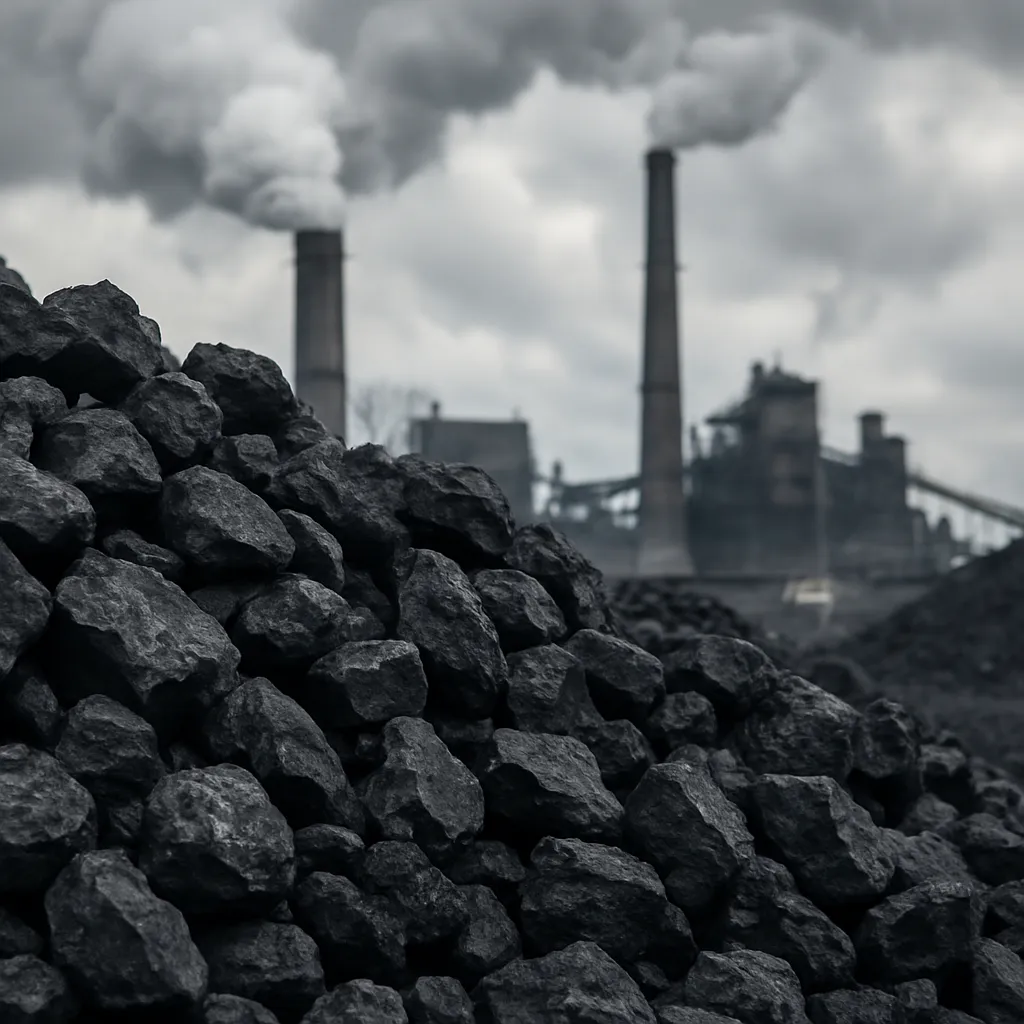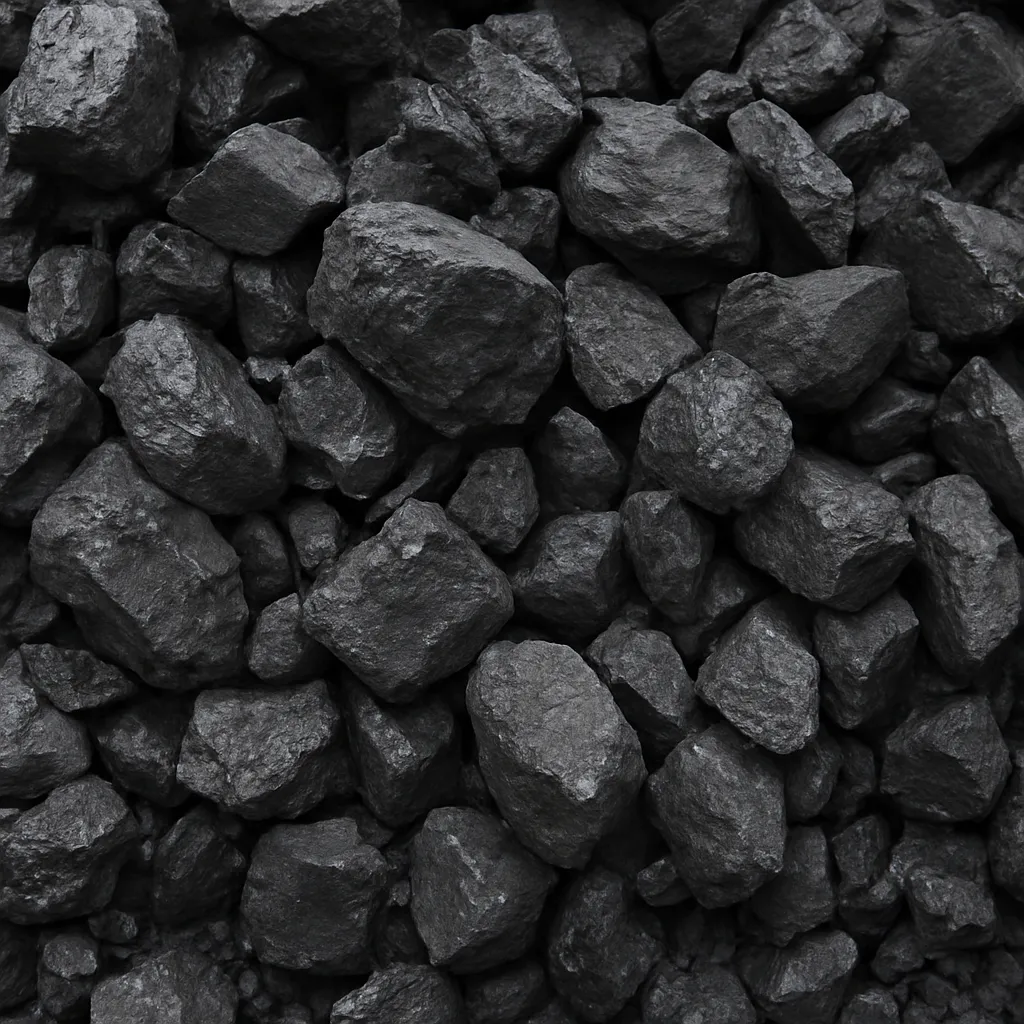
Premium blended anthracite is a carefully formulated form of high-rank coal designed to meet strict performance and quality specifications. By blending anthracite from different seams and processing streams, producers create a consistent product with predictable heating value, ash, sulfur content and physical size. This article explores the geology, mining, processing, economic importance, industrial uses and market dynamics of premium blended anthracite, offering technical, economic and practical perspectives useful for buyers, engineers and policy makers.
Geology, occurrence and major producing regions
Anthracite is the highest rank of coal, produced by intense metamorphism that removes volatile compounds and concentrates carbon. It characteristically has a hard, glossy appearance and a high fixed-carbon content. Natural occurrences of anthracite are less widespread than lower-rank coals because the geological conditions needed are more specific. Major global sources include several countries and basins where tectonic pressure and heat converted bituminous coal into anthracite.
Globally, the most important producers and occurrences of anthracite are:
- China – the largest producer and consumer of high-rank coals, with significant anthracite resources used domestically for industry and heating.
- Russia and Ukraine – historically important anthracite basins in the Donbas and related regions supplied both domestic industry and export markets (note: regional production and export patterns can be affected by geopolitical events).
- United States – concentrated anthracite occurrences in northeastern Pennsylvania; U.S. anthracite production today is a small fraction of historical output but remains important for specialty markets.
- Vietnam – anthracite deposits (hard coal) in the Quang Ninh and surrounding regions historically supplied neighboring Asian markets.
- South Africa and Australia – while better known for bituminous and thermal coal, both countries also produce higher-grade coals and export to a wide range of markets.
The global distribution of anthracite is relatively concentrated compared with thermal coal overall. As a result, premium blended anthracite supply chains often cross borders and depend on international logistics, especially for industrial consumers in East and Southeast Asia.
Physical and chemical properties of premium blended anthracite
When designing a premium blend, producers target a specific set of physical and chemical attributes. Typical properties of anthracite and goals for premium blends include:
- Anthracite rank: very low volatile matter (commonly in the low single-digit percentages for high-grade anthracite) and high carbon content, giving the coal a dense, high-energy character.
- Calorific or heating value: premium blends are formulated to meet client-specified calorific ranges; typical anthracite gross calorific values are in the range of about 27–33 MJ/kg (approximately 6,500–8,000 kcal/kg), depending on grade and moisture.
- Fixed carbon and volatile matter: anthracite fixed carbon is generally very high (often above 86–90%), while volatile matter is low, improving combustion stability and reducing smoke.
- Ash content: target ash values vary by application; premium blends often aim for lower ash (single-digit to low double-digit percent) to reduce slagging, fouling and waste disposal costs.
- Sulfur: keeping sulfur low is crucial for compliance with emissions rules and to limit corrosion; premium blends are commonly specified with low sulfur content, but actual levels depend on seam geology.
- Moisture and size distribution: moisture is typically low in anthracite (a few percent), and blended products are often sized and screened for consistent particle distribution to suit particular burners or briquetting processes.
Premium blended anthracite thus provides a stable, high-density energy source with limited impurities when compared with lower-rank coals or unblended seam products.
Mining, beneficiation and the blending process
Mining methods for anthracite range from underground room-and-pillar or longwall techniques in deep seams to open-pit mining where seams are shallow. After extraction, standard processing steps include crushing, screening, washing or jigging to reduce ash and remove rock inclusion, and sometimes flotation for very fine fractions.
Blending is a deliberate industrial process aimed at delivering consistent, predictable fuel. Key blending steps and quality controls include:
- Characterization of feed coals: detailed proximate and ultimate analyses (moisture, volatile matter, fixed carbon, ash, sulfur, calorific value).
- Selection of component streams: choosing coal from different seams or processing fractions to balance energy, ash and sulfur.
- Proportioning and mixing: using static or dynamic blending facilities to achieve target specifications on a lot-by-lot or continuous basis.
- Particle size control and agglomeration: sizing to specifications required by customers, and sometimes briquetting or pelletizing for specific end-uses.
- Laboratory and in-line testing: ongoing chemical and physical analysis to verify compliance before shipping.
Premium blended anthracite is therefore as much a manufactured product as it is a mined commodity. The value lies in consistency and tailored properties that minimize downstream operational problems for the consumer.
Industrial uses and significance
Anthracite and premium blends serve a range of industrial and municipal purposes because of their high energy density and clean-burning characteristics relative to lower-rank coals. Key applications include:
- Industrial heat and steam generation: used in boilers where stable combustion and reduced particulate emissions are important.
- Specialty metallurgical roles: while coking coal for coke production is typically bituminous, anthracite is used in some metallurgical furnaces and foundries where a high-carbon, low-volatile fuel aids process control.
- Water treatment and filtration: anthracite is widely used as a filtration media in municipal and industrial water treatment facilities due to its hardness, durability and specific gravity (often blended with sand).
- Activated carbon and chemical feedstock: high-grade anthracite can be processed into activated carbon, a high-value product for adsorption, purification and chemical separation.
- Domestic and commercial heating: in regions with established distribution networks, high-grade anthracite remains a preferred smokeless fuel for residential heating.
The importance of premium blended anthracite in industry comes from its ability to reduce operational costs (less slag, fewer stoppages), meet environmental limits more easily and deliver predictable thermal performance.
Economic and trade considerations
Premium blended anthracite typically carries a price premium over lower-ranked thermal coals because of higher energy density, lower impurity levels and the processing required to achieve consistent quality. The economic dynamics affecting price and availability include:
- Supply concentration: anthracite deposits are geographically limited, so supply disruptions (mining incidents, geopolitical events or transport bottlenecks) can sharply affect regional prices.
- Demand in Asia and niche markets: industrial demand for high-grade coal in East Asia—particularly in steel, foundry and high-temperature process industries—supports a steady market for premium blends.
- Costs of beneficiation and blending: washing, sizing and blending infrastructure adds to delivered cost but improves marketability and reduces buyer costs downstream.
- Transport and logistics: anthracite is bulky; long-distance shipments depend on rail and sea freight availability. Bulk carriers, transshipment facilities and port handling all influence landed prices.
- Regulatory and environmental policy: emissions regulations, carbon pricing and incentives for low-pollution fuels affect demand patterns and long-term pricing trajectories.
Quantitatively, anthracite represents a small fraction of global coal production—typically a single-digit percentage—so its market behaves differently than the broader thermal coal complex. Large coal-consuming nations that require lower-impurity fuels can pay premiums for blends that reliably meet specifications.
Statistical snapshot and recent trends
Precise global statistics for anthracite production vary year to year and by classification (anthracite vs. semi-anthracite). A few general, consistently observed patterns include:
- China is the dominant producer and consumer of high-rank coals, with anthracite output and consumption concentrated in domestic markets and in industry-specific applications.
- Anthracite production in traditional producers such as the United States (notably Pennsylvania) has declined substantially from historical peaks; current U.S. anthracite output is modest and primarily serves specialty local markets.
- Trade flows for anthracite are regionally focused; Asian importers (e.g., China, Japan, South Korea) have historically been major buyers of high-grade coal when domestic supply is insufficient.
- Global coal production overall has been resilient, though thermal coal demand patterns are shifting under climate policies. Anthracite markets, due to niche uses and filtration/industrial demand, have been less volatile in some respects.
Because anthracite constitutes a relatively small share of the market, year-to-year production numbers are often overshadowed by shifts in regional demand and the availability of substitutes (natural gas, oil, biomass, electrification). Buyers of premium blends track not only coal production statistics but also regional manufacturing activity, steel output and water treatment infrastructure investments.
Environmental, regulatory and technical challenges
Anthracite burns cleaner than lower-rank coals in terms of visible smoke and volatile organic emissions because of its low volatile matter. Nevertheless, it remains a fossil fuel and presents several environmental and regulatory challenges:
- CO2 emissions: per unit of energy anthracite emits substantial CO2; while its higher carbon content can result in slightly lower CO2 per energy unit compared with lignite, it does not eliminate the need for emissions mitigation where jurisdictions require decarbonization.
- Air quality and particulates: premium blends with low ash and low volatile content reduce particulate generation and ash handling issues, helping facilities meet local air quality standards.
- Regulatory compliance: sulfur control and heavy-metal content are major considerations for users; premium blends are engineered to minimize regulatory compliance costs.
- Reclamation and mining impacts: as with all coal mining, responsible environmental management of surface disturbance, water impacts and post-mining land use is critical for social license to operate.
Technical responses to these challenges include improved combustion technologies, emissions control equipment, and the development of low-ash blends that reduce waste and improve boiler efficiency. For long-term decarbonization, some industrial processes are exploring carbon capture and storage (CCS) applications for coal-fired facilities, though CCS economics remain a key constraint.
Key specifications for premium blends
Premium blended anthracite products often come with explicit technical specifications to ensure fit-for-purpose performance. Typical elements of a specification sheet include:
- Calorific value (gross and net, MJ/kg)
- Size distribution (mm or mesh ranges)
- Moisture, ash and fixed carbon percentages
- Sulfur and trace element limits
- Hardgrove grindability index (HGI) or other handling descriptors
- Acceptable foreign material and fines limits
These specifications are agreed between supplier and buyer and validated by laboratory tests and in-line monitoring to ensure consistent performance across shipments.
Logistics, quality assurance and commercial contracting
Delivering premium blended anthracite requires integrated logistics and commercial arrangements:
- Quality assurance programs with pre-shipment testing, third-party sampling and certificates of analysis.
- Contract structures that define price (often tied to calorific value and quality bands), delivery terms (FOB, CIF), and penalties for off-spec deliveries.
- Transport chains using rail, truck and maritime bulk handling systems; storage and blending yards to maintain product homogeneity before loading.
- Value-added services such as briquetting, pelletizing or pre-blending to customer-ready formats.
Robust contracting and logistics reduce buyer risk by ensuring material meets boiler or process requirements, thereby minimizing downtime and unplanned maintenance.
Market outlook and future use cases
Looking forward, the market for premium blended anthracite is shaped by several conflicting forces. On one hand, global decarbonization initiatives and shifts to gas, renewables and electrification constrain conventional coal demand in power generation. On the other hand, niche industrial uses—particularly in metallurgy, water treatment media and activated carbon production—sustain demand for high-grade, low-impurity coals.
Potential future trends include:
- Stable or modest growth in specialty industrial demand where process heat and low impurities are essential.
- Increased emphasis on low-sulfur, low-ash blends to meet tightening air quality rules in industrialized regions.
- Opportunities in converting anthracite into higher-value products (activated carbon, carbon electrodes) that can command higher margins and face different regulatory pressures than combustion-based uses.
- Potential incorporation of carbon capture technologies at fixed industrial sites where coal use remains entrenched, though economics will be decisive.
For buyers and producers, the strategic value of premium blended anthracite lies in its ability to provide predictable, high-quality thermal and material performance while fitting into evolving regulatory and commercial frameworks.
Concluding summary
Premium blended anthracite occupies a distinct niche in the global coal landscape: a high-grade, processed product valued for its energy density, stability and low levels of impurities. It is sourced from a limited number of geological provinces, processed through beneficiation and blending operations, and sold into specialty industrial markets where consistent performance is essential. Economic viability depends on secure supply chains, careful quality control and responsiveness to environmental regulations. As energy systems evolve, premium blends will likely remain relevant in specialized industrial applications and as feedstock for higher-value carbon products, even as broad-scale thermal coal demand faces long-term transition pressures.