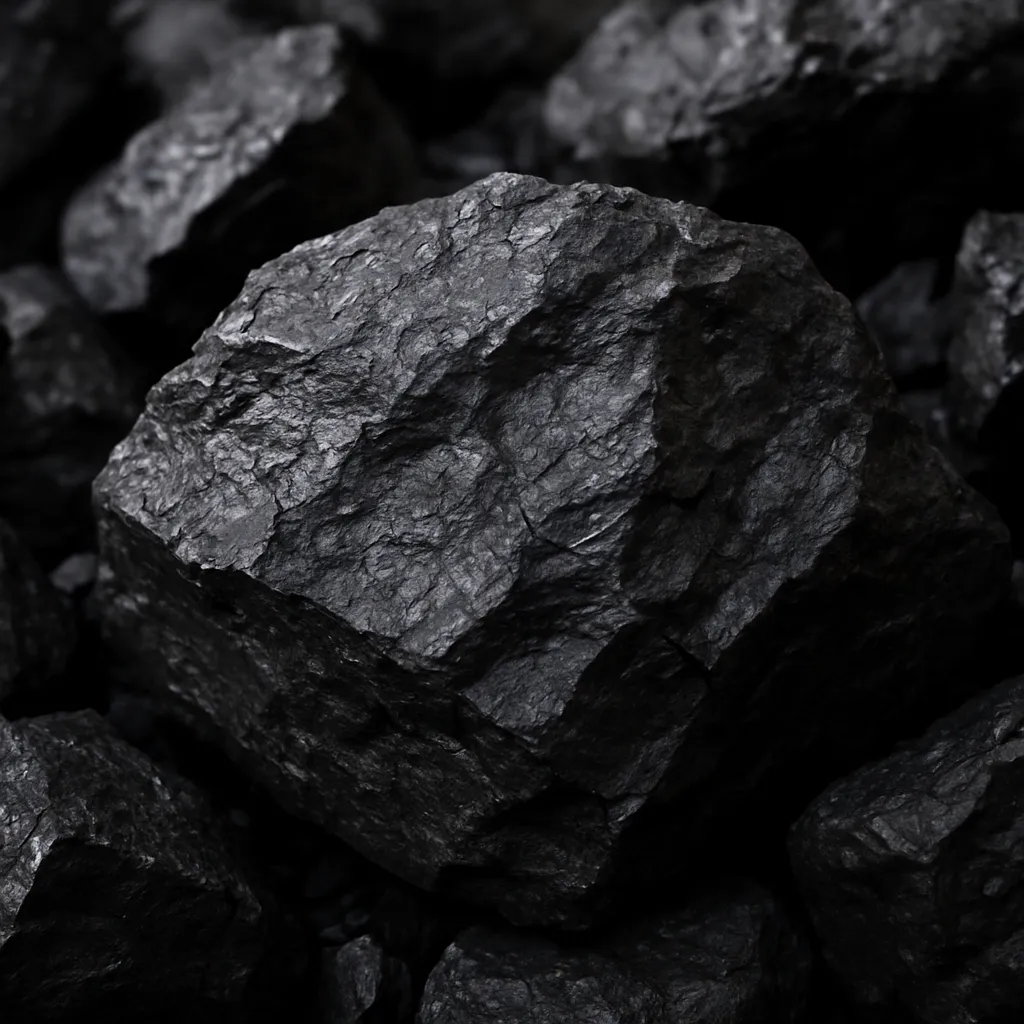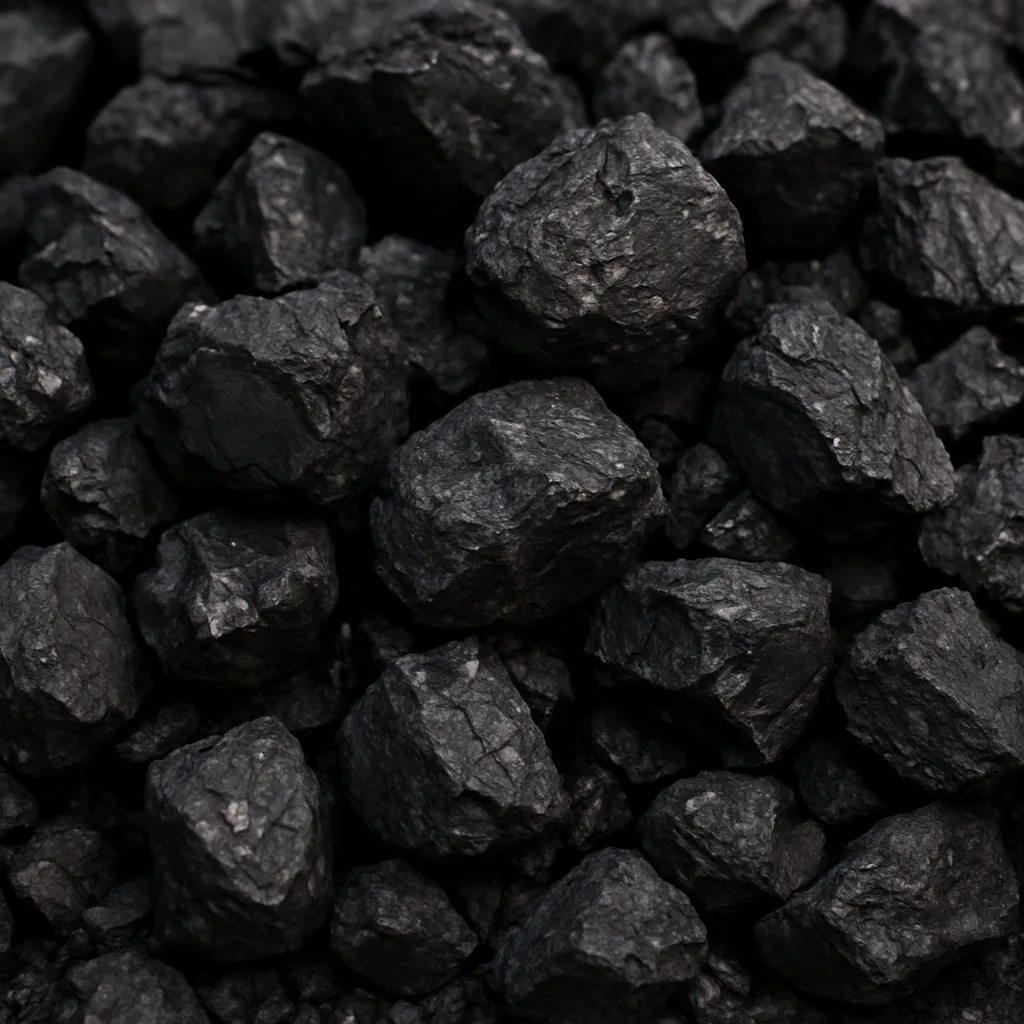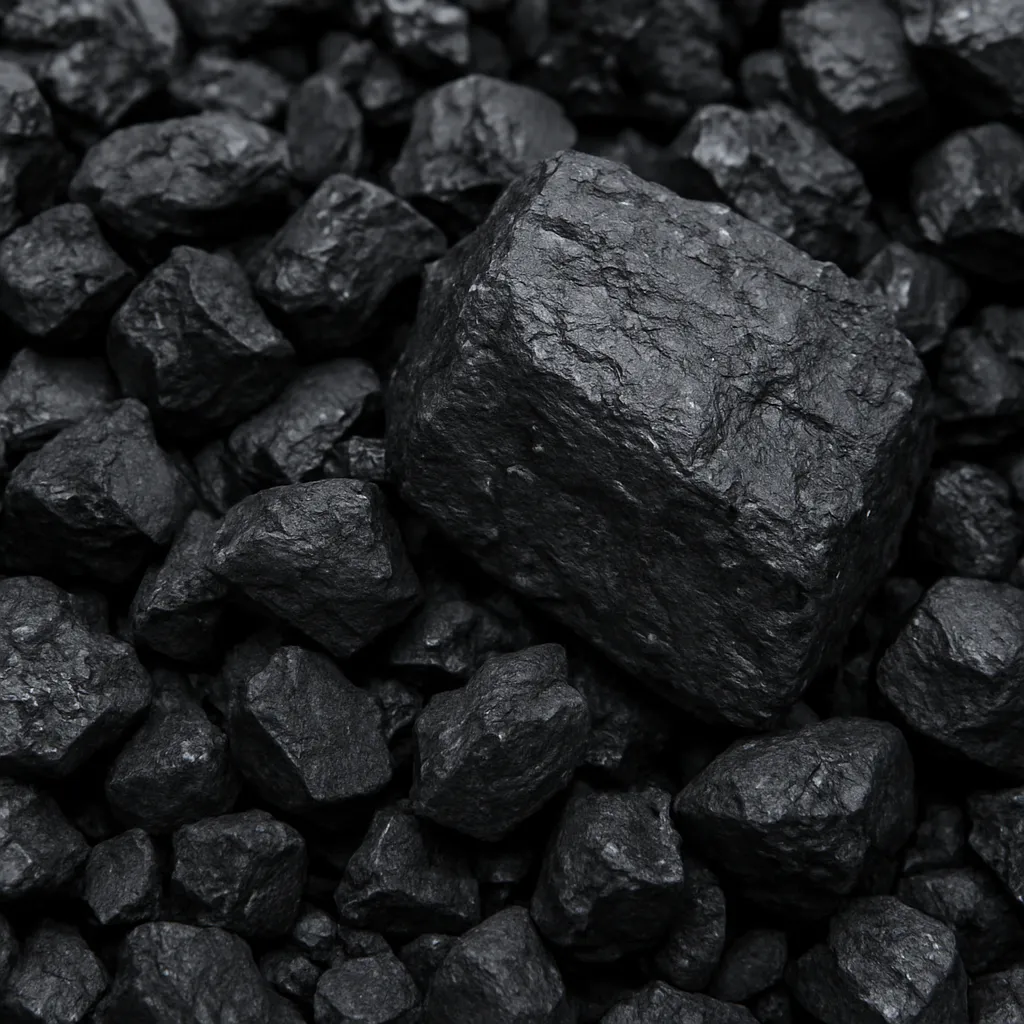
This article examines the properties, distribution, economic importance and industrial uses of non-swelling coal — a category of coal defined by its limited tendency to cake or expand when heated. Non-swelling coal plays a major role in the global energy mix and many industrial processes, especially where predictable thermal behavior and stable combustion are required. Below are the defining properties, geographic occurrence, market dynamics, and practical applications of this coal type, together with technical notes and selected statistical context from the early 2020s.
Properties and definition of non-swelling coal
In coal petrography and metallurgical practice, the behavior of coal on heating is characterized by indices such as the Free Swelling Index (FSI) and plasticity measurements (e.g., Gieseler plastometer values). Non-swelling coal is typically defined as coal with a very low FSI (commonly FSI = 0–1) and negligible plastic or caking behavior during carbonization. That contrasts with coking or swelling coals, which develop a soft, plastic phase and can form coherent coke when heated in the absence of air.
Key physical and chemical characteristics of non-swelling coal:
- Low or absent caking/swelling behavior (FSI near zero).
- Often corresponds to thermal coal ranks such as sub-bituminous, low- to medium-volatile bituminous, and some high-volatile bituminous coals that are non-caking.
- Calorific value: variable, generally lower than high-rank coking coals; sub-bituminous non-caking coals may contain higher moisture and lower gross calorific value (e.g., 8–20 MJ/kg as-received for lower ranks, though higher-value non-caking bituminous coals reach 20–28 MJ/kg).
- Volatile matter: can be relatively high in lower rank coals (leading to easier ignition and different flame characteristics).
- Petrographic composition: varying proportions of vitrinite, inertinite and liptinite; non-caking behavior often correlates with the nature and maturity of the organic constituents and maceral interactions.
How non-swelling behavior is measured
The most widely used simple test is the Free Swelling Index, where a small coal sample is heated in a standardized way and the change in volume (and appearance) is rated. More advanced laboratory tools include the Gieseler plastometer (measuring plasticity), thermogravimetric analysis (TGA), and petrographic reflectance (vitrinite reflectance, Ro) which informs rank and thermal maturity. A low FSI and limited plasticity indicate that the coal will not form coherent coke, making it categorized as non-swelling or non-caking.
Geographic distribution and major producing regions
Non-swelling coal is widespread — it is not limited to any single basin or country. It occurs in many of the world’s major coal provinces and is often the dominant type used for power generation and bulk thermal applications.
Prominent regions and deposits that produce mainly non-swelling (thermal) coal:
- United States — the Powder River Basin (Wyoming and Montana) produces vast quantities of low-rank, non-caking sub-bituminous coal used primarily for electricity generation. Appalachian basins provide both coking and non-coking coals.
- Indonesia — major exporter of seaborne thermal coal, much of it non-caking and sub-bituminous to low-volatile bituminous in character; Indonesian coals are a backbone of Asian coal markets.
- Australia — produces both metallurgical (coking) coal and large volumes of thermal, non-caking coal from basins such as the Bowen and Sydney basins; many exported Australian thermal coals are non-swelling.
- Russia — regions like Kuzbass (Kemerovo) supply a range of coal types; significant volumes of non-caking thermal coal are mined for domestic power and export.
- China and India — both countries mine huge quantities of thermal, typically non-caking coal for their power sectors; the character is variable but much of the supply is intended for combustion rather than coke production.
- South Africa and Colombia — both important in the seaborne thermal coal trade, providing non-coking coals for power generation globally.
The practical point is that anywhere there is a large demand for electricity or thermal process heat, non-swelling coal deposits will be developed because these coals are often cheaper per unit of heat and abundant in many basins.
Economic importance and market dynamics
Non-swelling coal forms the bulk of the world’s traded thermal coal market and is central to electricity generation in many countries. Its economic importance stems from high volumes, broad availability, lower processing requirements than metallurgical coals, and suitability for boilers and other combustion systems.
Market scale and trade
During the early 2020s, global coal production remained in the order of several billion tonnes per year. Thermal coal — much of which is non-swelling — typically represents the majority of production by mass because its primary use (power generation) consumes large quantities. Global seaborne thermal coal trade is concentrated among major exporters (Indonesia, Australia, Russia, South Africa, Colombia) and major importers (China, India, Japan, South Korea, Taiwan, some European countries).
Price behavior for non-caking thermal coal is volatile and reacts strongly to short-term supply/demand dynamics, shipping costs, and energy policy shifts (e.g., renewables growth and gas price movements). Prices for non-coking thermal coal have historically ranged from under USD 50/tonne to well over USD 200/tonne in extreme market tightness; recent years have seen large swings tied to energy security events and economic recovery cycles.
Role in national economies
- Large producers of non-swelling coal often derive significant export revenues and local employment from mining and logistical services (rail, ports). For some countries, thermal coal exports are a major source of foreign currency.
- For coal-consuming nations, domestic non-swelling coal underpins baseload power systems and energy security. In many developing economies, cheap domestic coal has supported industrialization and electrification.
- However, environmental policies, carbon pricing, and renewable deployment are increasingly affecting demand trajectories for thermal coal, creating structural risks for economies heavily dependent on coal revenues.
Industrial uses and technical applications
Because non-swelling coal does not produce metallurgically useful coke, its primary industrial uses differ from coking coal. The main uses are:
- Electricity generation — combustion in pulverized fuel boilers, circulating fluidized bed (CFB) units and other power plant technologies.
- Industrial heat and process steam — cement kilns, paper mills, chemical plants and other industries use non-caking coal where consistent combustion and lower cost are priorities.
- Coal blending and pulverized coal injection (PCI) — while pure non-swelling coal cannot produce blast-furnace coke, it can be used as part of blends or as pulverized injection fuel to partially replace coke in steelmaking, depending on chemistry and thermal behavior.
- Gasification and coal-to-liquids/chemicals — non-swelling coals may be used in gasification feedstock where specific properties (ash, moisture, sulfur) are acceptable.
- Domestic and commercial fuels — briquettes, household coal for specific markets, and other direct-combustion uses.
Non-swelling coal is often favored where stable flame behavior, ease of handling and lower price are more important than coke-forming properties. The absence of swelling simplifies some thermal processing steps and reduces operational variability in combustion units.
Operational considerations
Power stations and industrial plants that use non-swelling coal must manage other quality parameters: moisture, ash content, sulfur, and trace elements. Sub-bituminous non-swelling coals with high moisture require drying or compensation in boiler design; high-ash coals increase slagging and disposal costs. Lower calorific value coals require more mass throughput to deliver the same energy, influencing transportation and handling economics.
Environmental and regulatory context
Non-swelling coal, like other fossil fuels, is associated with greenhouse gas emissions and local environmental impacts (air pollutants, ash, water management). As national and international policies evolve to reduce CO2 emissions, the role of non-swelling coal in electricity systems is increasingly contested.
- Emissions: combustion of non-swelling coal emits CO2, NOx, SO2 and particulates; emissions intensity varies with coal rank and plant technology (efficiency reduces CO2 per MWh).
- Controls: flue gas desulfurization (FGD), selective catalytic reduction (SCR), electrostatic precipitators and baghouses help meet regulatory limits for SO2, NOx and particulates.
- Transition pathways: co-firing with biomass, higher-efficiency dispatchable units, carbon capture and storage (CCS) and fuel switching (to gas or renewables) are options being explored to reduce lifecycle emissions from thermal coal use.
Statistical context and trends (early 2020s)
Selected statistical observations relevant to non-swelling coal in the early 2020s (figures are approximate and intended as contextual indicators):
- Global coal production: on the order of several billion tonnes annually; thermal coal represents the large majority of this tonnage because of widespread use in power generation.
- Seaborne thermal coal trade: hundreds of millions of tonnes annually, with Indonesia and Australia among the largest exporters. Demand is concentrated in Asia (China, India, Japan, South Korea, Southeast Asia).
- Price volatility: thermal coal benchmark prices experienced strong fluctuations in 2021–2023 due to post-pandemic demand recovery and supply chain pressures; periods of acute price spikes highlighted the energy-security role of coal in some markets.
- Declining share in electricity mix in many OECD countries: many advanced economies have steadily reduced coal-fired generation share in favor of gas and renewables, whereas in some emerging economies coal-fired power remained the dominant source of electricity growth in the 2010s–early 2020s.
Because non-swelling coal is primarily a thermal fuel, these broad supply/demand dynamics for thermal coal largely determine its market fortunes.
Interesting technical and historical notes
Historical usage: The economic distinction between coking (swelling) and non-coking (non-swelling) coals has been central to the steel and power industries since the 19th century. Industrial regions developed around coking coal for iron and steelmaking, while thermal coal supported urban electricity and steam systems.
Coal rank vs behavior: It is important to note that rank (e.g., lignite, sub-bituminous, bituminous, anthracite) does not by itself determine swelling. Some bituminous coals are strongly caking, others are non-caking. The chemical pathways that generate a plastic phase during carbonization depend on maceral interactions and molecular structures formed during coalification.
Innovations: Advances in coal beneficiation, briquetting, and combustion technologies have increased the usability of lower-grade, non-swelling coals. Additionally, coal gasification projects have been designed to accept non-caking coals where feedstock consistency can be managed.
Conclusions and outlook
Non-swelling coal remains a widespread and economically important energy commodity, especially for electricity generation and large-scale industrial heat. Its main advantages are abundance, relatively low cost, and suitability for many combustion systems. However, environmental constraints and the economics of competing fuels (gas, renewables) are reshaping demand. Markets for non-swelling coal will continue to reflect a combination of short-term energy security needs and longer-term structural pressures from decarbonization policies.
Where deposits are accessible and logistics are favorable, non-swelling coal will continue to serve as a transitional or baseload fuel in parts of the world for the foreseeable future, while technologies such as higher-efficiency generation, emissions control, co-firing and potentially carbon capture will influence its environmental footprint and economic viability.