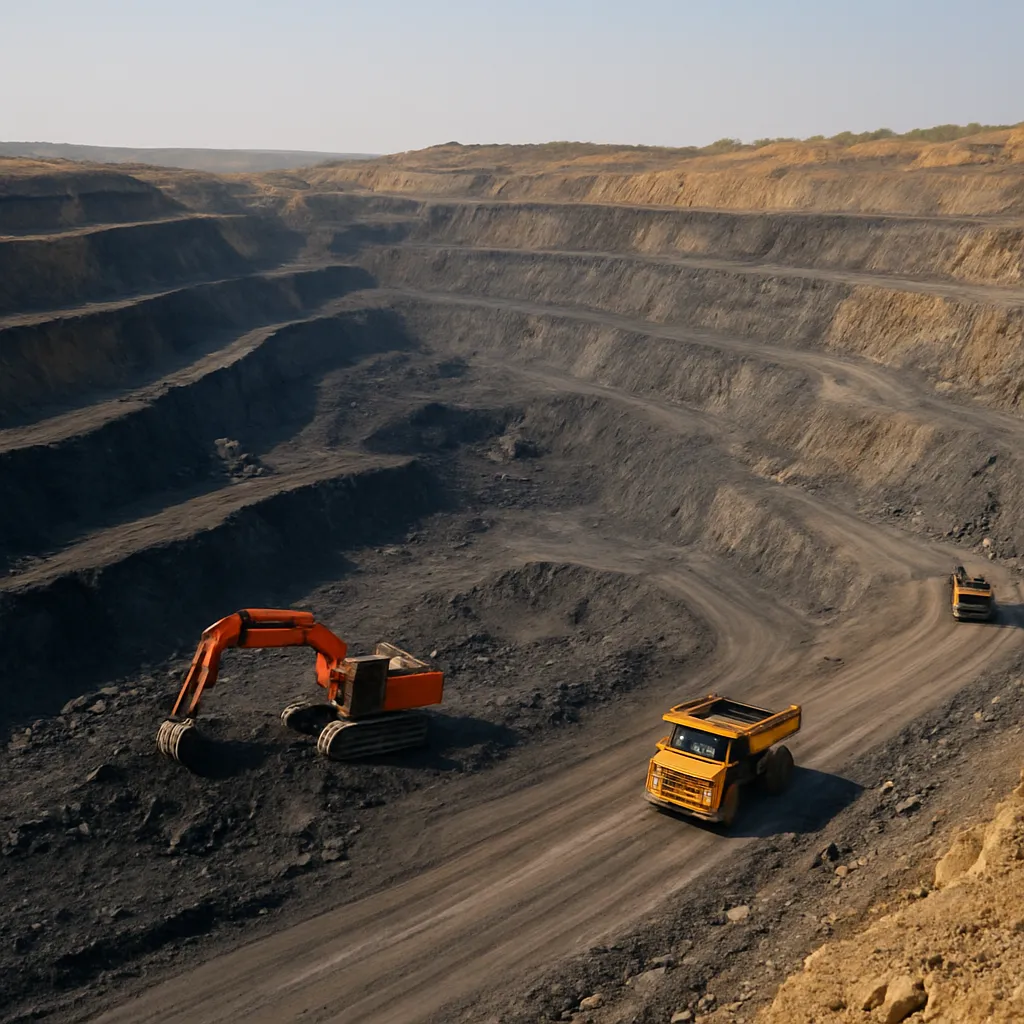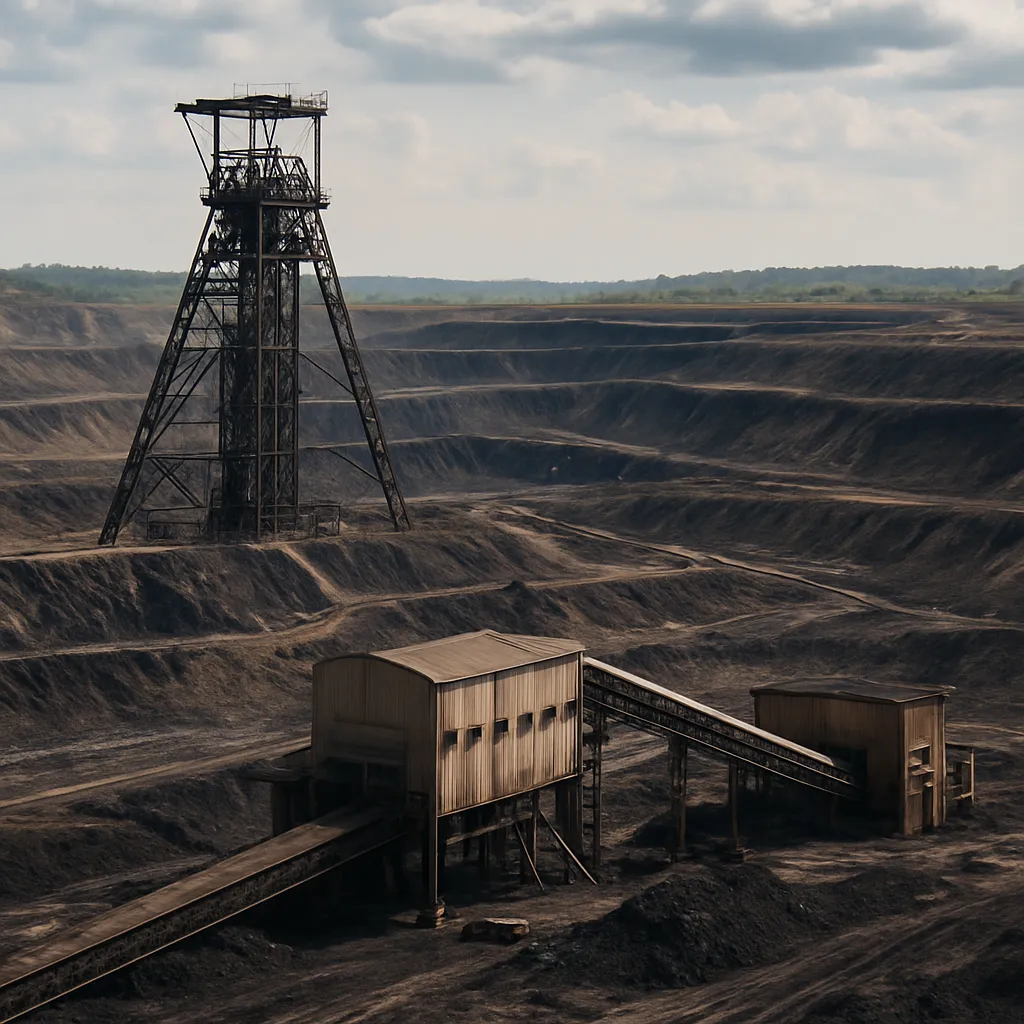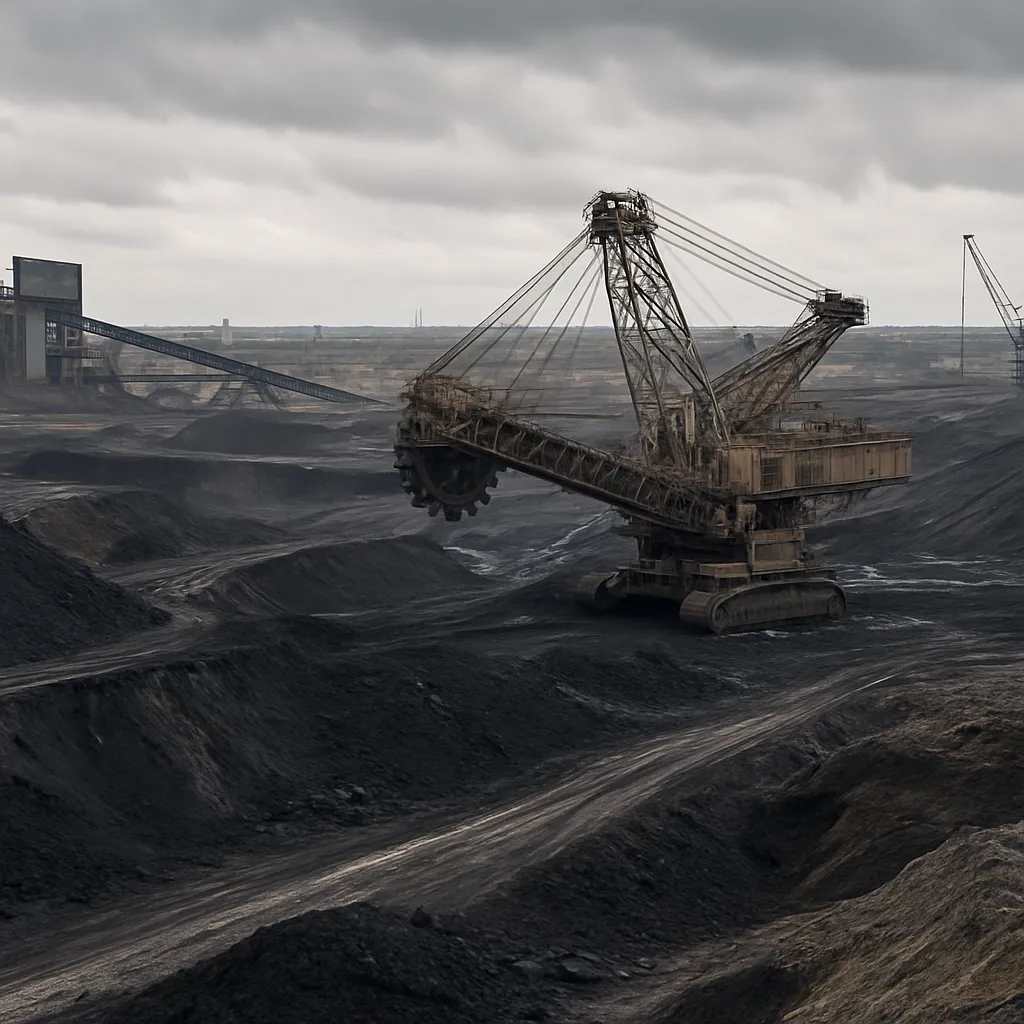
The Pavlograd coal mining area, located in the Dnipropetrovsk region of eastern Ukraine, is one of the country’s historically important coal-producing districts. For well over a century the mines around Pavlograd have supported heavy industry, powered local economies and shaped the region’s social fabric. This article examines the location and geology of the Pavlograd mining sites, the types of coal produced, the economic and industrial significance of the mines, the environmental and social impacts, and the strategic outlook for the future.
Location, Geology and Mining Complex
The Pavlograd mining complex is centered on and around the city of Pavlograd, in the northern part of Dnipropetrovsk Oblast. Geologically it belongs to the eastern fringe of the large Dnieper–Donets coal basin and is contiguous with the broader industrial coal regions of eastern Ukraine. The Pavlograd area comprises a cluster of individual shafts, drift and open-pit workings that exploit multiple coal seams at varying depths. The mining infrastructure is integrated with a network of regional railways and freight routes that connect Pavlograd to major metallurgical and energy consumers in the Dnipro–Donetsk industrial belt.
Coal seams in the Pavlograd area are typically of Permian–Carboniferous age and are characterized by variable thickness and quality. The most commercially important seams yield medium- to high-rank bituminous coal, with significant parcels of coal suitable for metallurgical uses. The geology is structurally complex in places: folding, faulting and local intrusions can disrupt seam continuity and affect mining methods and costs. Both underground longwall mining and selective surface mining have been used historically depending on seam depth and overburden conditions.
Types of Coal Extracted and Industrial Uses
The Pavlograd mines predominantly produce bituminous coal, with substantial quantities of higher-quality seam sections that serve industrial consumers as coking or metallurgical coal. Coal from Pavlograd has been used for:
- Blast-furnace coke production for the iron and steel industry.
- Thermal generation in regional power plants (though lower-ranked thermal coal is more widely used for power generation in other basins).
- Certain industrial processes requiring specific coal calorific characteristics.
Because of this mix, the Pavlograd area plays a dual role: supplying feedstock for the metallurgical plants in Dnipropetrovsk and neighboring regions, and contributing to energy security via fuel supply to local thermal power stations when needed.
Historical Development and Ownership Structure
Mining in the Pavlograd area intensified in the late 19th and early 20th centuries as industrialization in the Russian Empire and later the Soviet Union expanded. During the Soviet period, Pavlograd’s mines were developed and modernized as part of centrally planned industrial integration; rail links and industrial consumers were established, and the workforce grew significantly. The late 20th century and the transition after Ukrainian independence brought changes: state-owned enterprises were restructured, some mines were consolidated, and a mix of state and private ownership emerged in the sector.
Several mining enterprises and state coal companies have historically operated in the Pavlograd area. Ownership models ranged from state enterprises under the Ministry of Coal Industry to regional state-owned companies and private contractors operating particular shafts or coal-processing facilities. This transition period influenced investment cycles, maintenance of underground infrastructure, and modernization efforts.
Economic and Industrial Significance
The Pavlograd mining sites have long-standing strategic significance for regional industry and the national economy. Key points of economic importance include:
- Metallurgy supply chains: Pavlograd coal supports coke production and raw materials for steelmaking, which is crucial to Ukraine’s heavy industry cluster.
- Employment: Mining operations have historically provided employment for thousands of local residents and supported secondary economic activities—transport, equipment maintenance, services and trade.
- Regional development: The presence of mines has stimulated urban growth in Pavlograd and adjacent towns through housing, social infrastructure and municipal revenues.
- Energy security: While Pavlograd is less central to national energy generation than the larger Donetsk coalfields, it contributes to local fuel supply and can be part of regional balancing during supply shocks.
The mines also interact with national energy and trade policies. When domestic coal supply chains in eastern Ukraine have been disrupted—especially since 2014—Pavlograd and other non-conflict-region mines gained attention as stable inland sources for certain coal grades.
Production, Reserves and Statistical Overview
Mine-level statistics for Pavlograd vary over time due to changes in operation status, market demand and investment. Publicly reported production figures are periodically updated by regional mining authorities and by national statistical agencies. Some general observations that help place Pavlograd in context:
- Pavlograd’s output is modest relative to Ukraine’s largest coal basins in Donetsk, but it represents a meaningful share of production for Dnipropetrovsk Oblast.
- Reserves exploited in the Pavlograd area include recoverable coal in several mineable seams; reserve estimates are periodically revised upward or downward after geological reassessments and modern exploration.
- Production levels historically supported several million tonnes per year across the Pavlograd cluster in periods of high demand, but recent decades have seen fluctuating outputs as some shafts were modernized or idled.
Because official and up-to-date mine-by-mine production and reserves are subject to change and to the release schedules of Ukrainian authorities and companies, readers interested in precise statistics (annual tonnages, proven and probable reserves in tonnes, number of operating shafts) should consult the latest reports of the Ukrainian State Statistics Service, the Ministry of Energy and regional enterprise disclosures. At the time of writing, regional reporting indicates that Pavlograd remains an active mining node with ongoing extraction and coal processing capacity, though the sector faces structural and fiscal pressures that affect year-to-year output.
Infrastructure, Transport and Logistics
Pavlograd benefits from established transport links that are essential to the economics of coal mining. Infrastructure supporting coal logistics includes:
- Railway connections to metallurgical and power-industrial centers, enabling bulk shipment of coal and coke feedstock.
- Road networks linking mines to local markets and processing sites; however, heavy haul roads require ongoing maintenance due to truck traffic.
- On-site processing and screening facilities that prepare coal for different industrial specifications.
Because coal economics depend heavily on transport costs, proximity to steelmakers and the quality specification of coal plays a decisive role in marketability. Pavlograd’s existing rail links remain a comparative advantage for supplying regional metallurgical complexes.
Environmental and Social Impacts
Coal mining inevitably imposes environmental pressures, and the Pavlograd complex is no exception. Typical environmental and social issues linked to the mines include:
- Subsidence risks in areas of extensive underground extraction, requiring monitoring and mitigation to protect surface infrastructure and housing.
- Air quality concerns from dust, particulate emissions during coal handling and combustion of lower-grade coals if used regionally.
- Water management challenges: drainage of mine waters, treatment of acid or mineralized discharge and impacts on local waterways require investment in treatment infrastructure.
- Legacy spoil heaps and land reclamation needs after mine closure or restructuring; reclamation can be capital-intensive but offers post-mining land uses if properly managed.
- Occupational safety: underground mining remains hazardous; mines in the Pavlograd area have, like many legacy mining regions, focused on improving safety standards and implementing modern monitoring.
On the social side, mining communities depend on the sector for livelihoods. Changes in production, mechanization or mine closures can have substantial social impacts, creating the need for retraining programs, economic diversification initiatives and municipal planning to absorb workforce transitions.
Regulatory, Investment and Market Challenges
The Pavlograd mines operate against a backdrop of regulatory and market challenges that affect investment and long-term viability:
- Regulatory environment: Ukrainian mining regulation covers licensing, safety standards and environmental compliance. Reform of state-owned enterprises and privatization efforts influence investment flows and operational efficiency.
- Capital investment needs: Many legacy mine workings require capital for modernization—ventilation systems, methane management, automation of longwall faces and surface infrastructure upgrades.
- Market pressure: International commodity cycles, competition from imported coal (from Russia, the US, Colombia, etc.) and domestic power sector reforms affect profitability.
- Security and geopolitical risk: Since 2014, and escalated after 2022, geopolitical developments in eastern Ukraine have increased uncertainty for mining investment and transport corridors. Pavlograd’s relative stability has been an advantage, but broader supply chain disruptions affect demand and trade dynamics.
Technological Trends and Safety
Modernization of mining in Pavlograd follows global trends: increased mechanization, adoption of continuous longwall systems where seam geometry permits, better methane drainage and gas monitoring, and digitalization for asset monitoring. Safety programs increasingly emphasize real-time monitoring, training, and retrofitting of critical infrastructure. These investments both reduce accident risk and improve extraction efficiency, but they require financing and managerial capacity that can be constrained in areas affected by aging assets and limited capital.
Socioeconomic Role and Community Development
The mines have long served as anchors of local communities. Beyond direct employment, mining operations have supported local schools, health facilities and civic services—either through direct enterprise social programs or by contributing to municipal tax bases. As the mining sector transitions, local administrations and companies face the task of diversifying local economies. Strategies include developing light manufacturing, expanding service sectors, remediating and repurposing former mine sites for industrial parks or renewable energy installations, and investing in vocational training for displaced workers.
Outlook and Strategic Importance
The immediate future of the Pavlograd mining sites depends on a mix of geological, commercial and political factors. Key determinants include demand for metallurgical coal in Ukraine and export markets, the cost competitiveness of Pavlograd production versus imports, the availability of capital to modernize mines, and the regional security environment. Potential positive developments that could secure Pavlograd’s role in the medium term are:
- Targeted investments in mechanization and methane management that lower unit costs and improve safety.
- Integration with regional metallurgical supply chains that prioritize local feedstock for security and logistics reasons.
- Programs for environmental remediation and post-mining land reuse that attract new economic activity.
Conversely, without modernization and stable market access, some shafts may face rationalization or closure, with consequent social and economic impacts in surrounding settlements.
Notable Facts and Contextual Data
- The Pavlograd cluster is part of Ukraine’s broader coal heritage and complements larger coalfields in the Donetsk and Lviv-Volyn basins.
- Coal from Pavlograd has historically supplied both metallurgical and thermal needs, giving it versatile industrial value.
- Workforce numbers have varied by decade; mining operations support not just miners but service and logistics sectors locally.
- Environmental management and mine safety have been priorities for investment, though legacy issues remain in old working areas.
Final Observations
The Pavlograd mining sites represent a significant regional coal complex with strategic ties to Ukraine’s heavy industry. Their continued role will be shaped by investment in technology and safety, markets for metallurgical coal, and policies that balance economic benefits with environmental and social responsibilities. As Ukraine’s energy and industrial landscape evolves, Pavlograd’s mines may either be modernized as competitive suppliers of high-value coal or become candidates for managed transition programs that repurpose human and material capital for new economic pathways.