The following article provides a comprehensive overview of the Nalinhe Coal Mine in China, synthesizing available information about its location, geology, production characteristics, economic role and wider significance in the Chinese coal sector. Public, mine-level statistics for Nalinhe are limited in international sources; where precise data are not publicly available, the text places the mine in the broader context of China’s coal industry and describes typical operational, environmental and economic features that are relevant to sites of this type. The article highlights technological, regulatory and market trends that shape the operation and future of coal mining in China.
Location and geological setting
The Nalinhe Coal Mine is situated in mainland China, within a coal-bearing region characterized by multiple sedimentary basins formed during the Carboniferous–Permian and younger geological periods. The name Nalinhe indicates association with a river or locality (he = river in Chinese), and coal mines that bear similar names are typically located in provincial coal provinces in northeastern or northern China. Exact mine-level coordinates and detailed reserve surveys for Nalinhe are not widely published in international open sources, but the mine’s setting can be described using general coalfield geology common to the region.
Geologically, coal deposits in northeastern China and adjacent basins are commonly found in multi-seam sequences composed of interbedded sandstones, shales and occasional limestone layers. Coal seams vary in thickness from thin benches (<0.5 m) to thicker, economically minable seams (>2–4 m). The depositional environment that formed these seams was often fluvio-deltaic to lacustrine, which influences the rank and composition of the coal. Typical characteristics of coal in these basins include variable ash content, moderate sulfur (depending on local pyrite content), and ranks that range from lignite/sub-bituminous in younger basins to bituminous in older, more deeply buried seam sequences.
From a structural perspective, many Chinese coalfields show moderate folding and faulting. These structural features determine whether mining is primarily open-pit or underground. Where seams are shallow and thick, open-pit (surface) mining is common; deeper or structurally complex seams are typically mined using underground methods such as longwall or room-and-pillar mining with mechanized support.
Products and coal quality
Coal from a mine like Nalinhe is typically produced for two main end uses: thermal coal for power generation and coking coal for steel production. The exact product mix depends on the coal’s rank and quality. Common quality metrics include calorific (heating) value, volatile matter, fixed carbon, ash content and sulfur content.
- Thermal coal: Used predominantly in power plants and boilers. Thermal coal from Chinese mines often has an energy content in the range of roughly 5,000–6,500 kcal/kg (about 20–27 MJ/kg) for mid-rank coals, though specific values vary by seam and washing processes.
- Coking coal: Required for blast-furnace steelmaking, coking coals must have specific properties (low ash and sulfur, suitable volatile matter) that allow them to form a coherent coke. If Nalinhe produces higher-rank bituminous coal, parts of its output could be suitable for coking after beneficiation.
- Coal by-products: Coal-derived by-products (coke, coal gas, coal tar) and processed coal (washed coal, graded thermal coal) are often part of the downstream value chain in Chinese mining regions.
Coal quality is commonly improved through washing and beneficiation plants located at or near the mine site. Washing reduces ash and sulfur and creates product streams tailored to local power plants, industrial customers and export requirements. Where coal has high ash content or sulfur, washing becomes essential to meet environmental and combustion performance standards.
Production, reserves and statistical context
Mine-level production figures for Nalinhe are not widely disseminated in the international domain; state and provincial sources in China sometimes publish aggregated production figures at county, prefectural or enterprise level rather than for each individual mine. Nevertheless, it is possible to place Nalinhe within the statistical context of China’s coal industry:
- China is the world’s largest coal producer and consumer, with annual production measured in the order of multiple billions of tonnes. National production supports roughly three-quarters of the country’s primary energy supply mix historically.
- Coalfields are regionally distributed: major producing provinces include Inner Mongolia, Shanxi, Shaanxi, Heilongjiang and others. Production from a single mid-sized mine can range from several hundred thousand tonnes to multiple millions of tonnes per year, while very large complexes can exceed 10 million tonnes annually.
- Reserves at a specific mine are determined by detailed geological surveys. For mines of Nalinhe’s type, economically recoverable reserves can span from a few million tonnes up to several hundred million tonnes in larger coalfields, depending on seam continuity, thickness and mining method.
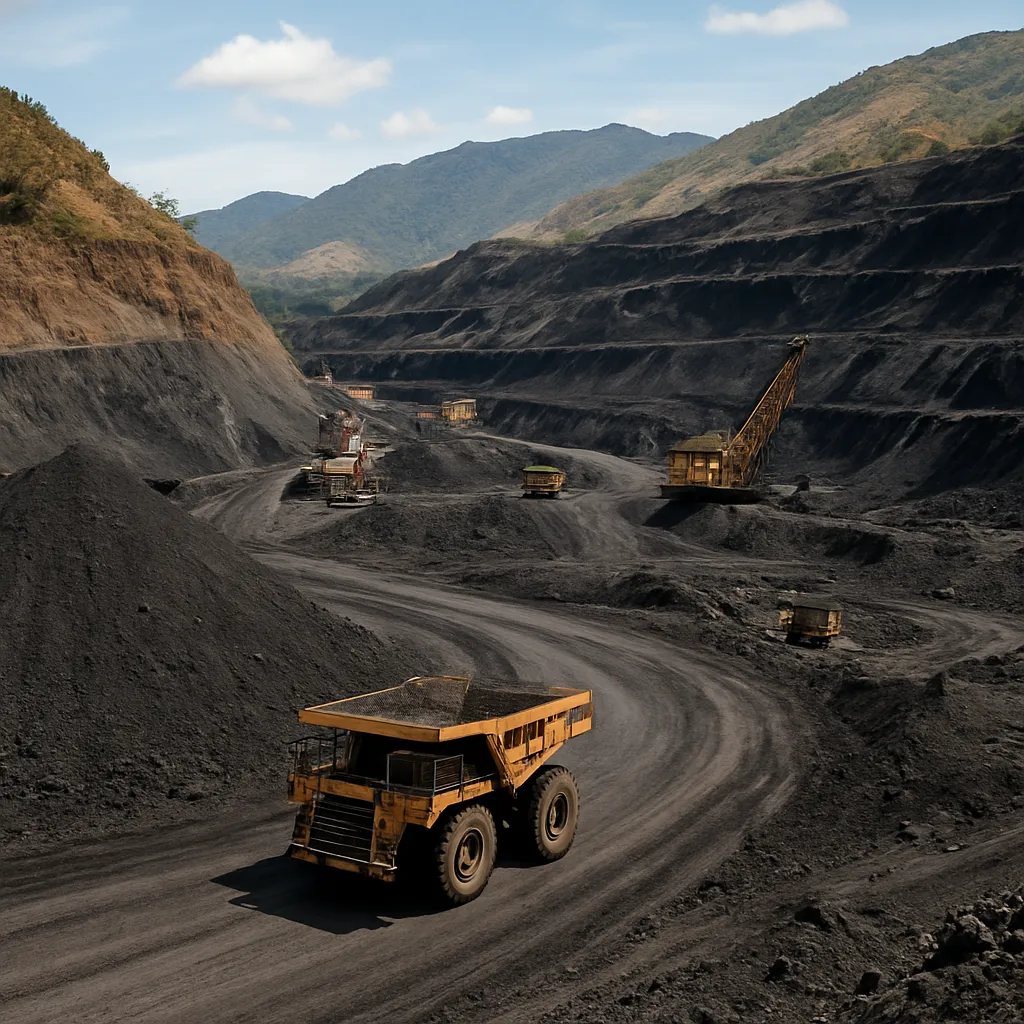
Because mine-level reporting practices differ and because some mine data are retained by regional authorities or corporations, analysts often rely on provincial production trends, company annual reports and satellite imagery to infer activity levels at individual sites. For example, a coal mine with visible spoil heaps, rail loadouts, wash plants and rail connectivity is likely operating at a medium-to-large capacity, while smaller sites may serve primarily local markets.
Economic and industrial significance
The economic role of a mine such as Nalinhe is multi-dimensional and extends from local employment to national energy security. Key aspects of economic significance include:
- Energy supply: Coal remains a major feedstock for electricity generation in China. Mines like Nalinhe contribute to the local and regional supply of fuel to thermal power plants, ensuring grid stability and supporting industrial loads.
- Steel and industry: If the mine produces coking-quality coal or is linked with beneficiation facilities, it supports metallurgical coke production and thus the steel industry, a cornerstone of China’s manufacturing sector.
- Local economies: The mine’s operations create direct jobs (miners, engineers, plant operators) and indirect employment in services, transport, equipment supply and local commerce. Many coal towns rely heavily on mining-related revenues.
- Fiscal contributions: Coal operations contribute via royalties, corporate taxes and local fees. They also influence provincial GDP and can underwrite public services in mining regions.
From a supply-chain perspective, a mine’s outputs feed into a network of coal-fired power plants, industrial consumers, coal traders and, in some cases, export terminals. Logistics (rail and road) and beneficiation capacity determine the market reach of the mine’s products. Integration with state-owned enterprises or large trading houses often enhances market access for mine output.
Operations, mining methods and logistics
Operationally, mines of Nalinhe’s type utilize either surface or underground extraction methods, or a combination of both. The selection of method is influenced by seam depth, thickness, geological structure and environmental constraints.
Common mining methods
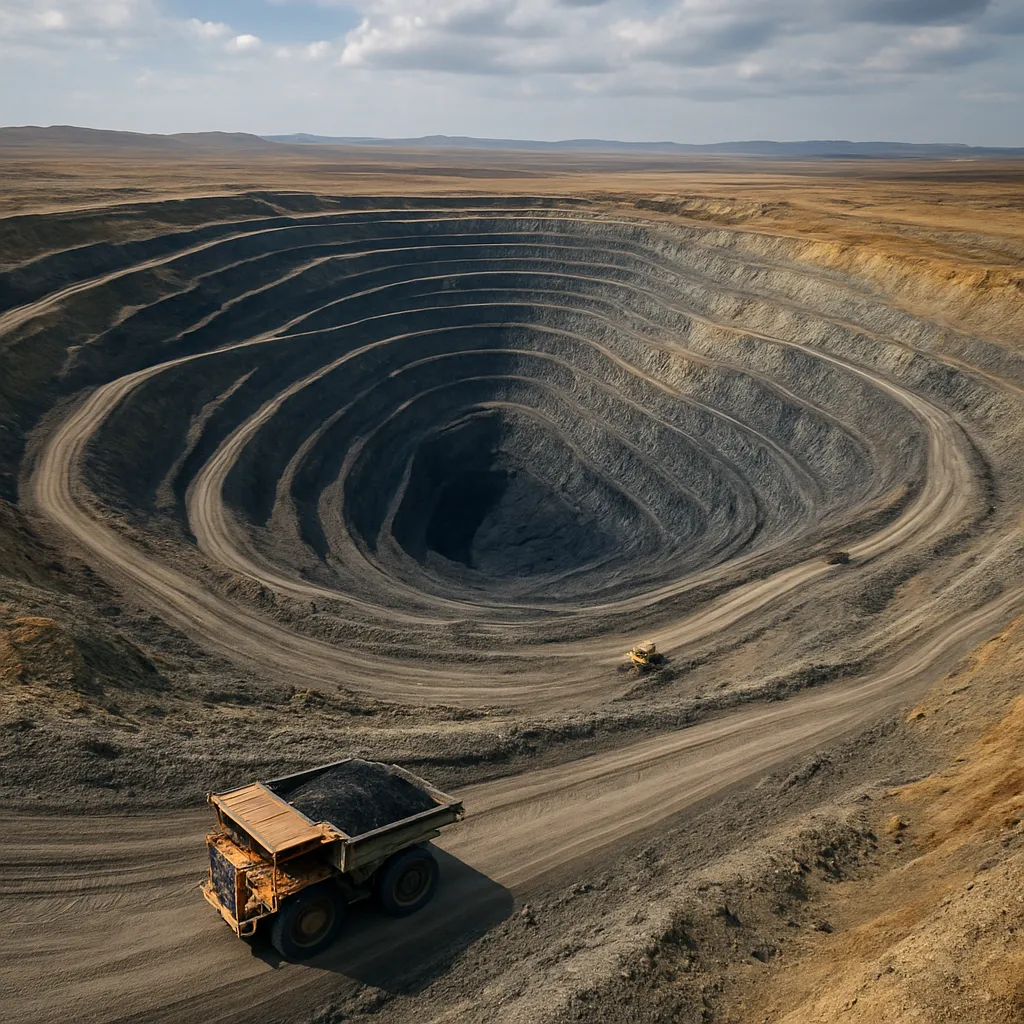
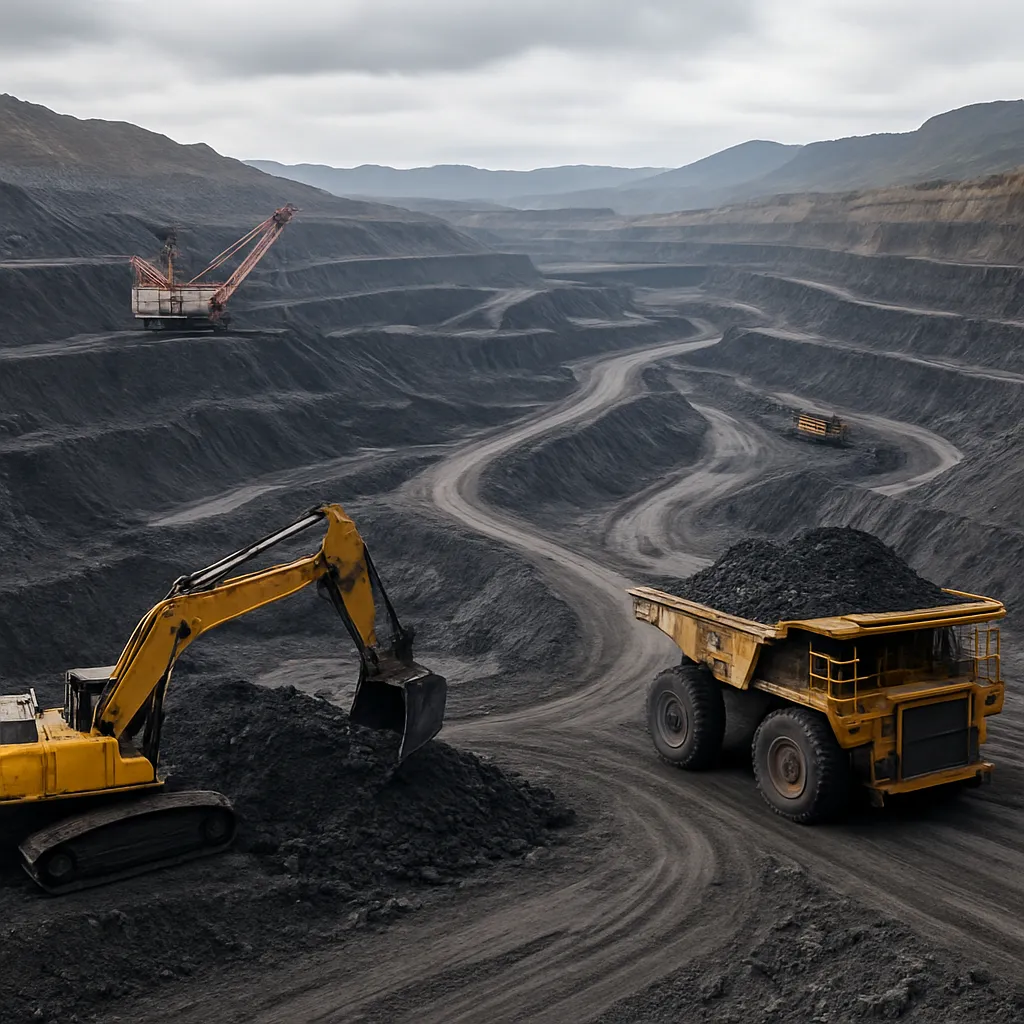
- Open-pit mining: Employed where seams are shallow and extensive. Open-pit operations rely on large earth-moving equipment, drilling, blasting and haul truck fleets. Open pits enable high productivity and lower unit costs at the expense of larger land disturbance.
- Underground longwall mining: If seams are deeper and continuous, mechanized longwall systems offer high recovery rates and efficient coal extraction. Longwall operations require continuous miners, shearer machines, hydraulic roof support and conveyor systems.
- Room-and-pillar (board-and-pillar): Used for thinner or structurally complex seams, often with partial extraction to maintain stability.
Processing and logistics
Post-extraction, coal typically goes through a sequence of processing steps:
- Crushing and screening to classify size fractions;
- Washing/beneficiation to reduce ash and sulfur content;
- Stockpiling and blending to meet buyer specifications;
- Transport via conveyor belts, truck fleets and predominantly rail networks to power stations, industrial customers or coastal ports for export.
Rail connectivity is a critical enabler for large mines. China’s extensive rail freight network allows mines in interior provinces to serve coastal power plants and overseas markets. The presence of dedicated rail spur lines, load-out facilities and unit train operations significantly increases a mine’s competitiveness.
Environmental and social aspects
Mining has substantive environmental and social impacts that must be managed. Key issues relevant to a mine like Nalinhe include:
- Air quality and dust: Fugitive dust from blasting, transport and stockpiles affects local air quality; particulate controls and water spraying are common mitigation measures.
- Greenhouse gas emissions: Combustion of coal is a major source of CO2; mine methane (CH4) is another GHG concern. China’s policy priorities include reductions in carbon intensity and measures to capture or flare mine methane where feasible.
- Water management: Dewatering of underground operations, water use in washing plants and management of effluents and tailings require careful design to prevent contamination of local water bodies.
- Land disturbance and reclamation: Open-pit operations remove vegetation and topsoil; progressive reclamation, contouring and replanting are part of modern mine closure standards in many Chinese provinces.
- Subsidence: Underground extraction may lead to surface subsidence, affecting agricultural land, infrastructure and residential areas. Monitoring and compensation mechanisms are used to manage impacts.
- Social impacts: Mines influence local demographics, housing, health and cultural landscapes. Workforce transitions and community development programs are often required when mines scale down or close.
Chinese authorities and mining companies increasingly implement environmental controls: dust suppression, wastewater treatment, emission controls at power plants, and rehabilitation programs for closed pits. Additionally, there is growing interest in capturing coal-mine methane (CMM) for power generation or pipeline injection, which both reduces greenhouse emissions and provides an energy resource.
Regulation, safety and workforce
China has made concerted efforts over recent decades to improve mine safety and environmental compliance. Key regulatory and operational features include:
- Safety standards and inspections: Stronger regulatory oversight, routine inspections and consolidation of smaller, higher-risk mines into larger firms have contributed to a decline in historic fatality rates.
- Workforce training and mechanization: Increasing mechanization reduces high-risk manual tasks; training programs target safe operation of longwall systems, ventilation controls and emergency response.
- Licensing and environmental permits: Mines must comply with provincial and national permitting processes, including environmental impact assessments (EIAs) and emissions standards for associated coal-fired facilities.
Typical workforce composition in a medium-sized mine includes miners, surface plant operators, engineers, geologists, safety officers and administrative staff. Employment levels vary with mine scale—smaller operations may employ a few hundred people while large complexes can employ several thousand directly.
Significance in regional and national industry
Although individual mine-level statistics for Nalinhe may be limited, its role within the regional economy and the broader energy system can be summarized:
- Energy security: Local mines reduce dependence on distant supply sources and imports, supporting regional power stability.
- Industrial supply chains: Coal from the mine likely feeds nearby power stations and industrial plants, and when upgraded can supply steelmaking coke markets.
- Employment and fiscal impact: The mine contributes to local employment, municipal revenues and investment in infrastructure.
Mines like Nalinhe also support secondary industries such as equipment maintenance, spare parts manufacturing, transport services and coal processing plants. This multiplier effect amplifies the economic significance of mining activity beyond raw commodity output.
Trends, challenges and future prospects
The future of a coal mine such as Nalinhe will be shaped by a combination of market forces, policy directions and technical possibilities:
- Energy transition pressures: China has announced targets to peak CO2 emissions and achieve carbon neutrality by mid-century. These commitments imply a gradual shift away from coal in power generation, though timelines and pathways are complex and regionally differentiated.
- Demand dynamics: Near-term demand for thermal coal may persist due to economic growth, industrial needs and the inertia of existing power infrastructure. However, long-term demand is likely to soften as renewable energy, storage and non-coal generation expand.
- Cleaner coal technologies: Carbon capture, utilization and storage (CCUS), high-efficiency low-emissions (HELE) power plant technologies and coal-to-chemical value chains may extend the economic life of coal assets in decarbonization scenarios.
- Mine closure and economic diversification: Regions dependent on coal production face social and economic challenges when mines close. Planning for workforce retraining, site reclamation and alternative industries is a growing priority.
Operationally, smart mining innovations—automation, remote operations, predictive maintenance and improved ventilation and gas-management systems—are being adopted to increase efficiency and safety. The viability of an individual mine in coming decades will hinge on its ability to adapt to stricter environmental regulations, access to markets, and the cost profile of competing energy technologies.
Other interesting aspects and contextual information
Several additional topics shed light on the broader context in which Nalinhe operates:
- Corporate structure: Many Chinese coal mines are owned or controlled by state-owned enterprises (SOEs) or large provincial groups. Such ownership structures affect investment decisions, safety practices and market behavior.
- Community legacy: Coal towns often have unique cultural histories shaped by mining generations. Museums, memorials and industrial heritage sites sometimes document the social narrative of mining communities.
- Technological transfer: China’s mining sector frequently adopts technologies developed domestically as well as from global suppliers—examples include advanced longwall equipment, large shovels and integrated fleet management systems.
- Market linkages: Mines that can supply coastal ports may participate in export markets (e.g., to Southeast Asia). Inland mines typically supply domestic power and industry, where price formation is influenced by national coal policy and rail capacity.
Finally, the environmental rehabilitation of former coal sites presents opportunities: reclaimed lands can be repurposed for agriculture, solar farms, ecological corridors or recreational uses. Such post-mining land uses are increasingly integrated into mine planning and closure strategies.
Summary
Nalinhe Coal Mine is an example of a Chinese coal operation embedded within a highly significant national industry. While mine-specific public statistics are limited, the mine’s role can be understood by reference to the geology, production practices and economic linkages that characterize coal-producing regions in China. Key themes include the dual roles of coal in power generation and heavy industry, the environmental and social management challenges, the technological pathways to safer and cleaner mining, and the strategic pressures resulting from China’s transition goals. The future of any coal mine, including Nalinhe, will depend on market demand, regulatory developments, adoption of mitigation technologies and the ability of local economies to adapt to changing energy paradigms.