Industrial-grade lignite, often termed brown coal, is a distinctive type of coal that occupies an important but controversial position in the global energy and industrial landscape. Characterized by relatively low carbon content, high moisture and volatile matter, and widespread near-surface deposits, lignite is used primarily for power generation and local industrial applications. This article examines where lignite occurs, how and where it is mined, its economic and statistical significance, technological uses and challenges, and the environmental and policy issues that shape its future.
Geology, Properties and Global Occurrence
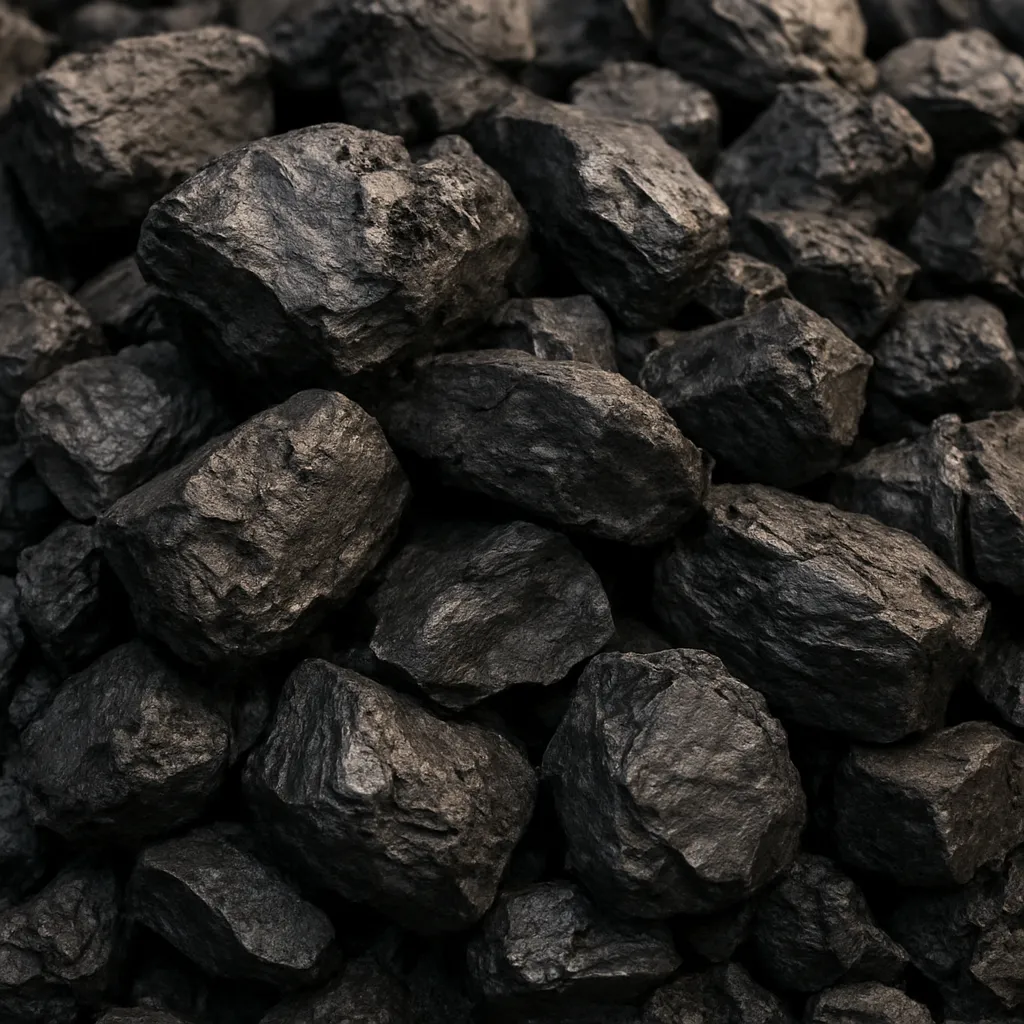
Lignite is a low-rank coal formed from compressed peat under relatively low temperatures and pressures; it is younger in geological age than sub-bituminous or bituminous coals. Its physical and chemical characteristics distinguish it from higher-rank coals: a high proportion of moisture (commonly 30–60% by weight), lower fixed carbon, higher volatile matter, and a lower calorific value—typically in the range of roughly 8–21 MJ/kg (approximately 2,000–5,000 kcal/kg), depending on the deposit and degree of weathering.
The term “industrial-grade lignite” refers to lignite used specifically for industrial purposes—primarily electricity generation in mine-mouth power plants, but also for briquetting, gasification, and local heating where its properties are acceptable. Because of its low bulk energy density, raw lignite is rarely transported long distances; instead, power plants are built adjacent to mines (so-called “mine-mouth” plants), which minimizes transport costs and energy losses.
Major global occurrences of lignite include:
- Germany — Europe’s largest producer and user of lignite, with extensive deposits in the Rhineland (Rheinisches Revier), Lusatia (Lausitz), and Central Germany. German lignite basins have been exploited intensively for decades.
- Poland — Significant lignite basins feed large mine-mouth plants such as the Bełchatów complex (one of the largest lignite-fired power plants in the world).
- Czech Republic — North Bohemian Basin with well-established open-cast mining and power generation infrastructure.
- Greece and Turkey — Several basins supply regional power stations and industrial needs.
- Russia — Lignite deposits exist across various regions; some are used regionally for power and heat.
- United States — Lignite deposits concentrated in the lower Mississippi region, Texas, and North Dakota; in the U.S., lignite is an important regional fuel, particularly in North Dakota, where it supplies baseload generation.
- India and Australia — Both countries have substantial low-rank coals; in India they are used in areas where higher-grade coal is not available, and in Australia some brown coals are developed for electricity.
Worldwide, lignite is responsible for a non-negligible share of coal production and electricity generation in countries where it is abundant and cheap to mine. Exact shares vary year-to-year; estimates often indicate lignite accounts for roughly 10–15% of global coal production by mass, but a smaller percentage by energy due to its low calorific value.
Mining Methods and Major Producing Regions
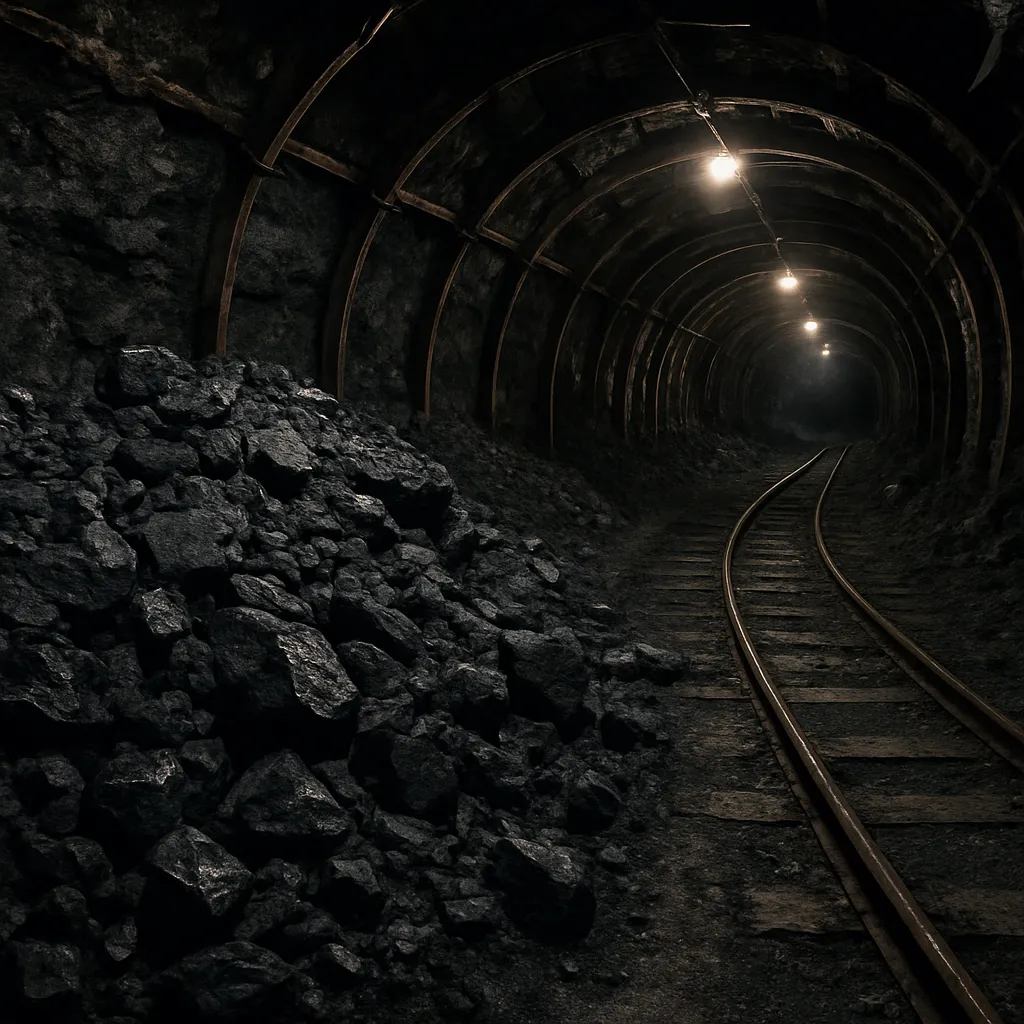
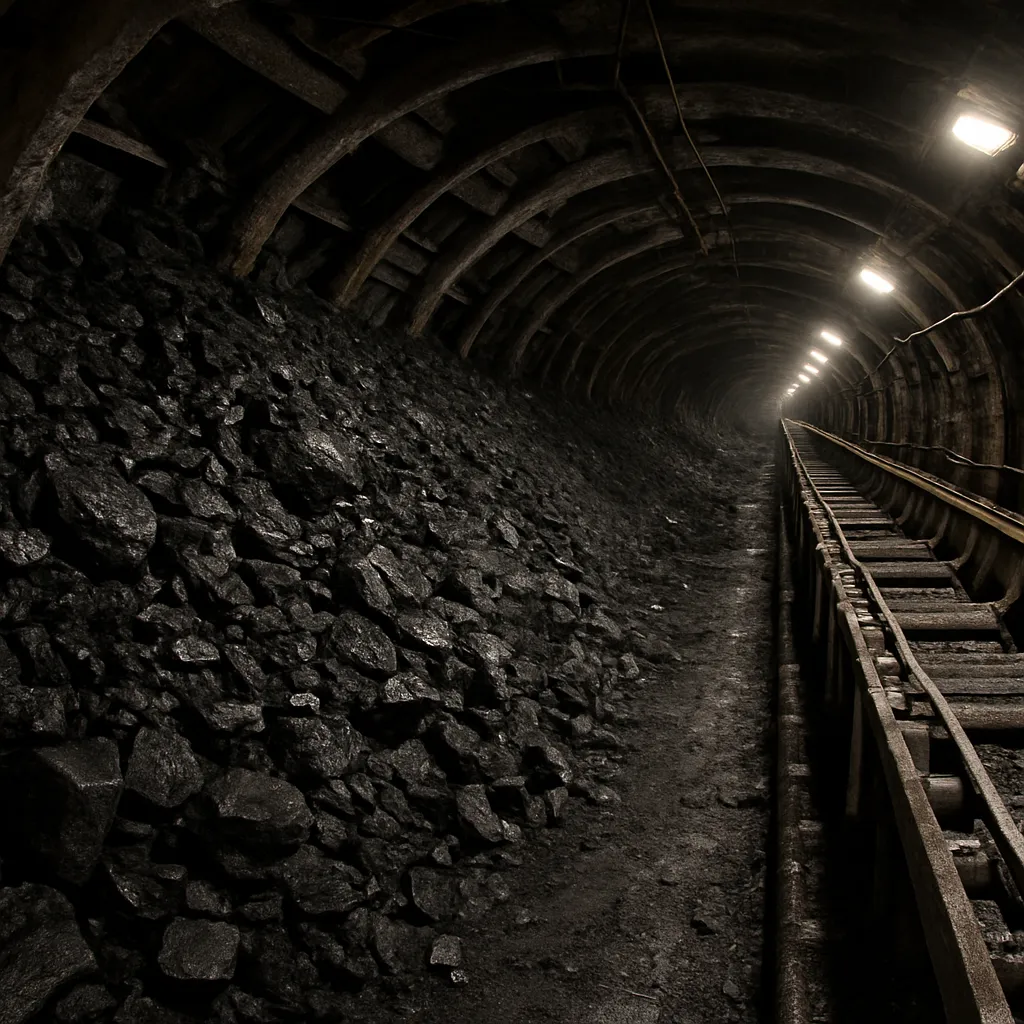
Because lignite beds commonly lie at shallow depths and extend for large lateral distances, open-pit mining (also called surface or opencast mining) is the dominant extraction method. These operations frequently use large-scale equipment—bucket-wheel excavators, conveyor systems, overburden removal machinery—and are often integrated directly with adjacent power plants via conveyor belts. In some older or geologically deeper deposits, underground mining occurs but represents a smaller share of lignite extraction.
Characteristic features of industrial lignite mining include:
- Large-area land disturbance leading to the need for land reclamation and recultivation after mining ceases.
- Short supply chains due to the impracticality of transporting moist, low-grade coal long distances; this leads to clusters of mines and power plants in the same basin.
- Significant local employment and economic dependency in mining areas; in many regions lignite mining and associated power generation remain major employers and local economic anchors.
- Advanced mechanization in major mines—particularly in Germany—where engineering solutions (e.g., bucket-wheel excavators, extensive conveyor networks) allow continuous high-rate extraction and supply to large power plants.
Prominent mining regions and examples:
- Rhineland and Lusatia (Germany): extensive open-cast mines feeding large thermal power stations and, in some areas, undergoing phased closure and land rehabilitation programs.
- Bełchatów (Poland): one of the world’s largest open-cast lignite mines and the adjacent Bełchatów Power Station—an emblematic mine-plant complex in Central Europe.
- North Dakota and Texas (U.S.): lignite fields supplying regional power stations and providing baseload capacity in local grids.
- Soma and Çan (Turkey): regional lignite production used for power and heat.
Economic, Statistical and Industrial Significance
Industrial-grade lignite plays several economic roles. Its principal advantage is low extraction cost per tonne compared with deeper, higher-grade coals: shallow deposits permit large-scale, efficient surface mining. For many countries with limited domestic higher-grade coal or limited energy imports, lignite provides a local and relatively cheap source of energy and grid stability.
Key economic aspects include:
- Affordability: per-tonne cost is low and the cost per unit of delivered heat or electricity can be competitive when transport and drying are factored in.
- Energy security: local lignite reserves reduce dependence on imported fuels, an attractive property for energy policy in some nations.
- Employment and regional development: mining and power complexes create jobs and associated services, often supporting entire local economies.
- Capital intensity: large mine-mouth power stations require high upfront investment and long operational lifetimes to be economical; these assets become central to regional energy planning.
Statistically, available international sources such as the International Energy Agency (IEA), World Coal Association and national energy agencies provide production figures for coal and lignite combined and separately by country. While figures vary by year, some representative points are:
- Germany historically has been Europe’s leading lignite producer and consumer, with annual lignite production measured in tens of millions of tonnes. Its power plants supplied a significant portion of national electricity for many years.
- Poland’s lignite production supports large local power generation; the Bełchatów complex alone consumes tens of millions of tonnes per year.
- The United States produces several tens of millions of tonnes of lignite annually, concentrated in a few states; lignite’s role is regional rather than national in the U.S. context.
- Global lignite production is substantial but represents a minority of total coal energy by heat content due to lignite’s low calorific value.
In industry, beyond power generation, lignite has niche roles:
- Briquetting: compressed lignite briquettes are used for residential and industrial heating where transportation distances are short and calorific needs are modest.
- Gasification and chemical feedstock: lignite can be gasified to produce synthesis gas (syngas) for industrial processes or synthetic fuels, though this is capital- and energy-intensive and often uneconomic without subsidies or high fuel prices.
- Soil conditioning and carbon products: partially carbonized lignite (or humic substances extracted from it) can be used in soil amendments, fertilizers or activated carbon precursors, though such uses are small in volume compared to power generation.
Environmental Impacts, Mitigation and Technological Responses
Lignite use is associated with a range of environmental challenges. Because of its low energy density and high moisture, burning lignite produces more CO2 per unit of delivered energy than higher-grade coals and most other fossil fuels. Other environmental impacts include particulate emissions, sulfur and nitrogen oxide emissions (depending on coal chemistry and control technologies), mercury and other trace elements, and large-scale landscape alteration from surface mining operations.
Environmental and mitigation strategies include:
- Emission control technologies: flue gas desulfurization (FGD), selective catalytic reduction (SCR) for NOx control, particulate filters and activated carbon injection for mercury mitigation.
- Drying and pre-treatment: drying technologies (e.g., mechanical, thermal, or low-temperature drying) can improve calorific value and combustion efficiency, thereby reducing specific emissions per MWh.
- Conversion to higher-value products: gasification and chemical conversion can produce cleaner-burning fuels or chemical feedstocks if coupled to efficient gas cleaning and, potentially, carbon capture.
- Carbon capture and storage (CCS): retrofitting lignite-fired plants with CCS is technically possible, but has been limited by high costs and energy penalties; lignite’s low energy density makes CCS more expensive per unit energy than for higher-grade fuels.
- Land reclamation and rehabilitation: after mining, large open pits can be reshaped, backfilled, or transformed into lakes and recreational areas; Germany has extensive programs to convert former opencast mines into lakes and new landscapes as part of post-mining land use planning.
Because of climate policy pressures and economics, several countries and utilities have planned or implemented phase-downs of lignite-fired capacity. These policy moves are driven by decarbonization commitments, competition from cheaper renewables and gas, and social decisions to shift local economies away from high-carbon extraction. Nevertheless, in some regions lignite remains a key transitional fuel due to its reliability and low short-term cost for baseload power.
Trends, Policy Drivers and the Future of Industrial Lignite
The immediate future of industrial lignite will be shaped by multiple forces: national energy policies and climate commitments, relative costs of renewables and storage technologies, local socio-economic considerations, and potential breakthroughs in emission control or carbon removal technologies.
Important trends include:
- Policy-driven retirements: several European countries have set timelines to retire or reduce lignite capacity as part of net-zero targets, accelerating the shift to renewables and gas.
- Just transition planning: regions dependent on lignite face social and economic challenges as mines and plants close; well-designed transition programs are needed to retrain workers, attract new industries, and restore landscapes.
- Technology integration: where lignite plants remain operational, there is increasing adoption of emissions controls, efficiency upgrades, and in some experimental cases, CCS pilots. However, the cost-effectiveness of CCS on lignite plants remains contentious.
- Local continued use in developing regions: in countries where alternatives are expensive or grid modernization is in early stages, lignite may continue to provide affordable local power for the medium term.
From an economic standpoint, lignite will likely persist where it is cheap to mine and politically supported, but its share of electricity generation is expected to decline globally as renewables and storage continue to reduce the levelized cost of electricity in many regions. The pace of change will vary significantly by country and by the availability of financing for both cleanup and new energy infrastructure.
Interesting Facts and Practical Considerations
- Mine-mouth power plants are very common with lignite—the integration of mine and plant via conveyors can create highly efficient logistics chains and reduce handling costs dramatically.
- Some reclaimed lignite mines have been converted to large artificial lakes and recreational areas; this approach has become a characteristic feature of post-mining land use in parts of Germany.
- Bełchatów Power Station (Poland) and several large German lignite power stations have frequently been cited among the highest single-site CO2 emitters globally, making them focal points in international climate discussions.
- Because of its high moisture content, raw lignite can self-heat and oxidize during storage, which raises safety and handling considerations for stockpiles and transport.
- Lignite’s chemical composition varies widely between basins. Some lignites have relatively low sulfur content and are consequently easier to desulfurize during combustion; others are richer in mineral matter and require more ash management.
Concluding Perspectives
Industrial-grade lignite remains an important energy resource in several regions, providing affordable, locally produced electricity and economic value to mining communities. Its geological abundance in certain basins, ease of surface extraction and integration with mine-mouth plants means lignite is likely to continue to play a transitional role in some national energy systems for years to come. However, due to its relatively low calorific value and high specific emissions, lignite is under increasing pressure from climate policies, expanding renewable energy deployment and evolving economics.
The future trajectory of lignite use will depend on how quickly alternatives can replace mine-mouth baseload capacity, the availability of investment for remediation and economic diversification in mining regions, and potential technological breakthroughs (such as cost-effective CCS or high-efficiency conversion routes) that could reduce the environmental footprint of lignite-based energy. For policymakers and industry alike, balancing immediate energy needs, local socio-economic impacts, and long-term decarbonization objectives will determine whether industrial lignite retreats rapidly or remains a regionally important fuel during the energy transition.