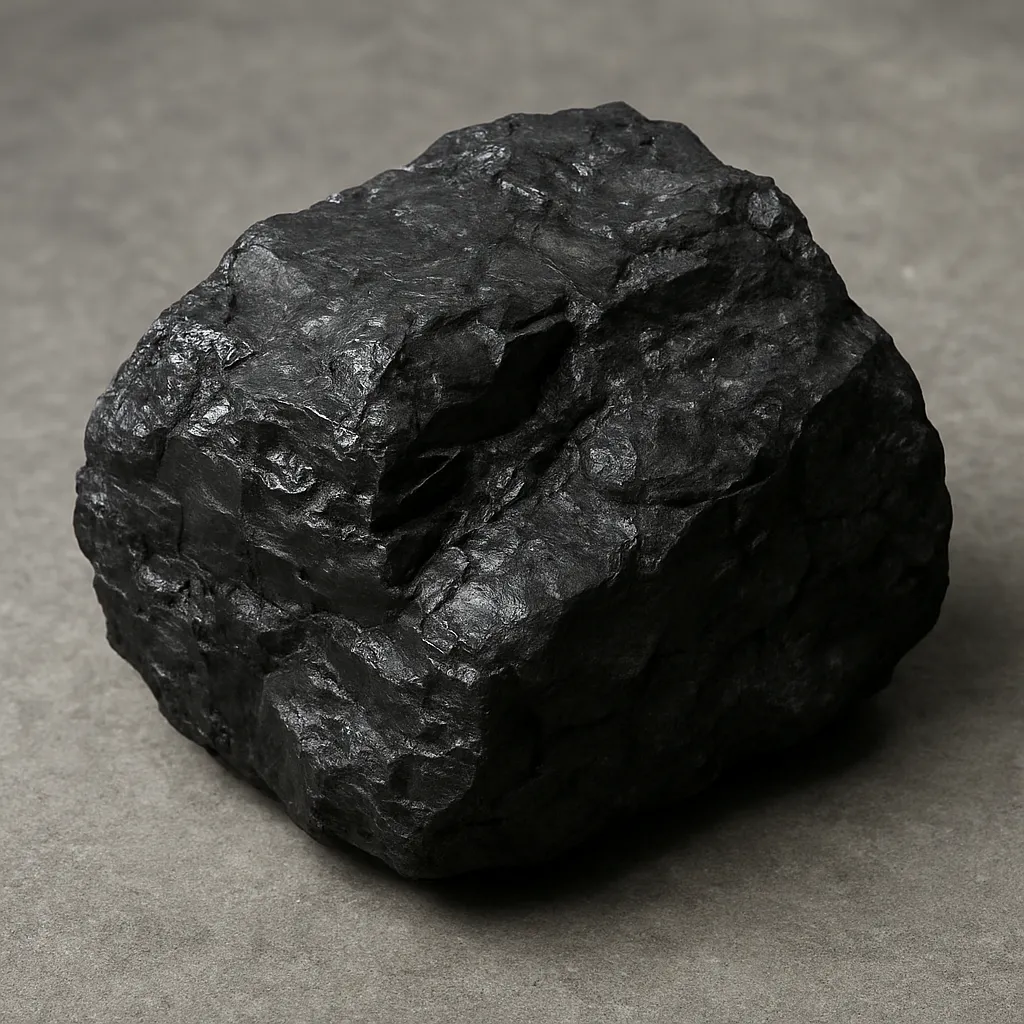
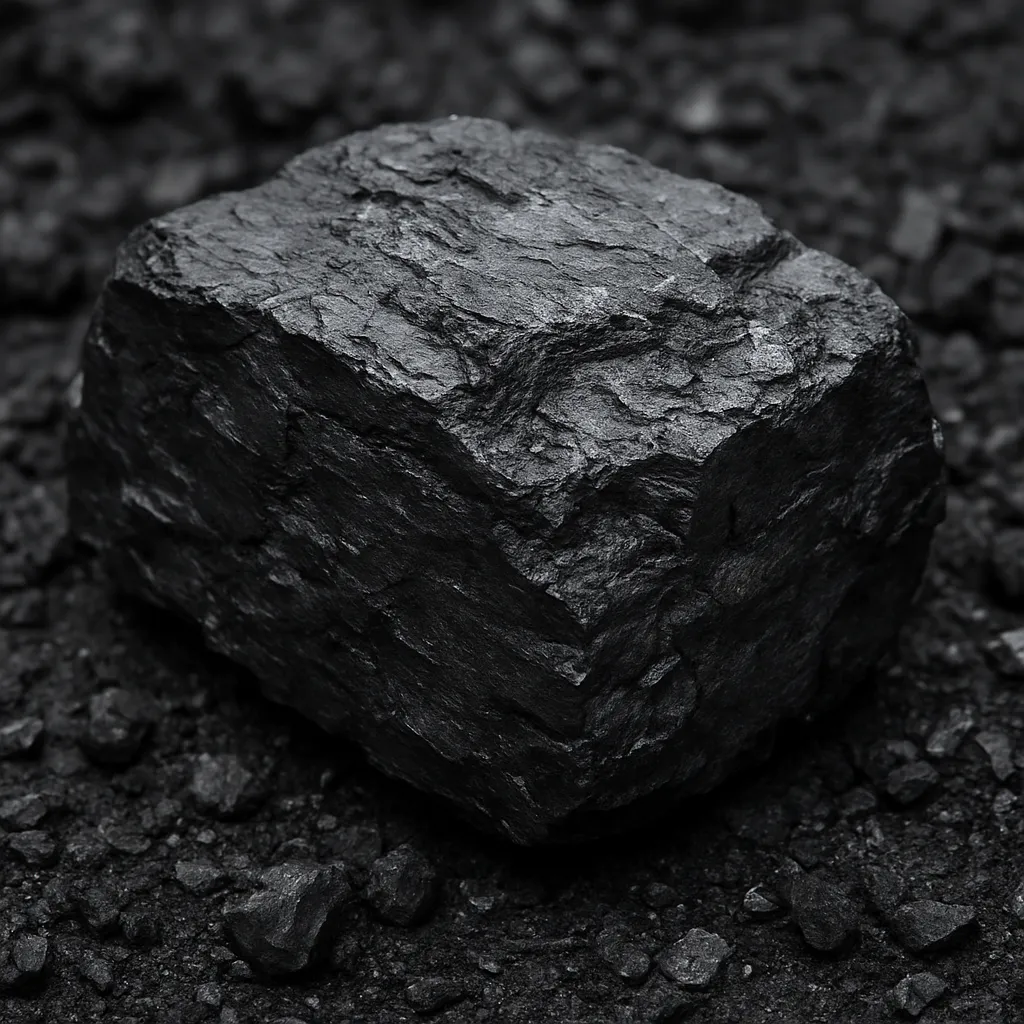
Ovoid coal is a term that can refer both to a particular morphological form of coal lumps and to the broader category of coal as a vital geological and industrial resource. This article presents a comprehensive overview of coal — its varieties, geological occurrence, mining and production methods, economic and trade significance, industrial uses, environmental challenges and future outlook — with special attention to ovoid or nodular coal occurrences, their geological meaning and scientific interest. Throughout the text, several key terms are emphasized for clarity.
Geology, types and the concept of ovoid coal
Coal is a sedimentary rock formed by the compaction and alteration of plant material over geological time under conditions of burial, pressure and heat. Major commercial types of coal, ordered roughly by increasing carbon content and energy density, are lignite (brown coal), sub-bituminous, bituminous and anthracite. Each rank reflects the degree of coalification — the physical and chemical transformation that converts peat to high-rank coal.
The phrase ovoid coal is not widely used as an international standardized coal rank. Instead, it describes a morphological characteristic: coal nodules, concretions or masses that are roughly ovoid (egg-shaped) in cross-section or as isolated bodies within a seam. Such ovoid forms may occur for several geological reasons:
- Localized diagenetic concentration of organic matter during peat formation.
- Later differential compaction where surrounding sediment compresses more than a relatively rigid organic nodule.
- Mineral replacement and permineralization producing spherical or ovoid concretions sometimes called coal balls.
- Biogenic or microbial alteration producing discrete lumps of altered organic matter.
Coal balls (often calcareous permineralizations preserving plant anatomy) are especially important in paleobotany because they preserve cellular detail of Carboniferous and Permian plants; they are frequently ovoid or spherical. These occurrences are commonly found in classic Carboniferous coalfields in Europe, North America and parts of Russia and Australia. While ovoid coal bodies are of limited significance for bulk fuel markets, they are of high value for scientific study and can influence seam continuity and mining behavior locally.
Where coal occurs and major producing regions
Coal distribution reflects ancient peat-forming environments (swamps, mires and delta plains) that existed during the Carboniferous, Permian, and younger geological periods. Today, coal deposits are found on all continents except Antarctica in commercially significant quantities. Global proven coal resources are large and geographically dispersed. Several regions dominate both production and trade:
- China — the world’s largest producer and consumer of coal, with very large inland deposits ranging from high-rank bituminous to lower-rank coals used for electricity and industry.
- India — substantial reserves of bituminous and sub-bituminous coal underpinning its power sector and industry.
- United States — large basins (Appalachian, Powder River Basin) producing a wide range of coals; Powder River is known for low-rank, low-sulfur coal mainly used for power generation.
- Australia — major producer and exporter of high-quality thermal and metallurgical coals; a top exporter to Asia.
- Indonesia — significant exporter of sub-bituminous coal, especially to East and Southeast Asian markets.
- Other notable producers and exporters include Russia, South Africa, Colombia, Poland and Kazakhstan.
Coal seams vary in thickness and lateral continuity. Some seams contain nodules or ovoid bodies that affect mine planning and seam extraction. In many underground mines, isolated ovoid masses of harder or more inert material can complicate cutting and roof support. In open-pit mines, large nodules might be removed as part of overburden or as economic pieces if quality is high.
Mining methods and resource extraction
Coal mining methods fall into two basic categories: surface (open-pit, strip mining, mountaintop removal) and underground (longwall, room-and-pillar, bord-and-pillar). Choice of method depends on depth, seam geometry, overburden thickness and environmental/regulatory constraints.
Longwall mining, common in modern underground operations, uses a mechanized shearer to extract large, continuous panels of coal. Room-and-pillar methods leave columns of coal for roof support and are favored in shallower or variable seams. Surface mining dominates where seams are near-surface and economic to remove overburden; it is the most productive method by tonnage but has larger surface footprints and environmental impacts.
Technological advances have improved safety, productivity and environmental performance:
- Automation, remote operation and real-time monitoring in large operations improve productivity and worker safety.
- Coal quality assessment and preparation (washing, sizing, blending) allow producers to meet specific market requirements.
- Methane drainage, ventilation controls and dust suppression reduce occupational hazards and greenhouse gas emissions at the point of extraction.
When ovoid or nodular coal bodies are present, mining plans may require selective extraction or different support measures. From an engineering perspective, these irregular masses sometimes behave like boulders and may be handled separately or crushed and blended, depending on their composition and quality.
Economic importance, trade and statistical overview
Coal remains an economically significant commodity despite global decarbonization trends. It is a major energy source for electricity generation and a critical feedstock for industries such as steelmaking (coking coal / metallurgical coal). Key economic dimensions include employment, export revenues, regional development, and energy security.
General statistical picture (approximate, based on trends up to the early 2020s):
- Global coal production: on the order of several billion tonnes per year (metric). Production fluctuates by year due to demand shifts, policy changes and market forces.
- Leading producers: China (about half of global consumption and the largest producer), India, the United States, Indonesia, Australia and Russia.
- International trade: major exporters include Australia, Indonesia, Russia, the United States and South Africa. Major importers are China, India, Japan and South Korea.
- Electricity generation: coal historically supplied roughly one-third of global electricity generation; in some years and regions it has been higher or lower. In several economies, coal still provides the majority of baseload generation.
- Reserves: proven global coal reserves are large, estimated in the order of hundreds of billions to more than a trillion tonnes, which at current consumption rates represents several decades to centuries of supply — though realistic extractable lifetimes depend on economics, technology and policy.
Economically, coal prices are influenced by demand for steel (metallurgical coal), power-sector needs (thermal coal), transport costs, and regional supply constraints. Export-oriented producers (for example, Australia and Indonesia) compete on freight, coal quality (calorific value, ash, sulfur) and service reliability. For importers, coal provides a hedge against supply disruptions but exposes economies to commodity price volatility.
Industrial uses and technical properties
Coal’s most important uses are:
- Electricity generation: combustion of thermal coal in power stations to generate steam and drive turbines.
- Steel and metallurgical processes: coking coal is transformed into coke and used in blast furnaces as both a fuel and a reducing agent.
- Chemical feedstock: coal gasification and liquefaction can produce syngas, liquid fuels and chemical precursors (though these are less common economically where oil and gas are abundant).
- Industrial heating and cement manufacture.
Basic technical parameters influencing use and value:
- Calorific value (energy per mass): varies by rank — roughly 10–20 MJ/kg for lignite, 20–30 MJ/kg for many bituminous coals, and potentially higher for anthracite.
- Ash content: residues after combustion; lower ash is preferable.
- Sulfur content: influences emissions of SO2 and need for flue-gas desulfurization.
- Volatile matter and fixed carbon: key in coking behavior and combustion characteristics.
In regions with ovoid coal nodules, the composition of these bodies may be quite different from the surrounding seam, sometimes richer in mineral content (limestone-filled coal balls) or more inert; such differences can affect grindability, combustion behavior and coke quality if used in metallurgical processes.
Environmental, health and socio-economic challenges
Coal use has significant environmental and social impacts:
- Greenhouse gas emissions: combustion of coal emits CO2 per unit energy at higher rates than oil or gas, making coal a major contributor to global warming. Policy measures (carbon pricing, emissions trading) directly affect coal economics.
- Air pollution: coal combustion emits sulfur oxides, nitrogen oxides, particulate matter and mercury, impacting public health and ecosystems.
- Land and water impacts: surface mining, waste rock, tailings from coal preparation (coal slurry ponds), and acid mine drainage are environmental concerns.
- Occupational health: coal mining historically carries risks (accidents, pneumoconiosis) though modern safety standards have reduced fatalities in many countries.
- Social impacts: communities dependent on coal face transition risks as markets shift; the concept of a just transition aims to mitigate unemployment and social dislocation.
Technological responses reduce some impacts: coal washing lowers ash and sulfur, flue gas cleaning removes pollutants, and carbon capture and storage (CCS) can theoretically reduce CO2 emissions from coal-fired plants. However, CCS deployment remains limited and expensive at scale.
Market dynamics and the future of coal
Coal’s future is shaped by several interacting trends:
- Energy transition: increased deployment of renewable energy (wind, solar) and energy storage reduces the need for coal in power systems, particularly for peak generation.
- Policy and regulation: air-quality standards, emissions targets, and carbon pricing accelerate coal retirements in many regions.
- Economic competitiveness: low prices for natural gas in some markets displaced coal in power generation; however, in regions lacking gas infrastructure, coal may remain competitive.
- Industrial demand: metallurgical coal for steelmaking remains a specialized market with different dynamics than thermal coal.
Projections vary: some scenarios show rapid declines in coal use over the next decades under strong climate action, while others foresee persistent coal demand in developing regions where electrification and industrialization remain priorities. The pace of renewable deployment, grid flexibility improvements, and policy choices will be decisive.
Scientific interest in ovoid coal and coal balls
Beyond economic uses, ovoid coal bodies and coal balls are scientifically valuable. Coal balls — calcareous or pyritic permineralizations that often exhibit ovoid shapes — preserve plant anatomy and tissues in exceptional detail. They allow paleobotanists to reconstruct ancient swamp ecosystems, study plant evolution and understand peat-forming environments of the Carboniferous and Permian.
Notable scientific insights from coal ball studies include:
- Microscopic preservation of vascular tissues, spore-producing structures and reproductive organs of early land plants.
- Evidence for plant diversity, community structure and paleoecology in coal-forming swamps.
- Clues about sedimentation processes and diagenesis that created nodular or ovoid mineral masses within peat layers.
Coal-ball research remains a niche but important field integrating geology, paleobotany and stratigraphy. Field locations with abundant coal balls have been critical to reconstructing the Earth’s early terrestrial biosphere.
Interesting facts and regional notes
– In many traditional coal regions, local nomenclature describes coal shapes and seam features; ovoid or kidney-shaped lumps may be well-known in mining folklore but do not change commercial grade classification.
– Some local deposits featuring ovoid masses were historically mined selectively for their distinct properties — for example, dense coal lumps that make good domestic fuel or specialized industrial feedstock.
– Coal continues to be a focal point of geopolitical and economic strategy: exporting nations rely on revenues, while importers balance energy security and climate goals.
– Technological pathways such as advanced coal gasification coupled with CCS could, in principle, enable lower-emission uses of coal, but widespread deployment depends on policy support and cost reductions.
Concluding remarks
Coal — including occurrences described as ovoid coal — remains a multifaceted subject connecting geology, industry, science and policy. While the commercial importance of coal is declining in parts of the world due to climate policy and the rise of renewables, it continues to supply substantial primary energy, underpin heavy industry and support regional economies. Ovoid coal and coal balls, though not primary market drivers, play an important role in geological interpretation and paleobotanical research. The evolution of markets, technology (including potential carbon mitigation), and policy will determine how coal’s legacy is managed and how communities dependent on coal navigate transition.
Coal, as both fuel and a subject of scientific study, thus occupies a complex place in the modern world: economically significant, environmentally challenging and geologically fascinating.