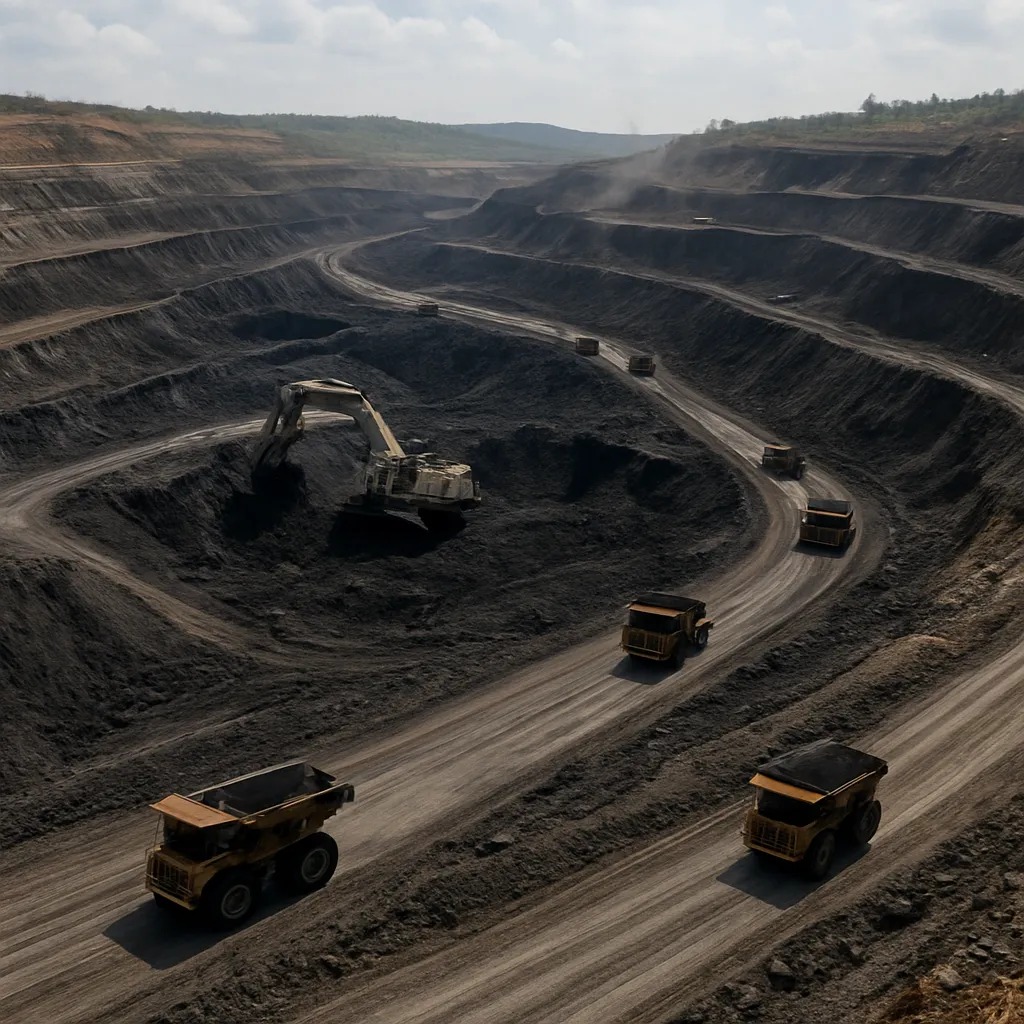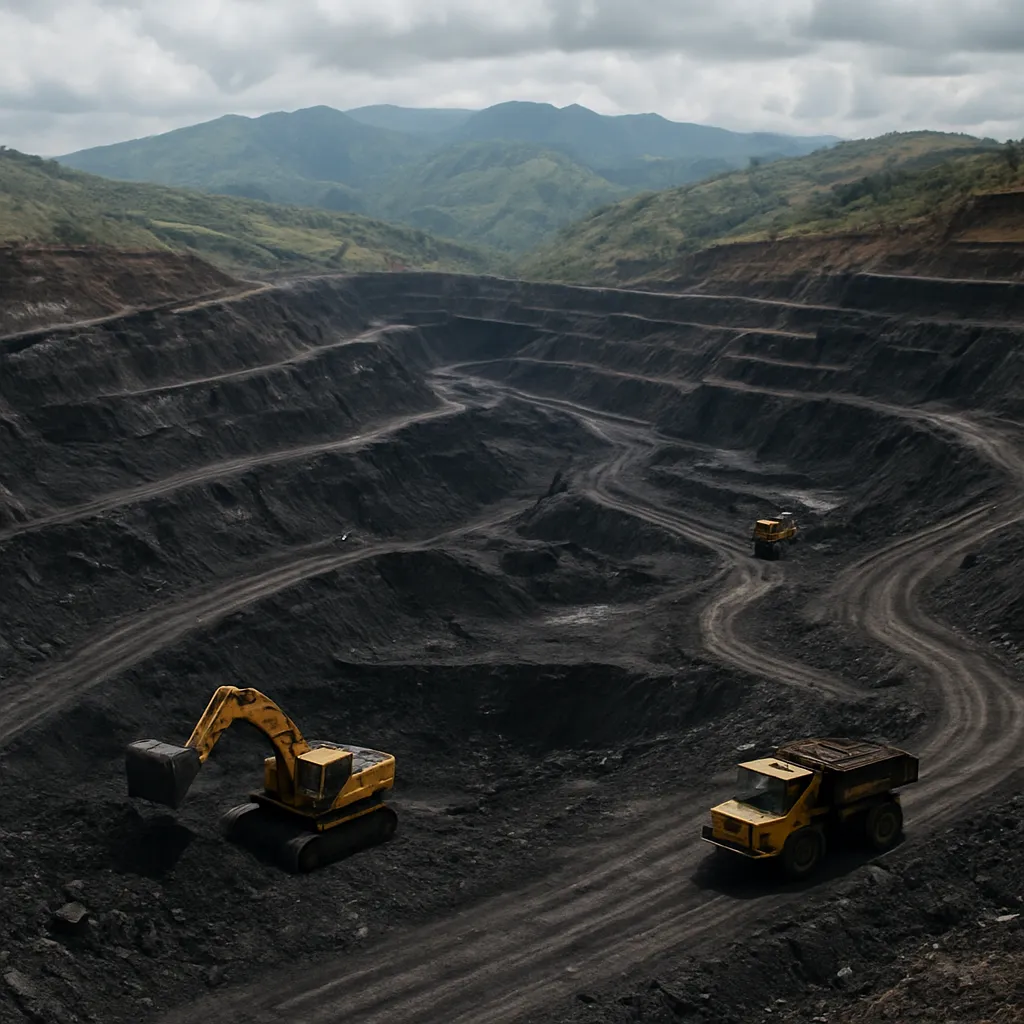
This article examines El Hatillo North, a coal mining site associated with Colombia’s principal coal-producing regions. It summarizes the mine’s location and geological setting, the types of coal likely extracted, operational characteristics, and the economic, social and environmental roles such a site plays regionally and nationally. Where mine-specific public data are limited, the article places El Hatillo North in the broader context of Colombian coal mining, offering statistical and industry information that helps illustrate the mine’s probable significance.
Location and geological setting
El Hatillo North is situated within Colombia’s coal-bearing provinces, which are concentrated primarily in the northern part of the country. The country’s most important coal basins are the Cesar-Ranchería Basin (in the departments of Cesar and La Guajira) and the Norte de Santander/Plain areas, with the La Guajira peninsula hosting one of the world’s largest open-pit coal operations. Although site-by-site public records for El Hatillo North are limited, its name indicates it is a northern sector or concession layout commonly found in the Cesar–La Guajira region where many concessions are subdivided into “north/south” blocks.
Geologically, Colombian coal basins generally contain sedimentary sequences from the Paleocene and Eocene with thick coal seams formed in deltaic to coastal plain environments. Typical depositional characteristics include multiple stacked seams, variable seam thickness, and interbeds of sandstone and claystone. These conditions produce coals ranging from sub-bituminous to bituminous ranks in different basins. In the regional setting, the presence of thick lateral seams often favors large-scale open-pit mining at shallow depths, while deeper or structurally disrupted seams may require more selective extraction.
Mining operations and coal type
Mines in the northern basins of Colombia are dominated by large-scale surface operations that combine heavy earthmoving, truck-and-shovel fleets, and on-site processing such as washing and sizing. For El Hatillo North, the likely operational model is a surface or shallow pit method, as this is the prevailing method for similar concessions in Cesar and La Guajira. Key components of such an operation include overburden removal, staged pit benches, on-site stockpiling, and transport infrastructure connecting the mine to rail, river or port systems for domestic use or export.
Type and quality of coal
Coal produced in northern Colombia is primarily used for power generation and industrial fuel, therefore categorized broadly as thermal coal. Depending on the specific seam, the coal may be:
- sub-bituminous to bituminous rank, with variable volatile matter;
- relatively low in sulfur compared with some global coals, which enhances its marketability;
- characterized by moderate ash yields—often requiring washing to meet export specifications;
- suited to both domestic power plants and international steam-coal markets in the Americas, Europe and Asia.
For a site like El Hatillo North, typical product streams may include raw run-of-mine coal, washed thermal coal meeting specific calorific value bands (e.g., in the range commonly sold as 5,000–6,500 kcal/kg GAR—gross as received—depending on wash plant performance), and lower-grade rejects used locally or blended. Exact calorific values and quality specifications can only be confirmed by laboratory analyses and operator reports, which are not always publicly available for every concession block.
Infrastructure and logistics
Logistics are central to the viability of any Colombian coal mine. Most successful operations rely on one or more of the following transport modes:
- rail links to northern ports (important for export oriented mines);
- road haulage to nearby processing or transshipment points;
- port facilities on the Caribbean coast—key gateways for international markets;
- on-site crushing, screening and washing plants to upgrade product quality and reduce transport costs per saleable tonne.
Depending on El Hatillo North’s proximity to main transport corridors and the presence of a wash plant, its cost structure and market access can vary significantly. Investment in rail or port access typically determines whether a concession can sustain high-volume exports or focuses primarily on domestic supply.
Economic and statistical context
Public, mine-specific production and revenue figures for El Hatillo North are limited or not widely published. Many Colombian concessions are operated by private firms or joint ventures and only report consolidated production at the company or regional level. Nevertheless, it is possible to place El Hatillo North in the broader economic framework of Colombian coal, which helps estimate its probable economic footprint.
Colombia’s coal industry—national statistics and role
Colombia has been one of the world’s major exporters of thermal coal for decades. The industry has historically been a significant foreign-exchange earner and an important source of direct and indirect employment in mining regions. Typical national-level statistics relevant for contextualizing a site like El Hatillo North include:
- Production and exports: Colombia’s annual coal production and export volumes historically fall within the range of tens of millions of tonnes per year, with exports representing the majority of production for many years. Major operations in La Guajira and Cesar account for the bulk of those volumes.
- Economic contribution: Coal revenues have constituted a substantial share of Colombia’s export earnings in years of high commodity prices, occasionally representing one of the top export categories after oil.
- Employment: The coal sector supports thousands of direct mining jobs and a larger number of indirect jobs in logistics, services, and supply chains in producing departments.
For a single concession such as El Hatillo North, production might range from several hundred thousand tonnes per year for smaller operations to multiple millions of tonnes for medium-to-large concessions. The economic value of that production depends on quality, market prices, and operating costs. Given the price volatility in global coal markets, annual revenue figures can vary widely; export-grade thermal coal prices respond to global demand for power generation, industrial fuel, and shipping constraints.
Regional socioeconomic impacts
At the local and departmental level, coal mines contribute in several ways:
- payment of royalties and taxes to national and regional governments, which fund infrastructure and social programs;
- creation of direct employment in mining operations, technical services and maintenance;
- stimulus for local supply chains—equipment, fuel, catering, transport and contracting services;
- investment in regional infrastructure such as roads, bridges and sometimes community projects financed by company social programs or public-private partnerships.
However, the distribution of benefits can be uneven, and mining regions often face tensions over land use, compensation, and long-term economic planning. For El Hatillo North, the size and design of community engagement programs and royalty flows would determine the precise socioeconomic footprint in adjacent municipalities.
Environmental and social dimensions
Any coal mining operation in Colombia must contend with environmental, social and regulatory considerations. These shape permit requirements, operational design, and post-mining obligations. El Hatillo North would be expected to operate under national mining and environmental regulations, plus local land-use planning and community consultation frameworks.
Environmental management
Key environmental issues relevant to a coal concession include:
- land disturbance from open-pit mining, including removal of vegetation and alteration of drainage patterns;
- water management—ensuring sediment control, protection of groundwater resources and treatment of mine-affected water;
- dust and air emissions related to blasting, hauling and crushing activities;
- management of waste rock and tailings from washing plants to prevent acid generation and erosion;
- progressive reclamation and final rehabilitation plans for post-mining land uses such as agriculture, forestry or recreation.
Operators commonly implement environmental impact assessments (EIAs), monitoring programs and mitigation measures. The effectiveness of these measures varies by operator capacity, regulatory oversight, and community engagement. Modern Colombian mines frequently commit to environmental offsets, reforestation and water-management improvements to meet permitting conditions.
Social license and community relations
Social acceptance (often referred to as the social license to operate) is essential. Mines like El Hatillo North need to establish:
- ongoing dialogue with affected communities;
- employment and training programs targeted to local residents;
- compensation and resettlement frameworks where land acquisition occurs;
- investment in local infrastructure, education and health services according to agreed community benefit plans.
Conflicts can arise over environmental impacts, inequitable benefit sharing, or perceived insufficient consultation. Conversely, positive, transparent programs can generate long-term cooperation and shared economic opportunities. For El Hatillo North, the shape of those programs would be decisive in determining the mine’s social sustainability.
Significance in the industry and strategic considerations
Even if El Hatillo North is a mid-sized concession within Colombia’s broader coal sector, it contributes to several strategic objectives: domestic energy security, export revenue diversification, and regional employment. The mine’s significance should be interpreted both in local terms (jobs, municipal revenues) and national terms (integration into export flows and resource base).
Market positioning and buyers
Colombian thermal coal traditionally found buyers in:
- Latin American power utilities;
- European utilities and traders when market conditions favored Atlantic coal routes;
- Asian markets via bulk shipping when logistics and pricing were competitive.
Market access for El Hatillo North depends on product quality, logistical costs to port, and contractual relationships with traders and utilities. Mines that can offer consistent, low-sulfur thermal coal at competitive cost frequently secure multi-year contracts, while smaller producers may export through intermediaries or target domestic customers.
Resilience and future outlook
The future of individual coal concessions, including El Hatillo North, rests on multiple interacting trends:
- global demand for thermal coal, which is sensitive to energy transitions, natural gas prices and policy settings in importing countries;
- Colombian domestic energy demand and potential for adding coal-to-power projects or industrial customers;
- the ability of operators to maintain low operating costs and high environmental performance to meet buyer and lender expectations;
- regulatory changes, including permitting regimes, royalty structures and environmental standards;
- the potential for diversification—repurposing infrastructure or planning for post-mining land uses to maintain long-term regional value.
Mines that can incorporate best practices in environmental management and meaningful community engagement are better positioned to sustain operations through market cycles. In some cases, operators pursue value-added strategies such as coal washing to produce higher-grade product streams or invest in logistics upgrades to reduce freight costs—moves that can extend life-of-mine economics.
Interesting facts and comparative perspective
Putting El Hatillo North in comparative perspective with Colombia’s better-known mines highlights a few useful points:
- Compared with mega-projects in the region, smaller concessions often have more limited capital intensity but can be flexible in serving local markets.
- Colombian coal commonly benefits from geographic proximity to Caribbean ports, giving export flexibility to Atlantic markets.
- Environmental and social scrutiny on Colombian coal has increased over the past two decades, prompting improvements in monitoring and community relations across the sector.
- Long-term planning for areas with coal activity increasingly emphasizes post-mining land-use planning, biodiversity offsets and economic diversification of mining towns.
For readers interested in technical details: typical bench heights, haul-road designs, and wash-plant configurations vary widely by operator and resource geometry. Younger engineers and geoscientists working in Colombian coal basins often gain multidisciplinary experience in geology, mine planning, water management and community engagement because mines must integrate these aspects to secure permits and financing.
Concluding observations
El Hatillo North, understood as a northern concession block within Colombia’s coal-producing provinces, typifies many of the characteristics of Colombian thermal coal sites: a geological setting conducive to open-pit extraction, a product stream aimed at thermal markets, and an economic role that integrates employment, royalties and export potential. While specific production and company-level statistics for this particular block may not be widely published, evaluating El Hatillo North in the context of national coal trends—where Colombia remains a major thermal coal exporter, with production and export volumes in the multi‑million tonne range—helps clarify its probable operational and socioeconomic footprint.
Key themes for any stakeholder assessing El Hatillo North include the mine’s quality of coal, access to logistics and export routes, approaches to environmental management and community engagement, and the long-term strategy to adapt to changing market and regulatory environments. The mine’s future will be shaped by global energy demand trajectories, domestic policy, and the capacity of operators and communities to translate resource extraction into sustainable local development.