The Zhungeer (also spelled Zhunge’er or Junggar) coal areas are among the most important coal-bearing regions in northwestern China. Located within the broad expanse of the Junggar Basin and adjacent coalfields in Xinjiang and parts of Inner Mongolia, the mines and supporting industries found here have shaped regional economic development, energy supply chains, and industrial policy for decades. This article reviews the location, geology, types of coal extracted, economic and industrial significance, environmental and social implications, and key challenges and opportunities connected with the Zhungeer coal mining complex.
Location and geological setting
The Zhungeer coal-bearing region lies within the greater Junggar Basin and neighboring basins in northwestern China, principally in the Xinjiang Uygur Autonomous Region and extending toward bordering areas of Inner Mongolia. The region forms part of a structurally complex inland basin system with sedimentary sequences that accumulated from the Carboniferous through the Mesozoic. These sequences include multiple coal-bearing horizons and interbedded clastic strata that together host substantial coal resources.
Geologically, coal measures in the area were primarily deposited in lacustrine, deltaic, and coastal plain environments during the Permian to Jurassic intervals (and in some localities Carboniferous). Coal seams vary in thickness, continuity, and burial depth. Both shallow open-pit exploitable seams and deeper underground reserves exist. The region’s tectonic and sedimentary history has produced a mix of coal seam geometries—ranging from relatively simple near-horizontal beds to folded and faulted sequences that complicate extraction in some areas.
Types of coal and mining methods
Coal from the Zhungeer region covers a spectrum of ranks and qualities, reflecting the variety of depositional settings and subsequent geological history:
- Sub-bituminous and low- to mid-rank bituminous coals are common and supply much of the region’s thermal coal market.
- Some local deposits contain higher-volatile bituminous coal suitable for coking after washing and blending, supporting metallurgical processes where required.
- Near-surface lignite deposits are present in limited areas and are generally used for local power generation or converted through coal-to-chemical technologies.
Mining methods used across Zhungeer include:
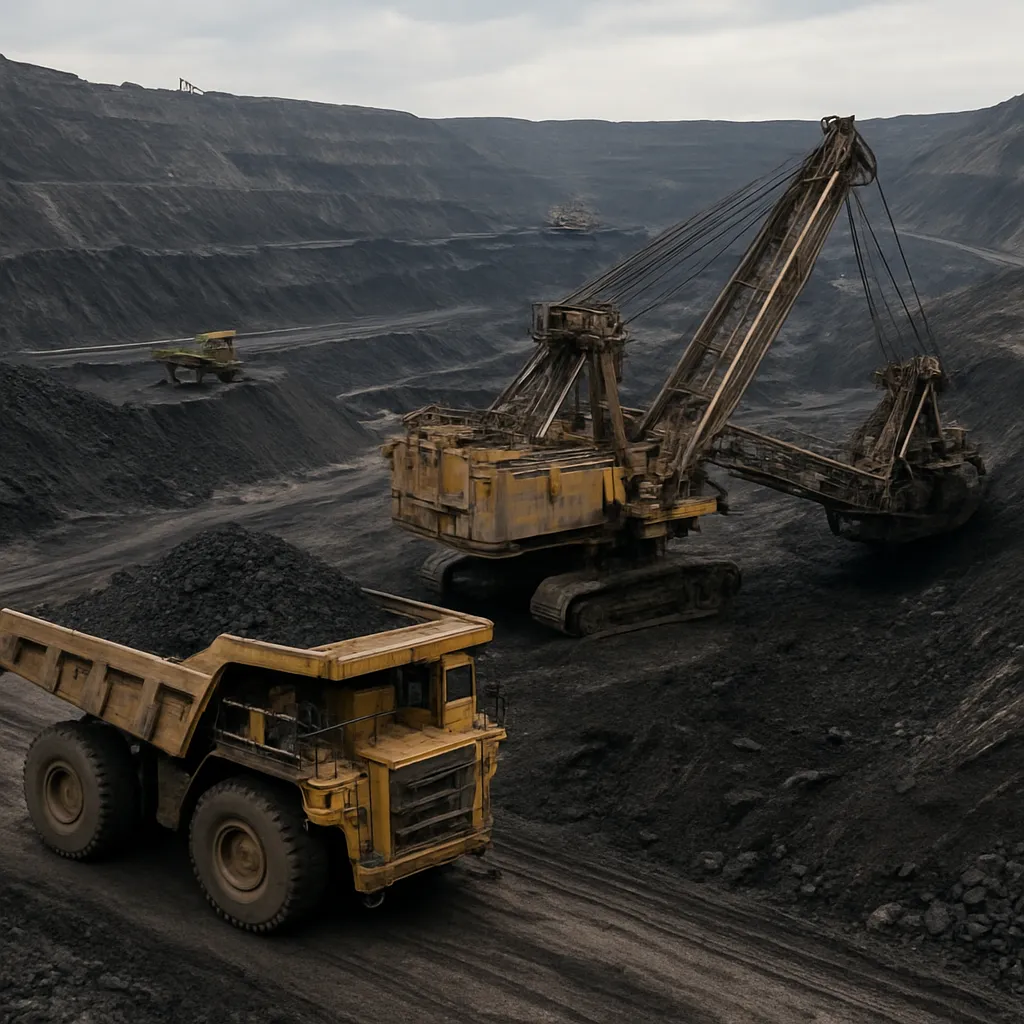
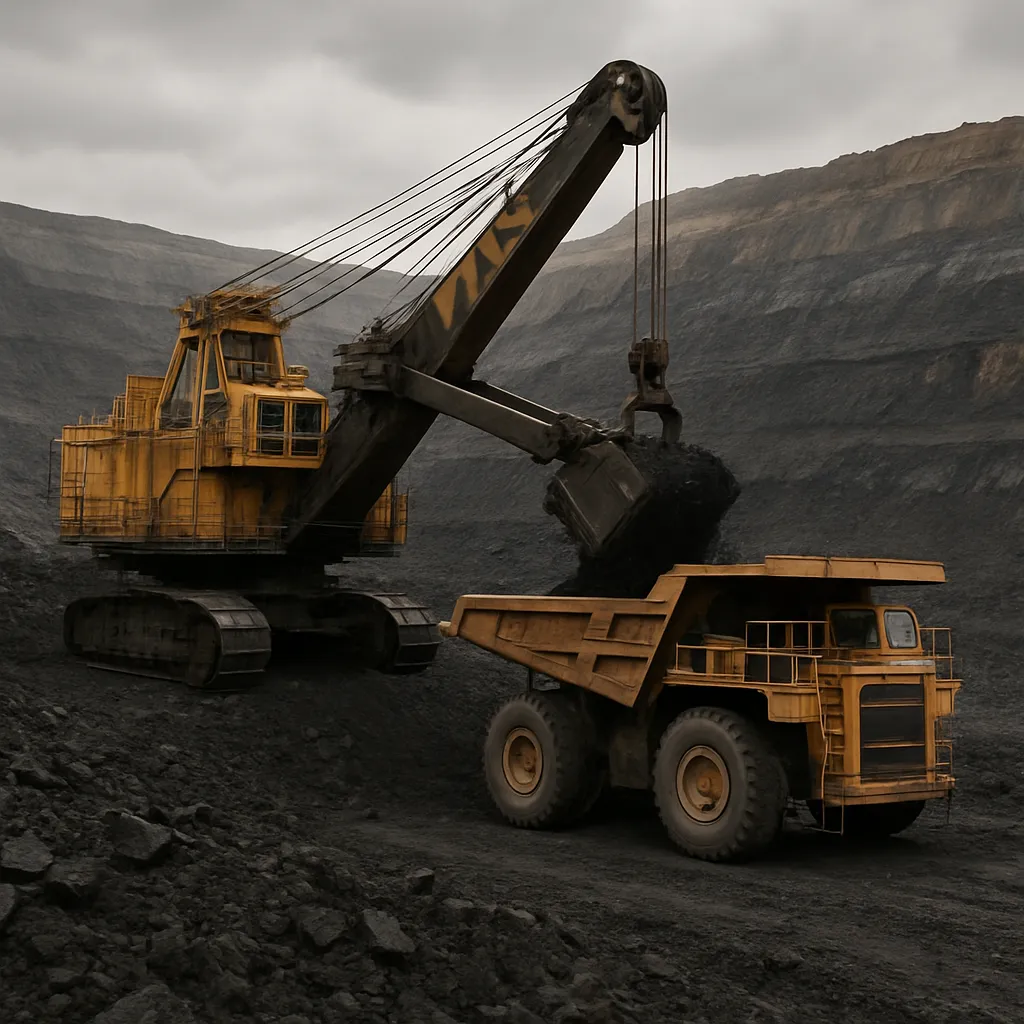
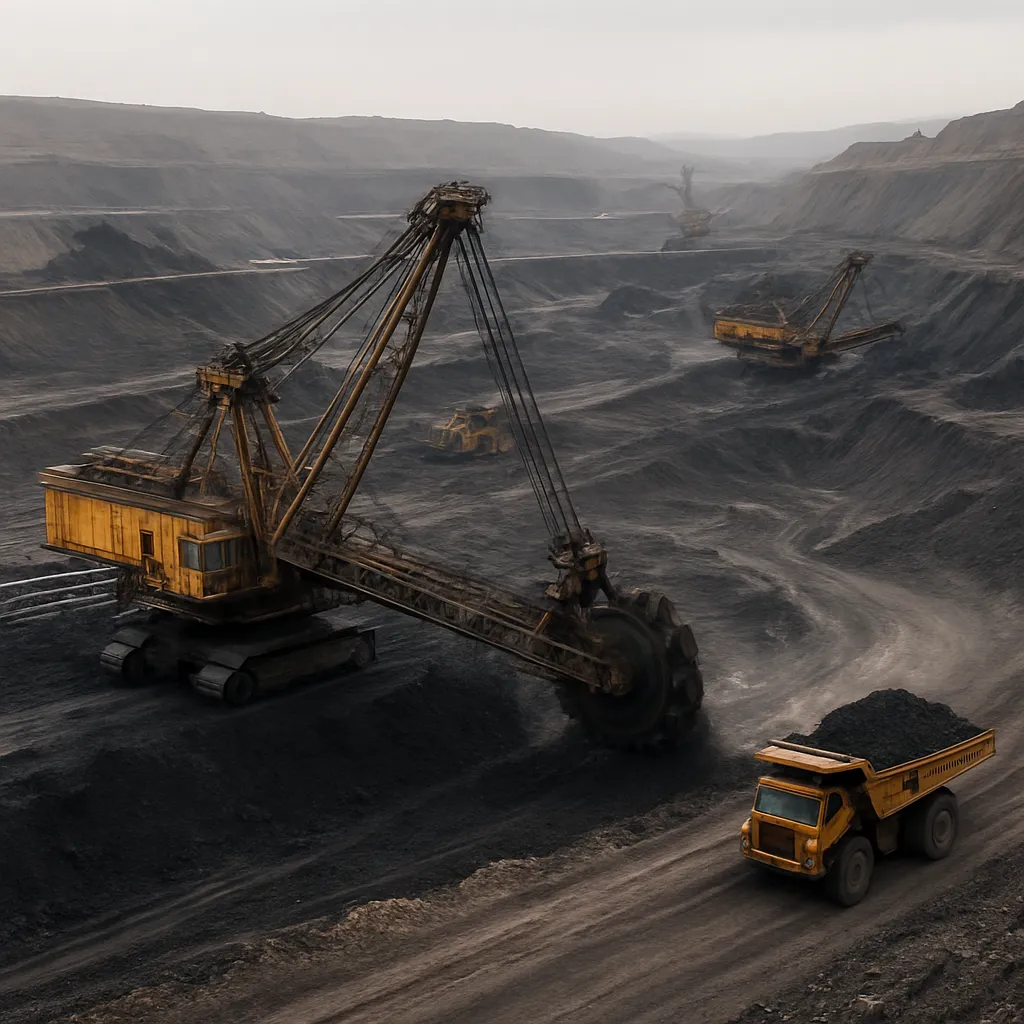
- Large-scale open-pit mining where thick, near-surface seams permit economical removal of overburden and bulk extraction.
- Mechanized underground longwall and room-and-pillar mining for deeper seams, increasingly employing modern roof support and automation systems.
- Integrated coal preparation and washing facilities to improve coal quality (reduce ash and sulfur) and to produce specialist coal grades for coking and chemical feedstocks.
Economic and industrial importance
The Zhungeer coal region plays a multifaceted role in China’s economy and industrial strategy:
- Energy security: Coal from this region supplies thermal power plants across northern and western China, helping to stabilize regional electricity supply, especially during peak demand seasons.
- Industrial feedstock: Washed and higher-grade coals are used in coking, metallurgy, cement production, and chemicals manufacturing.
- Coal-to-chemicals: The availability of large coal volumes has encouraged coal-to-chemical and coal-to-liquids projects in northwestern China, converting coal into methanol, olefins, or synthetic fuels to support petrochemical feeds and transport fuels in inland regions.
- Infrastructure and logistics: Development of rail, road, and handling infrastructure to move coal from inland mines to consumption centers or export nodes has stimulated broader logistics investments.
- Employment and regional GDP: Coal mining and associated industries provide significant employment in mining towns and contribute a notable share of local government revenues and GDP in affected prefectures.
Although exact production figures for individual Zhungeer mines vary year to year, the broader Junggar Basin and adjacent coalfields are recognized among China’s larger coal-producing regions. Production supports both domestic energy demand and feedstock needs for local chemical and industrial clusters.
Statistics, reserves and production (overview and estimates)
Comprehensive, mine-by-mine public statistics for every Zhungeer operation are not uniformly published in international sources; however, the following points summarize broadly accepted understandings and official-style estimates:
- The Junggar Basin and connected coalfields are routinely listed among China’s major coal-bearing basins, with resource estimates that place them in the tens-to-hundreds of billions of tonnes range depending on the scope (resources vs. reserves) and survey methods used.
- Annual coal production in Xinjiang as a whole has grown substantially since the early 2000s, driven by power demand and industrialization of the west. A meaningful proportion of this production comes from the Junggar/Zhungeer areas.
- Quality metrics indicate a wide range in calorific value, ash and sulfur content; modern washing plants in the region often reduce ash content by several percentage points to make coal suitable for high-value uses.
Because public reporting standards and definitions (e.g., “resources” vs “proved reserves”) differ across agencies and companies, numerical comparisons should be interpreted cautiously. Many official Chinese surveys and provincial geology bureaus publish more detailed reserve and production data in annual reports and statistical yearbooks for those seeking precise figures for particular years and mines.
Infrastructure, transport and markets
Connecting the Zhungeer coalfields to customers has required major infrastructure investments:
- Rail corridors are the backbone of long-distance coal transport, linking mines to power plants, steel mills, and export corridors toward Central Asia and coastal ports via trans-regional rail networks.
- Road networks and dedicated conveyor systems serve mine-to-wash-plant and mine-to-rail terminals within local mining districts.
- Coal-handling yards, washing stations, and logistic hubs enable blending and quality control to meet end-user specifications.
The location in northwest China means coal from Zhungeer is especially strategic for supplying regional power grids, resource-intensive industries, and for supporting government plans to develop inland manufacturing and chemical processing clusters that rely on secure coal feedstocks.
Environmental impacts and mitigation
Like other large coal mining regions, Zhungeer exhibits environmental and social challenges that have drawn increasing regulatory and public attention:
- Land disturbance: Open-pit operations alter landscapes, affect soils and vegetation, and require reclamation. Progressive mines implement staged reclamation to reduce long-term impacts.
- Water stress: The Xinjiang region is arid; mining, coal washing, and coal-to-chemical operations consume substantial water. Water allocation and efficiency measures—such as closed-loop systems and wastewater treatment—are important for sustainable operations.
- Air quality and dust: Mining and coal transport generate dust and particulate emissions. Dust suppression, covered conveyors, and air monitoring are employed to reduce local health impacts.
- Methane emissions: Coal seams release methane during mining. Methane capture and utilization (for power generation or as industrial gas) are gaining emphasis both to reduce greenhouse gas emissions and to recover an energy resource.
- Greenhouse gases: Coal extraction and combustion contribute to CO2 emissions. National policies to peak and then reduce carbon intensity are prompting some diversification and efficiency upgrades in coal operations.
Regulatory oversight, technological upgrades, and corporate environmental programs have increased in recent years. Measures include cleaner coal technologies, emission control for associated power plants, greater automation to reduce surface footprints, and investments in ecological restoration of disturbed areas.
Social, cultural and local economic effects
Mining towns and communities around Zhungeer have seen both benefits and strains:
- Employment and services: Mining provides relatively high-paying jobs and stimulates service industries—housing, retail, education and health services—often forming the backbone of local economies.
- Population changes: Influxes of migrant workers during boom periods can strain local housing, public services and social cohesion; conversely, downturns or mine closures present risks of unemployment and out-migration.
- Cultural landscape: The region is home to diverse ethnic groups and nomadic traditions. Mining and infrastructure development have transformed some traditional land uses, requiring careful social engagement and compensation frameworks.
Technological trends and modernization
Modern Zhungeer mining operations increasingly adopt technologies to improve safety, productivity and environmental performance:
- High-capacity continuous miners and longwall systems for underground extraction.
- GPS-guided earthmoving and optical surveying for open-pit optimization.
- Automated materials handling, including belt monitoring and remote operations centers.
- Advanced coal-washing and beneficiation to produce tailored coal products and reduce pollutants.
- Methane capture systems and co-generation units that turn fugitive gas into electricity or heat.
These technological shifts help reduce unit production costs, increase safety standards, and make coal supplies more compatible with stricter environmental requirements imposed by regulators and customers.
Strategic challenges and future outlook
The outlook for Zhungeer coal mining is shaped by intersecting factors:
- Domestic energy policy: China’s broader policy to ensure energy security and a stable domestic coal supply supports continued operation of major coalfields, while medium- and long-term carbon targets are pushing for cleaner energy mixes.
- Market dynamics: Demand from power generation, metallurgy and chemical sectors will influence production trajectories. Expansion of downstream coal-to-chemical facilities could sustain demand for certain coal grades.
- Environmental constraints: Water scarcity, air quality regulation, and national carbon-reduction pledges present limits on expansion without major investments in efficiency and mitigation.
- Infrastructure and logistics: Continued investment in rail and processing infrastructure is essential to keep mines competitive and to access distant markets.
- Technological innovation: Deployment of emissions-reducing technologies, methane utilization, and carbon management (including pilot carbon capture initiatives where feasible) may determine which operations remain viable in a low-carbon transition.
Overall, the Zhungeer mining complex is expected to remain an important regional source of coal for years to come, albeit one that must adapt to stricter environmental standards and shifting national energy priorities. The pace and nature of adaptation will determine long-term prospects for employment, local economies and environmental restoration.
Interesting facts and lesser-known aspects
Several intriguing points help illuminate the broader significance of Zhungeer:
- The region’s remote inland location has fostered development strategies that integrate mining, chemical processing and logistics, effectively creating industrial clusters optimized for coal feedstocks rather than proximity to coastal ports.
- Because of arid conditions, some mines have pioneered water recycling and zero-liquid-discharge systems to lower freshwater withdrawals.
- Methane drainage projects not only improve mine safety but also offer an energy source; captured gas has sometimes been used for local power supply, reducing diesel use and local air pollution.
- Reclamation efforts in some areas have experimented with planting native drought-resistant species and creating wetlands where hydrological conditions permit, balancing reclamation with water conservation.
Conclusions
The Zhungeer coal mines and the broader Junggar coal region are integral to China’s northwest industrial landscape. They supply critical thermal and metallurgical coal, underpin local economies, and support major downstream industries including power generation and coal-to-chemical processes. At the same time, water scarcity, environmental impacts, and the national carbon agenda create pressures that require technological upgrades, stricter management, and diversified local economies.
The future of Zhungeer will likely be characterized by efforts to balance continued production with improved environmental performance—through methane utilization, enhanced coal preparation, water-saving technologies, and reclamation—while navigating changing market and policy conditions. For stakeholders—government, industry and local communities—sustainable management of the region’s coal assets will be essential to preserve economic benefits while minimizing ecological and public health costs.