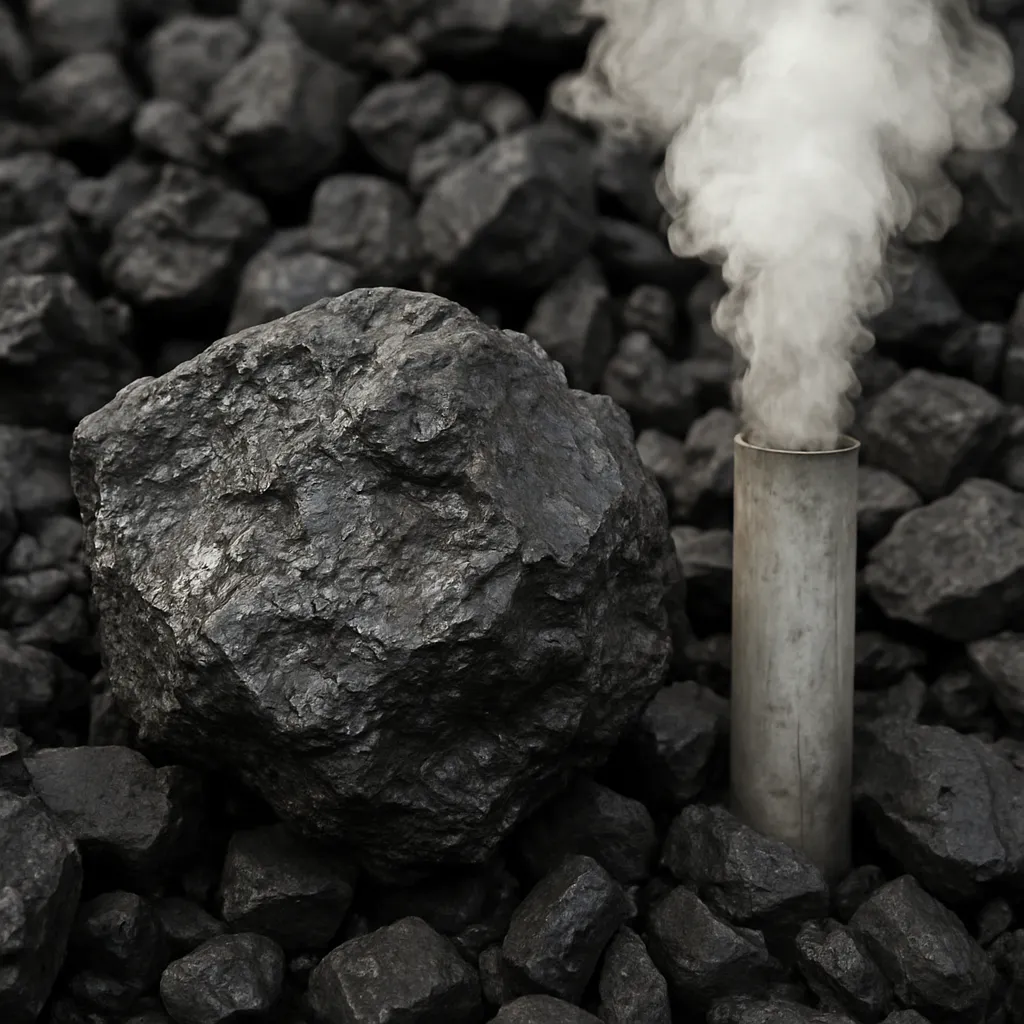
The coal industry has long been associated with high emissions of sulfur dioxide (SO₂), a major contributor to acid rain, respiratory illness, and environmental degradation. Over the past decades, the market and technology have evolved to favor coals and combustion methods that reduce SO₂ emissions — both by selecting naturally low-sulfur fuels and by using coal types whose mineralogy helps capture sulfur during combustion. This article examines the phenomenon of SO₂-reducing coal: where it occurs, how it is mined and used, the technologies and chemistry behind its sulfur-capturing behavior, and the economic, regulatory and statistical context shaping its significance in modern industry.
Occurrence and types of SO₂-reducing coal
Coal variability is the first key to understanding SO₂ emissions. Sulfur in coal occurs primarily in two forms: organic sulfur chemically bound within the coal matrix, and inorganic sulfur, most commonly in the form of pyrite (FeS₂) or other sulfide minerals. Some coals also contain substantial amounts of alkaline minerals such as calcite (CaCO₃) or dolomite (CaMg(CO₃)₂), which can react during combustion to capture sulfur and form stable sulfates. Coals that are naturally low in total sulfur or that contain a favorable mineral mix that promotes in-furnace sulfur capture are commonly referred to as SO₂-reducing or self-desulfurizing coals.
Typical categories and features:
- Low-sulfur coals: Generally defined as coal with sulfur content below 1.0% (often <0.5% or <0.3% for very low sulfur). These coals generate less SO₂ per unit of heat when combusted.
- Self-desulfurizing coals: Coals with significant calcium/magnesium-bearing minerals that react with SO₂ during combustion to form sulfates (e.g., CaSO₄). This intrinsic sulfur-capture lowers stack emissions without relying solely on downstream scrubbers.
- High-pyritic sulfur coals: Contain iron sulfides that release SO₂ readily and are less amenable to in-combustion capture unless physical cleaning removes pyrite.
Regionally, coal sulfur content varies due to geological formation conditions. Coals formed in oxygen-poor, marine-influenced environments tend to have higher sulfur because of sulfate incorporation, whereas coals from continental, fresh-water depositional settings more often have lower sulfur. Mineral-rich coals that can capture SO₂ often derive from depositional environments where carbonate minerals were present or where post-depositional mineralization introduced alkaline constituents.
Where SO₂-reducing coal is found and mined
SO₂-reducing or low-sulfur coals are mined across many of the world’s major coal basins. The occurrence is uneven: some basins are famous for exceptionally low sulfur content, others for coals that by virtue of their mineralogy help reduce SO₂ in combustion.
- Powder River Basin (USA): Located in Wyoming and Montana, PRB coal is a globally important source of low-sulfur subbituminous coal. Typical sulfur values are low (often in the range of a few tenths of a percent), which has made PRB coal attractive to utilities seeking compliance without extensive downstream treatment.
- Indonesian basins (Sumatra, Kalimantan): Many exported thermal coals from Indonesia have relatively low sulfur content (commonly <0.5%), making them competitive on the global seaborne market.
- Australian basins (Queensland, New South Wales): Sulfur content varies by seam; some Queensland thermal coals are low in sulfur, while metallurgical coals (hard coking coals) have other specifications that affect sulfur.
- Colombian deposits (e.g., Cerrejón): Known for low-sulfur, low-ash thermal coal for export markets, historically attractive to power plants needing cleaner-burning fuels.
- Russian and Central Asian basins: Variable; some regions produce coals with low sulfur, but many have higher sulfur content depending on local geology.
- European lignite and brown coal fields: Many continental lignites are relatively low in sulfur, though they may be high in moisture and CO₂ intensity; Germany, Poland and Czech lignite seams vary widely.
Major coal-producing countries (China, India, the United States, Australia, Indonesia, Russia, South Africa) collectively shape the global supply of low-sulfur coal. Export-oriented producers (Australia, Indonesia, Colombia) often market low-sulfur grades to utilities and industrial buyers worldwide.
Chemistry and combustion mechanisms that reduce SO₂ emissions
The reduction of SO₂ emissions from coal combustion can occur by three primary mechanisms:
- Fuel selection: burning coal that is inherently low in sulfur reduces SO₂ formation proportionally to sulfur content.
- Fuel processing: physical cleaning (washing) can remove pyritic sulfur and ash-bound sulfur minerals, lowering combusted sulfur content.
- In-furnace sulfur capture: when coal contains adequate quantities of alkaline minerals (e.g., calcium carbonate, calcium oxide, magnesium compounds), these can react with SO₂ produced during combustion to form sulfates (e.g., CaSO₄). Advanced combustion systems like fluidized bed boilers enhance contact between gas and sorbent minerals, improving in-situ sulfur capture.
In technical terms, the net effect is conversion of liberated sulfur (initially S or sulfide) to gaseous SO₂ during combustion, followed by either capture by sorbent minerals to form solid sulfates or removal by downstream processes. Physical coal cleaning targets inorganic sulfur (pyrite) and can reduce total sulfur significantly when pyritic sulfur dominates. Organic sulfur, however, is chemically bound and less removable by simple washing.
Combustion technologies that facilitate in-furnace desulfurization:
- Circulating fluidized bed (CFB) combustion — allows addition of limestone/limestone naturally present in coal to capture SO₂ at high efficiency.
- Pressurized fluidized bed and bubbling fluidized bed systems — promote gas-solid contact and enhance sulfur capture.
- Co-firing with biomass or adding sorbents — biomass can alter flue chemistry and added sorbents (limestone, dolomite) provide reactive calcium for SO₂ capture.
Industrial significance and applications
SO₂-reducing coal has clear industrial value. Utilities and large industrial boilers aim to meet regulatory emission limits and avoid expensive retrofits. Using low-sulfur or self-desulfurizing coals can reduce capital and operating costs associated with flue-gas desulfurization (FGD) systems, such as wet scrubbers, and can simplify compliance strategies.
Key application areas:
- Power generation: Utilities often blend coals to meet sulfur limits and to optimize boiler performance. Low-sulfur coals are used to avoid or mitigate the cost of FGD installations.
- Industrial steam boilers: Factories, refineries, chemical plants and district heating systems that burn coal benefit from lower SO₂ feedstock to meet local air quality standards.
- Metallurgical processes: While coking coal used for steelmaking has different quality drivers (volatile matter, carbon content, coking behavior), sulfur control remains critical because sulfur in steel reduces quality. Thus low-sulfur feedstock or desulfurization during coke production is important for metallurgy.
- Export markets: Countries restricted by air quality regulations or buyers with strict emissions targets prefer lower-sulfur coal to assure compliance and to limit downstream FGD costs.
Economic and policy context
The economic value of SO₂-reducing coal depends on regulatory frameworks, plant-level technology, transport logistics and market demand. Historically, stricter air pollution regulations — such as the United States Clean Air Act Amendments of 1990 (which established a sulfur dioxide cap-and-trade program) and European emissions standards — increased demand for low-sulfur coal. Utilities responded by switching to lower-sulfur supplies, installing FGD systems, or blending fuels.
Economic considerations include:
- Price differentials: Low-sulfur coal often commands a premium in markets where SO₂ compliance is costly. The premium depends on how much a buyer would otherwise spend on scrubbers, sorbent consumption, or emission allowances.
- Transport costs and coal quality logistics: Moving low-sulfur coal from distant basins can offset its value if shipping or rail costs are high. That is why local low-sulfur sources (e.g., PRB to U.S. midwest utilities) became economically attractive.
- Capital expenditure savings: For plants near retirement or with limited remaining life, purchasing low-sulfur fuel can be more economical than installing expensive scrubbers.
- Market segmentation: Exporters tailor coal cargos to meet buyers’ sulfur specifications. Thermal coal markets often have narrow product specifications that include sulfur limits to serve power utilities.
Policy actions and carbon transition pressures shape longer-term value. While low-sulfur coal addresses local air pollution, coal combustion still produces CO₂. Decarbonisation policies are reducing long-term demand for thermal coal in many regions, shifting economic emphasis toward cleaner alternatives (natural gas, renewables) and toward technologies like carbon capture, utilization and storage (CCUS) for coal plants that remain in service.
Statistics, trends and market data (approximate and indicative)
Global coal production and consumption levels have fluctuated with economic cycles and energy transitions. In recent years, world coal demand stabilized at a high level before beginning regional shifts driven by policy and price, with annual global coal production and consumption measured in the order of several billion tonnes per year. Coal remains a major energy source in countries such as China and India, while exports from Australia and Indonesia dominate seaborne markets.
Typical sulfur content figures and technical stats:
- Definition ranges: Low-sulfur coal often defined as <1.0% total sulfur; many market products target <0.5% or <0.3% for strict compliance.
- PRB coal averages: Many PRB subbituminous coals report sulfur values commonly in the order of 0.2–0.4% (varies by seam and mine).
- Flue-gas desulfurization (FGD) performance: Modern FGD systems can remove up to 95–98% of SO₂ from flue gas when properly designed and operated.
- Emission reductions: Regulatory programs such as the U.S. SO₂ cap-and-trade contributed to large national reductions in SO₂ emissions since the 1990s — declines on the order of tens of percent to over 50% in many jurisdictions over multiple decades — driven by fuel switching, scrubber installation and efficiency improvements.
Because coal quality and sulfur content vary by seam, mine and batch, buyers rely on routine proximate and ultimate analyses for contract specifications. The market premium for low-sulfur coal is driven by the cost differential of meeting emissions standards through alternate means, and by availability on the seaborne market.
Environmental implications and mitigation technologies
Reducing SO₂ emissions has clear environmental and public health benefits: fewer acid deposition events, reduced particulate formation from secondary sulfates, and lower risk of respiratory irritation. However, mechanisms that reduce SO₂ at the point of combustion do not address CO₂ emissions, which are the primary driver of climate change.
Key mitigation technologies and approaches include:
- Fuel washing and beneficiation — removes mineral sulfur (pyrite) and ash, lowering combusted sulfur content.
- In-furnace sorbent capture — fluidized bed technologies or the addition of limestone/dolomite promote formation of sulfates and reduce SO₂ emitted.
- Downstream FGD systems — wet and dry scrubbers remove SO₂ from flue gas; wet scrubbers produce gypsum as a byproduct that can be sold for use in construction materials.
- Emissions trading and regulatory instruments — economic instruments incentivize reductions, causing shifts to low-sulfur fuels and cleaner technologies.
- Co-firing and fuel blending — mixing low-sulfur coals or biomass reduces net sulfur output and can leverage existing plant infrastructure.
A notable co-benefit of some FGD systems is production of marketable gypsum (CaSO₄·2H₂O), which can be used in cement and drywall manufacture. In this way, sulfur captured from coal combustion becomes a feedstock for other industries, partially offsetting environmental cost through material substitution.
Interesting facts and technological innovations
- Historical policy effects: The success of SO₂ control programs in North America and Europe demonstrates how regulatory design (e.g., emissions trading) combined with fuel switching and technology deployment can produce rapid air quality improvements while allowing industry flexibility.
- Self-desulfurization is not universal: Even coals labeled “self-desulfurizing” depend on combustion temperature, residence time and particle size to facilitate sulfur capture. Operational parameters matter as much as coal composition.
- Integration with circular economy: Gypsum from FGD can substitute mined gypsum in construction, reducing raw material extraction.
- Coal quality analytics: Modern supply chains increasingly use near-infrared (NIR) and elemental analyzers to verify sulfur and ash content rapidly, enabling tighter contractual specifications and optimized blending.
- Transition strategies: In many markets, utilities that remain dependent on coal pursue staged approaches — switching to lower-sulfur grades, investing in FGD and efficiency upgrades, and evaluating CCUS for longer-term emissions control.
Outlook and conclusions
SO₂-reducing coal — whether by virtue of low inherent sulfur or of mineralogical propensity to capture sulfur in situ — has played, and continues to play, an important role in balancing air quality priorities with energy and industrial needs. The value of such coal is determined by a mix of geology, technology, local environmental regulation and market logistics. While low-sulfur fuels and in-furnace capture can substantially reduce SO₂ emissions and deliver tangible public health and environmental benefits, the broader energy transition requires addressing carbon emissions from coal as well. For the near to medium term, markets that remain coal-reliant will place a premium on coal quality that reduces particulate and SO₂ burdens, even as long-term investments increasingly focus on decarbonization, alternative fuels and emission abatement technologies.
Understanding the multiple dimensions of SO₂-reducing coal — geological occurrence, mining regions, combustion chemistry, industrial applications, economics and policy — is essential for energy planners, industry stakeholders and policymakers who must reconcile energy security, environmental health and economic efficiency in a rapidly changing global energy landscape.