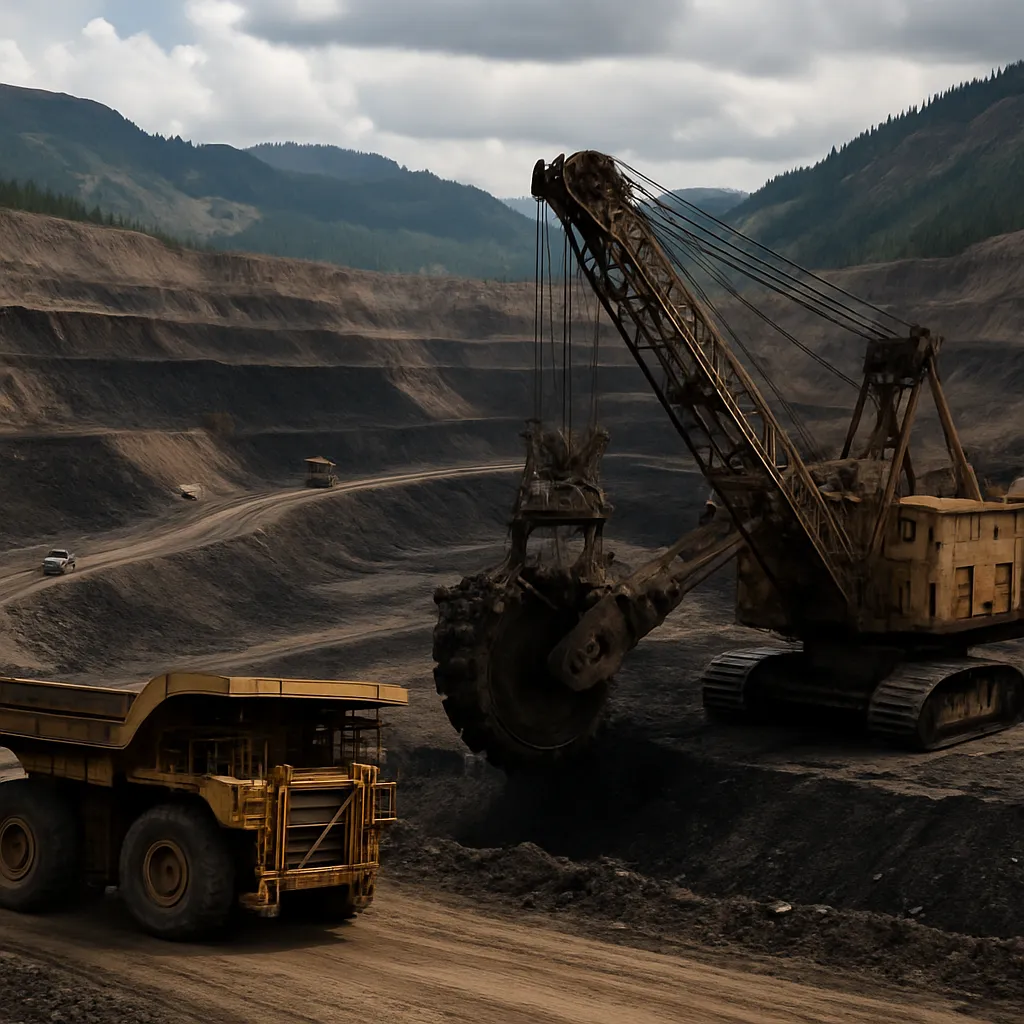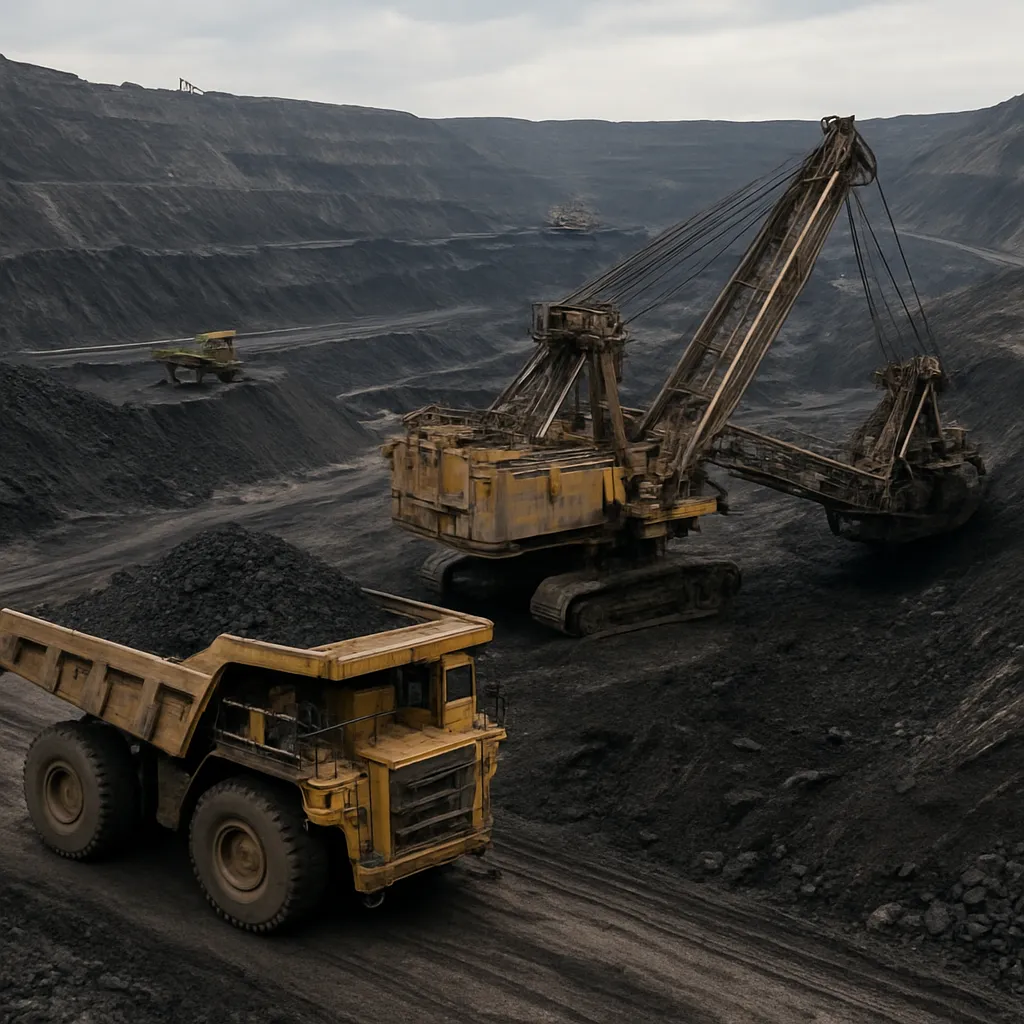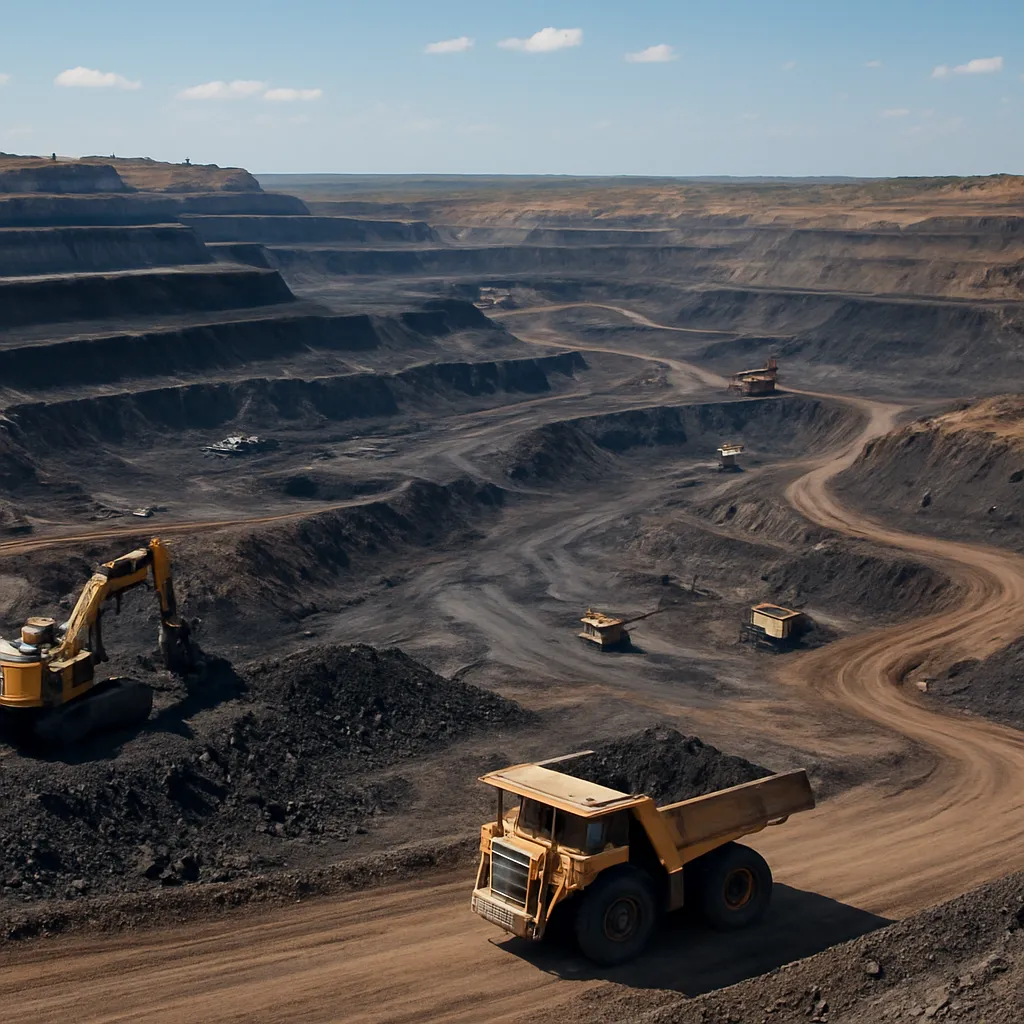
This article provides a comprehensive overview of the Nhamayabwe Mine in Mozambique, placing the site in the broader context of the country’s coal industry. It discusses the mine’s location and geological setting, the types and quality of coal associated with the deposit, the economic and industrial significance, operational and logistical aspects, and environmental and social considerations. Because public documentation specifically naming Nhamayabwe Mine is limited in widely available international databases, this profile synthesizes local reporting, regional geology of Mozambique’s coal basins, and standard industry practices to present a realistic portrait of the site and its role in the regional mining landscape.
Location and geological setting
The Nhamayabwe Mine is reported to be located in central or northern Mozambique, within or near the major coal-bearing areas that dominate the country’s mineral map. Mozambique’s most prolific coal-bearing region is the Tete Province, which hosts multiple coalfields and large-scale operations. The geology of the region is characterized by sedimentary basins with Carboniferous–Permian to Cretaceous sequences in which coal seams occur interbedded with sandstones, shales and mudstones.
Coal occurrences in Mozambique typically form in fluvial, deltaic and lacustrine depositional environments. These settings create seams varying in thickness, continuity and rank. At sites like Nhamayabwe, coal seam architecture is likely to reflect local paleogeography — stacked channels or laterally continuous blankets — resulting in variable mining conditions across the deposit. Mineralization trends in the region are commonly controlled by basin-scale stratigraphy and local tectonics that influence seam depth, dip, and faulting.
Geological investigations around similar Mozambican deposits commonly report the presence of both shallow, near-surface coal seams amenable to open-pit mining and deeper seams that require underground techniques. Given the broader context and the ongoing development pattern in Mozambique, exploration at Nhamayabwe would typically involve a sequence of surface mapping, trenching, exploratory drilling, and coal quality testing to delineate resources and plan mine development.
Coal type, quality and resource considerations
Coal in Mozambique ranges from sub-bituminous to bituminous ranks, with some occurrences of coking-quality (metallurgical) coal in specific seams within larger coalfields. The coal at Nhamayabwe, based on regional analogues, would most likely be classified as thermal coal with potential local bands of higher-rank material. Typical properties to evaluate would include calorific value (kcal/kg or MJ/kg), ash content, volatile matter, fixed carbon, moisture, sulfur content and coking properties if present.
Coal quality drives economic viability. Thermal coal with moderate to high calorific value (e.g., 4,500–6,500 kcal/kg) and low sulfur and ash is generally sought after by export markets and power generators. If the Nhamayabwe deposit contains higher-rank coal or coking fractions, it would command a premium and potentially support steel-industry supply chains regionally.
Resource statements for minor or emerging mines are often reported as inferred or indicated resources until extensive drilling and feasibility studies are completed. For many Mozambican deposits, early-stage resource estimates may be expressed in the low tens to hundreds of millions of tonnes; however, the absence of independently verified public data for Nhamayabwe means that any specific tonnage figure should be treated as provisional until validated by NI 43-101 / JORC or equivalent reporting.
Economic and industrial significance
Coal mining in Mozambique has been a significant driver of foreign direct investment, infrastructure development, and export revenue, particularly in the Tete region. A mine like Nhamayabwe, whether operating at modest scale or developed into a larger project, would contribute to several economic channels:
- Exports: The coal sector supplies international markets, notably in Asia (India, China), and in regional African markets. Revenue from exports supports Mozambique’s balance of payments and national budget revenues through royalties, taxes and dividends when state entities are involved.
- Employment: Direct mining jobs, ancillary services, and supply-chain opportunities create employment across skills levels, from drillers and operators to logistics, administrative and community liaison roles.
- Local economic development: Mining projects typically drive local procurement, road upgrades, electrification projects, and sometimes investments in schools and clinics as part of community development agreements.
- Investment: New or expanding mines attract capital expenditure for mine infrastructure, processing plants, and transport corridors, often leveraging international financing and technical partnerships.
At the national scale, the presence of additional mines such as Nhamayabwe strengthens Mozambique’s strategic position as a coal exporter. It also adds diversification to the portfolio of producers and can stimulate competition and innovation in logistics and value-add processing (e.g., coal washing, briquetting, or power generation projects associated with mine sites).
Operations, infrastructure and logistics
Successful coal operations depend crucially on reliable infrastructure. For Nhamayabwe, key operational considerations include the chosen mining method, processing facilities, and transport logistics linking mine to export terminals.
Mining method. The choice between open-pit and underground mining depends on seam depth, thickness and overburden. Open-pit mining is common for near-surface, continuous seams and is favored for cost-efficiency at scale. Underground methods are adopted where seams are deeper or where footprint minimization is required.
Processing. Coal from the mine would typically pass through a preparation plant for crushing, screening and washing to reduce ash and improve calorific value. Washed coal yields higher market value but requires water management and tailings handling infrastructure.
Transport corridors. Mozambique’s coal exports historically rely on a combination of rail and port infrastructure. The main corridors serving Tete and adjacent provinces include:
- Sena Railway to the Port of Beira — historically used for various bulk commodities.
- Nacala Corridor and the Nacala Logistics Corridor — developed to connect inland mines to deep-water ports via upgraded rail and port facilities.
- Road transport for shorter distances or feeder logistics, requiring robust local road networks and heavy-duty trucking capacity.
Integration with these corridors is essential for delivering coal to international markets competitively. Investment in rail capacity, rolling stock and port handling facilities frequently forms part of project-level planning. For smaller or newly developed sites, producers may use third-party logistics services or negotiate access to existing rail networks, which can be a critical bottleneck or enabler of production growth.
Environmental, social and governance considerations
Mining activities present environmental and social challenges that require robust management. For Nhamayabwe, responsible operations would need to address:
- Water management: Coal preparation and dust suppression use water; tailings and effluents require treatment and secure containment to prevent contamination of surface and groundwater.
- Air quality and dust control: Excavation, hauling and crushing generate dust and particulate emissions that must be mitigated through enclosure, water spraying, and downwind monitoring.
- Land rehabilitation: Progressive reclamation of mined areas reduces long-term landscape impacts and supports biodiversity offsets where appropriate.
- Community engagement: Effective stakeholder consultations, benefit-sharing mechanisms, and local employment and training programs are essential to securing social licence to operate.
- Regulatory compliance and transparency: Adherence to Mozambique’s environmental regulations, international best-practice standards and transparent reporting build investor and community confidence.
Environmental and social governance (ESG) frameworks are increasingly linked to access to international finance. Therefore, mine developers commonly implement Environmental and Social Impact Assessments (ESIAs), Resettlement Action Plans (if displacement is necessary), and ongoing monitoring programs. For the surrounding communities, mining can bring improved services and jobs but may also introduce competition for water resources, disruption of livelihoods (especially for smallholder farmers), and pressures on local infrastructure.
Statistical context and data transparency
Specific, independently verified statistics exclusively for Nhamayabwe Mine are not widely published in mainstream international mining databases as of the most recent consolidated sources. This is not uncommon for smaller or emerging projects which may be documented primarily in local government records, company reports not broadly distributed, or exploratory-stage filings. For a broader statistical perspective, consider the following contextual points about Mozambique’s coal sector:
- Mozambique’s coal resources are concentrated in central provinces, driving most of the country’s coal-related investments.
- Major projects in the country have attracted global mining companies and substantial infrastructure financing, highlighting the sector’s capacity to mobilize capital.
- Export orientation is a defining feature of the industry; coal mined domestically is often destined for international thermal and metallurgical markets.
For reliable, project-level numbers (reserves, annual production, employment), the best sources are official company technical reports, independent resource statements compliant with JORC / NI 43-101 standards, and Mozambique’s national mining cadastre and statistical releases. If Nhamayabwe is being developed by a private or smaller operator, direct inquiries to the operating company or provincial mining authority may be necessary to obtain up-to-date production and reserve figures.
Regional and global market linkages
Coal demand dynamics affecting Nhamayabwe extend beyond Mozambique’s borders. Global thermal coal prices, demand from power producers in Asia and Africa, and metallurgical coal demand for steelmaking determine market appetite and pricing. In recent years, trends that bear on Nhamayabwe’s prospects include:
- Volatility in seaborne thermal coal prices driven by shifts in energy policy, pandemic recovery cycles and alternative energy costs.
- Logistical constraints and freight cost fluctuations that can materially affect delivered coal pricing.
- Increasing scrutiny of carbon intensity and lifecycle emissions, pressuring coal producers to demonstrate emissions management and consider diversification into cleaner energy or carbon-offset initiatives.
For a mine like Nhamayabwe to competitively access global markets, reliable and cost-effective export logistics are as important as seam quality. Partnerships with logistics providers and alignment with national infrastructure upgrades (rail, ports, power) are common strategies to lower delivered cost and maintain market access.
Future outlook and strategic opportunities
The future for Nhamayabwe depends on several interrelated factors:
- Exploration and resource definition: Completion of extensive drilling and independent resource reporting will determine project scale and attractiveness to investors.
- Infrastructure integration: Securing rail and port access is a priority; improvement of corridors or negotiated access arrangements will enable scaling.
- Value addition: On-site or regional investments in coal washing, briquetting or captive power generation can increase returns and reduce exposure to raw coal price volatility.
- ESG performance: Demonstrating environmental stewardship and positive community outcomes will be decisive for financing and long-term social licence.
- Market diversification: Exploring regional power-plant supplies and domestic industrial demand as complements to export markets can stabilize revenue streams.
Opportunities also exist in leveraging renewable energy and electrification of mines, improving operational efficiency through mechanization and digital mining techniques, and engaging in carbon management strategies to align with global decarbonization trends while maintaining competitiveness in coal markets that persist for decades in many regions.
Concluding remarks
Nhamayabwe Mine sits conceptually within a dynamic Mozambican coal landscape characterized by significant geological potential, evolving infrastructure, and complex socio-environmental considerations. While specific public-domain statistics for Nhamayabwe are limited, the mine’s prospects and challenges closely mirror those faced across Mozambique’s coal sector: the need to balance resource development with sustainable practices, align with logistics networks to reach export markets, and structure investments that deliver local and national economic benefits. For stakeholders — from investors and government authorities to local communities and environmental advocates — an evidence-based approach founded on transparent resource reporting, responsible operations, and continuous engagement will determine the project’s long-term contribution to Mozambique’s development trajectory.
Key terms emphasized: Mozambique, Tete, coal, reserves, exports, infrastructure, employment, environment, railways, investment