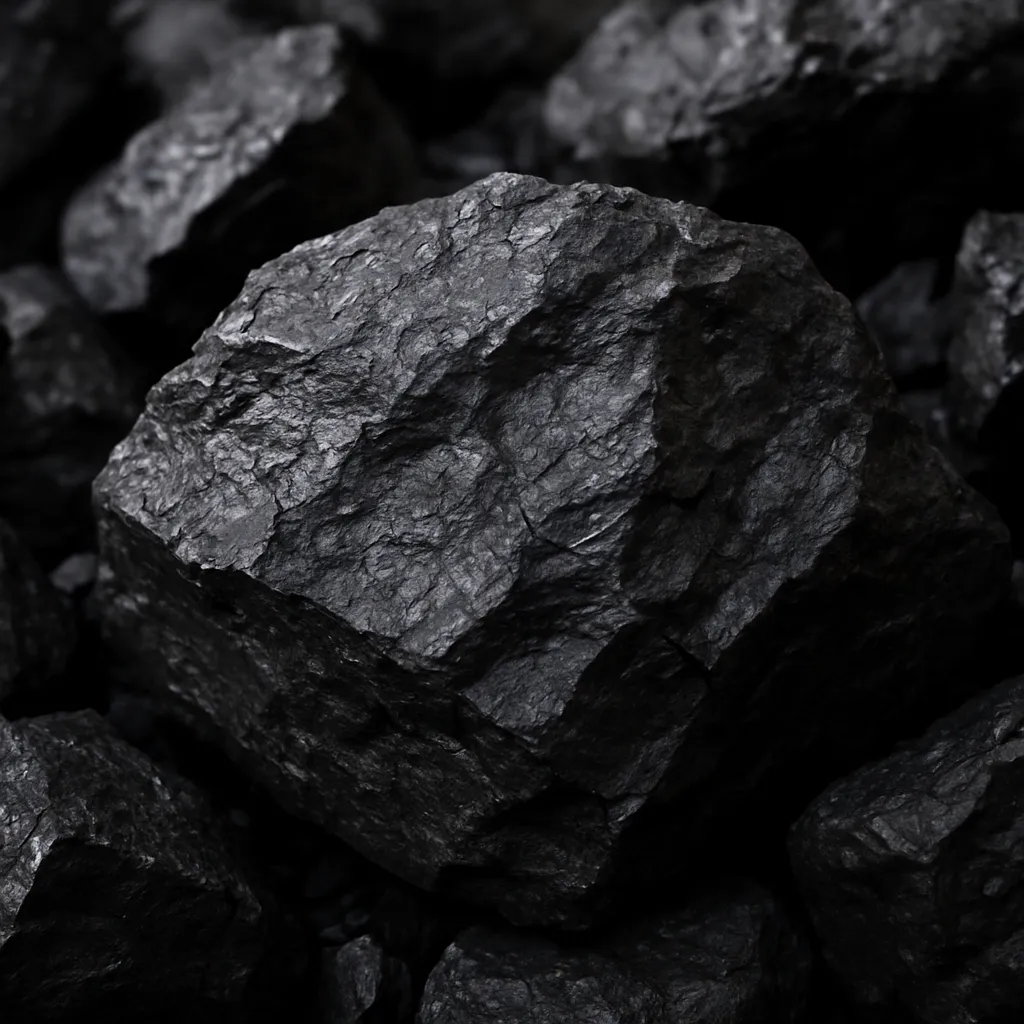
Metallurgical coal, commonly called coking coal in industry, is a critical raw material for traditional steelmaking and many heavy industries. Unlike thermal coal used mainly for power generation, metallurgical coal has special physical and chemical properties that allow it to be converted into coke — a porous, carbon-rich solid that provides both heat and a reducing atmosphere in blast furnaces. This article explains where metallurgical coal occurs, how and where it is mined, the economics and global trade patterns that shape its market, its role in the steel industry, environmental and social impacts, and the likely pathways for its future as the world pursues decarbonisation of heavy industry.
Geology, types and properties of metallurgical coal
Metallurgical coal is not a single homogeneous commodity but a set of coals with specific properties that determine their suitability for coke production. Key attributes include volatile matter, ash content, sulfur, phosphorus, and most importantly the coal’s ability to coke — that is, to soften, swell, and re-solidify into a strong porous mass when heated in the absence of air.
- Hard coking coal (HCC) — High-quality material that produces strong, high-strength coke for blast furnaces. It has low ash and sulfur, good caking properties, and strong mechanical performance.
- Semi-soft coking coal (SSCC) — Lower quality than HCC; used in blends to reduce cost while maintaining acceptable coke quality.
- Pulverized coal injection (PCI) coal — Lower-rank coals suitable for injection into blast furnace tuyeres to reduce coke consumption.
- Anthracite and other high-rank coals — Sometimes used in blends, particularly for PCI.
These different types are often blended to achieve specific coke strength and reactivity characteristics required by a steel plant. Laboratory tests (e.g., Gieseler plastometer, Gray-King test, and Free Swelling Index) and pilot-scale ovens are used to evaluate a coal’s coking behavior. The geological occurrence of metallurgical coal is typically in mid- to high-rank bituminous coal seams that have undergone sufficient thermal maturity to develop the required plasticity and coke-forming behavior.
Where metallurgical coal is found and mined
Deposits of coking coal are distributed across many of the world’s major coal basins. Mining methods vary from vast open-pit (open-cut) operations to deep underground workings depending on seam depth, seam thickness, overburden and local geology. Major mining regions include:
- Australia — Queensland and New South Wales contain some of the world’s most prolific coking coal basins. Australia is the largest global exporter of metallurgical coal and hosts large open-cut and underground mines operated by major mining companies.
- Russia — Significant reserves and growing export capacity, with major production in Siberian basins and the Far East, supplying both domestic steelmakers and international buyers.
- China — Produces the largest tonnage of all coal types, including coking coal, though much of this is consumed domestically. Chinese coking coals range widely in quality.
- The United States and Canada — Both produce metallurgical coal, notably in the Appalachian basin (US) and western Canada, serving domestic steelmakers and export markets.
- Colombia, South Africa, Mongolia, and Mozambique — Important exporters or producers of metallurgical and semi-soft coking coals, each with distinctive qualities and logistical profiles.
Mining techniques:
- Open-pit mining is common where seams are shallow and extensive; it enables very large-scale production at low unit cost but has extensive surface impacts.
- Underground longwall mining is used where seams are deeper; it can be highly productive but involves greater operational complexity and geotechnical risks.
Global production, trade and economic importance
Metallurgical coal occupies a distinct economic niche. It is a higher-value segment of the coal market because of its essential role in steelmaking and the relatively strict quality specifications buyers require. While total coal production worldwide runs into the billions of tonnes, metallurgical coal represents a smaller but strategically important share of that total.
Recent global figures (estimates for 2018–2023 range) indicate:
- Annual global production of metallurgical coal in the order of several hundred million tonnes (commonly reported ranges are roughly 400–800 million tonnes, depending on classification and year).
- International seaborne trade of metallurgical coal is smaller than thermal coal but highly concentrated; estimates of seaborne coking coal trade typically range between about 150 and 300 million tonnes per year depending on market conditions and trade definitions.
- Australia has been the dominant seaborne exporter for many years — commonly accounting for 40–60% of the seaborne coking coal market in typical periods. Other exporters include Russia, the United States, Canada, Colombia and Mozambique.
- China is the largest single consumer (and producer) of metallurgical coal because of its vast steel industry, which both imports seaborne coking coal and uses domestic supplies.
Price dynamics: Met coal prices have historically been more volatile than thermal coal due to the smaller market size, concentration of exports, and sensitivity to the steel cycle. Prices spiked in 2016 and again in 2021–2022 amid supply disruptions, strong steel demand and logistic constraints, then softened as demand cooled in some markets. The market is also sensitive to trade policy, freight costs, and disruptions such as flooding at mine sites or geopolitical events affecting major exporters.
Economic leverage: For producing regions, metallurgical coal can generate significant export revenues and high-quality employment compared to lower-value thermal coal. Conversely, countries dependent on coking coal imports are vulnerable to price and supply shocks, prompting some to seek diversification strategies including higher scrap use, imports from multiple sources, and investment in alternative ironmaking technologies.
Role in steelmaking, industrial importance and technical details
The primary industrial use of metallurgical coal is to make coke, which serves two critical functions in a blast furnace: it acts as a structural support for the burden of iron ore and coke, allowing gases to pass through, and it provides a strong reducing atmosphere and carbon source necessary to reduce iron oxides to metallic iron. The traditional blast furnace-basic oxygen furnace (BF-BOF) route still produces the majority of the world’s crude steel, especially for heavy sections, automotive, machinery and construction steel where high volumes and particular metallurgical qualities are required.
Key points about metallurgical coal in steelmaking:
- Typical consumption: On a very approximate basis, traditional BF-BOF routes require between about 0.5 and 0.9 tonnes of coking coal per tonne of crude steel when including PCI usage and blending practices; actual values depend on plant efficiency, use of by-product coke oven gas, and the share of PCI and scrap.
- PCI technology allows injection of pulverized coal directly into the blast furnace, reducing coke requirements and providing flexibility to use lower-grade coals.
- Steelmakers blend multiple coals to achieve desired coke strength and reactivity. The availability of suitable blends can be a limiting factor for plants when some coals are in short supply.
- By-products from cokemaking — coal tar, ammonium sulphate, benzene, toluene, and other chemicals — historically supported associated chemical industries.
Alternative steelmaking routes: Growth in electric arc furnace (EAF) steelmaking using scrap and direct reduced iron (DRI) reduces relative dependence on coking coal. Direct reduced iron processes can use natural gas (and increasingly hydrogen) instead of coke, and EAFs powered by electricity (preferably low-carbon) can produce steel with much lower CO2 intensity. However, the transition is uneven globally because of raw material availability (scrap and DRI feedstock), capital costs, and the need for high-quality steel for certain applications.
Environmental and social considerations
Mining and using metallurgical coal generate several environmental and social impacts. Surface disturbance from open-cut mines, groundwater and surface water impacts, dust and noise, greenhouse gas emissions from cokemaking and blast furnace operations, and community impacts near mines or transport corridors require active management and regulation.
- Greenhouse gases: Coke production and blast furnace steelmaking are carbon-intensive. A typical BF-BOF steel plant has a substantially higher CO2 footprint per tonne of steel than an EAF powered by low-carbon electricity and fed with scrap.
- Local environmental impacts: Mining can affect biodiversity, soil and water; modern mines use progressive rehabilitation and environmental management plans to mitigate impacts, but concerns persist especially in sensitive ecosystems.
- Health and safety: Both mining and cokemaking historically carried occupational hazards (collapses, dust-related illness, chemical exposures). Stringent mine health and safety regulations and improved technology have reduced, but not eliminated, these risks.
- Social license: Large metallurgical coal projects can transform local economies, bring employment and infrastructure but also cause displacement, pressure on services and conflict over land and resource rights.
Policy and innovation responses: Governments and industry are pursuing measures including emissions regulations, incentives for low-carbon steel, research into hydrogen-based DRI, carbon capture and storage (CCS) on blast furnaces and cokemaking plants, and circular economy approaches that increase scrap use. These responses will shape future demand for metallurgical coal.
Market dynamics, risks and geopolitical factors
The metallurgical coal market is characterized by several structural features that create supply risks and geopolitical sensitivities:
- Concentration of seaborne supply — heavy reliance on a handful of exporting countries (notably Australia and Russia in some periods) can make buyers vulnerable to export restrictions, geopolitical events, or weather-related disruptions.
- Demand tied to steel cycles — construction, automotive and infrastructure investment cycles drive steel demand and hence metallurgical coal consumption.
- Logistics and port capacity — the industry depends on large bulk shipping capacity and port handling systems; bottlenecks can significantly affect delivered costs.
- Trade and sanctions — political decisions affecting exporters can lead to rapid price shifts and re-routing of cargoes.
For example, events such as major floods in Queensland, labor disruptions, or trade sanctions have caused abrupt spikes in coking coal prices in past years. Buyers mitigate such risks through diversified sourcing, longer-term contracts, and strategic stockpiles.
Statistics and recent trends (summary)
Statistics in commodity markets change annually and are influenced by many factors; the figures below are offered as indicative snapshots synthesizing data patterns observed through the early 2020s:
- Global metallurgical coal production: several hundred million tonnes annually (estimate range ~400–800 Mt depending on classification).
- Seaborne met coal trade: typically on the order of 150–300 Mt/year in recent years; Australia often supplies roughly half of the seaborne market in many periods.
- Major importing regions: East Asia (China, Japan, South Korea, Taiwan) accounts for the largest share of seaborne imports because of their large steelmaking industries.
- Price volatility: spot coking coal prices have displayed wide swings — significant rises in 2016 and 2021–2022 followed by moderation as supply increased and demand softened in some markets.
Because the market is sensitive to short-term disruptions and long-term structural change, stakeholders regularly monitor production plans at key mines, shipping capacity, steel demand forecasts and policy developments that affect the pace of steel decarbonisation.
Technological developments and the future of metallurgical coal
The future role of metallurgical coal will be shaped by a mix of technological, economic and policy factors:
- Hydrogen-based steelmaking: Pilot and commercial projects aim to use hydrogen to reduce iron ore (H-DRI), which, if produced from low-carbon electricity, can dramatically cut CO2 emissions and reduce the need for coke and thus for coking coal.
- Carbon capture and storage (CCS): Application of CCS to coke ovens and blast furnaces could prolong the use of coking coal in a lower-carbon context, but significant cost and scale-up challenges remain.
- Increased scrap and EAF usage: Higher rates of steel recycling in developed markets reduce metallurgical coal demand per tonne of global steel, but scrap availability and quality constrain the pace.
- Coal quality innovations: Improved testing, coal beneficiations and blending practices can enhance the use of lower-quality coals and PCI routes to lower overall coke consumption.
Transition timelines will vary by country. Regions with abundant scrap, cheap low-carbon electricity and industrial policy support may shift faster away from coke-dependent steelmaking, while others with large ironmaking investments and limited alternatives may continue to rely on metallurgical coal for decades.
Interesting facts and historical perspective
- Historically, the switch from charcoal to coke in the 18th and 19th centuries was a defining feature of the Industrial Revolution, enabling larger-scale iron production and the rise of modern industry.
- Coke’s porous structure provides both mechanical support and essential permeability in blast furnace charge; coke strength is therefore as important as its carbon content.
- By-products of cokemaking historically supported the chemical industry (e.g., coal tar, benzene), giving a broader industrial footprint to coking operations than thermal coal plants.
- Modern metallurgical coal markets rely on sophisticated logistics chains where mining sites, rail networks, port facilities and bulk carriers must all coordinate to deliver specific coal blends to steelmakers half a world away.
Conclusions
Metallurgical coal remains a strategic commodity because of its central role in conventional steelmaking. While the long-term trajectory points toward a reduced role for coking coal as lower-carbon steel technologies—such as hydrogen-based DRI and expanded EAF usage—scale up, the commodity will remain important in the near- to medium-term. Market concentration among exporters, sensitivity to the steel cycle, and the technical specificity of acceptable coals create ongoing price and supply risks for buyers and significant economic value for producing regions. Addressing the environmental and social impacts of metallurgical coal requires a combination of technological innovation, pragmatic policy, and responsible industry practice that can reconcile the continued demand for steel with global climate and sustainability goals.