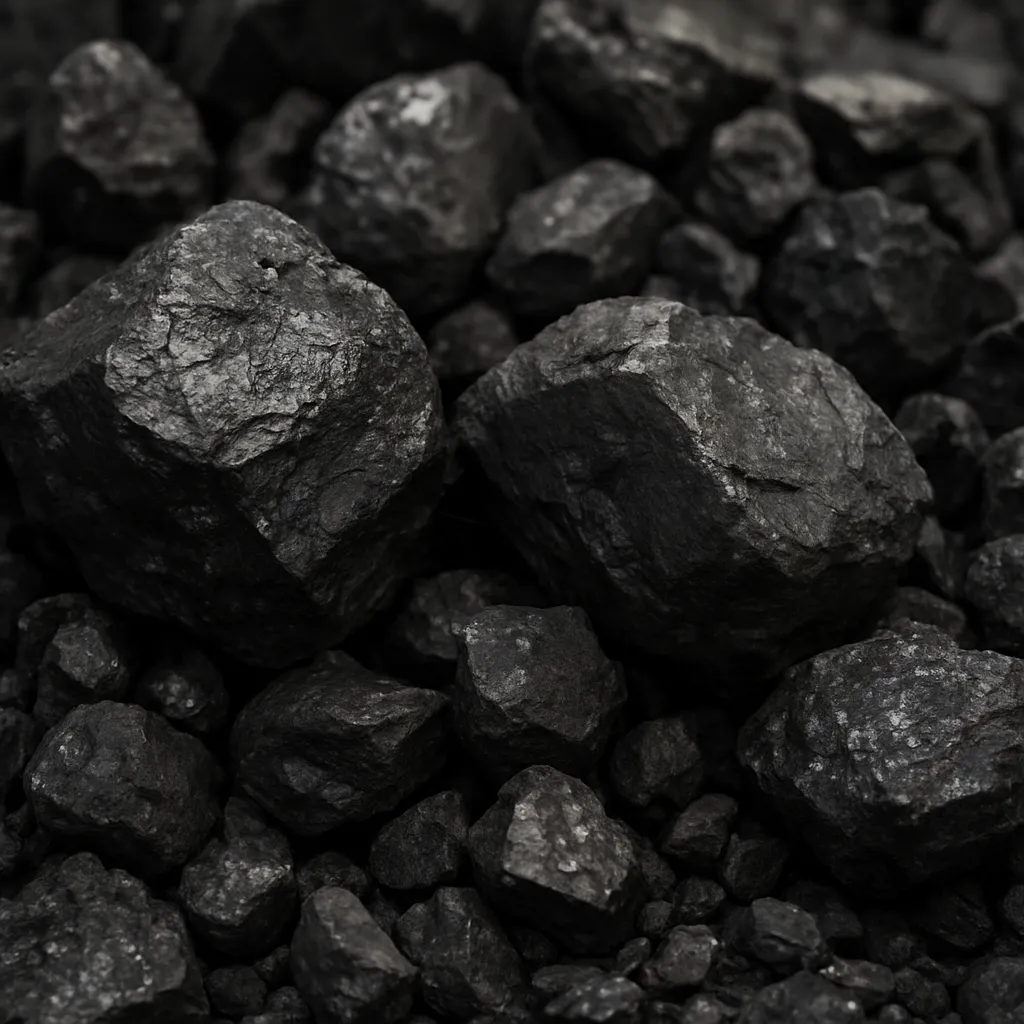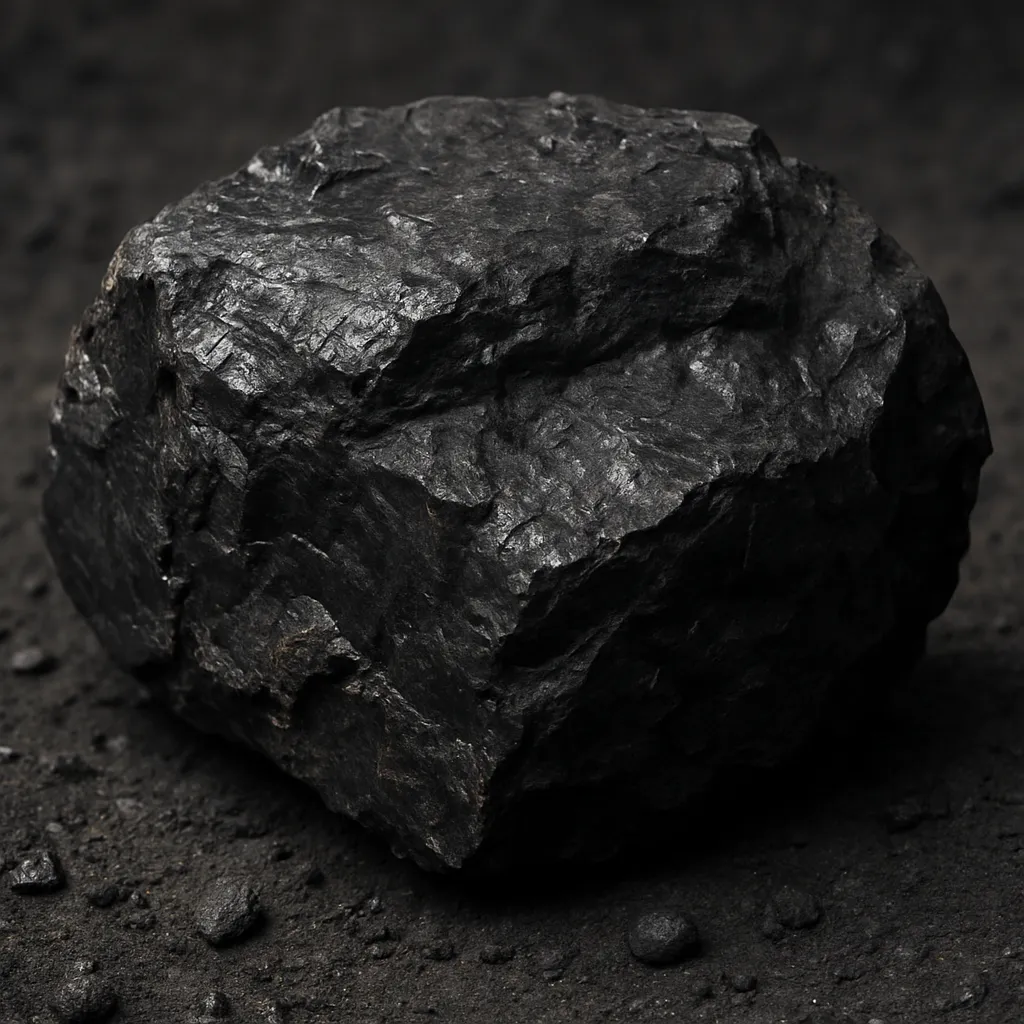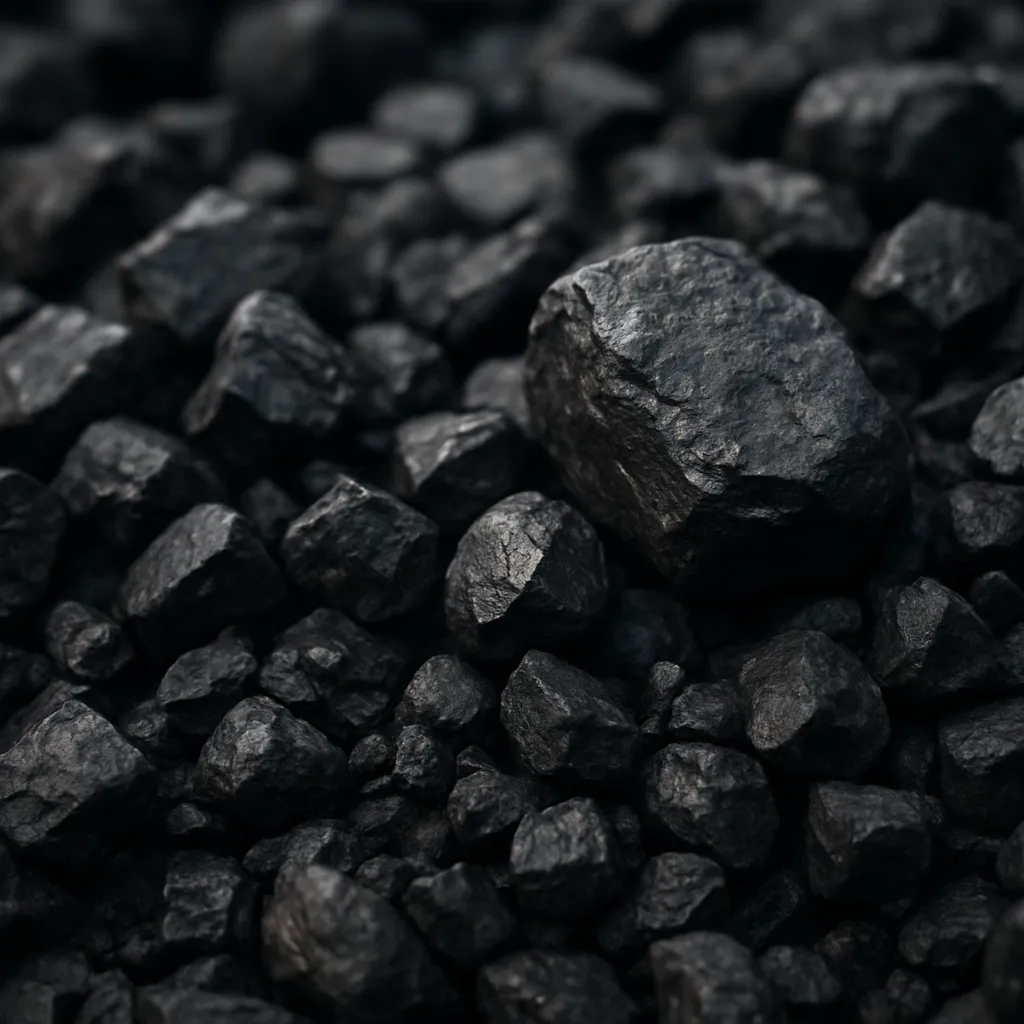
Low-reactivity thermal coal is an important but often overlooked category within the global coal market. It refers to coals used primarily for heat and electricity generation that, because of their physical-chemical properties, burn or gasify more slowly than typical thermal coals. That slower chemical response affects how the coal is handled, processed, combusted and valued in markets. This article reviews what low-reactivity thermal coal is, where it occurs, how it behaves in industrial settings, its economic role in international trade and power systems, environmental and regulatory issues, and prospects for demand and technology. The text combines geological, technical and economic perspectives and highlights operational challenges and industrial strategies linked to this specific coal type.
Defining low-reactivity thermal coal: properties and laboratory indicators
Low-reactivity thermal coal is not a formally standardized label with a single laboratory threshold; rather, it is a practical classification used by engineers, coal traders and researchers to describe coals that exhibit relatively low rates of devolatilization, char oxidation and gasification under typical combustion or gasification conditions. Several measurable properties are associated with low reactivity:
- Rank: Higher-rank coals (low-volatile bituminous to anthracite) tend to be less chemically reactive because of greater aromaticity and a more ordered carbon structure.
- Volatile matter: Lower volatile content correlates with slower ignition and devolatilization kinetics.
- Fixed carbon: High fixed-carbon coals produce chars that oxidize more slowly.
- Ash composition and melt behavior: Certain mineral assemblages can impede access of oxidants to carbon surfaces or promote sintering.
- Porosity and permeability of the char: Denser char textures reduce internal diffusion of oxygen and gasifying agents.
- Laboratory indices such as Rmax (max reflectance), oxygen/carbon ratios, and reactivity tests (e.g., to CO2 or O2) provide comparative measures of coal reactivity.
In practice, a coal classified as low-reactivity will require higher temperatures or longer residence times to reach complete burnout in pulverized-fuel and fluidized-bed systems. It is important to note that reactivity is context-dependent: a coal that is low-reactivity in one combustion technology might be adequately reactive in another with different residence time, temperature or oxidant concentration.
Where low-reactivity thermal coals occur: geological settings and major basins
Low-reactivity thermal coals typically arise from geological histories that produced higher-rank organic matter through deeper burial and greater thermal metamorphism. While there is variation in local geology and coal chemistry, several large coal-bearing provinces are known for producing coals with lower reactivity characteristics:
- Appalachian Basin (United States): Parts of the Appalachian region yield medium- to low-volatile bituminous coals that can show lower reactivity than sub-bituminous types.
- Donets, Kuznetsk and other Eurasian basins (Ukraine, Russia): Historical deposits here include bituminous to semi-anthracitic seams with relatively low volatile matter in some horizons.
- Poland and Central Europe: Upper Silesian and other basins host hard coals with higher rank, used both as steam and coking coals.
- South Africa (Highveld, Witbank): Some bituminous thermal coals from these regions can be less reactive; they are also notable for mineral matter characteristics that influence combustion behavior.
- Australia (selected seams in New South Wales and Queensland): Australian basins produce a diversity of thermal and metallurgical coals; certain low-volatile thermal seams are known to show slower combustion characteristics.
- China (northern basins with anthracitic material): China’s wide range of coal ranks includes some higher-rank coals whose reactivity is lower than the typical sub-bituminous fuels used in many power plants.
Because coal rank and reactivity are controlled by local burial, tectonics and thermal history, low-reactivity thermal coals are geographically scattered rather than confined to one country. Their occurrence is therefore best understood at the level of individual seams and mines within larger basins.
Combustion behavior and operational implications
Low-reactivity thermal coal affects furnace and plant operation in several concrete ways. Understanding these implications is essential for plant engineers, fuel purchasers and policy planners:
- Ignition and burnout: Low-reactivity coals require higher ignition temperatures and longer residence times for complete burnout. In pulverized coal boilers this can lead to higher unburned carbon in ash and reduced boiler efficiency.
- Combustion stability: Flame stability can be harder to maintain, increasing the risk of flameout or the need for auxiliary fuels during startup and load changes.
- Mill and pulverizer requirements: Finer grinding can increase surface area and reactivity, but this raises milling energy consumption and maintenance on equipment.
- Emissions and pollutant formation: Low-volatility coals alter the volatile species released; nitrogen release timing shifts can affect NOx formation pathways. Ash behavior may increase slagging or fouling risks depending on mineralogical composition.
- Boiler design and retrofits: Fluidized-bed systems and specially designed furnaces with longer residence times can handle low-reactivity coals better than short-residence pulverized fuel systems. Co-firing and blending with higher-reactivity coals is a common mitigation.
- Gasification: In entrained-flow or fixed-bed gasifiers the lower reactivity of char can reduce conversion rates and require higher temperatures or more severe operating conditions.
Plant operators mitigate these challenges through strategies such as controlled blending, modifications to burner geometry and air staging, additives that alter ash melting behavior, and investment in emission control and combustion optimization systems.
Economic and trade aspects
Low-reactivity thermal coal occupies a specific niche in coal markets. Its economic significance is shaped by calorific value, transport costs, demand from particular plant types, and the costs associated with handling and combustion:
- Price formation: Coal prices are influenced primarily by energy content (calorific value), sulfur and ash contents, and logistics. A high-rank, low-reactivity coal may carry a premium for its higher calorific value but may be discounted if combustion difficulties increase operational costs at the buyer’s plant.
- Blending economics: Utilities often blend low-reactivity coal with more reactive, lower-rank fuels to achieve an optimal mix of ignition properties and energy density. Blending reduces the effective cost of retrofits or operational adaptations.
- Export markets: Seaborne thermal coal trade is dominated by large exporters—particularly Australia and Indonesia—while importers include China, India, Japan, South Korea and various Southeast Asian countries. Low-reactivity coals have particular value where buyers have boilers designed for higher-rank coal or where high calorific value is advantageous for reducing transport or handling volumes.
- Market share and statistics: Global coal production remains large despite demand shifts. In recent years global coal production has been on the order of several billion tonnes annually; China is by far the largest producer and consumer. Seaborne thermal coal traded volumes are measured in the hundreds of millions of tonnes per year, with Australia and Indonesia together supplying the majority of that market.
- Price volatility and contract terms: Because of the operational implications, buyers and sellers often negotiate specific quality clauses for reactivity, volatile matter and ash behavior, and may include penalties or premiums tied to performance in combustion tests.
From an investment viewpoint, low-reactivity coals can be attractive to mines that can demonstrate predictable quality and supply to buyers equipped to handle them. Conversely, utilities without flexible combustion systems face increased retrofit costs that can make such coals uneconomic.
Industrial significance and applications
Despite the operational challenges, low-reactivity thermal coal plays distinct roles in industry:
- Base-load power generation: Plants designed for higher-rank coals or for long-residence combustion can efficiently burn low-reactivity coal, leveraging its higher caloric value and lower moisture content.
- Specialized boilers: Certain industrial boilers and combined heat and power units that operate at higher temperatures or longer residence times favor coals with specific reactivity profiles.
- Gasification-to-power and chemical feedstocks: Gasification systems that can be optimized for lower reactivity feedstocks may use such coals for syngas production, though they often require higher operating temperatures and more robust reactor designs.
- Blending with metallurgical coal: In regions where coals serve dual markets (steam and metallurgical), blending low-reactivity steam coals with metallurgical coals is sometimes used to tailor coke properties or calorific value for particular processes.
- Export niches: Some coastal utilities and industrial plants prefer higher-rank, lower-moisture coal to reduce shipping weight per unit of energy; low-reactivity coals that are also high in calorific value can meet this need if combustion constraints are manageable.
In short, low-reactivity thermal coal is not a marginal product but a specialized one: valuable where its higher energy density or other attributes are needed and manageable, and less desirable where rapid ignition and simple combustion are priorities.
Environmental, regulatory and health considerations
Environmental and regulatory frameworks increasingly shape the fate of all coal types, including low-reactivity thermal coal:
- Greenhouse gas emissions: Per unit of energy, higher-rank coals (often low-reactivity) tend to emit slightly less CO2 than lower-rank, high-moisture coals because less energy is wasted evaporating moisture. However, absolute emissions depend on plant efficiency. Typical coal-fired plants emit on the order of hundreds of grams of CO2 per kWh—generally in the range of roughly 800–1,000 g CO2/kWh for conventional units, with modern ultra-supercritical plants at the lower end.
- Pollutant formation: Ash, sulfur and trace metals in low-reactivity coal still require controls—electrostatic precipitators, fabric filters, flue-gas desulfurization and selective catalytic reduction systems are used to limit particulate, SO2 and NOx emissions respectively. Fixed nitrogen release timing from low-reactivity coal can change NOx profiles and need burner tuning.
- Waste streams: Ash management and the behavior of slags are influenced by mineralogy; certain ash chemistries from low-reactivity coals can increase scaling or slagging risks, with downstream implications for maintenance and disposal.
- Regulation and phase-out trends: Policies to reduce coal use—ranging from emissions trading to coal phase-out schedules—affect demand for all coal types. Yet in some regions, the need for reliable base-load power, local coal resources and industrial uses sustain continued demand.
- Health and local impacts: Mining and combustion impacts on air quality and worker safety are subject to the same controls and concerns as other coal types; geology and mining method affect dust and pollutant exposures.
Technology such as carbon capture, utilization and storage (CCUS) could alter the environmental trade-offs for low-reactivity coal. CCUS costs and technological compatibility can be influenced by the coal’s combustion or gasification behavior, because capture efficiency and costs relate to flue gas composition and plant configuration.
Statistical context and recent market dynamics
Providing numerical context helps situate low-reactivity thermal coal within the broader coal economy:
- Global coal production remains substantial, totaling on the order of several billion tonnes annually in recent years. China is by far the largest producer and consumer, typically accounting for about half of global coal output and consumption combined.
- Seaborne thermal coal trade is concentrated: Australia and Indonesia are the largest exporters of thermal coal, together responsible for the majority of international shipments. Major importers include China, India, Japan and South Korea, though trade patterns shift with policy, price and logistics.
- Coal’s share of global electricity generation has fluctuated but has been roughly around one-third in recent years, with significant regional variation. In countries such as China and India coal continues to be a dominant source of electricity.
- Prices for thermal coals vary widely depending on specification, proximity to markets, and global demand. Premiums or discounts are applied for calorific value, sulfur, ash and sometimes operationally relevant parameters such as volatile matter and washability; low-reactivity characteristics are increasingly negotiated in contracts when they materially affect plant performance.
Because low-reactivity thermal coals are specified at the seam and contract level, their volumes are not always reported separately in public statistics; rather they are embedded within broader categories by rank and use. Industry data providers and lab assay reports are commonly used by buyers to ascertain the prevalence and economic impact of low-reactivity shipments.
Operational strategies and technological responses
Utilities and industrial operators use a range of strategies to accommodate low-reactivity thermal coal while maintaining reliability and efficiency:
- Blending: Mixing lower-reactivity coal with higher-reactivity coals improves ignition and burnout while preserving some calorific advantages.
- Fuel preparation: Grinding to finer particle sizes increases surface area and accelerates combustion, though at the cost of higher milling energy and wear.
- Combustion tuning: Adjusting primary and secondary air flows, burner tilt and staging can optimize residence time and flame temperature.
- Boiler modifications: Installing low-NOx burners, extended furnaces or switching to circulating fluidized-bed technology can improve performance with challenging coals.
- Additives and fuel treatments: Minerals and chemical additives can alter ash behavior and combustion kinetics; some advanced treatments aim to increase reactive sites on char.
- Process integration: For gasification applications, pre-treatment, pressurization and higher operating temperatures can compensate for lower intrinsic reactivity.
These interventions illustrate the trade-offs between fuel flexibility and capital or operational expenditure. In many cases the least-cost solution is a carefully negotiated coal supply contract combined with moderate plant tuning and blending.
Research, innovation and future outlook
Research into low-reactivity thermal coal focuses on understanding fundamental chemical kinetics, improving combustion hardware and developing better predictive assays. Key areas of innovation include:
- Advanced reactivity testing: Rapid assay methods that predict combustion and gasification behavior at industrial scale help buyers and engineers make informed decisions.
- Materials science: Studies on char microstructure and catalytic effects of mineral matter inform additives and fuel treatments to enhance burnout.
- Combustion modelling: High-fidelity computational fluid dynamics models simulate complex flame and ash behavior for long-residence combustion of low-reactivity coals.
- Decarbonization technologies: Integration of CCUS and biomass co-firing strategies may make some existing plants more tolerant of lower-reactivity fuels while reducing net emissions.
- Alternative fuels and flexibility: Demand-side management, energy storage and renewables reduce temporal reliance on coal, but when coal is required for firm power, fuels with predictable combustion characteristics remain important.
Looking forward, the market for low-reactivity thermal coal will be shaped by three main forces: global energy transitions reducing overall coal demand in some regions; the need for reliable firm capacity in others; and the pace of technology adoption for cleaner coal use. In regions where coal remains central to power systems, investments that enable efficient use of a diverse set of coal qualities—including low-reactivity types—will determine competitiveness.
Concluding observations
Low-reactivity thermal coal occupies a specialized but meaningful niche in the energy and industrial landscape. Its distinct geological origins and chemical properties present operational challenges but also certain advantages, such as higher energy density and lower moisture. Economic value depends on both intrinsic coal properties and the ability of buyers to adapt plant operations—through blending, hardware modifications and process control—to accommodate the coal’s behavior. Environmentally, the coal’s rank and combustion efficiency influence emissions per unit of energy, and deployment will increasingly hinge on the integration of emissions control and carbon management technologies. As global energy systems evolve, the fate of low-reactivity thermal coal will be determined by local power needs, market structures, technological innovation and regulatory frameworks.
Key highlighted concepts in this article: reactivity, combustion, thermal coal, power generation, gasification, emissions, calorific value, ash, char, boiler efficiency.