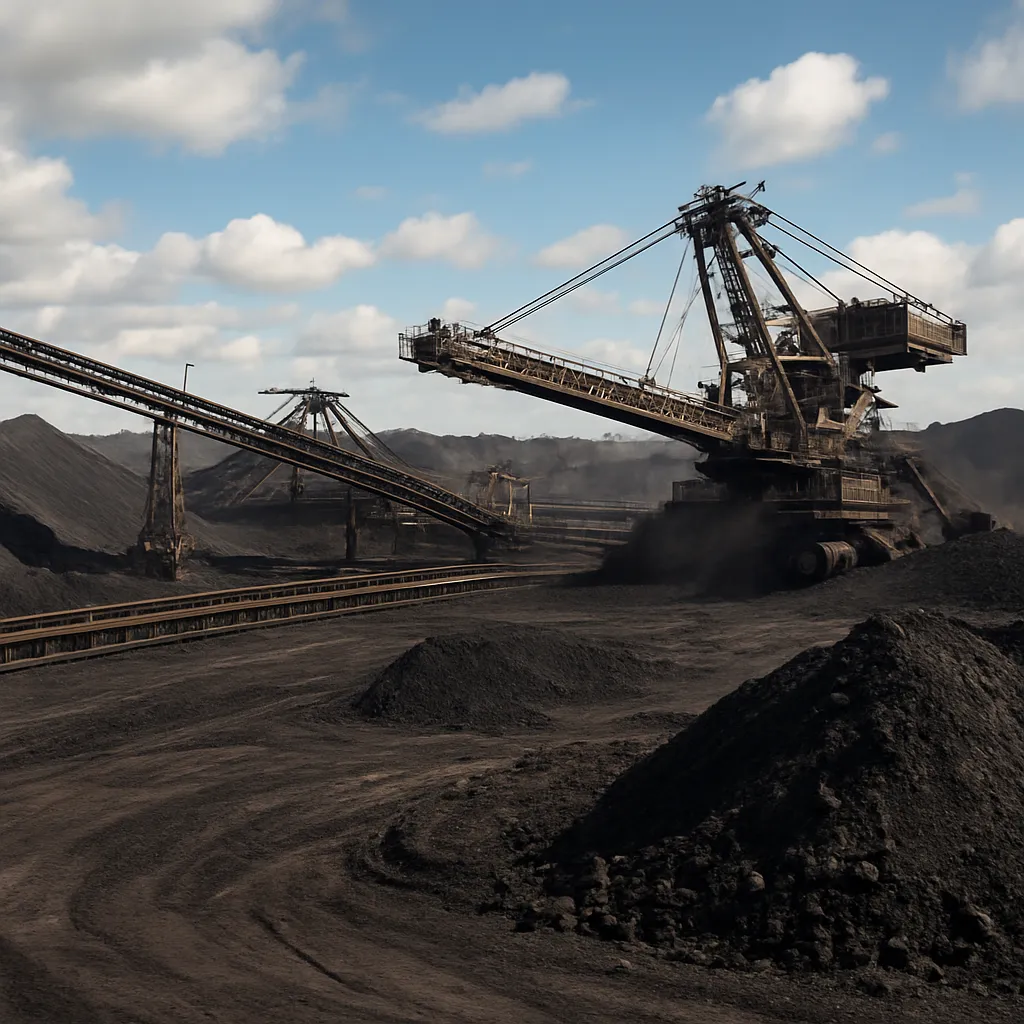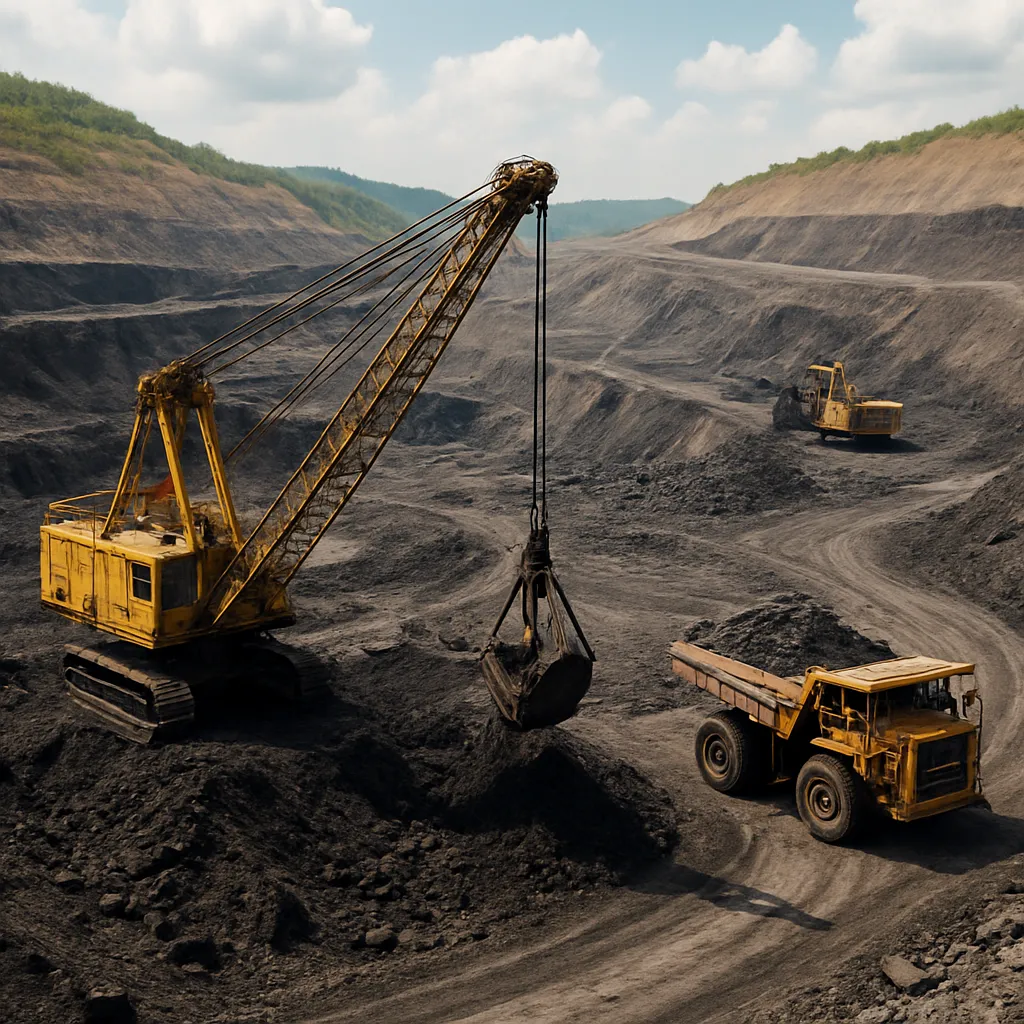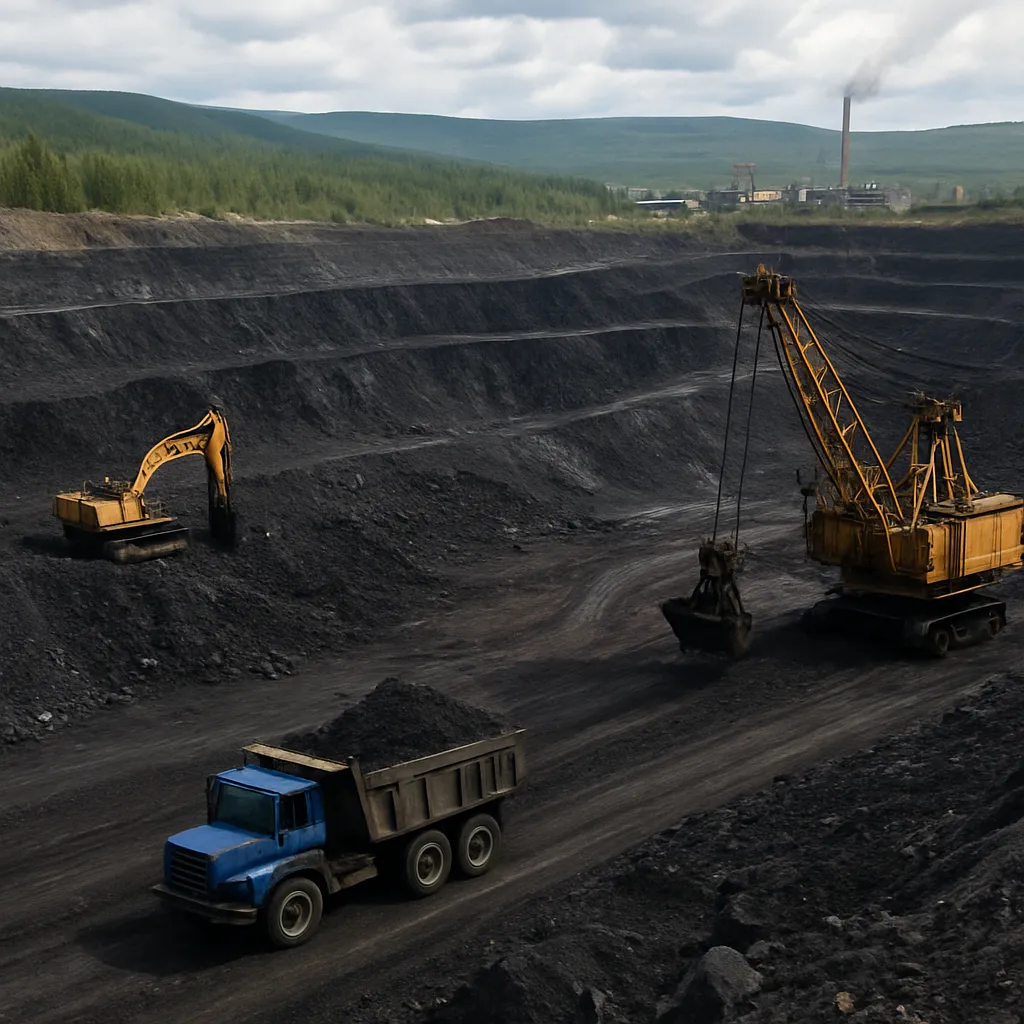
The Listvyanskaya Mine is referenced in discussions of Russia’s extensive coal-mining network and serves as an example of the many regional operations that supply both domestic energy systems and international markets. This article summarizes the mine’s likely geographic and geological context, the types of coal typically extracted at comparable Russian sites, the economic and social roles such mines play, available statistical and estimated data where public information is limited, and broader industry trends—including environmental and technological aspects—that shape the present and future of Listvyanskaya and similar operations.
Location and geological setting
Precise, publicly available coordinates and exhaustive published data specific to Listvyanskaya Mine are limited in international sources. Mines bearing similar names occur in several parts of Russia; however, most coal mining in Russia is concentrated in a few major basins: the Kuznetsk Basin (Kuzbass) in Kemerovo Oblast, the Pechora Basin in the northwest, the Eastern Donets/Donbass region (historically transboundary with Ukraine), and lignite deposits in the Far East and the Volga-Urals region. Mines called Listvyanskaya or variants of the name are typically associated with smaller field developments within these broader coal-bearing regions.
Geologically, coal deposits in Russia range from bituminous coals used for metallurgical purposes to lower-rank brown coals and lignite used for heat and power generation. The coal at a site like Listvyanskaya would be described in terms of rank (e.g., anthracite, bituminous, sub-bituminous, lignite), seam thickness, depth (surface vs underground), and quality indicators such as calorific value, ash content, and volatile matter—parameters that determine its market (thermal or coking) and processing needs.
Types of coal and mining methods
At many Russian mines similar to Listvyanskaya, the extracted coal can be categorized into two major commercial groups:
- Thermal coal (steam coal) used for electricity generation and heating; typical features include moderate calorific value and higher ash or moisture content compared to metallurgical coal.
- Coking coal (metallurgical coal) suitable for coke production and steelmaking, having higher carbon content and lower ash and volatile matter.
The choice of mining method depends on geology. Underground methods such as longwall mining and room-and-pillar are used where seams are deep or thick. Surface (open-pit) mining is preferred where seams are near the surface and economically recoverable with overburden removal. Russia’s big coal basins feature both methods; small- to medium-sized mines often rely on underground drift and shaft workings or smaller open pits with mechanized equipment.
Economic and industrial significance
Coal remains a cornerstone of Russia’s energy and industrial mix. The country is consistently among the world’s top coal producers, and coal fuels power plants, industrial heating, and the metallurgical sector. Mines like Listvyanskaya contribute to:
- regional employment and household incomes, providing direct jobs in mining and indirect jobs in transport, services, and maintenance;
- local and federal tax revenues and royalties that support infrastructure and public services;
- supply chains for heavy industry, including steelmaking, cement, and power generation;
- export earnings where coal is sold to foreign markets, especially in Asia and, historically, Europe.
Although national-level figures vary year to year, Russia’s annual coal production in recent years has been on the order of several hundred million tonnes. This production supports domestic energy security and significant export volumes through ports on the Pacific and Baltic/Black Sea regions. In this context, even modest mines play a role in stabilizing local supply and contributing to the broader industrial network.
Available statistics and estimates
Publicly available mine-by-mine statistics for many Russian operations are not always comprehensive in international databases. For Listvyanskaya specifically, publicly searchable datasets provide limited direct figures for production or reserves. Where direct figures are lacking, it is useful to consider typical ranges for similar operations:
- Small regional underground mines: annual production often ranges from a few hundred thousand to 1–2 million tonnes per year.
- Medium mines: can produce several million tonnes annually depending on seam thickness, mechanization, and capital investment.
- Large flagship mines in Kuzbass: tens of millions of tonnes per year (these are comparatively much larger than typical Listvyanskaya-class operations).
Reserves at a single small-to-medium Russian mine might range from several million to several hundred million tonnes of coal in place, but recoverable reserves are a fraction of geological reserves depending on mining method, economic constraints, and regulatory approvals. Employment numbers likewise vary: a smaller underground mine may employ several hundred people directly, while large integrated mining complexes employ thousands.
At the national level, recent public sources indicate that Russia’s coal production was roughly in the range of 350–450 million tonnes per year in the late 2010s and early 2020s, with notable export flows to Asia (China, South Korea, Japan) and other markets. Export shares, port capacity, and logistics constraints influence the value and destination of coal from any particular mine.
Logistics, processing and market chains
A mine like Listvyanskaya would be integrated into local logistics networks linking pit heads to customers via rail or road. Key logistical considerations include:
- rail connectivity to inland power plants, industrial consumers, or export terminals;
- coal washing and beneficiation facilities to lower ash and improve calorific value when required for higher-value markets;
- storage and loading infrastructure to handle seasonal demand and shipping schedules.
Coal that meets metallurgical specifications commands premium prices and may be routed to domestic steelmakers or exported. Thermal coal follows power-sector demand and contract arrangements with utilities. In many regions, mines operate associated beneficiation plants to upgrade lower-quality raw coal to meet customer specs. Where washing is unavailable, lower-quality product is sold at a discount primarily for local combustion uses.
Socioeconomic impact and employment
Mining operations, including Listvyanskaya-class mines, generally provide substantial local employment and can anchor regional economies. Direct impacts include wages, local procurement of goods and services, and stimulation of small businesses. Indirect effects extend to housing, healthcare, and education services in nearby towns.
However, dependence on a single extractive industry also exposes districts to economic cycles and commodity-price volatility. When demand falls or mines become uneconomic, communities can face unemployment and loss of public revenue unless diversification strategies and social safety nets are implemented. Modern Russian mining policy and company practice increasingly emphasize social investments, community relations, and local infrastructure improvements as part of licensing and corporate social responsibility programs.
Safety, environmental and regulatory aspects
Coal mining in Russia faces the same prominent challenges found globally. Safety remains a priority due to the risks inherent to underground workings (methane explosions, roof collapse, fire). Historically, Russia has recorded serious mining accidents, which have driven regulatory reforms and investments in monitoring, methane drainage, ventilation and emergency systems. Mines operating today invest in improved risk management and compliance with safety standards.
Environmental impacts include land disturbance (especially from open-pit operations), water quality issues, dust and particulate emissions, and greenhouse gas emissions from extraction, transport, and combustion. Reclamation and post-mining land use planning are increasingly mandated in modern licensing. Larger companies often implement reclamation plans and incremental environmental monitoring to reduce long-term liabilities and community opposition.
Technological trends and modernization
The Russian coal sector has been undergoing technological evolution to increase productivity, lower operational risks, and reduce environmental footprints. Relevant trends include:
- mechanization and automation of longwall faces and conveyors to increase output and reduce labor intensity;
- remote monitoring systems and digitalization (data-driven maintenance, geological modeling, and mine planning);
- improved coal-washing technologies to increase product quality and reduce transport of ash/spoil;
- methane capture and utilization projects aimed at reducing greenhouse gas emissions and improving mine safety;
- logistics optimization via upgraded rail terminals and more efficient transshipment points to reduce bottlenecks for export volumes.
Smaller mines such as Listvyanskaya often benefit when larger regional players or state-backed programs provide shared infrastructure or when investment programs target productivity upgrades and safety improvements.
Role in national and regional energy strategies
Coal is an important fuel in Russia’s energy strategy because of its role in electricity generation, industrial heat, and as feedstock for steel production. Policies that affect a mine like Listvyanskaya include domestic energy demand forecasts, price regulation for electricity, environmental standards for emissions, and trade policies that shape export opportunities.
For regional authorities, maintaining coal production may be prioritized to preserve jobs and local fiscal revenues. At the same time, energy diversification and climate commitments encourage investments into lower-carbon generation or improved coal-use efficiency and emissions controls, which can change market dynamics for thermal coal producers.
Interesting and lesser-known aspects
- Localized geology: Small mines often exploit narrow seams and specific geological anomalies that are uneconomic for larger mechanized operations—this can preserve small-scale employment but limit expansion potential.
- Community heritage: Many mining towns in Russia have deep cultural ties to coal mining. Traditions, local museums, and commemorative practices reflect working-class histories that tie communities to the mine beyond economics.
- Seasonality and logistics: Northern and Far Eastern mines face seasonal transport challenges, including river transport seasonality and winter road conditions that affect supply chains and inventories.
- Adaptive reuse: Where mines close, there are examples of repurposing former mining infrastructure for industrial parks, renewable energy sites, or tourism (mining museums and heritage trails).
Outlook and strategic considerations
The outlook for Listvyanskaya-type mines depends on several interacting factors: global coal demand (notably from Asia), domestic Russian energy policies, local geology, investment in productivity and safety, and environmental regulation. Short- to medium-term demand for both thermal and metallurgical coal is influenced by economic cycles and industrial activity. Over the longer term, decarbonization pressures and alternative energy deployment could reduce thermal coal demand, while coking coal demand will be linked to steel sector dynamics and potential technological shifts (e.g., hydrogen-based steelmaking).
Policy responses can support a smoother transition for mine workers and communities through retraining programs, investment in local economic diversification, and funding for reclamation. At the same time, investments in efficiency (automation, methane capture) can extend the operational life of economically viable mines while reducing environmental impacts.
Concluding synthesis
Listvyanskaya Mine represents the many medium-to-small coal operations that together form the backbone of Russia’s coal sector. While specific mine-level data may be limited in public international sources, the broader context is clear: such mines contribute to local employment, regional economies and national energy and industrial supply chains. They operate within a landscape of increasing technical modernization, regulatory scrutiny, and market pressures that will shape their future relevance. Key considerations for Listvyanskaya and similar mines include maintaining safety standards, improving productivity through modernization, managing environmental impacts responsibly, and participating in local economic planning that addresses long-term resilience for mine-dependent communities.
Note on data and sources: Specific up-to-date production, reserves and employment figures for Listvyanskaya Mine were not identified in widely available international datasets at the time of writing. The figures and ranges cited here reflect typical values and national/regional trends in the Russian coal industry; for precise mine-level statistics, company reports, regional government publications, or specialized industry databases should be consulted.