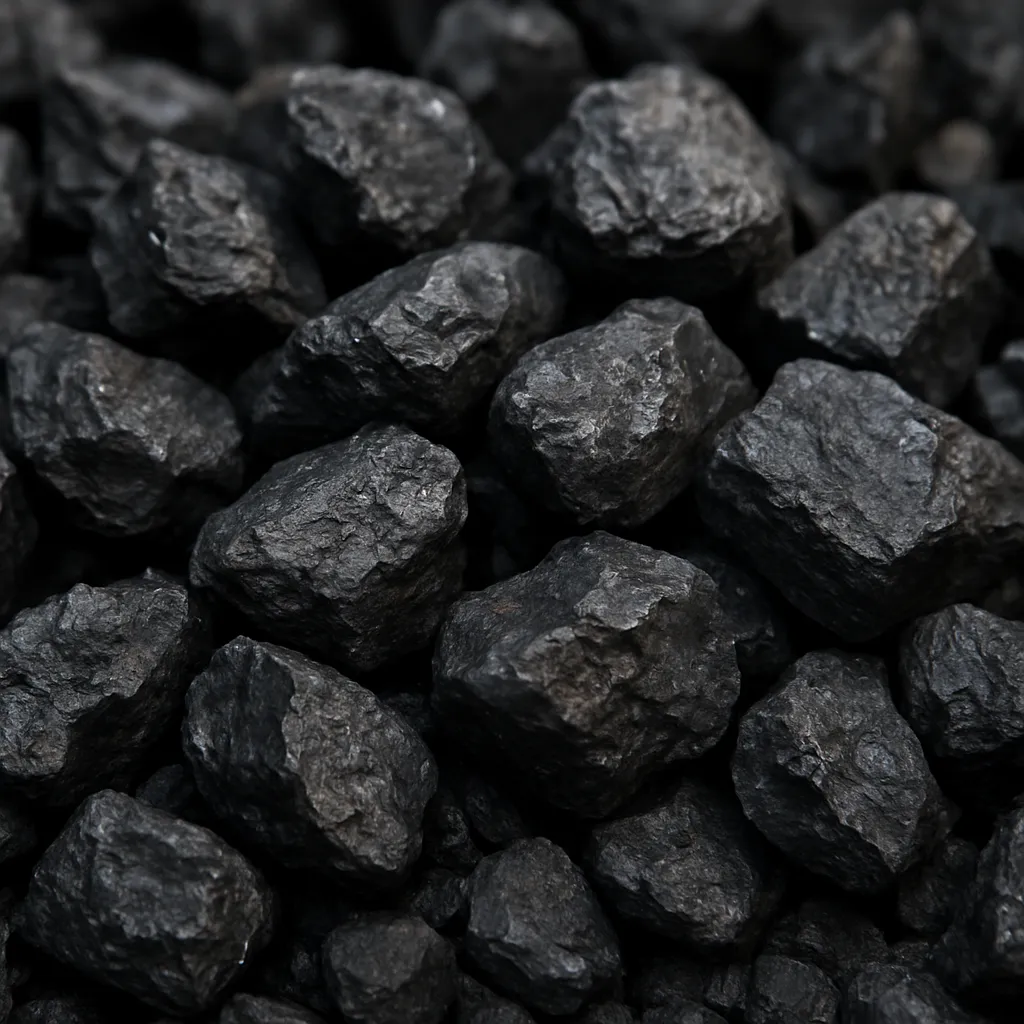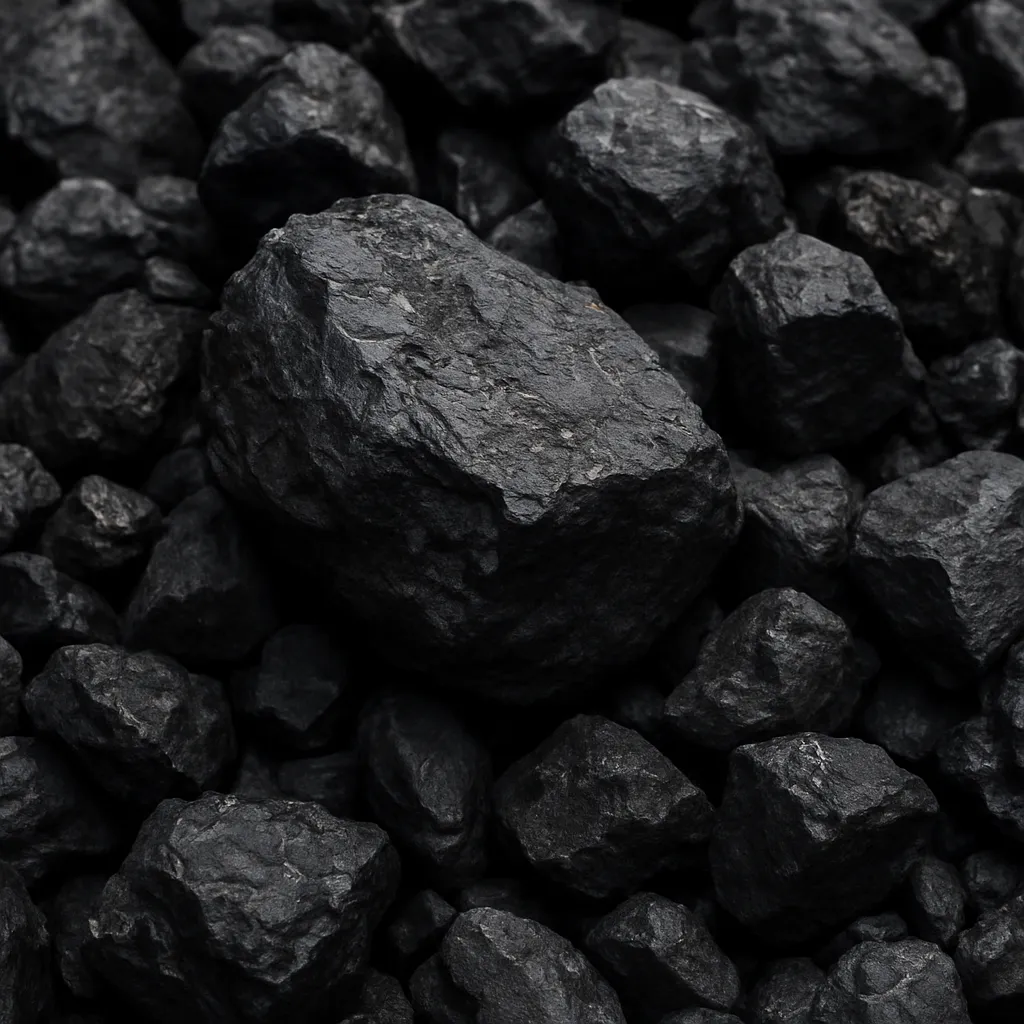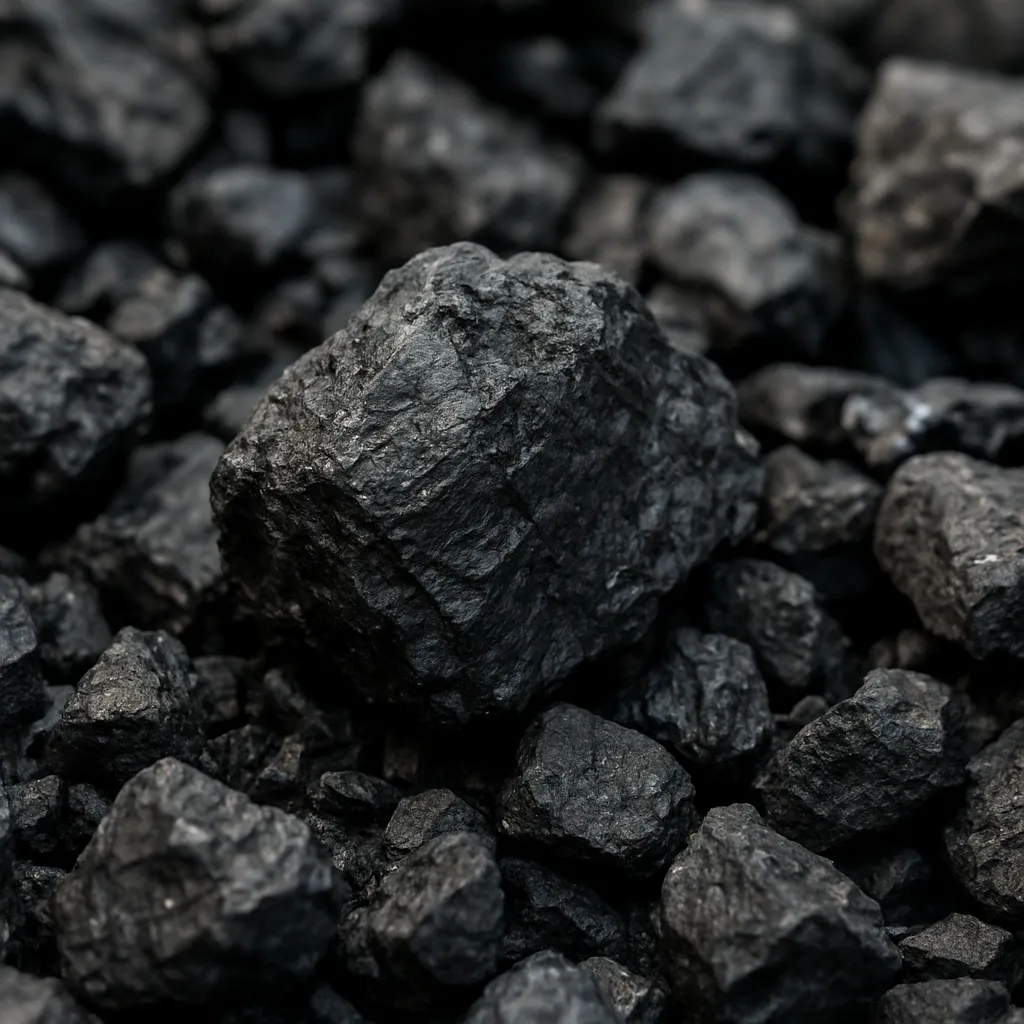
Low-fluidity coking coal occupies a particular niche within the family of metallurgical coals. It does not flow or swell as much as high-fluidity coals during carbonization, yet it can be indispensable in producing specific types of coke and in certain industrial applications. This article reviews the petrographic and technological characteristics of low-fluidity coking coal, where it is found and mined, its economic and statistical significance, industrial uses, environmental implications, and the likely future trends affecting its market.
Characteristics and petrographic properties
Understanding low-fluidity coking coal requires knowledge of coal rank, composition and plastic behavior during heating. Coal that is suitable for producing metallurgical coke typically lies in the bituminous rank and displays a degree of thermoplasticity during the carbonization process. Low-fluidity coals, however, show limited plastic range and reduced mobility of volatile components compared with high-fluidity coals, which affects how they contribute to the formation of a coherent coke mass when heated.
Definition and classification
- Low-fluidity coking coal is a type of coking coal characterized by limited melt and flow during carbonization. Fluidity is often measured by the Gieseler plastometer or other standardized tests; low-fluidity coals have significantly lower Gieseler maxima than high-fluidity or premium coals.
- Coals are commonly categorized as strong or weak coking based on caking properties. Low-fluidity coals tend to fall into weak-to-medium caking categories but can still be valuable when blended correctly.
Fluidity and plastic behavior
Fluidity quantifies how much coal softens and flows at elevated temperatures before resolidification. High-fluidity coals readily form a plastic phase and then resolidify into a coherent coke matrix. Low-fluidity coals show limited plastic phase and may not, on their own, produce strong coke. Their behavior is strongly influenced by petrography — the proportions of vitrinite, inertinite and liptinite macerals — and by mineral matter content. The presence of certain minerals and the maturation history of the coal affect softening behavior and fluidity.
Coke quality parameters
- CSR (Coke Strength after Reaction) and CRI (Coke Reactivity Index) are key indicators of coke performance in blast furnaces. Well-balanced coke must have low reactivity (low CRI) and high strength (high CSR) after exposure to CO2. Low-fluidity coals typically produce coke with distinct CSR/CRI profiles and are therefore managed within blends to meet target values.
- Other important parameters include ash content, volatile matter, sulfur and phosphorus levels — all of which influence coke quality and blast furnace performance.
Occurrence and major producing regions
Low-fluidity coking coals occur in many of the world’s major coal-bearing basins where sedimentary environments and geological histories produced bituminous coals in the coking rank but with restricted plastic ranges. These deposits are widely distributed across Europe, Asia, North and South America, Africa and Australia.
Geological settings
Most coking coals formed in terrestrial to marginal marine environments during the late Paleozoic (Carboniferous and Permian) and in some Mesozoic basins. The specific composition resulting in low fluidity is often due to higher inertinite content, certain vitrinite types, or diagenetic/thermal histories that limit the coal’s plasticity. These coals are found in both deep underground seams and shallower deposits amenable to open-pit mining.
Major basins and countries
- Russia — the Kuzbass (Kemerovo) and other Siberian basins contain large reserves of bituminous coals, including low-fluidity types used domestically in steelmaking.
- Ukraine — Donetsk Basin (Donbas) historically produced a range of metallurgical coals, including many low- to medium-fluidity seams.
- Poland — the Upper Silesian Basin is notable for a variety of coking coals used in domestic metallurgical industries.
- Australia — several basins (Bowen, Sydney, and others) produce both hard coking and lower-fluidity coking coals; Australian coal is a dominant export to Asian steelmakers.
- United States — the Appalachian and Illinois basins include coking coal deposits of varying fluidities; the Powder River Basin is major for thermal coal rather than coking coal.
- Colombia — the Cesar-Ranchería region and other basins export metallurgical coals, including low-fluidity grades.
- China — numerous coalfields produce coals with a wide range of properties; domestic demand for metallurgical coal has shaped extraction and blending practices.
- South Africa and Kazakhstan — both have metallurgical coal resources with regionally important low-fluidity seams.
Because the distribution of coal types can be highly local, the same country can produce both high-fluidity and low-fluidity coking coals from different basins or seams. The commercial value of low-fluidity coals depends on local steelmaking technologies, blending needs and access to markets.
Mining, processing and industrial use
Mining methods and preparation
Low-fluidity coking coal is mined using conventional underground and open-pit methods depending on seam depth and thickness. After extraction, coal preparation plants remove partings and reduce ash content through washing and flotation. Beneficiation improves the coal’s coking potential by lowering mineral matter and controlling sulfur and phosphorus.
Blending strategies
Because low-fluidity coals often cannot produce high-quality coke alone, they are blended with higher-fluidity or strong coking coals to achieve required coke quality. Blending is a technical art, balancing:
- plasticity and fluidity contributions from each coal,
- volatile matter to manage the coke oven gas and oven operation,
- ash and sulfur contents to meet environmental and furnace requirements,
- cost and availability constraints.
Even low-fluidity coals can be essential in blends because they may bring favorable ash chemistry, low sulfur or desirable mechanical properties after carbonization.
Primary industrial uses
- Blast furnace coke production — the main use of coking coal; coke serves as a reducing agent, energy source and structural support for the burden inside blast furnaces used in the integrated steelmaking route.
- Coal blending for pulverized coal injection (PCI) — certain low-fluidity coals may be suitable for PCI where injection into the blast furnace reduces coke demand.
- Chemical feedstock and gasification — when used in gasifiers, low-fluidity coals can yield syngas for chemicals or power.
- Briquetting and metallurgical coke specialty products — for some metallurgical or foundry applications, specific coke grades made with low-fluidity coal blends are valuable.
Economic and statistical overview
Low-fluidity coking coal’s economic importance derives from its role in steel production and from its contribution to blends that adjust both technical performance and cost. Below are approximate statistical patterns and market dynamics drawn from industry summaries and trade reports of the early 2020s.
Global production and trade (estimates)
- Global production of metallurgical coal (all types) in recent years has been in the order of several hundred million tonnes annually up to around one billion tonnes, depending on how finely the industry defines “metallurgical coal” versus broader categories. A significant share of that tonnage consists of coals used in coke-making and blends for furnaces and PCI.
- Australia, Russia, the United States, Canada, Colombia and China are among the largest producers and exporters of metallurgical coal. Australia historically accounts for a substantial share of global metallurgical coal exports due to its large-scale open-cut production and proximity to Asian steelmakers.
- Trade flows vary widely: East and Southeast Asia (China, Japan, South Korea, Taiwan) are major importers of coking coal, drawing on a range of qualities including low-fluidity coals blended for domestic coke ovens.
Price dynamics
Prices for coking coal are more volatile than thermal coal, reflecting sensitivity to steel demand, logistics and supply shocks. Spot prices have occasionally spiked due to tight supply or surging demand from the steel sector. Low-fluidity coals typically trade at discounts relative to premium hard coking coals, but their value depends on blend requirements and regional availability.
Consumption intensity in steelmaking
In integrated blast furnace–basic oxygen furnace (BF-BOF) plants, the coke requirement per tonne of crude steel varies by technology and efficiency. Typical ranges (estimates) are around 0.4–0.9 tonnes of coke per tonne of steel, depending on furnace design, raw materials and the use of PCI or other coke-reducing technologies. Therefore, changes in global steel production rapidly translate into changes in demand for coking coal of all types, including low-fluidity coals used in blends.
Regional economic impacts
Regions and countries with significant metallurgical coal resources often depend on mining for employment, export revenue and local economic activity. For example, Australian export receipts from metallurgical coal are a major contributor to mining export earnings. In Eastern Europe and parts of Asia, locally mined coking coal supports domestic steelmaking and reduces import dependence. Conversely, countries that rely on imported metallurgical coal are exposed to price volatility and supply disruptions.
Environmental, technological and policy considerations
The metallurgical coal and coke industry face rising scrutiny over greenhouse gas emissions and local environmental impacts (dust, wastewater, coke oven emissions). At the same time, technology trends in steelmaking and broader energy policy are reshaping demand.
Environmental footprint
- Coke production and blast furnace operations are carbon-intensive. Coke ovens emit volatile organic compounds and require by-product handling. Environmental regulation has pushed many plants to adopt cleaner technologies and emissions controls.
- Mining and coal preparation generate waste streams (tailings, slurry) and can impact landscapes and water. Modern mines use mitigation measures, but legacy issues persist in many older basins.
Decarbonization of steel and implications
Long-term demand for traditional coking coal is influenced by the steel industry’s shift toward lower-carbon technologies:
- Electric arc furnaces (EAFs) use scrap steel and, increasingly, direct reduced iron (DRI) produced with natural gas or hydrogen. Greater EAF adoption reduces the share of steel produced via blast furnaces, thus lowering demand for coke and coking coal.
- Hydrogen-based direct reduction and other breakthrough technologies aim to produce iron with far lower CO2 emissions. If broadly adopted, these could alter the long-term market for coking coal substantially.
- Short- to medium-term, however, the pace of adoption is constrained by capital costs, availability of low-emission electricity and hydrogen, and regional steelmaking dynamics — meaning coking coal demand is likely to remain material for the coming decades, albeit with structural decline risk in some markets.
Industrial significance and surprising facts
Despite being “low-fluidity,” these coals are far from marginal — their contribution to economic blends and local industrial ecosystems can be decisive. Some noteworthy points:
- Low-fluidity coals may enhance certain coke mechanical properties after carbonization, providing structural advantages when combined appropriately.
- Some countries maintain strategic reserves of coking coal to ensure continuity of steel production in times of supply shocks, underscoring the material’s strategic industrial value.
- Advances in coal beneficiation and additive technologies can upgrade lower-quality coals, making previously sub-commercial low-fluidity seams economically viable.
- Blending practice means that a single steel plant may accept dozens of coal types to maintain oven operation and coke quality, integrating low-fluidity coals into large, complex supply chains.
Outlook and strategic considerations
The future of low-fluidity coking coal is shaped by multiple interacting forces: global steel demand, technological shifts in steelmaking, environmental regulation, trade geopolitics and mining cost curves. Some key considerations for producers, consumers and policymakers:
- Short- to medium-term stability in demand: As long as blast furnace steelmaking remains a significant share of global production, coking coal of various fluidities will be needed. Producers of low-fluidity coals should focus on consistent quality, beneficiation and market access.
- Importance of logistics and location: Proximity to steelmakers or to major export ports materially affects the competitiveness of low-fluidity coals. Investment in transport infrastructure can unlock value.
- Diversification options: Regions with low-fluidity seams may explore alternative uses (gasification, petrochemical feedstocks) or value-added processing to mitigate long-term demand risk from steel decarbonization.
- Environmental compliance and social license: Mines and coke plants that proactively reduce emissions and manage wastes will face lower regulatory and reputational risk and be better positioned to attract finance and secure permits.
Summary
Low-fluidity coking coal is a technically distinct and economically relevant category of metallurgical coal. While it may not be the first choice for producing the highest-grade coke on its own, it plays an essential role in the complex blending recipes that underpin modern coke production and steelmaking. Geologically widespread, its regional importance is tied to local steel industries and trade flows. Market dynamics are driven by steel demand, technology changes (notably the gradual adoption of EAFs and hydrogen-based processes), and geopolitical factors that influence coal trade. For producers and consumers alike, prudent management of quality, logistics and environmental performance will determine how low-fluidity coking coal fits into the steel industry of the coming decades.