The Kostolac mining and power complex is one of Serbia’s most important coal-producing areas and energy hubs. Located in the eastern part of the country near the town of Kostolac and the city of Požarevac, the site combines extensive open-pit mining operations with thermal power plants that have supplied electricity and heat to the national grid for decades. This article examines the geology and location of the basin, the type and scale of mining, economic and industrial roles, environmental and social aspects, available statistics and trends, and the future outlook for Kostolac within Serbia’s evolving energy landscape.
Location, geology and historical background
The Kostolac complex lies on the right bank of the Danube River in eastern Serbia, within the administrative area of the municipality of Požarevac. Geologically, the Kostolac basin is part of the larger Pannonian and Serbian lignite-bearing regions. The deposit is typical of southeastern European brown coal basins: relatively shallow, horizontally layered lignite seams overlain by variable thicknesses of overburden. Because seams are close to the surface and extensive laterally, the deposit is primarily exploited by open-pit methods.
Mining and power generation activity in the Kostolac area dates back to the mid-20th century, when Yugoslavia and later Serbia developed local coal-to-power infrastructure to support industrialization and regional economic development. Over the decades the site expanded in response to national electricity demand, including construction and modernization of thermal power units adjacent to the mines so that coal could be supplied with minimal transport distance.
Mining operations, coal characteristics and logistics
Coal type and quality
The coal extracted at Kostolac is primarily lignite, commonly referred to as brown coal. Lignite has a lower calorific value than bituminous coal, higher moisture content and a higher proportion of volatile matter. These properties make it especially suitable for nearby, dedicated thermal power plants (district or plant-adjacent) where short-distance transport minimizes losses and economic inefficiency. Lignite from Kostolac typically serves exclusively the adjacent thermal units rather than distant industrial markets, because long-distance transport would diminish its economic attractiveness.
Mining methods and infrastructure
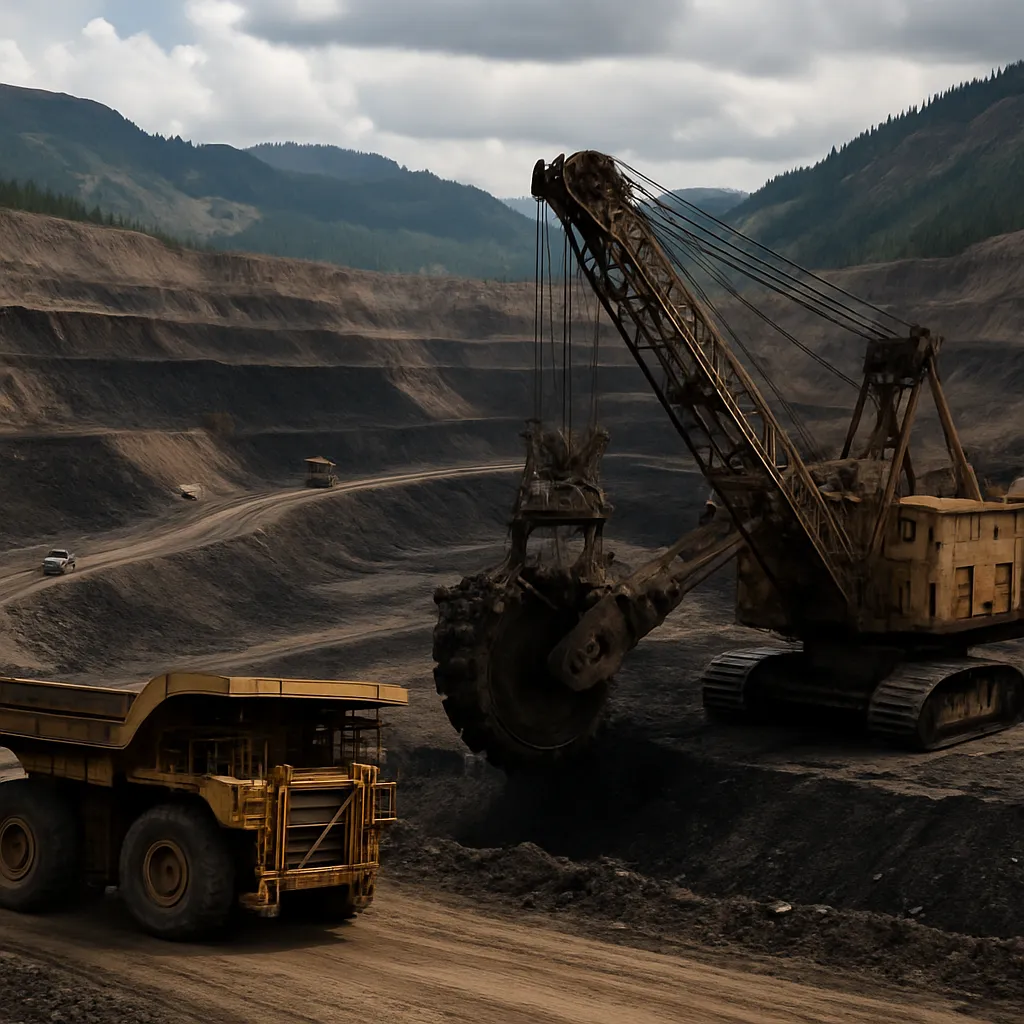
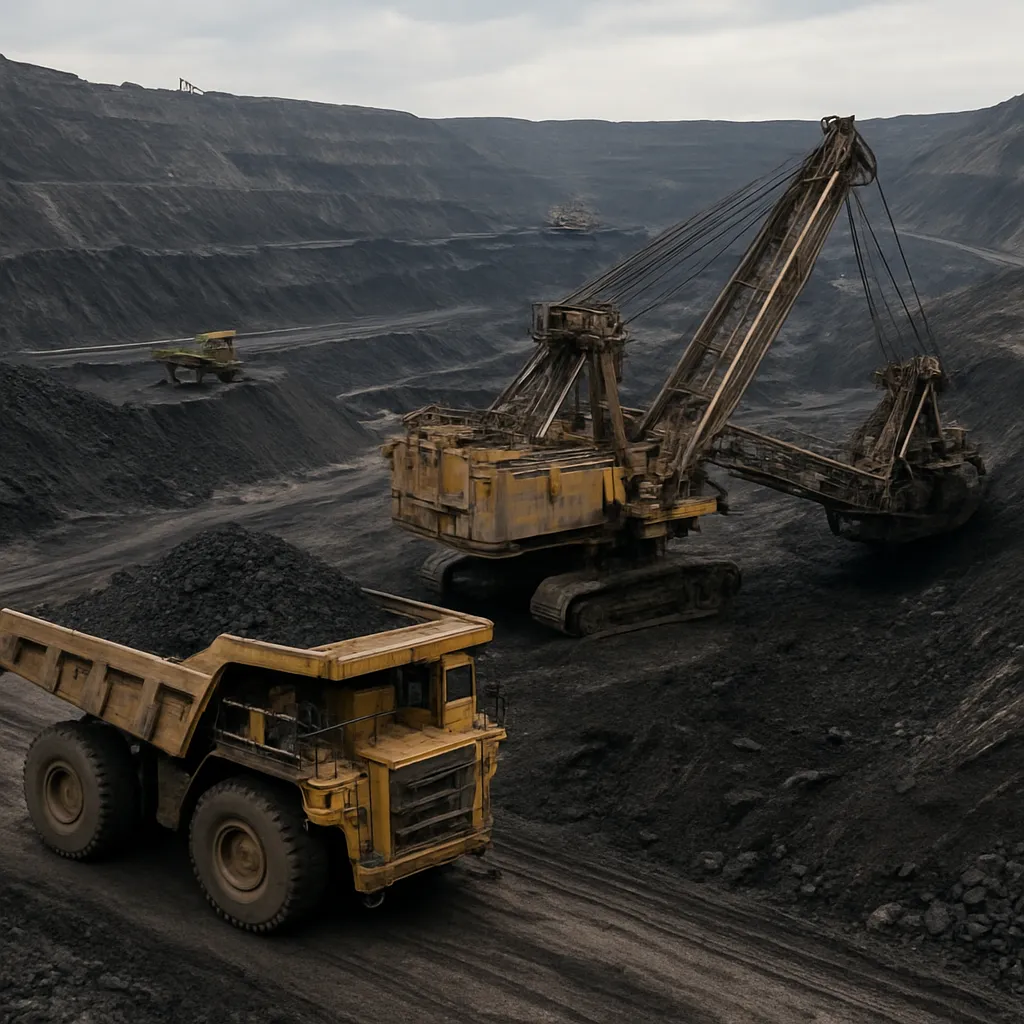
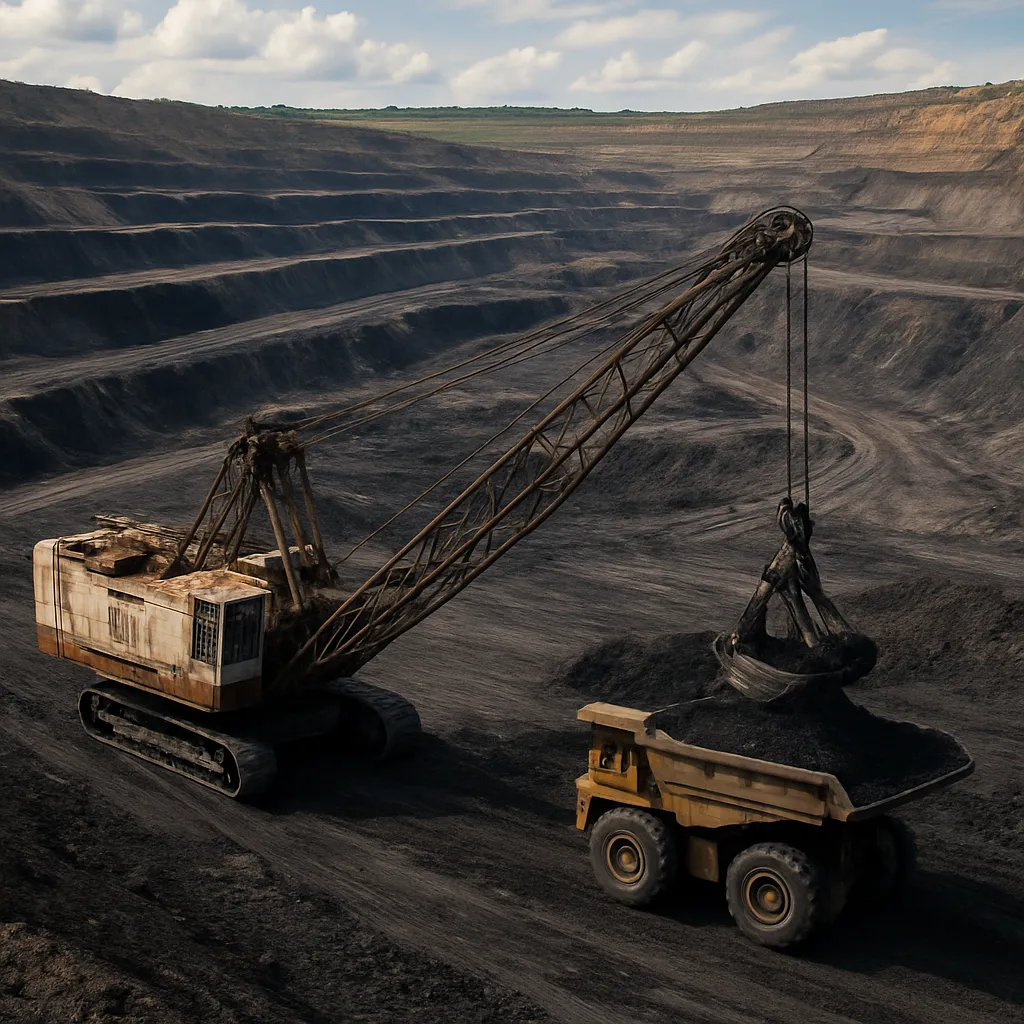
Mining at Kostolac is dominated by large-scale open-pit operations. Typical site features include extensive stripping benches, excavators or draglines, haul trucks or conveyor systems, and overburden dumps. Because the power plants are located very close to the pits, coal delivery frequently uses conveyor belts and short-haul trucking, reducing handling stages. The proximity to the Danube also offers additional logistics options: shipment of certain materials and removal of by-products can be accomplished by barge, providing lower-cost transport for bulky goods.
Support facilities and workforce
The complex comprises not only the pits and power units but also workshops, maintenance yards, ash handling and storage facilities, and employee settlements. The mining and power complex provides employment for thousands of workers directly, and supports additional indirect employment in supply chains, transport, and local services. The combination of mining and generation creates synergies—for instance, dedicated repair shops and supply depots serve both mine and plant needs.
Economic and industrial significance
Kostolac plays a multifaceted role in Serbia’s economy and energy system. As one of the country’s main lignite basins—secondary in scale to the Kolubara basin—Kostolac contributes a reliable, baseload source of domestic electricity and heat. This reduces dependency on imported fuels, supports grid stability, and underpins local industry and municipal services, particularly in eastern Serbia.
- Energy security: Local coal supply for adjacent thermal units helps stabilize power supplies by reducing exposure to international fuel market volatility.
- Economic multiplier: The complex supports regional economic activity through wages, procurement, and transport services.
- Industrial linkages: Industries that require firm baseload power (manufacturing, processing plants) benefit from predictable electricity availability in the region.
Revenue from coal extraction and electricity production contributes to state and local budgets via taxes, royalties and enterprise profits. In periods of high domestic demand or constrained imports, Kostolac’s output becomes especially valuable to national energy planners.
Statistics and operational data (recent and approximate)
Exact annual figures for production and consumption at Kostolac vary year to year. In recent decades the Kostolac basin has produced several million tonnes of lignite annually, substantially less than Serbia’s largest producing area, the Kolubara basin, which typically accounts for the bulk of national lignite output. As a working approximation based on historical reporting and public energy statistics:
- Annual lignite production at Kostolac in the 2010s–early 2020s has often ranged in the low single-digit millions of tonnes (for example, roughly 4–8 million tonnes per year), depending on plant demand and mine sequencing.
- Recoverable reserves in the Kostolac basin are commonly described in national geological overviews as being in the hundreds of millions of tonnes category, sufficient to support continued operation for multiple decades at current production rates, though precise reserve classifications and economic recoverability depend on market and policy conditions.
- The thermal power units served by Kostolac historically provided several hundred to several hundred-plus megawatts of installed capacity combined, supplying a notable share of Serbia’s thermal generation capacity.
- Employment from the complex—direct and indirect—runs into the thousands, with exact staffing levels varying with production cycles and modernization projects.
Because state-owned and corporate reporting practices change, and because periodic investments (upgrades, new units) alter fuel demand, these figures should be treated as indicative rather than definitive. Public energy company annual reports and national energy statistical bulletins provide the most authoritative and up-to-date numbers for a given year.
Environmental, health and social considerations
Emissions and air quality
Like all lignite-fired operations, Kostolac’s mines and adjacent thermal plants are significant sources of greenhouse gas emissions, as well as local air pollutants such as particulate matter (PM), sulfur dioxide (SO2), and nitrogen oxides (NOx). Modernization and the installation of flue gas cleaning systems can reduce local pollutant emissions, but lignite combustion remains carbon- and pollutant-intensive compared with higher-grade coals and with low-carbon generation sources.
Water, ash and land management
Mining and thermal operations require substantial water use for cooling, dust suppression and processing. Ash and other combustion residues create long-term waste-management obligations; ash ponds, dry ash landfills and sintering residues must be managed to prevent groundwater contamination and leaching of heavy metals. Rehabilitation of mined land—backfilling, reshaping spoil heaps and restoring vegetation—is an ongoing technical and financial challenge, and a necessary part of permitting and social responsibility strategies.
Social impacts and community relations
The Kostolac complex is a major local employer, which creates both benefits and tensions. While the site provides livelihoods and funds municipal services through taxes, communities near mines often contend with dust, noise, landscape alteration and traffic. Compensation, resettlement (where needed), and community investment programs are important components of maintaining social license to operate. Over time there has been a growing emphasis from operators and regulators on stakeholder engagement, local development projects and environmental mitigation measures.
Recent developments and modernization efforts
In the early 21st century, Serbia undertook several modernization and expansion projects at major thermal facilities, including Kostolac. These projects generally aimed to increase efficiency, replace aging units, and meet more stringent environmental standards. Some newer units at Kostolac were constructed with international partnerships and modern engineering to improve efficiency and reduce per‑MWh emissions compared with older units.
At the same time, national and international pressure to reduce carbon emissions has influenced planning: upgrades focus on higher thermal efficiency and emission controls, while long-term strategies contemplate diversification of the energy mix. In response, some investments emphasize co-firing, ash handling improvements, and incremental efficiency gains, while broader system-level decisions explore renewable integration, grid flexibility, and eventual coal phase-down scenarios aligned with national energy and climate commitments.
Challenges and future outlook
Kostolac faces multiple near- and medium-term challenges:
- Decarbonization pressures: EU climate policy, international finance trends and global decarbonization pathways create pressure to reduce reliance on lignite. Serbia’s energy policy choices will determine the pace at which coal-fired units are retrofitted, retired or replaced.
- Economic competitiveness: As renewables costs fall and carbon pricing becomes more prominent, lignite-based generation must either become cleaner and more efficient or lose competitive ground.
- Environmental compliance: Meeting stricter emissions limits and managing ash and water impacts will require continued capital spending and technical improvements.
- Social transition: Workers and local economies dependent on mining require transition planning, retraining programs and new employment opportunities if production is scaled down over time.
Opportunities exist as well. Proximity to the Danube and established industrial infrastructure makes the Kostolac site potentially suitable for diversified energy activities—such as biomass co-firing, deployment of carbon-capture readiness measures, or hosting renewable generation and energy storage projects that can leverage existing grid connections. Thoughtful rehabilitation of mined land can also generate new economic uses (agriculture, recreation, or industrial development) if planned and funded appropriately.
Conclusion
The Kostolac mine and power complex is a cornerstone of Serbia’s lignite-based energy system, with longstanding contributions to local economies, national energy security and industrial activity. Its future will be shaped by the interplay between economic realities, environmental imperatives and policy choices. Continued investments in modernization, emissions control and land rehabilitation can extend the useful life of the complex while reducing impacts. At the same time, a strategic approach to economic diversification and workforce transition will be essential to ensure that communities around Kostolac benefit from a sustainable and resilient energy transition. The nearby thermal units and the mine remain emblematic of Serbia’s broader challenge: balancing immediate energy and social needs with mid‑ and long‑term climate and environmental goals.