The following article provides a comprehensive overview of the Kirov Mine, one of the coal mining sites associated with Russia’s extensive extractive industry. It covers the mine’s location and geological setting, the types of coal produced, economic and social importance, production and statistical context (noting where public data are limited), technological and environmental aspects, and other noteworthy details. Where precise public statistics for this specific mine are unavailable, the text places the Kirov Mine within the broader patterns and averages of Russian coal mining to give a realistic picture of its likely scale and role.
Location and Geological Setting
The name Kirov Mine is used for several historical and contemporary mining operations across the former Soviet Union, typically commemorating the Bolshevik leader Sergey Kirov. In the Russian Federation context, sites bearing the Kirov name are most commonly associated with major coal-producing regions such as the Kuzbass (Kemerovo Oblast) and other basins like the Pechora and Kansk-Achinsk subregions. For the purposes of this article, Kirov Mine is discussed as a coal production site representative of regional operations within Russia’s industrial coal-producing belts.
The mine is sited within sedimentary basins where Carboniferous to Permian coal-bearing strata are present. These basins were formed during ancient geological periods conducive to the accumulation of organic material, later transformed under pressure and heat into coal seams. Typical geological features around such mines include multiple coal seams of varying thickness, associated sandstones, shales and occasional carbonate layers, and the presence of mine gases such as methane trapped within the coal layers.
What Is Mined and Coal Types
Russian coal mines produce several grades of coal. The Kirov Mine, like many regionally significant operations, would most likely produce a mix of:
- Thermal coal (steam coal) used for electricity generation and heating.
- Coking coal (metallurgical coal) suitable for steelmaking through coke production.
- Intermediate bituminous grades and lower-rank coals used for local industries or blended products.
The precise quality of coal—measured by calorific value, ash content, volatile matter and sulfur content—depends on the seam. In major Russian basins, commercially valuable seams often yield coals with calorific values in a range adequate for both thermal and metallurgical applications after sorting and processing. Where the mine targets high-grade metallurgical markets, on-site washing plants and quality control systems are typically present to produce coking coal concentrates.
Mining Methods and Operations
Underground vs. Open-Pit
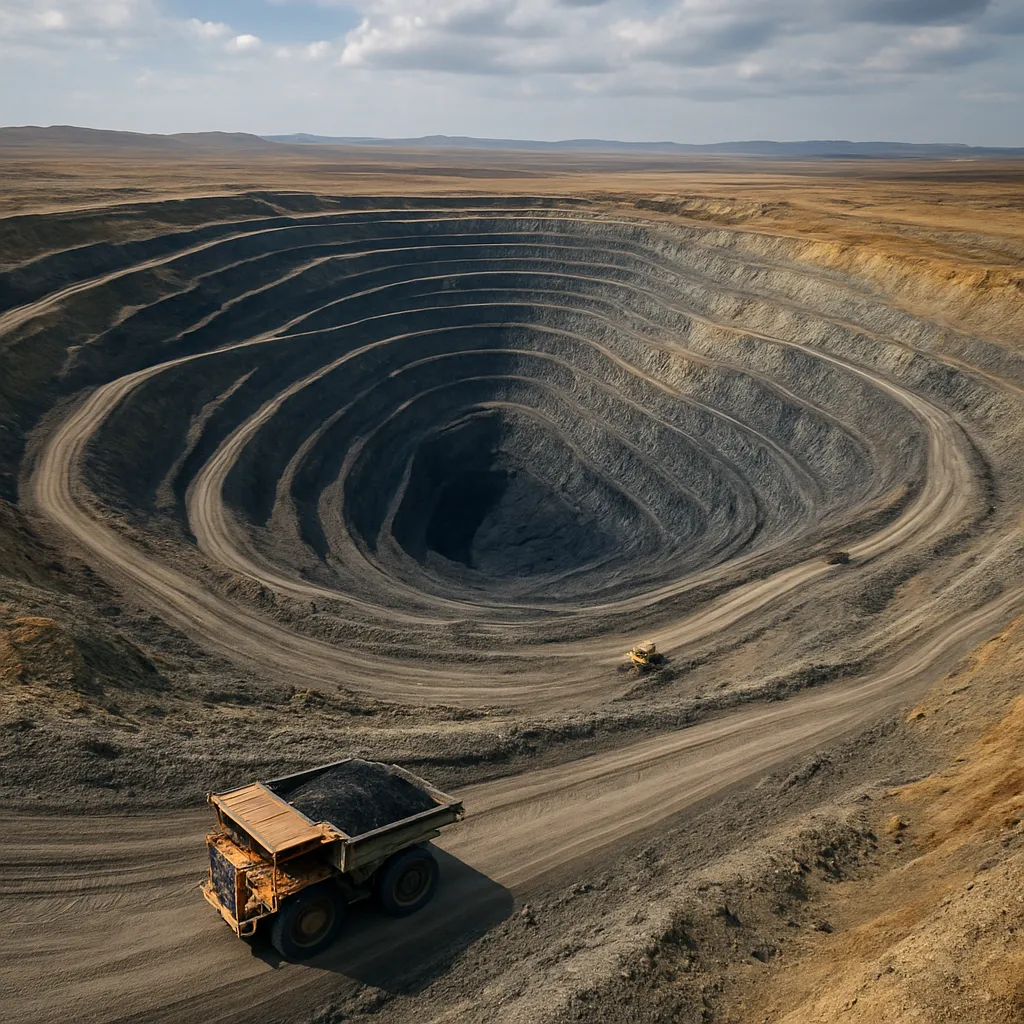
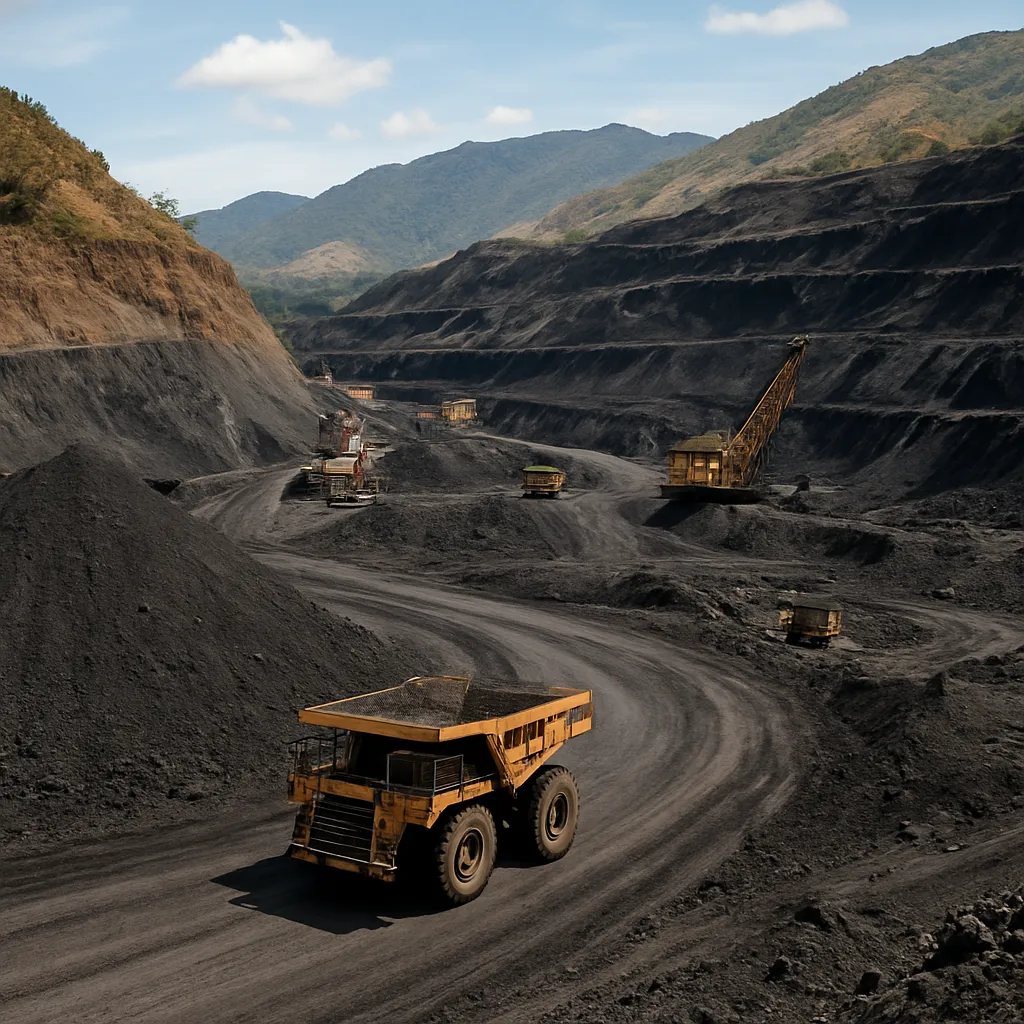
Coal extraction at sites named Kirov has historically employed both underground and open-pit techniques. In deep, multi-seam basins, underground longwall mining systems are common, while shallow deposits are often exploited by surface (open-pit) methods. Longwall mining is valued for its productivity and ability to extract large continuous panels of coal, while surface mining allows the recovery of low overburden seams at lower operational complexity.
Infrastructure and Processing
A typical Kirov Mine operation will include:
- Primary access shafts or conveyor systems for transporting coal and personnel.
- On-site coal preparation plants (washery) to reduce ash and sulfur and to separate coking fractions.
- Rail and road links for dispatching coal to domestic power stations, metallurgical plants or export terminals.
- Gas drainage and ventilation systems to manage methane and ensure safety.
Economic and Social Significance
Coal mining operations like the Kirov Mine have multiple economic and social effects at local, regional and national scales. They typically provide direct employment to several hundred to several thousand workers depending on mine size. Beyond direct jobs, mines support a network of contractors, service providers, and community businesses contributing to local economies.
- Employment: Mines are often major local employers in mono-industrial towns. Worker roles range from miners and engineers to logistics, administration and maintenance staff.
- Local economy: Wage flows from mines support retail, education and health services in mining towns; municipal budgets often include taxes and royalties from mining activity.
- Regional industrial linkages: Coal supplies power plants and metallurgical facilities, undergirding industrial clusters such as steelmaking and chemical production.
At a national level, coal remains an important element of Russia’s energy mix and export revenue. Although natural gas is a leading fuel in Russia, coal supports base-load power generation, industrial processes and—importantly—export markets where Russian coal competes on price and logistics.
Production, Reserves and Statistical Context
Precise, up-to-date production and reserve figures for a specific Kirov Mine depend on public reporting by the mine operator, regional authorities, or ministry statistics. Where those are not publicly available or are fragmented, it is helpful to place the mine in the context of Russian coal statistics to understand scale and significance.
- Russia is among the world’s top coal producers and exporters. Annual production in the early 2020s typically ranged above 400 million tonnes per year across the whole country.
- Major coal-producing regions include the Kuzbass (Kemerovo Oblast), the Far East (Sakhalin and Primorye-linked export routes), and the Pechora and Urals basins.
- Individual mid-sized underground mines in Russia often produce between 0.5 and 5 million tonnes per year, while very large operations or surface mines can produce substantially more.
If Kirov Mine is a medium-sized underground operation, a plausible annual production range might be on the order of several hundred thousand to a few million tonnes per year. Proven and probable reserves at such mines—again, highly site-dependent—can often sustain operations for several decades if seams are sufficiently thick and economically recoverable.
Note: the above production ranges are typical benchmarks drawn from the Russian coal sector; exact numbers for a given Kirov Mine must be verified against operator reports or regional mining registries for precision.
Role in the Coal Industry and Markets
Kirov Mine’s market role depends on the coal grade produced. If it yields high-quality coking coal, the mine feeds domestic steel producers and export markets (notably Asia), supporting higher-value trade. If production is primarily thermal coal, the mine’s coal may be destined for domestic power plants, district heating or export markets where cost-competitive thermal coal is in demand.
- Domestic supply: Supplying power stations and industrial facilities helps maintain regional energy security and reduces dependence on fuel transport from distant regions.
- Export potential: Russian coal exports target Europe and Asia; connectivity to rail networks and ports is decisive for export competitiveness.
- Price drivers: Global metallurgical coal prices, freight costs, and regional demand patterns shape the mine’s revenue and investment outlook.
Safety, Environmental and Regulatory Aspects
Coal mining in Russia, including operations like Kirov Mine, faces multiple safety and environmental challenges. These determine operational costs and community acceptance.
Safety
- Methane management and adequate ventilation are critical to mitigate explosion risks. Modern longwall mines implement methane drainage and monitoring systems.
- Ground control and subsidence management are essential in underground operations to protect infrastructure and surface land use.
- Occupational health programs address dust control, noise, and ergonomics to reduce chronic respiratory diseases and workplace injuries.
Environmental
- Surface mining alters landscapes and requires reclamation plans to restore vegetation and manage water runoff.
- Coal washing and processing create tailings and effluents that must be treated to prevent contamination of local waterways.
- GHG emissions: combustion of coal is a major source of CO2; at the mine level, fugitive methane emissions can be significant contributors to greenhouse gases.
Regulation is enforced through federal and regional environmental laws, and mines increasingly adopt best practices such as capturing methane for power generation or using modern dust suppression systems. Community engagement and corporate social responsibility programs are common ways mines mitigate social impacts.
Technological Modernization and Efficiency
The longevity and competitiveness of Kirov-type mines hinge on modernization. Key trends include:
- Automation of longwall faces and remote-controlled equipment to improve safety and productivity.
- Digitalization and process optimization through sensors, predictive maintenance and fleet management software.
- Enhanced coal preparation technologies to upgrade product quality and reduce waste.
- Methane capture systems that can be monetized through on-site power generation or pipeline sales.
Investment in these areas tends to increase unit efficiency and lower per-ton extraction costs, which is critical in a global market where coal competes with alternative fuels and varying environmental regulations.
Social and Cultural Dimensions
Mines named Kirov often lie at the heart of mining communities that developed around them in the Soviet era. These towns typically feature housing, schools, medical facilities and local cultural institutions funded historically by the mining enterprise. Over decades, this fosters a distinct mining culture with traditions, commemorations and community networks centered on the mine.
Transitions—whether through mechanization, market shifts, or declining seams—pose social challenges such as unemployment, outmigration and the need for economic diversification. Successful local strategies often include retraining programs, investment in small and medium enterprises, and redevelopment of former mining lands for new economic uses.
Interesting Historical and Comparative Notes
- The name Kirov evokes Soviet industrial history; many mines named after party figures played symbolic as well as economic roles during the USSR’s industrialization campaigns.
- Comparatively, Kirov-type mines reflect broader global coal trends: a mix of legacy infrastructure and gradual modernization to meet contemporary economic and environmental constraints.
- Some Kirov mines have been focal points during labor movements and regional politics, illustrating how extractive industries shape social and political life in mining regions.
Concluding Observations
Kirov Mine, as a representative Russian coal operation, exemplifies the complexity of modern coal mining: geologically rooted in rich sedimentary basins, technologically evolving to improve safety and efficiency, and economically significant at local and regional levels while facing environmental and market pressures. Where specific operational statistics for a named Kirov Mine are not publicly documented, the best assessment places such mines within the broader Russian coal sector—one characterized by large national output, regional specialization (notably the Kuzbass), and an ongoing tension between maintaining economic value and addressing environmental and social sustainability challenges.
Given the variable availability of mine-level public data, anyone needing exact figures for annual production, workforce size, or reserves for a particular Kirov Mine should consult operator reports, regional mining registries, or official statistics from Russian federal agencies. Those sources provide the authoritative numerical basis for investment, planning and academic study.