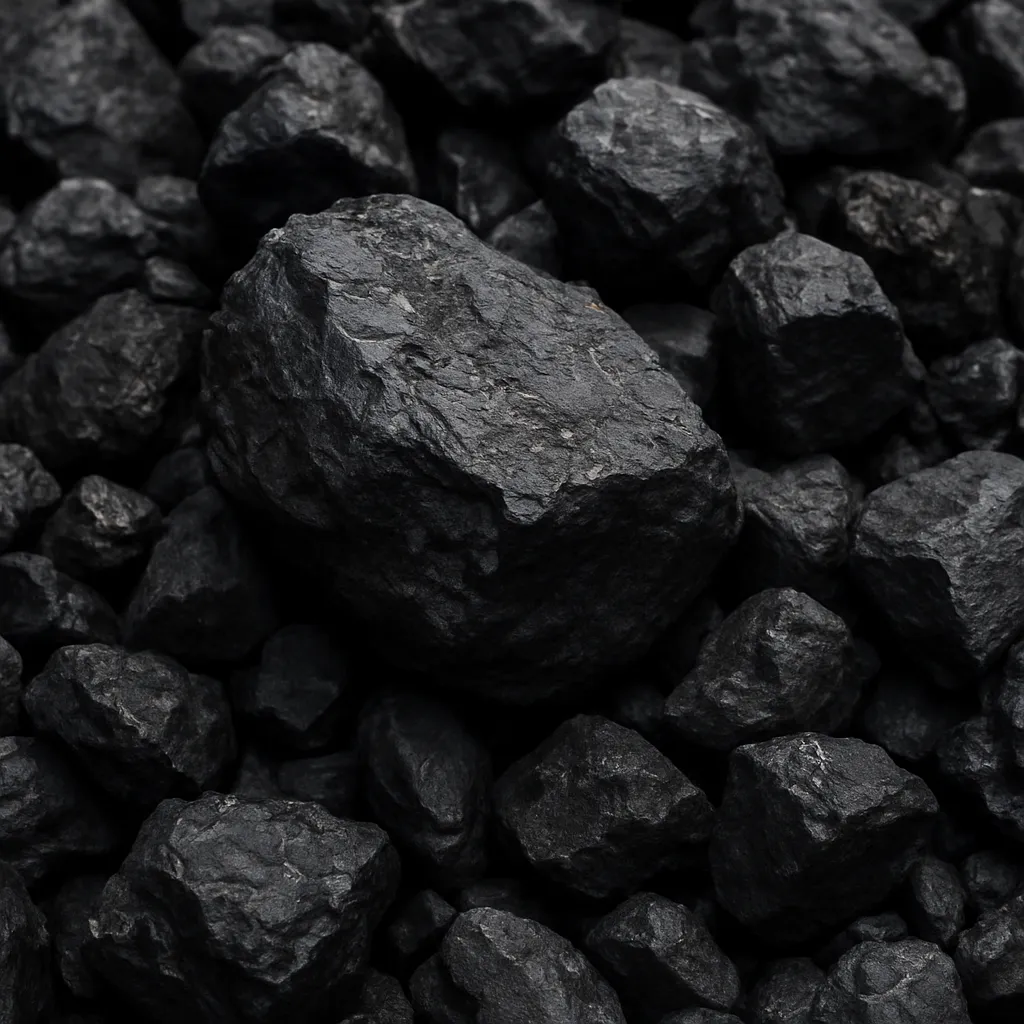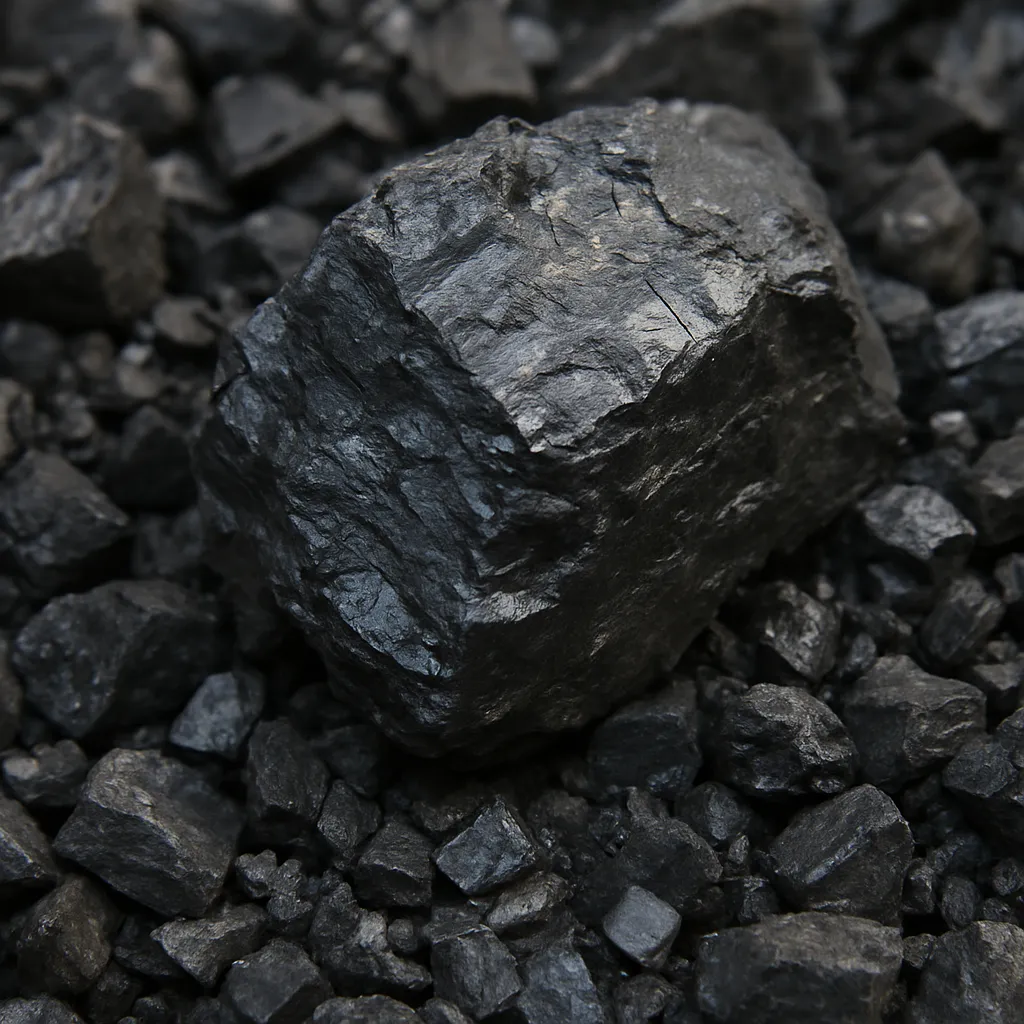
Improved thermal coal refers to conventional thermal coal that has undergone physical or chemical processing to raise its **calorific value**, reduce impurities (ash, **sulfur**, moisture and trace metals), and improve handling, combustion efficiency and environmental performance. This article surveys geological occurrence and global distribution, mining and upgrading technologies, economic and market dynamics, industrial significance and environmental implications, and presents statistical context and future outlook for improved thermal coal. The aim is to give a comprehensive view of why processed or upgraded thermal coal remains an important energy and industrial commodity in many parts of the world.
Where thermal coal occurs and how it is distributed globally
Coal is a sedimentary rock formed from plant matter subjected to heat and pressure over geological time. Thermal coal types used for electricity generation and heat production commonly include **lignite**, sub-bituminous and lower-grade **bituminous** coals. Deposits are found on all continents except Antarctica, in sedimentary basins formed in Paleozoic and Mesozoic eras. The largest national **reserves** and production centers are concentrated in a handful of countries.
- China — the world’s largest producer and consumer. China hosts extensive domestic basins (Shanxi, Inner Mongolia, Shaanxi) that supply most of its thermal coal demand.
- United States — large reserves in the Powder River Basin (Wyoming, Montana) produce low-cost sub-bituminous coal primarily for domestic power generation.
- India — substantial reserves (Jharkhand, Chhattisgarh, Odisha) supply a rapidly growing power sector that still depends heavily on domestically mined thermal coal, supplemented by imports.
- Australia — major exporter of both thermal and metallurgical coal; Australian basins (Queensland, New South Wales) supply high-quality coals to Asian markets.
- Indonesia — key seaborne supplier of low-cost thermal coal; production centered on Kalimantan and Sumatra and oriented toward exports.
- Russia, South Africa, Colombia and Poland — significant producers and exporters with substantial domestic markets in Europe and elsewhere.
Global thermal coal markets are split between domestic consumption (power utilities using locally mined coal) and a sizeable seaborne trade that supplies countries lacking domestic resources or seeking specific coal qualities. Seaborne thermal coal flows are dominated by Indonesia and Australia as exporters, and by China, India, Japan, South Korea, Taiwan and some European and Southeast Asian countries as importers.
Mining, beneficiation and technologies that create “improved” thermal coal
Improved thermal coal is produced by applying processes that upgrade low-rank or raw coal into a product with more desirable fuel and environmental characteristics. Key objectives are to raise the **calorific value**, lower ash and moisture, reduce sulfur and trace metals, and optimize particle size and bulk density for transport and combustion.
Primary mining methods
- Surface/open-pit mining — dominant for large, near-surface deposits (e.g., Powder River Basin, many Australian operations).
- Underground mining — used for deeper reserves; can include longwall and room-and-pillar techniques (common in China, Poland, India).
- Highwall mining and other hybrid methods — applied where surface strip mining leaves accessible coal seams.
Beneficiation and upgrading methods
Common physical and chemical treatments used singly or in combination include:
- Dense medium separation and gravity separation — remove heavy mineral impurities and reduce ash content.
- Flotation — particularly useful for fine particles and to separate organic matter from mineral impurities.
- Deshaling — essential for reducing high-ash free-swelling coals sourced from some basins.
- Drying and dewatering — lowers moisture in high-moisture sub-bituminous and **lignite** coals, increasing heating value and reducing transport weight.
- Thermal treatments (torrefaction, mild pyrolysis) — produce a coal-derived solid with improved grindability, hydrophobicity and higher energy density; sometimes marketed as “upgraded coal” or “black pellets.”
- Chemical stabilization and briquetting/pelletizing — improve handling, reduce dust and enable co-firing or blending with other fuels.
These processes collectively reduce transportation costs per unit of energy, improve **combustion efficiency** in power plants, and lower emissions of particulates, sulfur oxides and some trace elements when compared with raw, unprocessed coal.
Economic and market dynamics of improved thermal coal
The economics of thermal coal—improved or raw—are shaped by supply-side factors (production costs, export capacity, geopolitical events) and demand-side drivers (power sector growth, fuel switching, and policy). Improved thermal coal carries a price premium in markets where lower ash, lower moisture and higher calorific value translate into lower operational and environmental costs for utilities.
Production, trade and pricing trends
- Seaborne thermal coal markets are notably volatile. Benchmark prices such as the Newcastle index (Australia) rose sharply during global energy disruptions in 2021–2022, reflecting tight supply, freight bottlenecks and geopolitical tensions; they subsequently moderated as markets adjusted.
- Indonesia and Australia are the largest seaborne thermal coal exporters by volume; Russia and Colombia also supply significant volumes. Import demand is concentrated in Asia — notably **China** and **India** — where large power sectors require reliable supplies.
- Improved coal products (washed coal, low-ash grades, low-sulfur shipments, and upgraded pellets) command higher unit prices but can reduce plant operating expenses and environmental compliance costs, potentially yielding net savings for utilities.
Economic importance to producing regions
Coal production—especially where beneficiation and export infrastructure exists—generates employment, royalties and foreign exchange. In coal-dependent regions, improved thermal coal projects often attract investment because upgraded products can access export markets with stricter fuel quality requirements or fetch higher prices. Governments derive fiscal revenues via taxes, royalties and export duties in some jurisdictions.
Statistical context and global significance
Reliable, consistent global statistics vary by source, but several broad patterns are clear:
- Coal remains a major component of the global energy mix. In recent years, coal-fired generation provided roughly one-third of global electricity (about 35–40% in the early 2020s), though the share varies significantly by country and is generally declining in many advanced economies.
- China accounts for roughly half of global coal consumption and production, making its domestic production and import policy critical to global markets. India is typically the second-largest consumer and a major importer, especially when domestic supply or quality constraints arise.
- Global coal production across all types is measured in the order of billions of tonnes annually; national outputs range from several billion tonnes (China) down to tens of millions in smaller producers.
- Seaborne thermal coal trade represents a significant fraction of global consumption, and spot markets and long-term contracts coexist. The seaborne market is more sensitive to international price signals than domestic-bound coal flows.
Environmental-statistical indicators associated with coal are stark: burning thermal coal is one of the largest anthropogenic sources of CO2 emissions. Emission intensity varies with coal quality and technology; typical ranges for CO2 emissions from coal combustion are roughly 2.2 to 3.0 tonnes of CO2 per tonne of coal burned, depending on rank and carbon content. Utilities that burn improved coal with higher calorific value and lower moisture can achieve lower CO2 per MWh generated, though absolute emissions remain substantial without carbon capture.
Industrial role and applications
Improved thermal coal serves primarily the power generation sector, but also has roles in industry and chemical production.
- Power generation — the largest single use. Improved coal offers higher thermal efficiency, lower slagging and fouling in boilers, and lower emissions of particulates and sulfur when properly matched to plant design.
- Cement manufacturing and industrial heat — many kilns and industrial boilers are designed to burn coal. Improved coal can improve combustion stability and reduce maintenance.
- Coal-to-liquids and coal-to-chemicals — in countries with strategic interest in synthetic fuels or chemicals, upgraded coal with controlled quality is preferable for gasification and downstream synthesis.
- Co-firing with biomass — pelletized or upgraded coal can be blended with biomass to lower net CO2 emissions while avoiding major retrofits.
Utilities and industrial users choosing improved coal typically do so to reduce downtime, increase boiler life, comply with emissions limits, and optimize heat rates. For aging power plants, switching from raw high-ash coal to washed or upgraded coal can reduce maintenance and improve availability.
Environmental, regulatory and social considerations
While improved thermal coal can lower some pollutants per unit energy, it does not eliminate greenhouse gas emissions. Key considerations include:
- Carbon emissions — even high-quality thermal coal emits large amounts of CO2 when combusted. Without carbon capture and storage (**CCS**), coal-fired generation remains incompatible with deep decarbonization targets.
- Local air pollutants — beneficiation reduces **ash**, sulfur and some trace metals, thereby cutting SOx, PM and heavy metal emissions from combustion. However, some pollutants may still be significant without advanced flue gas cleaning.
- Mining impacts — land disturbance, water consumption and potential contamination remain central concerns. Improved coal production does not remove the need for reclamation and community engagement.
- Social and economic transition — areas dependent on coal mining and related industries face complex transitions as markets evolve; policies for retraining, economic diversification and social protection are critical.
Technological innovations and future outlook
The future of improved thermal coal is shaped by competing trends: persistent demand for reliable base-load power in many developing economies, and accelerating policy-driven shifts toward low-carbon energy in others. Innovations influence how coal might remain part of energy systems with lower environmental impact:
- Advanced upgrading (torrefaction, hydrothermal carbonization) and pelletization improve transportability and co-firing potential with biomass.
- Improvements in coal washing and fines recovery reduce waste and increase saleable yield from a given seam.
- Integration with CCS — the principal pathway for near-zero CO2 emissions from coal-fired plants but requiring substantial capital and infrastructure; deployment pace is linked to policy incentives and carbon pricing.
- Hybrid systems — combining coal plants with energy storage or flexible operation to complement variable renewables while reducing emissions intensity.
Regional outlooks differ: in many OECD countries and parts of Europe, coal use is contracting rapidly under climate policies and economics. In several Asian and African countries, coal (including improved thermal coal) remains central to meeting growing electricity demand and industrialization objectives, at least in the medium term. Market signals, carbon prices, cost declines for renewables and storage, and geopolitical events (affecting fuel supply security) will determine trajectories.
Interesting facts and lesser-known aspects
- Upgraded coal products can approach the energy density of low-grade petroleum-derived fuels on a volumetric basis, enabling niche uses in areas without piped fuels.
- Some improved coals are specifically tailored for individual power plants: exporters and brokers may deliver cargoes blended or washed to meet boiler design constraints and emissions permits in importing countries.
- Coal beneficiation plants can convert previously uneconomic seams into saleable product streams, extending the life of mines and local employment profiles.
- Coal chemistry affects trace emissions: lower chlorine and sodium in improved coal reduce ash melting problems and corrosion in boilers.
Concluding perspective
Improved thermal coal occupies a pragmatic niche in the global energy landscape. By enhancing calorific value and lowering contaminants, upgraded coal reduces some environmental impacts of combustion and improves economic performance for utilities and industrial users. Nonetheless, the fundamental climate challenge associated with burning fossil carbon remains. The role of improved coal will therefore be contingent on regional energy needs, policy environments, technological deployment (especially **CCS**) and the pace at which renewables and storage continue to become cost-competitive. For producers, beneficiation and upgrading offer pathways to higher-value products and expanded market access; for consumers, improved coal can be a transitional fuel that allows better plant performance and lower local emissions while longer-term decarbonization strategies are implemented.