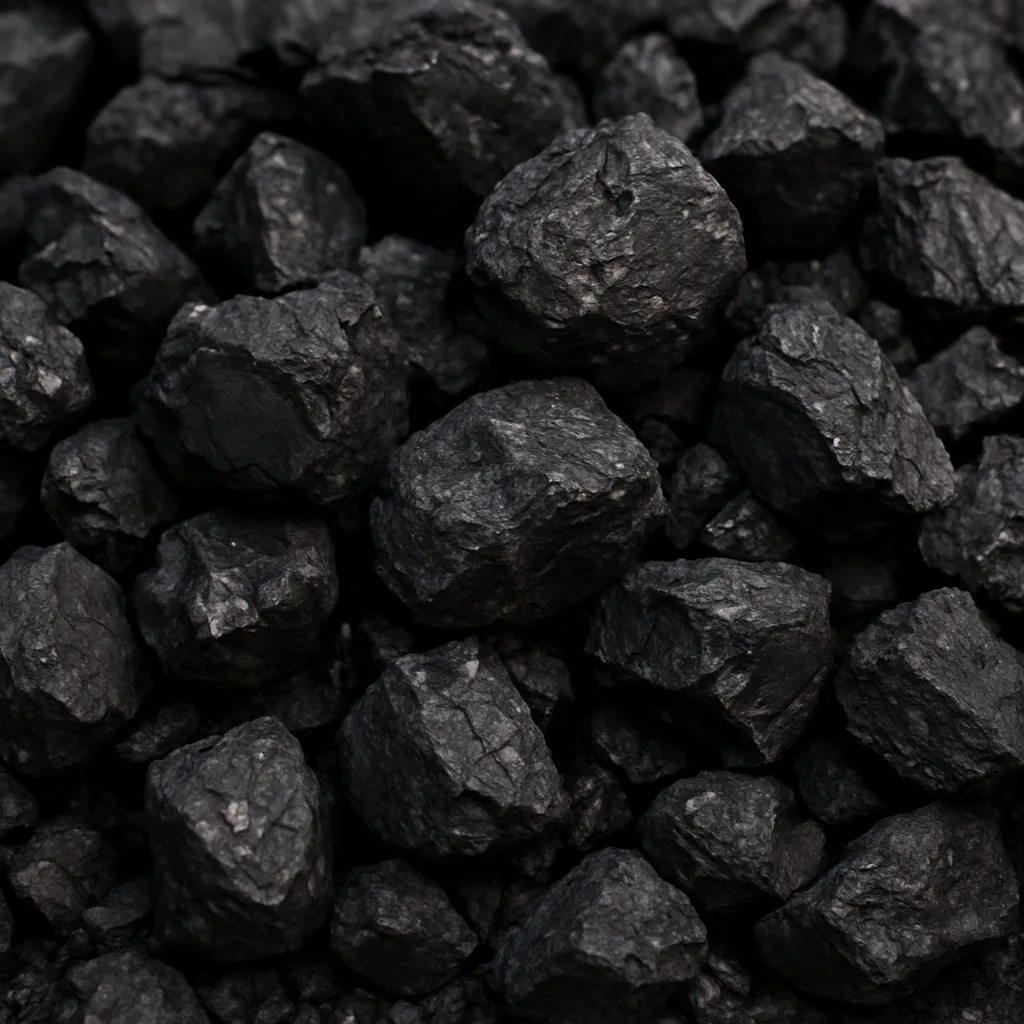
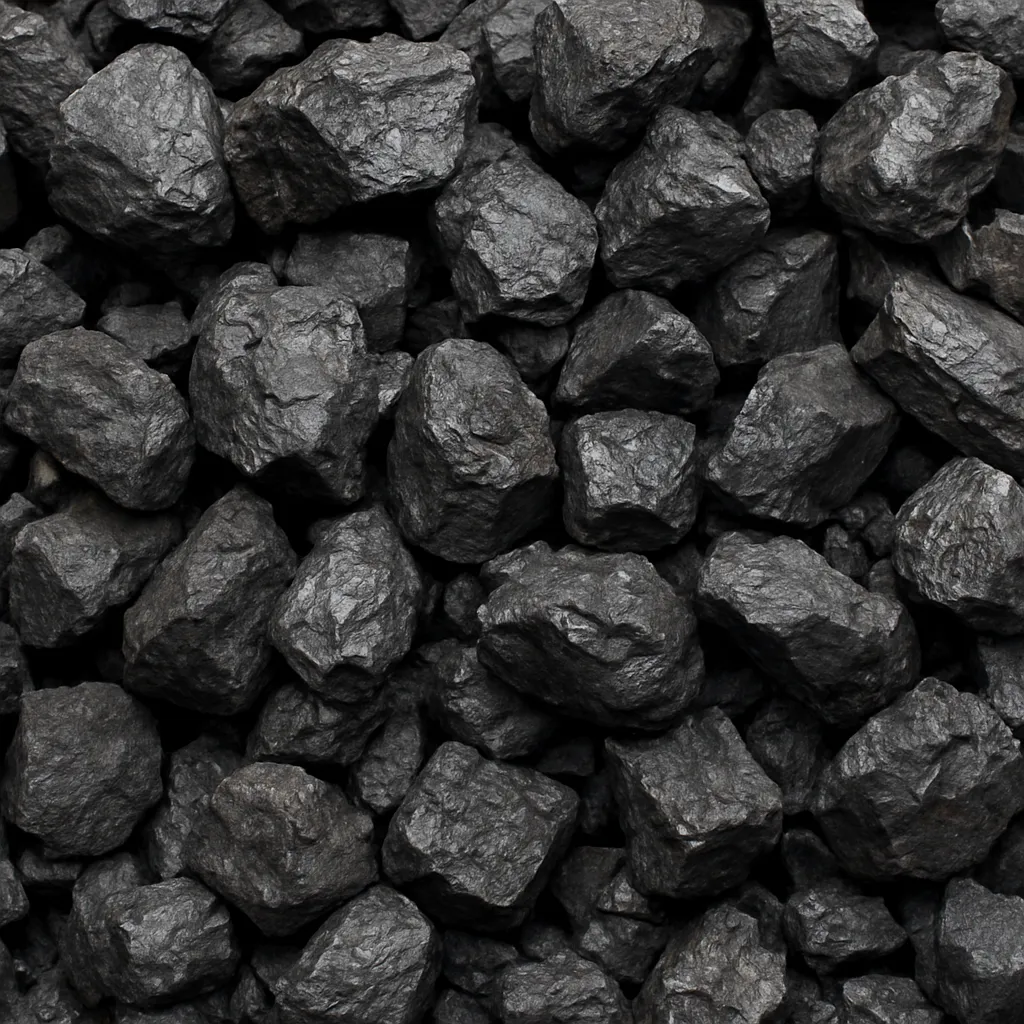
High-moisture coal is a broad category of low-rank coals that contain a significantly higher share of water in their natural state than medium- and high-rank coals. These coals play an important role in regional and global energy systems because they are often abundant, relatively inexpensive at the mine mouth, and well suited to certain combustion technologies. At the same time, their physical and chemical properties create technical, logistical and environmental challenges that shape how they are mined, marketed and used. This article reviews where high-moisture coal occurs, how and where it is produced, key economic and statistical indicators, its industrial significance, associated technologies for utilization and upgrading, and other notable features of this fuel class.
Occurrence and geological characteristics
High-moisture coal generally refers to lignite and many varieties of sub-bituminous coal that retain a large proportion of water as part of their composition. Moisture content can vary greatly depending on rank, depositional environment and post-depositional alteration. Typical features include softer, more friable seams, relatively low fixed carbon and volatile matter profiles differing from higher-rank coals. The moisture content of these coals often ranges from 20% up to 60% or more on an as-mined basis for lignites; sub-bituminous coals typically contain 15–40% moisture.
Geologically, high-moisture coals form from peat deposits that were subjected to relatively low levels of pressure and heat during burial compared to the processes that create bituminous and anthracite coals. This limited coalification preserves higher inherent moisture and more plant macerals that trap water. High-moisture deposits are commonly found in young basins with extensive peat formation, lacustrine and fluvial settings, and broad shallow sedimentary basins.
Common properties that distinguish high-moisture coal
- Lower calorific value per tonne (lower energy density) on an as-received basis.
- High inherent moisture and often higher volatile matter than older coals.
- Soft mechanical properties, making them amenable to surface mining but susceptible to spontaneous heating during stockpiling.
- Higher ash and sulfur contents in some deposits, though composition varies widely.
Major producing regions and mining methods
High-moisture coals are widespread and occur on most continents. Examples of major regions and their characteristics include:
- Indonesia: Large deposits of low-rank thermal coal are found in Kalimantan and South Sumatra. Indonesian coal exported to international markets is often sub-bituminous with elevated moisture, marketed as steam coal for power generation. Indonesia has been a leading exporter of thermal coal, providing low-cost coal to countries in Asia.
- Australia: The eastern state of Victoria contains extensive brown coal deposits in the Latrobe Valley, notable for moisture contents often exceeding 50–60% in situ. Queensland and New South Wales produce sub-bituminous coals as well, though many Australian exports are higher-rank thermal coal.
- Europe: Germany’s large lignite basins in the Rhineland, Lusatia and Central German mining area are classical examples of mine-mouth lignite production used for local power generation. Poland also produces significant lignite volumes (e.g., the Bełchatów region) which fuel nearby power plants.
- United States: The Powder River Basin (Wyoming and Montana) produces large quantities of low-rank sub-bituminous coal with elevated moisture relative to bituminous coals; PRB coal is an important fuel for U.S. power generation due to its low sulfur and low price per unit of delivered energy.
- Russia and former Soviet basins: Several basins contain sub-bituminous coal used for domestic power and heat, with regional mines supplying nearby industrial centers.
- Colombia and South America: Regions with sub-bituminous seams supply domestic plants and some export markets.
Because many high-moisture deposits lie close to the surface, surface mining methods (open-pit or strip mining) dominate. In parts of Europe, giant bucket-wheel excavators and conveyor systems are characteristic of lignite mining. Underground mining occurs where overburden or land constraints make surface methods impractical, but it is less common for very low-rank coals. Key logistical elements of mining include extensive dewatering, handling of wet spoil, and careful stockpile management to mitigate spontaneous combustion and self-heating.
Economic and statistical overview
Globally, coal remains a major fossil fuel, though trends vary by region and policy environment. Total annual world coal production typically sits in the range of several billion tonnes per year; the share attributable to low-rank, high-moisture coals (lignite and sub-bituminous) is substantial—often estimated at roughly one third to two-fifths of global production depending on how categories are aggregated and the year considered. These coals are particularly important in regional markets where their low delivered cost and local availability make them the backbone of electricity generation.
Key economic characteristics:
- Lower market price per tonne compared to higher-rank coals, because of reduced energy density caused by high moisture.
- Freight and shipping economics often limit long-distance trade in very wet lignites; such coals are frequently used in mine-mouth power plants to minimize transport of water weight and maximize delivered energy per ton.
- Quality-based pricing mechanisms: coal contracts and spot markets commonly price coal on an energy basis (e.g., price per gigajoule) or adjust payments according to moisture, ash and sulfur content. Buyers apply penalisations for high moisture because it reduces the effective heat content.
- Upgrading, drying, or beneficiation can add value by increasing calorific value per unit mass and enabling transport to more distant markets.
Regional statistics and examples (approximate and illustrative):
- Indonesia ranks among the world’s largest exporters of thermal coal and particularly supplies vast quantities of low-rank, higher-moisture steam coal to Asia. Annual exports have historically been in the order of hundreds of millions of tonnes.
- Germany’s lignite production historically exceeded 150 million tonnes per year in peak years, with large integrated mining and power complexes. Other European producers such as Poland produce tens of millions of tonnes annually of lignite used mostly domestically.
- The United States’ Powder River Basin produces several hundred million tonnes annually of low-sulfur, sub-bituminous coal that often carries higher moisture than eastern bituminous coal varieties—this basin alone supplies a significant share of U.S. coal-fired power capacity.
Because markets price energy content rather than sheer mass, countries and utilities buying high-moisture coal evaluate delivered cost per unit of useful energy. Thus, a low per-tonne cost can be offset by high moisture that reduces net thermal output, and buyers will often demand higher calorific content through blending or drying.
Industrial significance and typical uses
High-moisture coal serves several important industrial roles:
- Electricity generation: Most high-moisture coal is burned in thermal power plants, frequently in plants located near the mine to avoid transport penalties. Fluidized bed boilers (particularly circulating fluidized bed, CFB) are well-suited to low-rank coals because they tolerate fuel variability and allow efficient combustion with lower NOx emissions.
- District heating and industrial heat: Lignite and low-rank coals commonly provide heat in regions where alternatives are expensive or where existing infrastructure depends on coal.
- Feedstock for chemical and conversion processes: Some projects explore gasification, coal-to-liquids (CTL) and coal-to-chemicals pathways that can utilize low-rank coals, often after drying or pre-treatment to improve process efficiency.
- Local employment and regional economies: Lignite basins and large open-pit operations often underpin local labor markets and municipal revenues, especially in areas with limited alternative industries.
The role of high-moisture coal in the energy mix is both practical and economic: it allows inexpensive, dispatchable generation in many developing and transition economies. For countries with abundant low-rank resources, lignite and sub-bituminous coal can be a strategic fuel for energy security, albeit with environmental trade-offs.
Technical and environmental challenges
High-moisture coal brings specific operational and environmental challenges that influence how it is managed across the supply chain.
Technical challenges
- Lower heating value: The presence of water reduces the net calorific value per tonne, increasing the mass the fuel must be transported and handled to deliver the same energy as higher-rank coal.
- Transport and storage: Wet coal can be heavier and more prone to physical degradation and dusting after drying; it can also oxidize and self-heat when stockpiled, a safety and emissions concern.
- Combustion efficiency: Power plants designed for higher-rank coal may experience reduced efficiency and higher moisture-related slagging or ash behavior when burning low-rank fuels without modification.
- Beneficiation complexity: Removing moisture mechanically is difficult; processes such as thermal drying, hot-gas drying and hydrothermal upgrading require energy input and investment.
Environmental implications
- Higher CO2 emissions per unit of delivered useful energy: Because less of the coal’s mass contributes to heating, the CO2 emitted per megajoule delivered can be higher compared to higher-grade coals.
- Local pollution: Combustion without adequate controls can increase emissions of particulate matter, SOx and NOx depending on trace elements and ash characteristics.
- Water and land impacts: Lignite mining, particularly surface mining, creates large land disturbances and can require significant water management for dewatering and ash handling.
- Reclamation obligations: Extensive reclamation is often required post-mining to restore landscapes and mitigate long-term environmental hazards.
Technologies for utilization and upgrading
To improve the performance and marketability of high-moisture coals, several technological approaches are used:
- Drying and thermal upgrading: Hot-gas dryers, direct-fired dryers, flash drying and fluidized-bed drying can reduce moisture and increase calorific value. Technologies like torrefaction (more common for biomass but sometimes adapted for low-grade coal) and hydrothermal carbonization can transform fuel properties.
- Coal beneficiation: Although traditional washing targets ash and sulfur removal, some processes also reduce moisture by separating higher-density mineral components and concentrating combustible matter.
- Briquetting and pelletizing: Compressing low-rank coal into densified forms reduces spontaneous combustion risk, simplifies handling and raises energy density per unit volume for transport.
- Combustion technologies: Circulating fluidized bed (CFB) boilers and bubbling fluidized bed systems are widely used to burn moist, heterogeneous fuels efficiently while controlling emissions. Co-firing with biomass or higher-rank coal is another strategy to stabilize combustion and meet environmental targets.
- Gasification and advanced conversion: Integrated gasification combined cycle (IGCC) and other gasification-based processes can, in principle, use low-rank coals after pre-treatment; these pathways also enable integration with carbon capture when economically justified.
Market dynamics and future prospects
Market prospects for high-moisture coals are shaped by a mix of local economics, global energy transition policies and evolving technology costs. Important dynamics include:
- Regional dependence: In many regions, low-rank coal will remain a staple fuel for years because of low capital requirements for existing plants and the proximity to resources, particularly where alternative fuels are expensive or infrastructure is limited.
- Price sensitivity to energy content: Buyers increasingly negotiate contracts on energy or calorific basis, penalizing moisture and ash. This creates incentives for producers to invest in upgrading facilities when transport to distant markets is needed.
- Policy pressure and carbon constraints: As governments adopt tighter air quality and climate policies, the long-term demand for all coal types faces uncertainty. Technologies like carbon capture and storage (CCS) could extend the life of coal-fired assets, but economics remain challenging.
- Innovation and niche opportunities: Advances in drying, briquetting and conversion for chemicals could open new markets for upgraded low-rank coals, particularly where feedstock costs favor local coal use over imports.
Notable case studies and interesting facts
Several examples illustrate the diverse roles of high-moisture coal:
- Latrobe Valley (Australia): This region’s brown coal reserves are among the most moisture-rich commercial coals. Because moisture can exceed 60%, much of the electricity generation is performed by mine-mouth power stations; transporting raw brown coal long distances is rarely economical.
- Bełchatów Power Station (Poland): One of Europe’s largest lignite-fired power plants receives lignite from a nearby open-pit mine and demonstrates the model of integrated mining-power operation that minimizes transport costs.
- Powder River Basin (USA): PRB coal’s combination of low sulfur and low per-tonne cost made it a dominant fuel for U.S. utilities for decades, illustrating how favorable sulfur and price characteristics can offset lower calorific value in market competition.
- Indonesian export model: Indonesian sub-bituminous coals—priced competitively—have helped to feed rapidly expanding thermal power capacity in Southeast and East Asia, showing how maritime trade can make sub-bituminous coals a global commodity despite higher moisture than many bituminous coals.
Conclusions and outlook
High-moisture coals are a diverse and regionally important class of fossil fuels. Their widespread occurrence and often-low extraction costs make them integral to power generation in many countries, particularly where they can be consumed near the mine site. However, high moisture content reduces energy density, complicates transport economics, increases the need for specialized combustion technologies and creates environmental challenges. Market forces—pricing by energy content, local policy, investment in upgrading technologies, and broader decarbonization trends—will determine how prominent these coals remain in future energy systems. Practical strategies to maintain economic value include mine-mouth power plants, patronage of fluidized-bed combustion, investment in drying and densification technologies, and strategic blending and beneficiation to meet buyer specifications and environmental standards.
Understanding the geological, technical, economic and environmental dimensions of high-moisture coal is essential for stakeholders planning resource development, power generation, or policy instruments in coal-dependent regions. While global momentum toward lower-carbon energy systems is clear, the near- to mid-term significance of high-moisture coal will persist where it is abundant, cheap to mine and central to regional energy security.