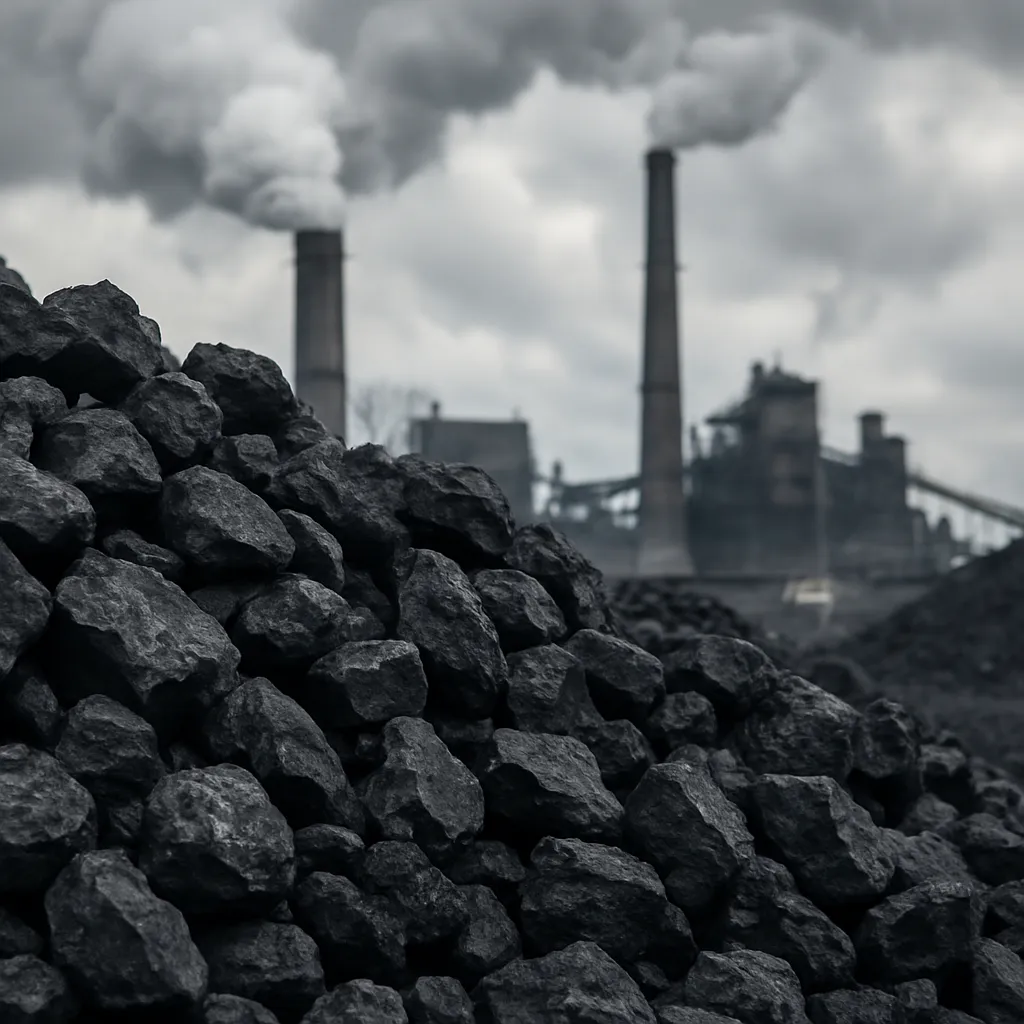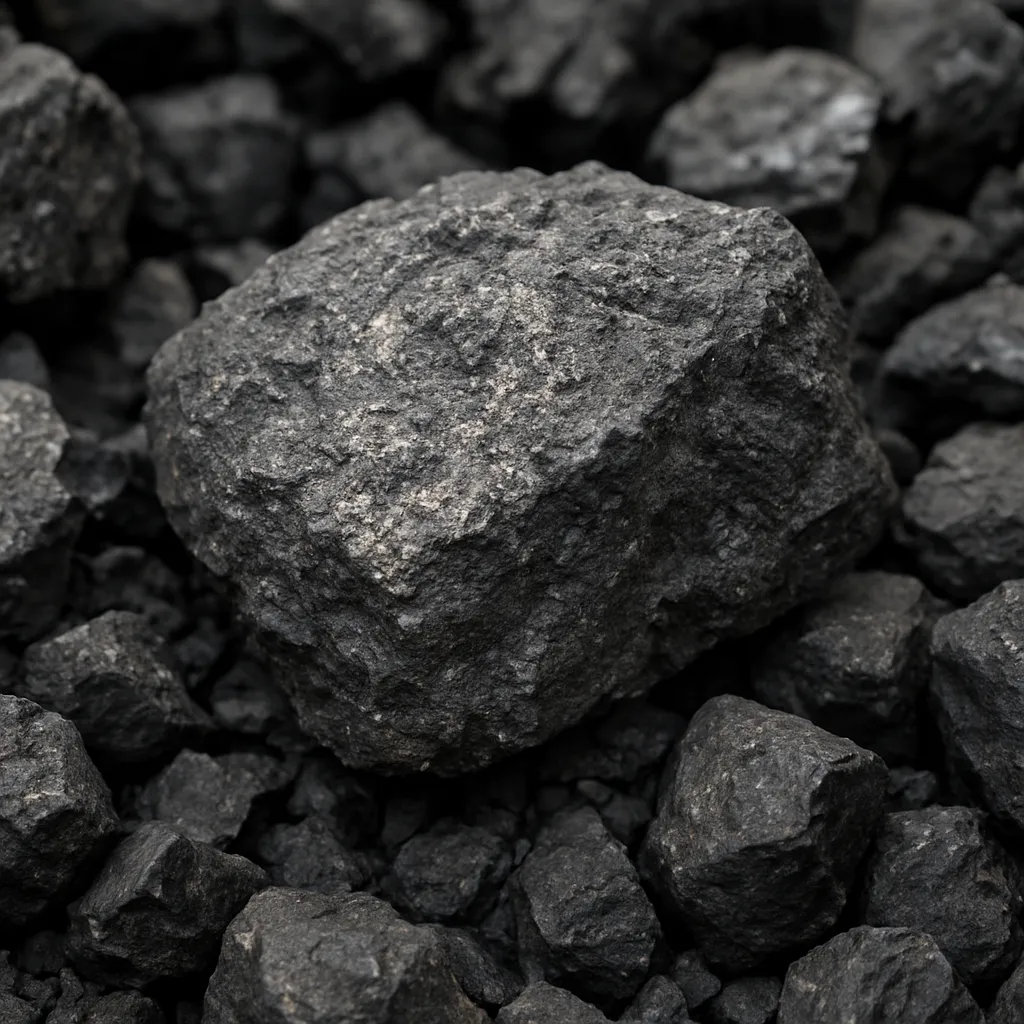
High-ash thermal coal is a widely used but often overlooked category of fossil fuel that plays a significant role in electricity generation and industry in many parts of the world. Characterized by a relatively large proportion of mineral matter (ash) compared with lower-ash coals, this type of coal poses distinct technical, economic and environmental challenges—and at the same time offers opportunities through beneficiation, industrial reuse of ash, and regional energy security. The following article explores where high-ash thermal coal occurs, how and where it is mined, its economic and industrial importance, the environmental implications, market and statistical perspectives, and other notable facts.
What is high-ash thermal coal and how is it characterized?
In simple terms, high-ash thermal coal is coal used mainly for power generation that contains a relatively high fraction of inorganic mineral material, measured as ash after combustion. While there is no universally accepted numeric threshold, coal with ash content above about 15–20% is often considered “high-ash” in commercial markets; many coals classed as high-ash contain 25–40% ash, and some domestic coals in certain regions can exceed 40–50% ash.
Key properties that define and influence the behavior of high-ash coals include:
- Calorific value (net and gross)—higher ash dilutes the combustible fraction and lowers heating value. Many high-ash coals have calorific value in the lower ranges for thermal coals (for example, roughly 8–20 MJ/kg, depending on moisture and volatile matter).
- Ash composition—minerals such as silica, alumina, iron oxides, calcium, and trace elements affect ash melting behavior, slagging, fouling and the suitability of ash for beneficial reuse.
- Ash fusion temperatures—these determine how ash behaves in furnaces (whether it remains granular or forms sticky slag).
- Moisture and volatile matter—often, high-ash coals are also high in moisture, which further reduces net energy content per tonne.
Geography and major producing regions
High-ash thermal coal is not restricted to a single geological environment; it occurs in many basins formed during different geological periods. Important characteristics—such as coal rank, depositional environment, and degree of sediment contamination—determine ash content.
- India—India is among the most notable users and producers of high-ash coal. Large parts of Indian coal production are characterized by relatively high ash (often in the 25–40% range for raw domestic coal). Major coalfields (Jharia, Raniganj, Korba, Talcher and others) supply the country’s thermal power plants, many of which are designed to accept these lower-quality coals.
- China—China’s coal quality is highly variable; some basins yield medium- to high-ash thermal coals. Given China’s massive consumption, even medium-grade coals result in large volumes of ash being generated annually.
- Russia and the CIS—some Russian basin coals have moderate to high ash levels, depending on the seam and region. Domestic thermal power plants are often adapted to these qualities.
- South Africa—certain South African thermal coals have higher ash content; the country combines both export-quality coals and lower-grade domestic coals.
- Australia—while much of Australia’s export thermal coal is relatively low in ash (a competitive advantage), there are domestic and some lower-grade seams with higher ash content.
- United States and others—parts of the United States and other countries host coals with elevated ash; however, international trade often favors lower-ash export coals.
In short, many coal-producing countries have deposits of high-ash thermal coal; the prevalence and commercial significance depend largely on domestic demand patterns, power plant fleet design, and availability of beneficiation options.
Mining, processing and quality improvement
High-ash coals are mined using conventional surface and underground methods. Once extracted, the economic and environmental value of such coal is heavily influenced by the availability and extent of coal beneficiation—the set of processes that reduce ash content and improve the fuel’s heating value.
- Washing and physical separation—processes such as heavy media separation, dense medium cyclones, jigs, spirals and hydrocyclones selectively separate mineral matter from coal. Where feasible, washing can reduce ash content substantially and produce a higher-grade product for power plants or export.
- Fine cleaning—techniques like froth flotation and chemical/biological treatment can target fine mineral particles bound to coal surfaces.
- Blending—mixing high-ash coal with lower-ash coals is a common, low-investment strategy to meet plant specifications without full-scale beneficiation.
- Dry beneficiation—advances in dry separation (electrostatic separators, air-based systems) may be attractive in water-scarce regions.
Despite available technologies, limitations arise from economics (washing costs vs. coal price), the nature of the mineral contamination (dispersed vs. seam nodules), water availability, and local regulatory frameworks. Where washing is not cost-effective, power plants may cope by adapting boiler design or accepting higher ash handling costs.
Economic and market aspects
The economics of high-ash thermal coal differ strongly from low-ash coals. Key themes include pricing, local supply security, and trade considerations.
- Price discounts—on international markets, buyers generally pay premiums for clean, low-ash, high-calorific coals and discount high-ash material. For domestic markets where supply security is paramount, high-ash coal may still be economically preferred if transportation and supply costs are low.
- Domestic supply and import substitution—countries with ample high-ash coal reserves often rely on them for baseload power, reducing dependence on imports even if that implies lower plant efficiency and higher operating costs.
- Impact on power plant economics—higher ash increases fuel handling, transportation costs (you’re moving more inert material per unit of energy), wear on equipment, and ash disposal costs. Conversely, beneficiation and washing add capital and operating expenditure but can improve thermal efficiency and reduce emissions per MWh.
- Trade flows—export-focused producers tend to invest in washing/processing to meet stringent buyer specifications, while producers supplying domestic markets may prioritize quantity and continuity over quality.
Industrial uses beyond power generation
Although the primary use of thermal coal is electricity production, high-ash coals and their by-products also find uses in non-power sectors:
- Construction materials—fly ash is a widely used supplementary cementitious material in concrete production. When chemically and physically compatible, fly ash can partially replace Portland cement, improving durability and reducing CO2 emissions associated with cement manufacture.
- Bricks and aggregates—ash can be incorporated into bricks, blocks, and road-base materials after appropriate treatment and quality control.
- Mine backfilling and land reclamation—ash mixed with other wastes can be used in mine reclamation or as a structural fill, though environmental controls are necessary.
- Chemical extraction—certain ashes contain recoverable values (like rare metals or alumina precursors) that may be extractable under advanced processes.
That said, the suitability of ash for these applications depends on its chemical composition, leachability, particle size and regulatory acceptance.
Environmental and health considerations
High-ash coal presents specific environmental and health challenges:
- Higher particulate and ash production—burning coal with a high inert fraction produces greater volumes of fly and bottom ash per unit of energy. This increases the burden on ash handling systems and disposal sites.
- Emissions profile—on a per-unit-energy basis, high-ash coal tends to produce higher emissions of CO2, NOx and trace elements because more fuel must be burned to obtain the same energy output. Properly sized and maintained pollution-control equipment (electrostatic precipitators, baghouses, selective catalytic reduction, flue gas desulfurization) is essential.
- Ash disposal and leachate risks—ash contains trace metals (mercury, arsenic, chromium) and soluble salts that can pose a risk to groundwater and surface water if not managed correctly. Modern ash disposal emphasizes lined containment, monitoring, and beneficial reuse.
- Occupational exposure—handling and transporting larger ash volumes raises concerns about worker exposure to airborne particulates and silica.
Environmental regulation, public scrutiny and carbon pricing increasingly influence decisions about the use of high-ash coal. In many jurisdictions, stricter emissions standards and incentives for lower-carbon energy sources put pressure on high-ash coal use unless mitigated by technology.
Statistics and scale (approximate figures and trends)
Accurate, up-to-date figures for high-ash coal specifically are less commonly separated in global statistics than totals for coal production and consumption. Nonetheless, some general numerical perspectives are useful:
- Global coal production—recent annual global coal production has been on the order of 7–8 billion tonnes per year (rough ballpark for the early 2020s). A sizable fraction of this volume is thermal coal used in power generation and industry.
- Regional quality differences—countries such as India report average ash values for domestically mined coal in the range of approximately 30–35% (raw coal average), while imported seaborne coals often have much lower ash (single digits to mid-teens percent). China and other major consumers present a wide quality spectrum.
- Ash generation—if a coal has 30% ash content, burning 1 tonne of that coal will produce roughly 300 kg of ash (excluding additional mass changes from additives). Scaled to nation-level consumption, this leads to millions of tonnes of ash produced annually in large coal-consuming countries.
- Exports vs. domestic consumption—many exporters (e.g., Australia, Indonesia) focus on low-ash, high-calorific coals for international markets; countries with large domestic needs but lower-quality resources (e.g., India, some parts of China) consume more high-ash coal internally.
Because of the variability in definitions and reporting practices, policymakers and analysts often rely on domestic quality surveys and mine-level data to quantify the share of high-ash fuel in national energy portfolios.
Technology and mitigation strategies
Several technological pathways help reduce the downsides of high-ash coal:
- Upstream beneficiation and washing—implemented where economically and hydrologically feasible to raise calorific value and reduce ash and associated impurities.
- Advanced combustion technologies—fluidized bed combustion (FBC) and circulating fluidized bed (CFB) boilers can tolerate lower-quality, higher-ash coals while achieving good combustion efficiency and lower NOx emissions.
- Emission controls—effective particulate control (ESPs, baghouses), flue gas desulfurization for SO2, and mercury control systems mitigate many pollutant concerns.
- Ash management and reuse—development of markets for fly ash in cement and construction reduces disposal needs and can create revenue streams.
- Fuel blending and co-firing—mixing with higher-grade coal or biomass can improve combustion and lower emission intensity per MWh.
Market outlook and policy context
The future role of high-ash thermal coal will be shaped by several intersecting forces:
- Energy transition—the global shift towards lower-carbon energy systems creates long-term demand uncertainty for all coal types. Nevertheless, many developing economies will continue to rely on abundant domestic coal (often higher-ash) for decades unless alternative baseload technologies or grid-scale storage become economically dominant.
- Regulatory pressure—stricter air quality and waste management standards incentivize washing, improved plant controls, or substitution toward cleaner fuels.
- Economics—where beneficiation and emissions control costs are higher than alternatives (e.g., gas, renewables plus storage), high-ash coal use may decline faster. Conversely, in regions where infrastructure and capital are limited, high-ash coal may remain a mainstay because of availability and low immediate capital cost.
- Innovation—the development of cost-effective dry beneficiation, ash valorization technologies, and more tolerant combustion systems could extend the economic life of high-ash coal resources while reducing environmental impacts.
Interesting technical and historical notes
Some additional facts and considerations often overlooked:
- Historically, many early power plants were designed around local fuel qualities. As trade increased and plants standardized, international coal quality specifications became more important—and high-ash local coals were either upgraded or relegated to local markets.
- High-ash coals can sometimes carry advantages for industrial uses where certain mineral contents are desirable—for example, some ash compositions are useful in cement or ceramics.
- Ash chemistry strongly influences boiler performance: certain compositions cause slagging and corrosion, driving the need for costly downtime and maintenance.
- Where fly ash markets are developed, it can offset disposal costs and even improve the carbon footprint of concrete—thus turning a by-product liability into a partial environmental benefit.
Concluding observations
High-ash thermal coal is a paradox of modern energy systems: abundant, often cheap and vital for energy security in many countries, yet technically and environmentally challenging compared with cleaner, lower-ash alternatives. Its continued use depends on the interplay of local resource endowments, economics, technological adoption (beneficiation, advanced combustion and emissions control), and policy choices that balance energy access with environmental and public health goals. Where investments are made in washing, advanced boilers, and ash reuse, high-ash coal can be managed more sustainably—but the broader decarbonization trend will increasingly shape the long-term demand for all types of coal.