The following article provides a detailed overview of the Haizi Coal Mine in China, its geological context, the types of coal associated with the mine, economic and social significance, and the environmental and safety challenges typical for coal operations in China. Publicly available, mine-specific statistics for Haizi Coal Mine are limited in international sources; where exact figures are not available, the article explains typical ranges and contextual national data to help understand the mine’s likely scale and importance.
Location and Geological Setting
The Haizi Coal Mine is located within the vast coal-bearing regions of China, a country whose geology features numerous basins and coalfields formed primarily during the Carboniferous and Permian periods. The exact coordinates and administrative jurisdiction of Haizi are not widely reported in English-language public databases; however, mines with the name Haizi are typically found in provinces with significant coal resources such as Shanxi, Inner Mongolia, Shaanxi, or Liaoning. These provinces host major coal basins and a mix of surface and underground mining operations.
Geologically, coal seams exploited in central and northern Chinese basins are often part of complex stratigraphic sequences that include sandstone, shale, and occasional limestone interbeds. The nature of a specific mine’s seams—thickness, dip, and lateral continuity—influences the mining method chosen (underground longwall, room-and-pillar, or open-pit) and economic recovery factors.
Types of Coal and Quality
The primary product of the Haizi Coal Mine is presumed to be coal, the category of fossil fuel used for thermal energy, steelmaking, and various industrial processes. In China, mines commonly produce a range of coal ranks from sub-bituminous and bituminous coal to lower-grade anthracite in some regions. The rank determines calorific value, volatile matter, fixed carbon, and ash content—key metrics for market value and end use.
Typical quality attributes relevant for Haizi-type mines include:
- Calorific value: expressed in kcal/kg or MJ/kg; medium-quality bituminous coals generally range from 5,500 to 7,500 kcal/kg.
- Ash content: influences thermal efficiency and disposal costs; lower ash (<15%) is preferable for power generation.
- Sulfur content: low-sulfur coals (<1% sulfur) are more valuable due to lower emissions of SO2.
- Moisture and volatile matter: affect combustion behavior and beneficiation requirements.
Without mine-specific laboratory reports for Haizi, it is reasonable to infer that the coal produced is used predominantly for power generation and possibly for local industrial consumption, depending on quality. Metallurgical (coking) coal is less common and generally associated with specific higher-grade seams; if present, it would confer higher economic value.
Production, Reserves and Statistical Context
Direct, verifiable production figures for the Haizi Coal Mine are not available in major English-language industry datasets or international publications up to 2024. Chinese mine data is often reported at the company or municipal level in Mandarin-language disclosures, while smaller or regionally named mines may not publish separate, widely accessible statistics.
To place Haizi in context, consider these broader statistics about China’s coal industry:
- China remains the world’s largest coal producer and consumer; national annual production is on the order of several billion tonnes (commonly cited ranges are approximately 3–4 billion tonnes per year in the early 2020s).
- Major coal-producing provinces include Shanxi, Inner Mongolia, Shaanxi, and Xinjiang; collectively they produce the majority of national output.
- Coal mines in China vary from large state-owned operations with annual outputs in the tens of millions of tonnes to small local mines producing under one million tonnes per year.
Based on the above, Haizi Coal Mine is likely categorized either as a medium-sized regional mine or part of a larger complex. Typical medium-sized Chinese mines often have annual production in the range of 0.5–3 million tonnes. If Haizi were part of a large state-owned mine cluster, output could be higher. However, in absence of primary data, such numbers are indicative ranges rather than confirmed figures.
Economic Importance and Market Role
The economic value of coal produced at Haizi derives from multiple factors: local energy demand, proximity to power plants and industrial facilities, and access to rail or road transport for wider distribution. Coal remains integral to China’s energy mix, supplying electricity, heat, and feedstock for industrial processes such as cement and steel production.
Key economic considerations:
- Revenue: Mine revenue depends on tonnage sold and prevailing coal prices. Thermal coal prices are subject to domestic policy, seasonal demand, and international market fluctuations. In recent years price volatility has been influenced by policy-driven changes in supply, infrastructure bottlenecks, and regional demand shifts.
- Local employment: Mines typically provide direct employment (miners, engineers, technicians) and indirect jobs (transport, maintenance, services). A medium-sized mine can support several hundred to a few thousand jobs across direct and indirect roles.
- Government role: Local and provincial governments often rely on mining taxes, royalties, and associated industrial activity as a source of revenue. State-owned enterprises may prioritize energy security and strategic production targets over short-term commercial returns.
Given the strategic role of coal in provincial economies, the Haizi Coal Mine likely contributes to local fiscal receipts, provides employment, and helps ensure fuel supply stability for nearby power and industrial consumers.
Social and Community Impact
Coal mines in China typically create mixed social outcomes. On the positive side, mines like Haizi provide employment, support local businesses, and finance infrastructure (roads, schools, clinics) through taxes and corporate social responsibility programs. Employment offers stable wages in otherwise rural or semi-rural communities, and mining towns often develop a supply chain of services and secondary industries.
On the negative side, coal operations can strain local health and environmental conditions. Common social concerns include:
- Air quality impacts from dust and emissions, especially when coal handling and washing occur near communities.
- Water stress and contamination risks if mine drainage or coal-processing effluents are not properly managed.
- Health risks for miners and local residents due to occupational exposure to dust (pneumoconiosis), diesel particulates, and chemical contaminants.
- Economic dependency on a single industry, which can leave communities vulnerable to price shocks, mine closures, or regulatory shifts toward cleaner energy.
Safety Record and Occupational Health
Mining safety is a critical issue across China’s coal industry. Over the past decades, China significantly reduced mining fatalities through consolidation of small mines, stricter enforcement, and modernization of operations. Nonetheless, risks remain, particularly in older or smaller operations with inadequate ventilation, methane management, or structural engineering controls.
Typical safety concerns include:
- Gas explosions and methane management in underground workings.
- Roof falls and ground control issues in deep, high-stress seams.
- Fire hazards in coal stockpiles and transport facilities.
- Long-term occupational diseases such as black lung (pneumoconiosis) from coal dust exposure.
If Haizi Coal Mine operates as a modernized, regulated site—especially if managed by a major state-owned enterprise—its safety record is likely improved relative to historical industry averages. However, without mine-specific safety reports or government disclosures, an exact safety profile cannot be provided here.
Environmental Considerations
Environmental management is a major operational and regulatory focus for coal mines in China. Environmental considerations for a site like Haizi include:
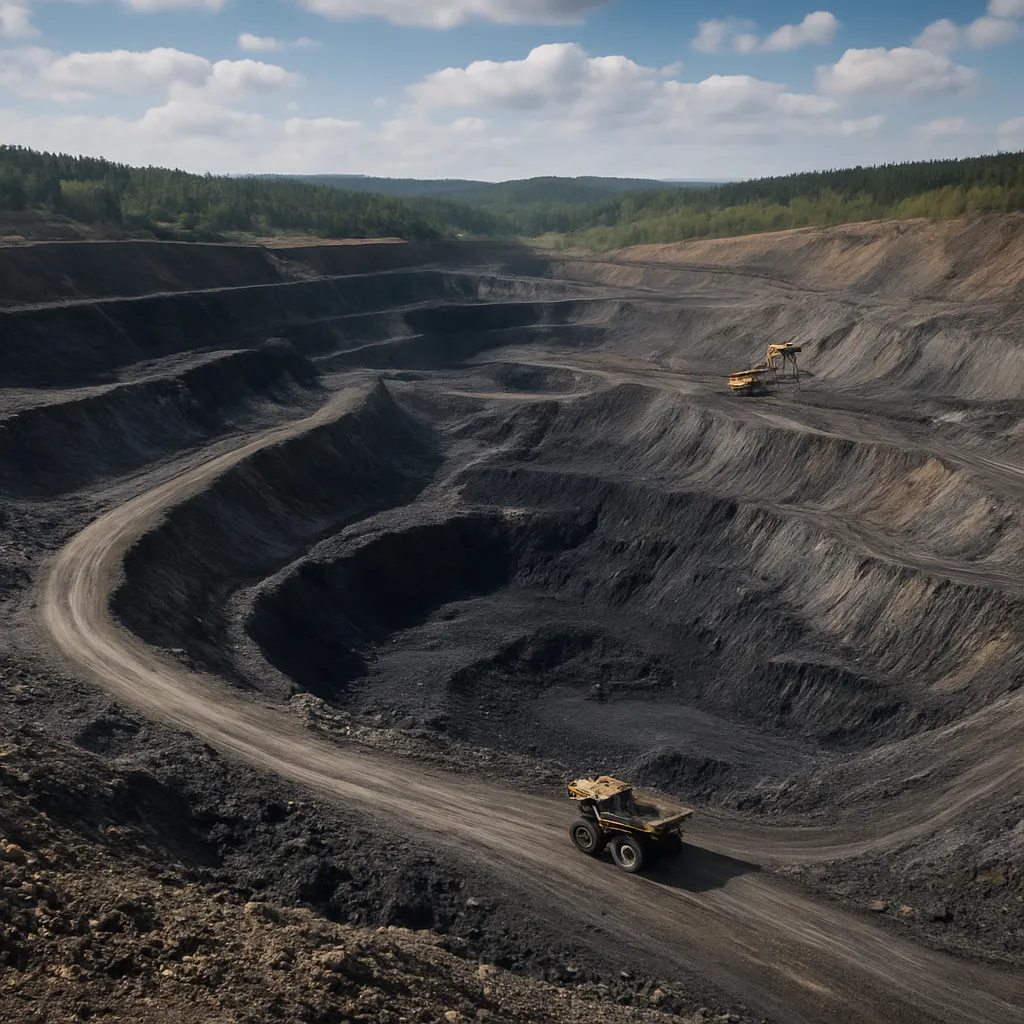
- Land disturbance and reclamation: open-pit operations require rehabilitation plans to restore vegetation and manage erosion after mine closure.
- Waste management: overburden, rock waste, and coal gangue must be stored and managed to limit leachate and spontaneous combustion risks.
- Water management: controlling acid mine drainage and ensuring clean water for local communities are continual challenges.
- Air emissions: dust suppression, sealed conveyors, and water spraying are common measures to reduce particulate emissions.
China’s regulatory environment increasingly emphasizes environmental protection, including limits on new mine approvals in ecologically sensitive areas, stricter water-quality standards, and requirements for progressive reclamation. These policies affect operational costs and long-term planning for mines such as Haizi.
Infrastructure and Logistics
Connectivity determines a mine’s competitiveness. Coal is a high-volume, low-margin commodity; thus, access to rail networks, major roads, and river transport is essential for cost-effective movement to power plants, ports, and industrial users. Facilities often include coal washing plants to upgrade product quality, stockyards, loading facilities, and sometimes dedicated rail spurs.
If Haizi is located near major rail arteries or industrial centers, it will have lower transport costs and better market access. Remote mines face higher costs and may supply only local consumers or rely on government-subsidized logistics for long-distance transport.
Historical Development and Ownership
The history of specific Chinese mines varies: many were developed in the mid-20th century and subsequently modernized, while others were opened more recently to meet rising energy demand. Ownership structures range from state-owned enterprises (SOEs) to municipal coal companies and private contractors. Consolidation in the sector has often brought small mines under larger corporate umbrellas to improve safety, efficiency, and regulatory compliance.
Without authoritative corporate filings or government records available in English for Haizi Coal Mine, its ownership model is unclear. It may be operated by a local/state enterprise or be part of a mining group that consolidates production across several sites.
Future Prospects and Transition Challenges
China’s energy transition—balancing carbon-reduction goals, energy security, and industrial needs—creates both uncertainty and opportunity for coal mines. In the near term, coal remains essential for grid stability and industrial processes. Medium- and long-term prospects depend on policy decisions, adoption of cleaner technologies, and economic restructuring.
Key trends relevant to Haizi and similar mines:
- Consolidation and modernization: smaller, less efficient mines may be closed or merged into larger, more modern operations that meet safety and environmental standards.
- Cleaner coal technologies: retrofitting plants with emissions controls, co-firing with biomass, and carbon capture demonstration projects can extend coal’s role in a lower-carbon system.
- Mine reclamation and diversification: communities and regional governments may pursue economic diversification, reclamation projects, and alternative employment opportunities as mines reduce output or close.
Summary of Key Points and Data Limitations
Haizi Coal Mine exemplifies many features common across China’s coalfields: geological complexity, local economic importance, and significant operational challenges in safety and environmental management. Important facets include:
- Location: Situated in China’s coal-producing regions; exact administrative details are not widely published in English-language sources.
- Product: Coal—likely bituminous/thermal in nature, serving power plants and industrial users.
- Production: No verified mine-specific figures publicly available; medium-sized mines in China typically range from 0.5–3 million tonnes/year as an illustrative benchmark.
- Economic role: Provides employment, local revenue, and fuel security; faces price and regulatory dynamics.
- Environmental and safety: Common industry challenges include dust, water management, occupational health, and reclamation obligations; regulatory pressure has tightened in recent years.
Because detailed operational, ownership, and statistical records for Haizi Coal Mine are limited in accessible international sources, organizations or readers seeking precise production numbers, reserve estimates, or safety records should consult local government mining bureaus, Chinese corporate disclosures, or specialized Chinese-language industry databases that track mine-level data. The broader context presented here draws on typical characteristics and national trends that shape the likely reality for Haizi and comparable coal mines in China.