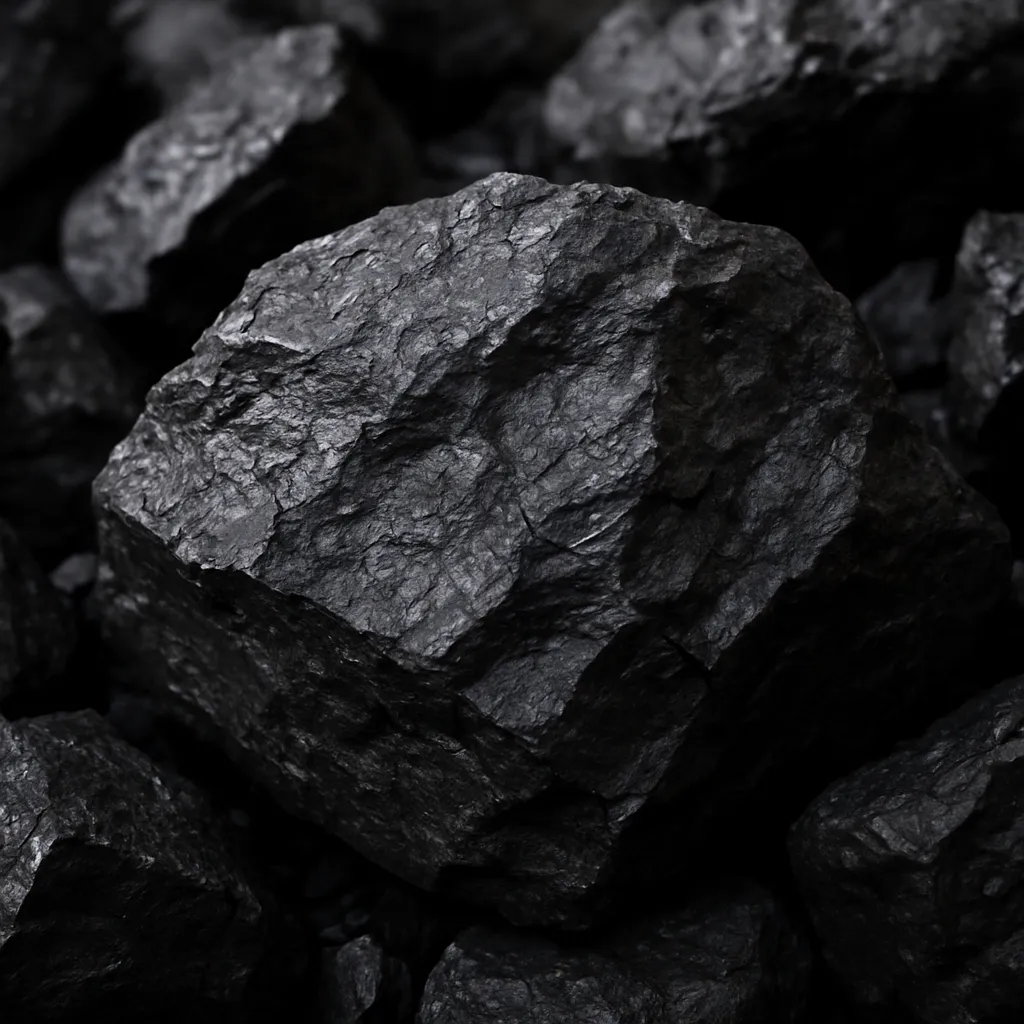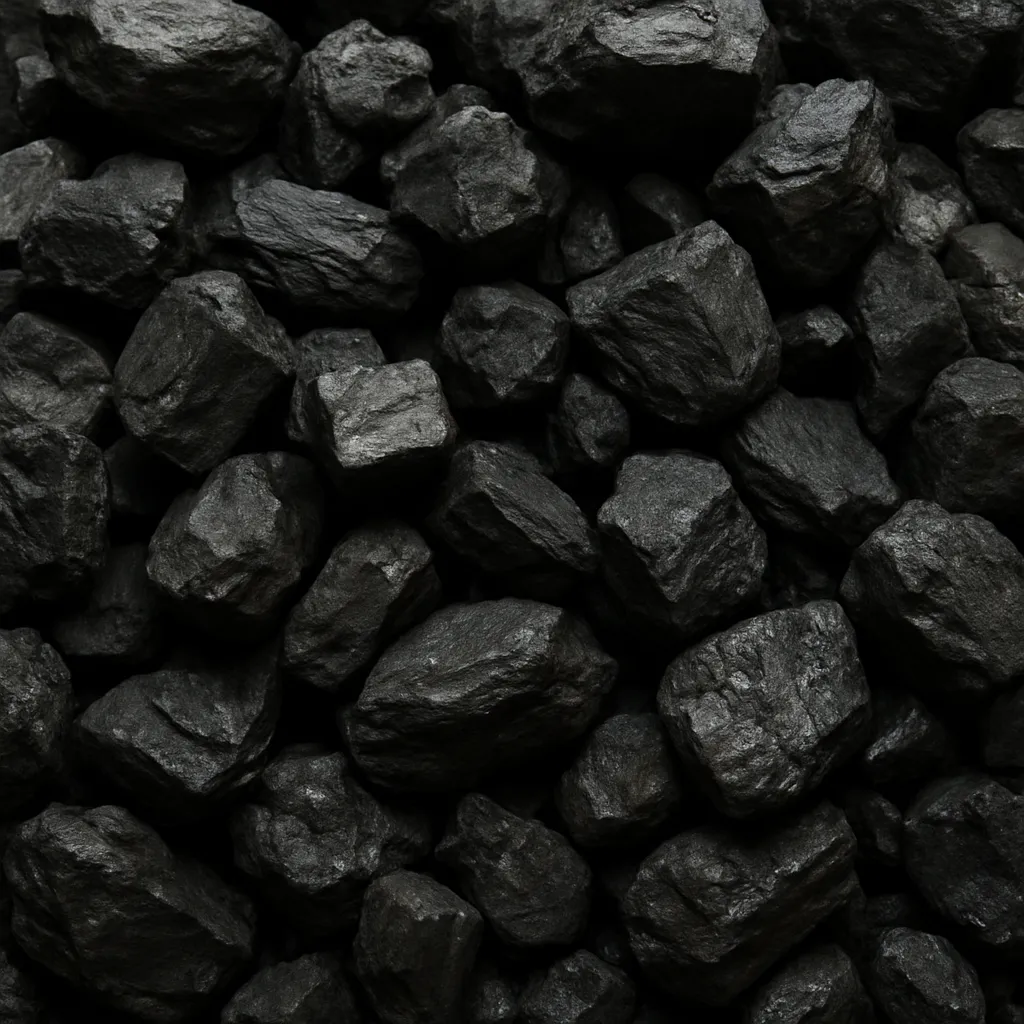
Fusain-rich coal is a distinctive variety of coal in which fragments of fossil charcoal, known collectively as fusain, are abundant. These coals preserve a record of ancient paleo-wildfires and the processes that transformed vegetation into coal under conditions of burning and rapid burial. Fusain-rich seams occur in many coal-bearing basins worldwide and carry both scientific value for reconstructing past environments and practical importance because their physical and chemical properties influence mining, utilization and industrial valuation. This article surveys the geological occurrence, petrographic and chemical traits, mining and industrial implications, economic context and emerging applications of fusain-rich coal.
Occurrence and Geological Context
Fusain is a terrestrial maceral (part of the inertinite group) composed of highly carbonized, charcoal-like material produced when peat or other plant matter is subjected to combustion or smoldering before burial and coalification. Because fusain is formed by in situ charring of vegetation, its presence in a coal seam is a direct indicator of ancient fire events. The highest abundances of fusain are commonly reported from late Paleozoic deposits — especially the Carboniferous and Permian intervals — when atmospheric oxygen levels and widespread terrestrial vegetation promoted frequent large wildfires.
Fusain-rich layers are found in many coal basins around the globe. Notable occurrences include European Carboniferous basins such as the Upper Silesian Basin (Poland), the Ruhr Basin (Germany), and the British Coal Measures; Late Paleozoic coals in North America (Appalachian and Illinois basins), and Permian coals in Australia and parts of China. However, fusain is not confined to these intervals and basins: it can appear in younger coals and in many depositional settings wherever peatlands experienced burning episodically and the charcoal fragments were preserved during subsequent peat accumulation and diagenesis.
Stratigraphically, fusain may be present as discrete lenses or layers, disseminated fragments throughout a seam, or concentrated nodules and bands. The abundance of fusain in a seam varies widely: some seams contain only trace amounts, while in extreme cases fusain and other inertinites constitute the dominant maceral group. These variations reflect local fire frequency, vegetation type, depositional rate, hydrology of the peatland, and post-fire transport and reworking of charcoal fragments.
Physical and Chemical Properties
On a petrographic level, fusain differs from other coal macerals in several important ways. It is usually highly carbonized and structurally altered compared with unburnt plant tissues. Under the microscope, fusain fragments may retain cell outlines (fusinite) or appear as structureless, powdery, highly porous particles (true fusain). Compared with vitrinite and liptinite macerals, fusain generally shows higher optical reflectance and a more aromatic carbon structure, reflecting thermal and oxidative alteration during charring.
Chemically, fusain-rich material tends to be enriched in fixed carbon and depleted in volatile matter relative to adjacent, uncharred coal. That said, because fusain fragments are highly porous and low in bulk density, the energy content expressed per unit volume can be lower than in dense vitrinite-rich coal, even if the carbon concentration per unit mass is high. Typical proximate and ultimate properties of fusain-rich samples therefore reflect a mixture of high carbon (on a dry, ash-free basis), low hydrogen and oxygen, and variable ash content depending on the degree of contamination with mineral matter. Fusain often has a comparatively low hydrogen-to-carbon ratio, indicating a high degree of aromaticity and graphitization tendency as rank increases.
From a reactivity standpoint, the high porosity and surface area of fusain fragments can increase susceptibility to oxidation and rapid burn-out during combustion tests; yet the intrinsic low volatile content can make ignition more difficult. These competing effects mean that fusain-rich coals may behave unpredictably in furnaces or coking ovens compared with more homogeneous coals. Analytical techniques commonly used to characterize fusain include reflected-light petrography, scanning electron microscopy (SEM), Fourier-transform infrared spectroscopy (FTIR), Raman spectroscopy and proximate/ultimate analyses.
Mining, Processing and Industrial Uses
Fusain-rich coal presents particular challenges and opportunities for mining and processing. Because fusain fragments are often highly porous and brittle, they can generate large amounts of fine material and slimes during mechanical mining and handling. The high proportion of fines can complicate beneficiation, increase losses to tailings or slurry, and raise the risk of spontaneous combustion in waste heaps and storage because of the increased reactive surface area.
In underground and surface mining operations, standard methods (longwall, room-and-pillar, open-pit) are used to extract seams containing fusain, but seam-specific planning is often required to manage dilution, control dust, and tailor comminution to preserve product quality. In coal washing and beneficiation, separations based on density and float-sink techniques can remove some non-combustible mineral matter, but separating lightweight fusain fragments from desirable coal fractions is more difficult because fusain’s low density can cause it to float or remain with lower-density fractions.
From an industrial perspective, fusain-rich coals are generally less suitable for high-quality metallurgical coke production because coking properties are especially sensitive to maceral composition. High proportions of inertinite and fusain reduce plasticity and the ability of the coal to form a firm coke matrix, thereby lowering coke strength and resilience. For thermal power generation, fusain-rich coals can be burned, but the overall combustion performance and heat release profile may differ from more vitrinite-dominated coals; furnace settings and blending strategies are commonly used to compensate.
There are also emerging and niche uses for fusain-rich coal and its processed derivatives. Because fusain is essentially a natural form of charcoal with high porosity and aromatic carbon, it can be a feedstock for producing activated carbon, specialty carbon materials, electrodes for energy storage (after suitable upgrading), and high-value carbon products through pyrolysis and chemical activation. Research has explored using fusain-derived char for water purification, gas separation, and as precursor for carbon nanomaterials. These applications are particularly appealing where conventional coals have limited domestic markets or where environmental regulations constrain large-scale combustion.
Economic and Statistical Perspective
It is important to recognize that global coal production statistics do not generally distinguish between maceral compositions such as fusain content. Worldwide coal production is on the order of several billion tonnes per year — roughly around 8 billion tonnes in recent years — with major producing countries including China (producing roughly half of global output), India, the United States, and Australia. However, quantitative data specifically reporting production or reserves of fusain-rich coal are not compiled in standard mineral-production databases; demand and pricing are driven by product specification (calorific value, ash, sulfur, volatile matter, coking quality) rather than explicit maceral percentages.
Within individual coal basins and mining operations, the economic effect of fusain depends on market end-use. For coking coal markets, elevated fusain/inertinite content can reduce the pool of suitable coals and force shifts to other seams or blending strategies. Price differentials for metallurgical coal versus low-rank thermal coal are substantial; thus, a seam whose fusain content reduces its coking potential may command a lower price or require processing. In thermal markets, fusain-induced operational issues (e.g., fines generation, variable combustion) can increase handling and processing costs.
Where fusain-rich horizons form a significant portion of a deposit, mining companies and operators commonly evaluate the seam both geologically and economically to determine whether beneficiation or product diversification (char production, activated carbon) could yield higher value than sale as raw thermal coal. Some economic studies and pilot projects have explored converting low-value, inertinite-rich coal fractions into adsorbents or carbon materials; profitability depends on local processing costs, proximity to markets, scale and environmental permitting.
Environmental and Scientific Importance
Fusain-rich coal has exceptional scientific value. Because fusain is the fossilized residue of wildfire, its occurrence, abundance and stratigraphic distribution provide a direct record of ancient fire regimes, vegetation types and atmospheric conditions. The frequency and intensity of wildfires recorded by fusain layers are used to infer changes in climate, paleovegetation and even atmospheric oxygen. For example, the late Paleozoic shows widespread fusain reflecting more frequent fires at a time when atmospheric oxygen may have been higher than today.
In addition to paleoecology, fusain is relevant for studies of the modern carbon cycle and carbon sequestration. Fusain is chemically similar to human-produced biochar and black carbon in soils; its persistence in the geological record highlights pathways by which charcoal can be stabilized and sequestered over geologic timescales. This makes fusain-bearing sediments useful analogs for evaluating long-term stability of carbon sequestration strategies based on biochar amendments.
From a coalbed methane (CBM) and shale gas perspective, maceral composition influences gas generation and adsorption. Vitrinite is generally the primary adsorbent for methane in coals, whereas inertinite-rich, fusain-bearing coals often show lower gas adsorption capacities and can be less favourable as CBM reservoirs. Thus, mapping fusain abundance in coal seams can help predict methane content and outgassing behaviour, which is important for both resource evaluation and mine safety planning.
Interesting Scientific and Historical Notes
- Fusain provides one of the most direct fossil records of ancient fires. Its microscopic features sometimes preserve cell structures, allowing botanists to identify plant groups involved in Paleozoic fires.
- The term “fusain” historically derives from French and has been used in coal petrography for over a century to describe charred plant remains in coal seams.
- Large-scale fusain layers have been used as marker beds in stratigraphy where they are laterally persistent, aiding in correlation of coal seams and sedimentary sequences across basins.
- Fusain has inspired modern biochar research because it represents a natural, long-term stable form of charcoal deposited into soils and sediments, offering lessons for soil carbon sequestration strategies.
Future Prospects and Research Directions
Research on fusain-rich coal is active and multidisciplinary. Key directions include:
- Advanced characterization using Raman spectroscopy, high-resolution SEM and synchrotron techniques to quantify structural order and graphitization pathways as fusain matures with rank.
- Development of beneficiation and upgrading flowsheets that can economically separate fusain fractions for value-added carbon products rather than discarding them as low-value waste.
- Expanding paleo-fire reconstructions by combining fusain abundance data with palynology and geochemical proxies to better constrain past fire frequency, intensity and climatic drivers.
- Investigating the suitability of fusain-derived chars as precursors for activated carbon, electrodes in batteries and supercapacitors, and other specialty carbon materials, particularly where local markets and environmental controls limit bulk coal combustion.
- Improved basin-scale mapping of maceral distributions to predict CBM potential, seam quality variations and operational risks related to spontaneous heating and dust control.
Summary
Fusain-rich coal represents a distinct and informative component of many coal seams worldwide. It is a direct fossil record of ancient fires and carries unique petrographic, chemical and physical properties that influence both scientific interpretation of past environments and practical aspects of mining and utilization. Although global production statistics do not isolate fusain-rich coal as a separate category, its presence matters locally: it affects coking potential, combustion behaviour, mine planning, and opportunities for producing specialty carbon products. Growing interest in carbon materials and environmental management offers pathways to add value to fusain-bearing coals beyond traditional combustion, while paleoenvironmental studies continue to exploit fusain as a window into the Earth’s fire-prone past.