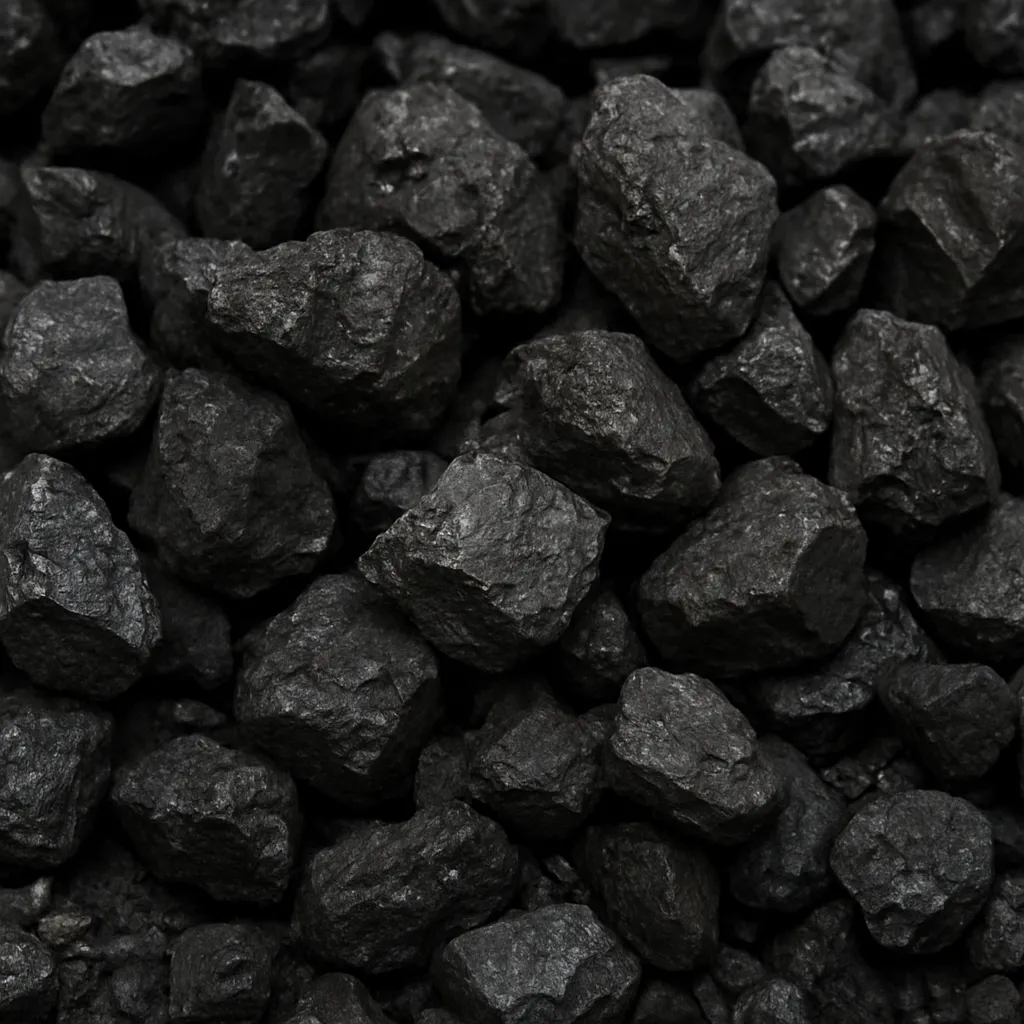
Blended coal refers to coal products created by combining different grades or types of coal to achieve specific technical and commercial specifications. Blending is a widespread practice in power generation, steelmaking and export markets to balance calorific value, ash, moisture and sulfur content, or to meet coking requirements. This article explores where blended coal is produced, how and why blending is done, its economic and industrial significance, relevant statistics, and other noteworthy aspects of this important commodity.
Where Blended Coal Is Found and Mined
The practice of creating blended coal is not limited to a single geological basin; it happens wherever multiple seams or coal types are available and there is a market need for customized fuel mixes. Natural occurrences of coal vary by rank (lignite, sub-bituminous, bituminous, anthracite) and by properties such as volatile matter, sulfur and ash. Blending combines these varieties to produce consistent, marketable products.
Major producing regions
- Asia: China and India are the largest coal producers and consumers worldwide. In both countries, blending is commonly applied to optimize coal for large thermal power fleets and to improve transportable export qualities.
- Australia: A key exporter of both thermal and metallurgical coal. Coal from different mines and seams is blended to meet precise export specifications for Asian steelmakers and power utilities.
- Indonesia: A major producer of seaborne thermal coal; blending at ports and stockyards is routine to meet calorific and sulfur specifications demanded by buyers.
- United States: Extensive coal basin diversity (Appalachian, Powder River, Illinois Basin) leads to frequent blending for both power and industrial users.
- Russia, South Africa, Colombia and Poland: Important producers where blending is used to adjust domestic and export coal quality.
Blending occurs at several points in the supply chain: at the mine (pre-shipment blending), at coal preparation plants after washing, at port stockyards, or at consumer end points (power plants or steelworks). These locations enable control over the final product properties and allow logistic optimization.
Technical Reasons and Methods for Blending
Blending is fundamentally a quality-control and performance optimization technique. By combining coals with complementary characteristics, operators can produce a fuel with target attributes and more consistent behavior in boilers, furnaces or coke ovens.
Key quality parameters addressed by blending
- Calorific value — target energy per unit mass, typically expressed in kcal/kg or MJ/kg. Blending high- and low-rank coals adjusts heating value to the required level.
- Ash content — ash affects slagging, fouling and disposal costs. Blending can lower or standardize ash content.
- Sulfur — blending high-sulfur with low-sulfur coal helps meet environmental emission limits without expensive downstream treatment.
- Moisture — high moisture reduces calorific value; mixing drier coals improves net energy delivered.
- Coking properties — for the metallurgical industry, blending different coking coals achieves the plasticity, swelling and strength characteristics needed for quality coke.
Practical blending techniques
- Batch blending: discrete amounts of different coals are mixed in controlled ratios before dispatch.
- Continuous blending: automated systems regulate proportions on the belt conveyor to produce a steady output blend.
- Stockyard stacking and reclaim blending: stacking coal in layers (chevron, windrow) and reclaiming in patterns to create blended batches.
- Post-wash blending: combining washed coal streams to match ash and sulfur targets.
Beyond mechanical mixing, beneficiation processes such as froth flotation and gravity separation commonly precede blending to upgrade specific fractions. For some high-value applications, chemical analysis and rheological testing of blends is performed to ensure predictable behavior in industrial processes.
Economic and Market Importance
Blended coal is a commercial response to diverse market demands. It allows suppliers to:
- meet precise buyer specifications without needing a single mine to produce an exact quality;
- optimize margins by combining lower-cost coals with premium grades;
- stabilize price volatility by offering standardized, predictable products;
- expand sales opportunities across different markets (power generation, cement, steelmaking).
Price formation and trade
Thermal coal prices and coking coal prices are influenced by global demand-supply balances, freight rates, and the ability to offer consistent, spec-compliant blended products. Many buyers prefer blends because they reduce unit-to-unit variability that can cause operational issues. Typical blending strategies can reduce procurement costs by allowing purchase of lower-cost domestic coal combined with a smaller proportion of imported premium coal.
Role in metallurgy and steelmaking
The steel industry relies on coking coal with precise plasticity, swelling and coke strength parameters. High-quality metallurgical coal is relatively scarce and expensive; blending different coking coals (including thermal coals in some processes like pulverized coal injection) allows steelmakers to achieve coke quality while controlling costs. Blending also supports the increased use of PCI (pulverized coal injection) which reduces coke consumption and can improve furnace stability.
Statistics and Global Figures
World coal production and trade provide context for the scale at which blending operates. Exact figures vary year by year, but trends and approximate magnitudes are instructive.
- Global coal production in the early 2020s was on the order of roughly 7–8 billion tonnes annually, with fluctuations tied to energy demand and policy measures.
- China is the dominant producer and consumer, accounting for a large share of global production (often around 45–50% of the world total in recent years).
- Other major producers include India, the United States, Australia, Indonesia and Russia; together they account for the majority of the seaborne and domestic coal trade.
- Seaborne thermal coal trade is measured in hundreds of millions of tonnes per year; export-oriented producers frequently blend at ports to meet calorific and sulfur limits for importing countries.
Within these flows, blended coal does not always have separate tracking in public statistics; it is typically reported as part of broader coal production and trade categories. However, domestic procurement contracts and trade documents frequently specify blends, and terminals routinely report stockpile compositions.
Industrial and Environmental Impacts
Blending affects both operational performance and environmental outcomes.
Operational benefits
- Improved boiler and furnace stability due to consistent fuel properties.
- Optimized combustion leading to higher thermal efficiency when calorific values and moisture are controlled.
- Reduced unplanned downtime from slagging and fouling when ash and mineral profiles are managed.
Environmental considerations
- Lowering sulfur through blending can reduce SOx emissions without immediate capital investment in flue gas desulfurization.
- However, blending can also increase ash production if lower-quality, high-ash coals are used—raising disposal and particulate control needs.
- Blended coals remain carbon-intensive. Even optimized blends may still produce substantial CO2 per unit of electricity or steel produced, and policy drivers (carbon pricing, emissions standards) increasingly shape demand for coal blends or alternatives.
Because coal blending is a way to manage short- to medium-term operational constraints, its future is intertwined with the broader energy transition. Where coal-fired generation is being phased down or retrofitted with carbon capture, managers may use blending to extend asset life economically or to meet interim emissions targets.
Logistics, Quality Control and Technology
Efficient blending requires robust sampling, analytical capability and logistics coordination. Modern coal blending operations often incorporate automated systems and predictive software.
Sampling and laboratory analysis
- Representative sampling at mine, rail, port and plant is essential for reliable blends. Standardized protocols (grab samples, cross-stream samplers) are used for quality assurance.
- Laboratory testing measures calorific value, ash, sulfur, moisture and other parameters. For metallurgical blends, coking index and rheological tests are required.
Digital tools and optimization
Optimization software and machine-learning tools can predict how various source coals will interact and can recommend blend recipes to minimize costs while meeting specifications. Such tools factor in mine availability, transport costs, stockpile degradation and contract penalties for off-spec shipments.
Coal preparation and beneficiation
Preparing coal prior to blending can dramatically change blend economics. Washing reduces ash and sulfur in many coals, but produces a refuse (tailings) stream. Techniques such as beneficiation, briquetting, and upgrading can make lower-grade coals more useful in blends.
Policy, Market Trends and Future Prospects
Global policy trends—climate commitments, air quality regulations, and shifts in energy markets—affect blended coal demand and its strategic role.
- Carbon pricing and stricter emissions rules incentivize fuel switching (coal-to-gas or renewables) in many regions, reducing long-term demand for coal blends in power generation.
- Short to medium-term demand for coal persists in emerging economies where power systems still rely heavily on coal and where blended coals help meet environmental thresholds affordably.
- Steelmaking remains a key demand center for blended metallurgical coals; however, development of low-carbon steel (hydrogen reduction, electrification) could alter coking coal demand over the next decades.
Innovation in carbon capture, utilization and storage (CCUS) could extend the timeline for coal-fired assets in jurisdictions that invest in such technologies. In those contexts, blending will continue to be an important tool to maintain operational and economic flexibility.
Interesting and Less Obvious Facts
- Blending is often used to produce “contract grade” coal for large utilities; these grades may be defined by narrow tolerances for calorific value and ash, requiring precise mixture control.
- Some terminals maintain hundreds of thousands of tonnes of segregated stockpiles to assemble specific blends on demand.
- Blends are also used to tailor coal for non-power uses—cement kilns, brick manufacturing, and some chemical processes—where specific combustion properties are needed.
- Even within a single mine, multiple benches or seams can vary significantly; internal blending at the pit face is sometimes practiced to reduce downstream variability.
- Blending can mitigate supply shocks: when a high-quality seam is temporarily unavailable, a blend with more abundant lower-grade coal can sustain operations without major interruption.
Concluding Remarks
Blended coal is a pragmatic, technical and commercial response to variability in coal resources and to diverse industrial needs. It plays a key role in stabilizing performance for coal-dependent industries, optimizing costs, and meeting environmental thresholds in the short to medium term. While global trends point toward a long-term reduction in coal’s share of primary energy, the practice of blending will remain relevant as long as coal is mined and used—supporting efficient operations, enabling trade, and smoothing transitions in markets where complete fuel substitution is gradual.
Blended coal, whether tailored for power plants or steelworks, represents a complex intersection of geology, engineering, logistics and economics. Understanding its technical levers—calorific value, ash, sulfur, and the role of washing and beneficiation—is essential for markets and policymakers navigating the evolving energy and industrial landscape. Finally, attention to emissions and regulatory trends will determine how blending evolves in coming decades.