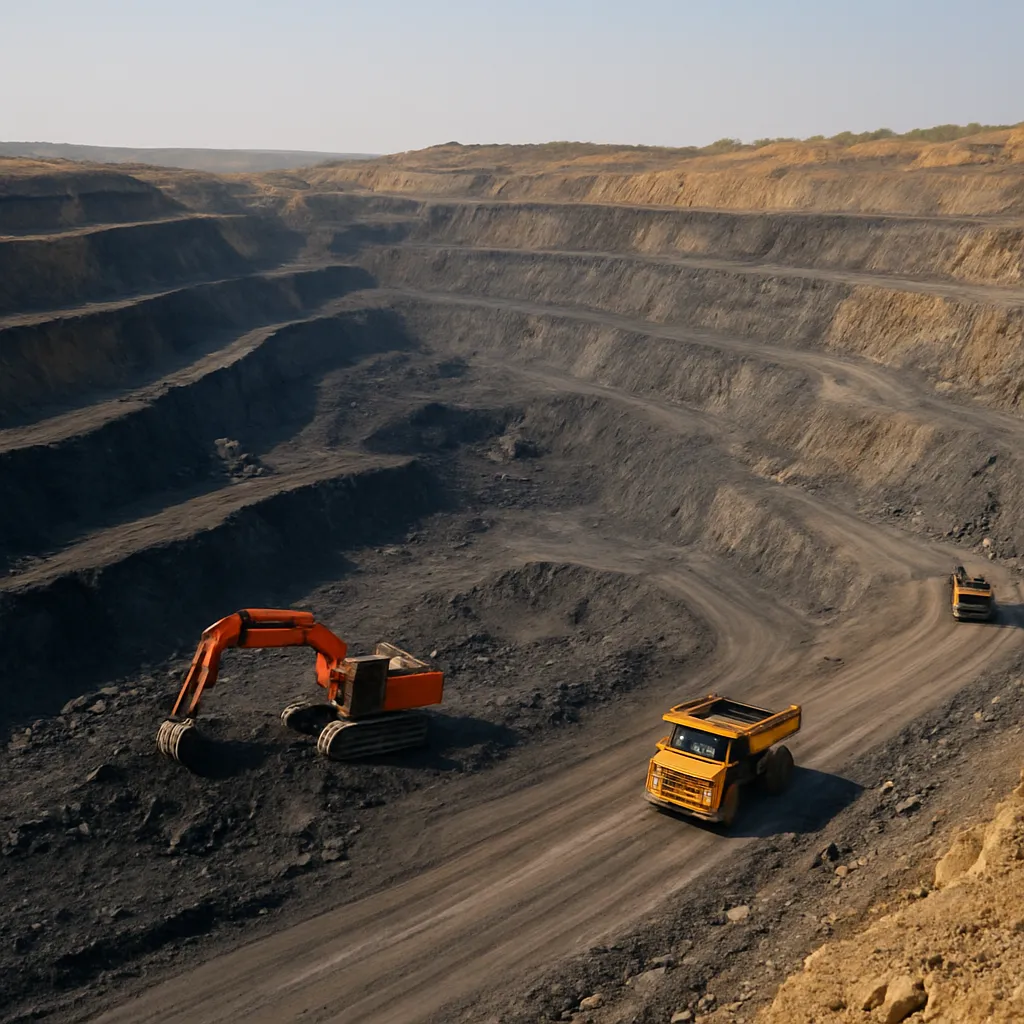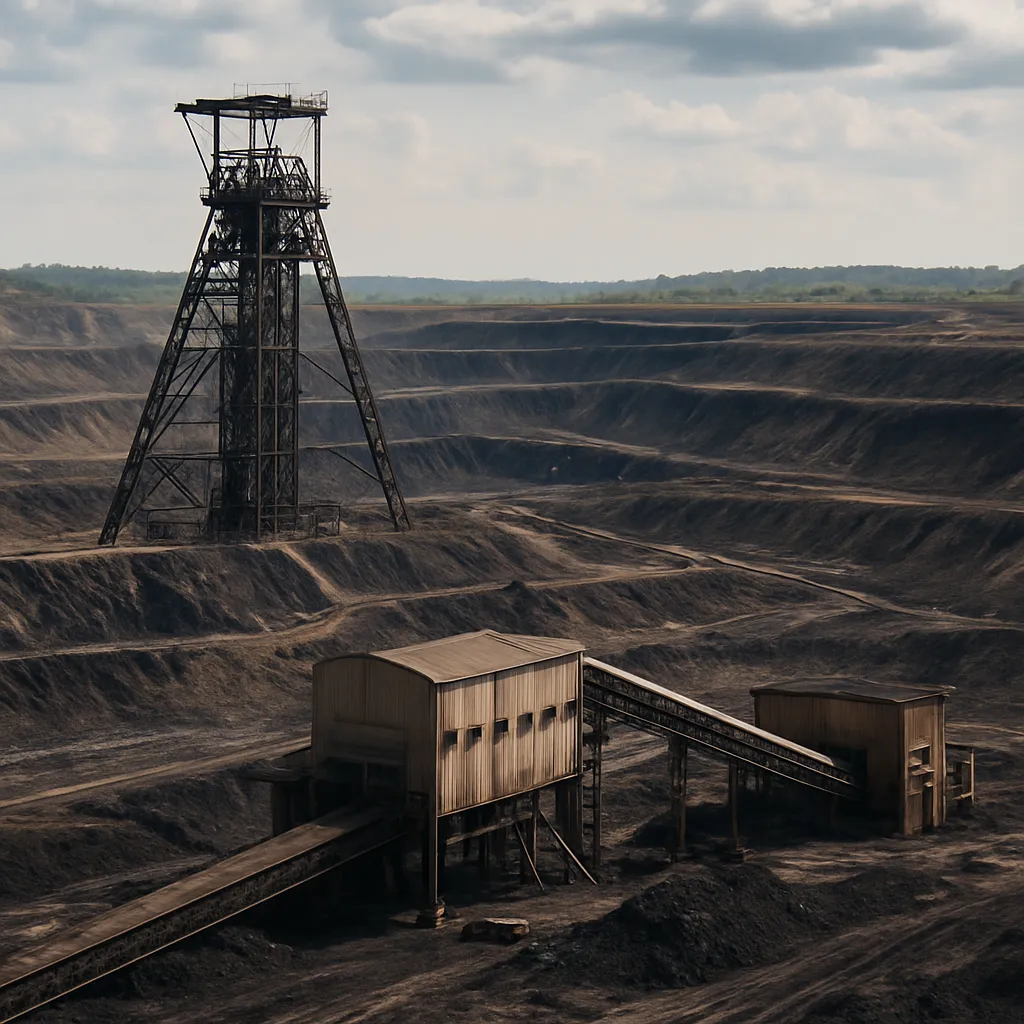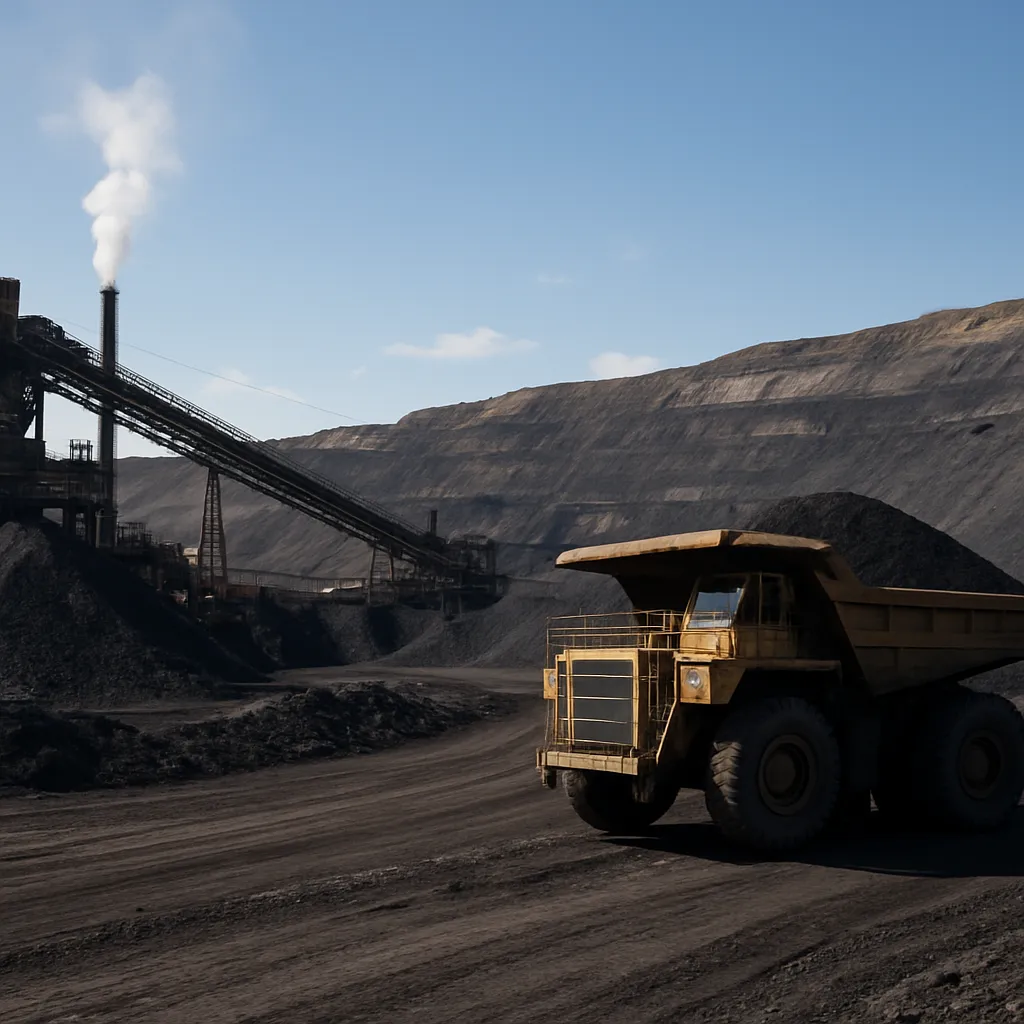
Bank Colliery is a representative coal mining operation located in the heart of South Africa’s coal-producing region. This article examines the mine’s geological setting, the types of coal extracted, operational practices, economic and social contributions, environmental and safety challenges, and its broader significance to South Africa’s energy and industrial sectors. The analysis synthesizes common attributes of collieries in the Highveld coalfields and highlights the most relevant technical, economic and environmental aspects associated with a colliery of this kind.
Location and geological setting
Bank Colliery is situated in South Africa’s main coal-bearing basin in the Highveld region of the interior plateau. The Highveld coalfields, largely concentrated in Mpumalanga and parts of Limpopo and KwaZulu‑Natal, contain the bulk of the nation’s coal reserves and host most active collieries. Coal deposits in this region are part of the Karoo Supergroup, principally the Ecca Group (including the Vryheid and Volksrust formations), which formed during the Permian period and contains multiple economically mineable seams.
Geologically, seams vary in thickness and quality across the basin. Typical seam thickness ranges from less than a metre up to several metres in locally thickened zones. Depth to seams can vary from near-surface (suitable for opencast mining) down to several hundred metres (targeted by underground methods). Bank Colliery’s operations are adapted to the local seam geometry and overburden, using extraction methods that balance safety, cost, and resource recovery.
Coal type and quality
The predominant product from collieries in this part of South Africa is thermal coal used for power generation and industrial heat. Coal ranks range from sub‑bituminous to low-volatile bituminous, with calorific values commonly between 18 and 24 MJ/kg (4,300 to 5,740 kcal/kg) depending on seam, depth and washing practices. Typical quality parameters for regional thermal coal include:
- Gross calorific value (as received): ~18–24 MJ/kg.
- Ash content: commonly 15–30% raw, reduced by washing to 10–20% depending on plant sophistication.
- Sulfur: relatively low to moderate, often in the range 0.5–1.5% though varies by seam.
- Moisture: inherent moisture levels vary; washed product moisture typically 8–12%.
Washing and beneficiation facilities at or near the colliery improve product quality for both domestic customers (notably the national power utility) and export markets. Higher-grade coal from certain seams can also serve metallurgical or coking coal markets where available, but the Highveld is mainly known for thermal coal.
Mining methods, infrastructure and operations
Mining methods
Bank Colliery employs mining methods chosen to match seam depth, thickness and geotechnical conditions. In the Highveld, common methods include surface (opencast) mining for shallow seams and underground methods (bord-and-pillar, mechanized room-and-pillar, or longwall in specific locations) where seams lie deeper or preservation of surface land is needed. Many collieries operate a combination of surface and underground operations to optimize recovery.
Processing and logistics
Mined coal is typically sized, screened and washed in a coal preparation plant to remove reject material and improve calorific value and ash content. Product streams are then classified for domestic power stations, industrial customers, or export. Logistics infrastructure is critical: collieries in the Highveld depend on road and rail links to deliver coal to consumers and ports. The main export gateway for South African coal is the Richards Bay Coal Terminal (RBCT), and domestic supply heavily depends on rail deliveries to Eskom power stations clustered in Mpumalanga and the Highveld.
Typical production and workforce
A mid-size colliery in this region commonly produces between 0.5 and 3 million tonnes per year, though some larger operations can exceed this. Workforce size varies with scale and mechanization: direct employment can range from several hundred to a few thousand employees. Bank Colliery and similar operations usually have a mix of permanent mine staff, contract workers, and contractors providing maintenance, processing and transport services. Employment supports local economies through wages, procurement and secondary jobs.
Economic and statistical profile
Coal remains a cornerstone of South Africa’s energy and industrial economy. Although national and global energy trends are evolving, coal production continues to supply a substantial portion of domestic electricity and a notable export income stream.
- National production context: South Africa has historically produced in the low hundreds of millions of tonnes annually; a significant share of this production is consumed domestically by power generation and industry, with a portion retained for export markets.
- Exports and logistics: Major export volumes pass through the Richards Bay terminal and other port facilities, linking South African coal to markets in Asia and Europe. The logistics chain — rail capacity, port throughput and availability of stockyards and washing plants — shapes the economic viability of individual collieries.
- Revenue streams: Collieries generate revenue from domestic sales to utilities and industries, exports, and sometimes from by-products or sale of waste for reclamation uses. Royalties, taxes and local procurement contribute fiscal benefits to provincial and national governments.
On a local level, a colliery can be one of the largest employers and taxpayers in a municipality, supporting local supply chains (transport, services, maintenance) and community projects. The exact economic contribution of Bank Colliery would depend on its annual output, workforce size, the split between domestic and export sales, and its procurement policies. For a typical mid-sized operation, direct and indirect economic impacts extend across tens of millions to hundreds of millions of rand annually when accounting for wages, purchases and taxes.
Role and significance in industry
Bank Colliery contributes to several strategic functions in South Africa’s economy:
- Energy security: By supplying thermal coal to power stations, collieries sustain base-load electricity generation that underpins industrial and household energy needs.
- Employment and social stability: Collieries provide formal employment and fund community initiatives, often acting as anchor economic institutions in mining towns.
- Export earnings: Coal exports generate foreign currency and support the national trade balance; even as volumes fluctuate, coal remains among South Africa’s important mineral export earners.
- Industrial input: Coal supplies feed heavy industries such as steel, cement and chemical production where process heat or coal-derived feedstocks are needed.
The mine-to-power link is particularly important in South Africa where a single utility accounts for the majority of electricity consumption and depends heavily on domestic coal supply continuity and quality stability.
Environmental, health and social challenges
Environmental impacts
Coal mining brings a set of environmental challenges that collieries must manage:
- Water stress and quality: Mining and coal washing use significant quantities of water; risk of acid mine drainage and saline or suspended solids contamination to surface and groundwater can affect communities and ecosystems.
- Air emissions and dust: Blasting, hauling, crushing and stockpiles generate dust and particulate emissions; combustion of coal produces greenhouse gases contributing to climate change.
- Land disturbance: Opencast operations remove vegetation and topsoil, requiring rehabilitation plans and long-term land management to return sites to productive or safe post-mining uses.
- Biodiversity impacts: Habitat fragmentation and alteration may affect local flora and fauna unless mitigation measures are put in place.
Many collieries operate under environmental authorizations requiring monitoring, pollution control measures and progressive rehabilitation. Management of legacy impacts from historic workings (disused shafts, pollution sources) is also a pressing concern in older coalfields.
Health and safety
Health and safety are central in mining operations. Risks include underground hazards (roof falls, gas emissions), surface accidents, and occupational illnesses such as pneumoconiosis (coal worker’s lung) and noise-induced hearing loss. Modern collieries implement safety management systems, gas monitoring, dust suppression, and training to reduce incidents. Despite advances, the sector continues to confront the legacy of fatalities and occupational disease, requiring vigilant regulatory oversight and company commitment.
Social and community dimensions
Coal towns depend on collieries for livelihoods, housing, and services. Community relations encompass employment opportunities, skills training, procurement of local goods, and support for schools and clinics. Closure or downsizing of mines can create significant socioeconomic shocks, so companies and governments often collaborate on transition planning, diversification and retraining programs.
Regulation, taxation and governance
Coal mining in South Africa is regulated at national and provincial levels. Mining rights, environmental authorizations, water use licenses, and health and safety requirements govern operations. Fiscal instruments include royalties, corporate taxes, and duties related to exports. Land-use planning and community consultation are mandated parts of mining authorization processes. Effective governance is important to ensure mining benefits accrue to broader society and that negative impacts are minimized.
Statistics and performance metrics (typical ranges and considerations)
Specific, up-to-date figures for Bank Colliery depend on company reporting and regulatory filings. Typical performance indicators for a colliery in the Highveld context include:
- Annual production: commonly 0.5–3 million tonnes for mid-scale operations; large complexes may produce higher volumes.
- Recovery and yield: coal preparation plants can improve product yield and reduce ash; washed yield depends on raw quality and washing intensity.
- Workforce size: from several hundred to several thousand employees depending on mechanization and scope.
- Unit costs: production costs per tonne vary based on mining method, depth, stripping ratio, labour costs and rail/port charges.
- Emissions intensity: scope 1 (on-site) CO2 emissions are tied to fuel use and methane release from mines; quantifying exact numbers requires site-specific measurements.
Where company reports are available, they typically present annual production tonnages, safety statistics (LTIFR, fatalities), environmental performance (water use, pollution incidents) and social investment reports. For precise, current statistics on Bank Colliery, consult company disclosures, the Department of Mineral Resources and Energy (DMRE) publications, or industry market reports.
Trends, risks and future prospects
The outlook for a colliery such as Bank is shaped by several interacting trends:
- Global energy transition: Long-term declines in thermal coal demand from developed markets will influence export opportunities, though demand from some Asian markets may persist in the medium term.
- Domestic energy policy: South Africa’s electricity sector reforms, Eskom’s generation mix and plans for cleaner energy can alter domestic consumption patterns for coal.
- Operational cost pressures: Rail and port constraints, labour costs, and capital investment needs affect competitiveness. Investment in mechanization and efficiency can reduce unit costs.
- Environmental regulation and financing: Increasing scrutiny on greenhouse gas emissions and environmental liabilities may change access to finance and increase rehabilitation obligations.
- Community expectations: Demand for local development, skills training and long-term employment alternatives will shape social license to operate.
Opportunities for collieries include improving product quality through beneficiation, diversifying into value-added coal products, implementing methane capture for power generation, and partnering on land-restoration or alternative economic projects post-closure.
Interesting historical and technical notes
– Coal mining in South Africa has deep historical roots, with large-scale commercial operations beginning in the late 19th and early 20th centuries to support industrialization and rail networks.
– The Ecca Group’s coal seams represent a valuable geological archive of Permian swamp environments; seam continuity and thickness have made the Highveld one of the world’s significant coal provinces.
– Technological shifts — from labour-intensive methods to mechanized longwall and high-capacity opencast fleets — have improved recovery and safety but also reshaped local labour markets.
– Methane emitted from coal seams can be both a hazard and an opportunity; where economically recoverable, methane capture reduces greenhouse gas emissions and can be used for power generation or pipeline sales.
Practical considerations for stakeholders
For local authorities, communities, investors and regulators, key considerations when evaluating a colliery like Bank include:
- Transparency of production and environmental reporting to assess ongoing impacts and obligations.
- Robust closure and rehabilitation planning, including financial provisioning to ensure land is returned to safe and productive use.
- Skills development and economic diversification strategies to reduce community dependence on a single employer.
- Investment in pollution control, water management and dust suppression to minimize environmental and health impacts.
- Continued monitoring and improvement of health and safety systems to protect workers and contractors.
When these elements are addressed, a colliery can provide substantial socio-economic benefits over its life cycle while managing environmental and social risks in line with best practice and regulatory obligations.
Conclusion
Bank Colliery, as a typical coal mine in South Africa’s Highveld, exemplifies the technical complexity, economic importance and environmental challenges of coal mining in the region. It produces predominantly thermal coal from seams belonging to the Ecca Group, contributes to local employment and the national energy supply chain, and relies on transport links such as the rail corridor to Richards Bay for export. At the same time, the operation must manage environmental impacts, worker health and safety, and prepare for a future in which global and domestic pressures shape coal demand and regulatory expectations. With responsible management, rehabilitation and community engagement, collieries like Bank can continue to play a role in regional economies while adapting to evolving energy and environmental landscapes.