The Badin Coal Mine, located in the Badin District of southeastern Sindh, Pakistan, represents one of several regional coal occurrences that contribute to the country’s broader aspirations for energy security and industrial development. Although far less prominent than the giant Thar lignite deposits, Badin’s coal-bearing formations have drawn geological interest, local economic activity and debate about the environment and sustainable resource management. This article provides a detailed overview of the mine’s setting, the type of coal found, operational and economic aspects, infrastructure and logistics, environmental and social considerations, and prospects for future development.
Location, Geological Setting and Discovery
The Badin coal occurrences lie within the coastal plain and deltaic environment of southern Sindh, not far from the Indus River delta and the Arabian Sea. The district’s landscape is characterized by flat, low-lying alluvial and coastal sediments with areas affected by saline soils and seasonal waterlogging. Coal in this region is associated with Tertiary to Quaternary stratigraphic units deposited in deltaic and lagoonal environments, where organic-rich layers were subsequently buried and transformed into low-rank coal.
Exploration and mapping of Badin’s coal began intermittently during geological surveys carried out by national agencies such as the Geological Survey of Pakistan and various research teams. Local and regional studies identified thin to moderate coal seams distributed over several outcrops and subsurface intervals. These seams are generally discontinuous and are interbedded with clays, silts and sands typical of deltaic sedimentation.
Coal Type and Quality
The coal encountered in the Badin area is predominantly low-rank in character, often classified as lignite or sub-bituminous depending on the specific seam and its degree of coalification. Characteristics commonly reported for deltaic lignite include:
- Relatively high moisture content.
- Lower calorific (heating) value compared with higher-rank bituminous coals.
- Variable ash content and presence of sulfur and other trace elements depending on local sediment chemistry.
- Seams that tend to be thin to moderately thick, often discontinuous across short distances.
Because of the low rank, Badin coal is most suitable for local, low-cost thermal applications such as small power generation units, brick and lime kilns, and some industrial boilers, provided appropriate beneficiation and handling measures are adopted to manage moisture and ash. Direct use in large, modern thermal power plants is more challenging unless the coal is blended or upgraded.
Mining Operations and Methods
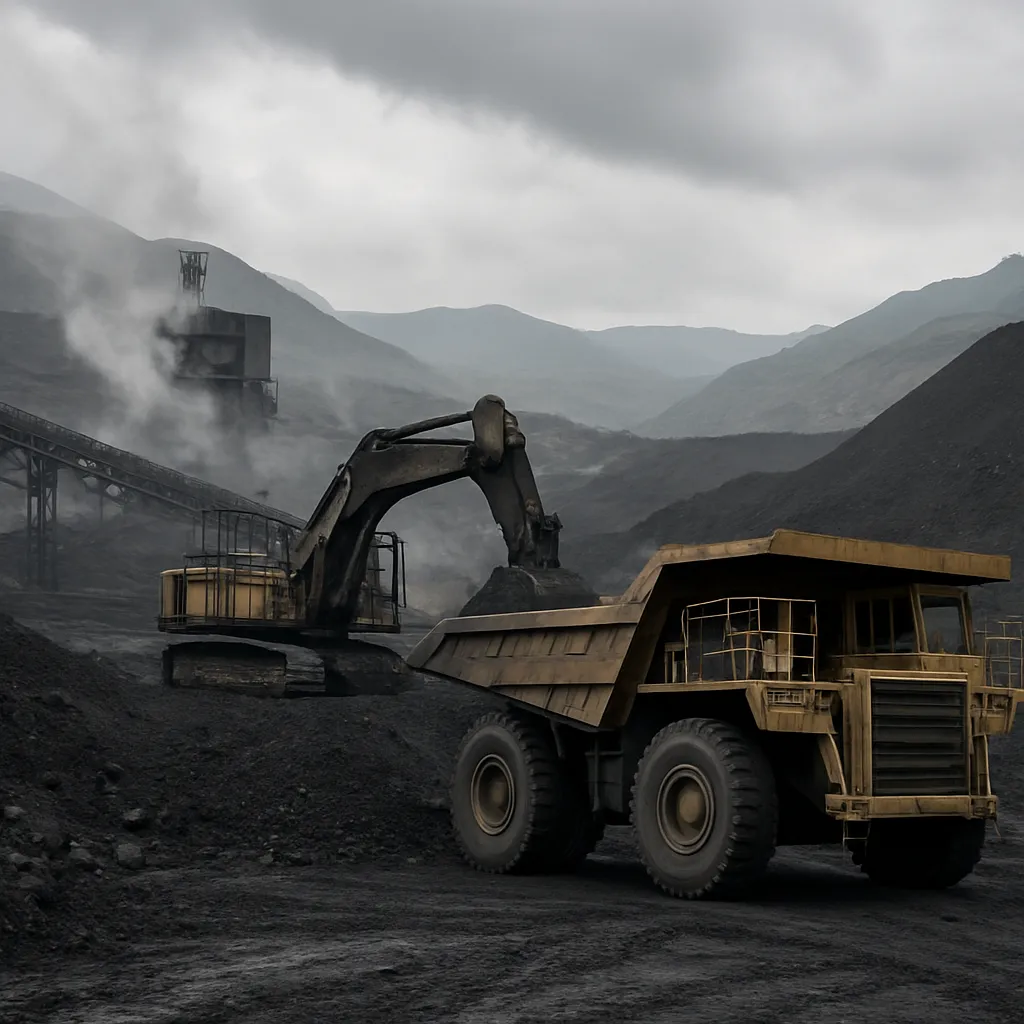
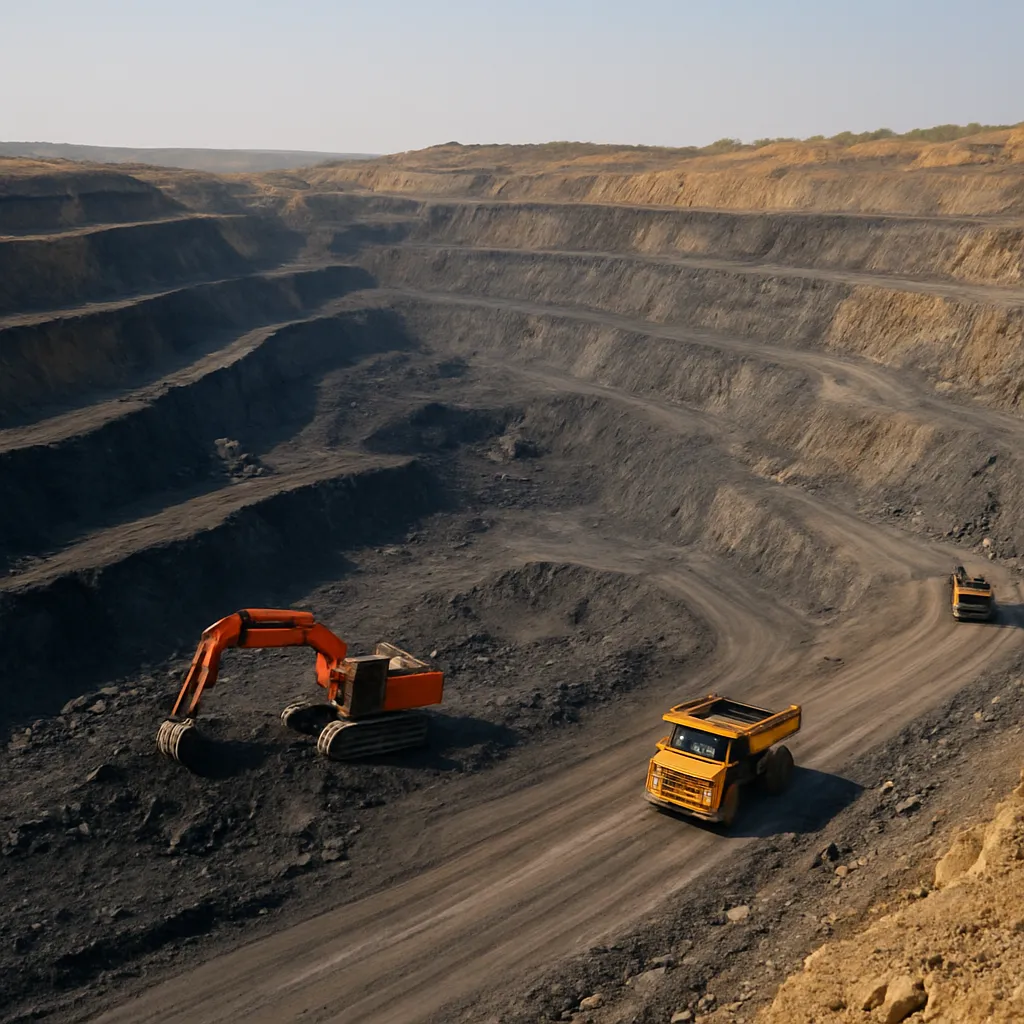
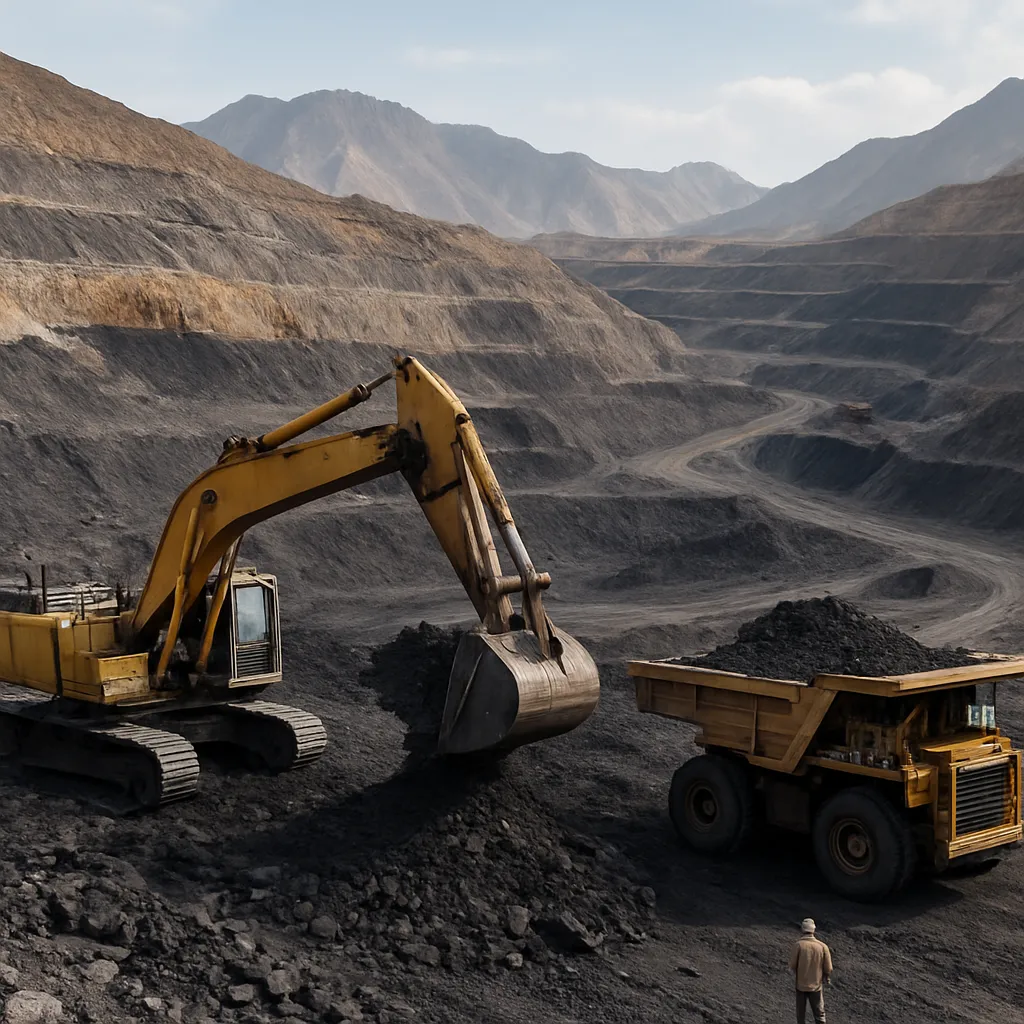
Mining activity in and around Badin has historically been on a small to medium scale. Methods reported and typically used for such deposits include open-pit (surface) mining where the seams are near the surface, and small underground workings where seams extend deeper. Key operational characteristics include:
- Small-scale, often locally organized extraction with limited mechanization in earlier phases.
- Opportunities for mechanized surface mining in areas where overburden is shallow and seams are relatively continuous.
- Use of simple beneficiation (sizing, washing) where feasible to reduce ash and moisture before transport to consumers.
Large-scale industrial development has been limited compared to major coalfields. Institutional and private interest in exploration has occurred, but sustained, high-volume commercialization has been constrained by seam discontinuity, quality issues and infrastructural challenges.
Economic and Industrial Significance
On a national scale, Badin’s coal is a modest contributor when compared with Pakistan’s major coal reserves, notably the Thar coalfield in Sindh which is globally notable for its vast lignite resources. Nevertheless, Badin plays several important local and regional economic roles:
- Providing local employment and income for mining families and ancillary service providers (transport, maintenance, supply).
- Supplying fuel for nearby industrial activities such as brick kilns, small power generators, agro-processing units and local industries that can tolerate lower-grade coal.
- Offering potential for import substitution: even modest local coal output can reduce demand for imported fuel in specific niche uses.
Exact production figures for Badin are not always publicly consolidated in international databases; production tends to be small relative to national totals and often varies year-to-year with local demand and investment. Nationally, Pakistan’s coal sector has seen growth driven primarily by large projects in Thar, while smaller fields such as Badin serve regional and local markets.
Statistics and Comparative Context
Pakistan’s coal landscape is dominated by the Thar deposits, which are commonly cited as holding on the order of 175 billion tonnes of lignite — a figure that makes Thar the country’s central coal asset. In contrast, coal occurrences in districts such as Badin are smaller and less continuous. Publicly available, reliable reserve estimates specifically for Badin are limited; official detailed reserve figures for many smaller fields have not been widely published or remain part of ongoing exploration reports.
To place Badin in context:
- Thar: Very large lignite resource, significant ongoing development and several associated power projects.
- Other Sindh fields (e.g., Lakhra and smaller deposits): Historically important for regional industry and power, production varies.
- Badin: Locally important, generally smaller-scale reserves and production focused on regional needs.
At the national level, Pakistan’s annual coal production has historically been in the low millions of tonnes range, with much of the recent increase driven by new mines and Thar development. Coal’s share in Pakistan’s primary energy mix has been growing due to policy emphasis on domestic fuels and strategic projects, although oil and gas remain dominant for now.
Infrastructure, Transportation and Processing
One of the principal constraints on scaling up coal exploitation at Badin is infrastructure. Effective coal mining and commercialization require reliable transport links, onsite handling and, in many cases, processing to improve fuel quality. Key infrastructure considerations include:
- Transport: Roads are the main immediate transport mode for Badin coal; rail connectivity is limited and would be a major investment for bulk commercialization.
- Port access: Proximity to Karachi and regional ports can be an advantage for certain logistics flows, but inadequate onsite loading facilities and road quality increase costs.
- Processing: Moisture management, drying and basic washing or sizing plants can enhance coal usability and reduce transport of inert materials.
- Power and water: Reliable electricity and water supplies are essential for mine operations and beneficiation, but in coastal and deltaic areas these resources may be constrained or saline and require treatment.
Environmental and Social Impacts
Mining in the Badin area raises several environmental and social concerns that require careful planning and mitigation:
- Land and water: Surface mining can disturb soils and change drainage patterns. In a deltaic environment, disturbance may exacerbate salinization or affect groundwater quality and quantity.
- Biodiversity and coastal ecosystems: The Indus delta and nearby coastal habitats support mangroves, fisheries and birdlife. Mining and associated infrastructure can fragment habitats, alter water flow and increase pollution risks.
- Air quality and health: Dust from mining and ash from coal use can impact respiratory health in nearby communities. Combustion of low-rank coal typically produces higher particulate emissions if not well controlled.
- Greenhouse gases: Coal combustion contributes to CO2 emissions; use of low-rank lignite can lead to elevated per-unit emissions unless mitigated through efficiency improvements or carbon management.
- Social impacts: Employment opportunities are counterbalanced by potential displacement, changes in livelihoods (especially for agriculture and fisheries) and increased pressure on local services.
Mitigation measures effective in similar settings include rigorous environmental impact assessments, community consultation and benefit-sharing, dust suppression, lined tailings and water treatment facilities, regulated land reclamation, biodiversity offsets, and monitoring programs. Responsible development requires balancing local economic benefits with long-term environmental stewardship.
Regulation, Policy and Investment Climate
Coal development in Pakistan is governed by federal and provincial laws covering mineral rights, environmental protection, land acquisition and labor standards. In Sindh province, the provincial government plays a key role in granting mining leases and regulating extraction. Recent national policy emphasis on expanding domestic energy supplies has stimulated interest in coal projects, particularly under frameworks such as the China–Pakistan Economic Corridor (CPEC) that prioritized energy infrastructure.
Despite such frameworks, small fields like Badin often struggle to attract major investment because of:
- Resource quality and continuity uncertainties.
- High upfront costs of infrastructure (road, rail, processing) relative to expected revenue from modest reserves.
- Environmental sensitivities and potentially costly mitigation obligations.
Carefully structured public–private partnerships, incremental development strategies that start with smaller, local-use projects, and targeted infrastructure investments could improve attractiveness. Moreover, technical assistance for beneficiation and efficient small-scale power conversion could enhance economic viability.
Local Benefits and Community Perspectives
When managed with community engagement and equitable benefit distribution, local coal development can deliver tangible advantages to Badin’s residents:
- Jobs in mining, transport and ancillary services.
- Improved infrastructure (roads, electricity) as a byproduct of investment.
- Opportunities for local enterprises supplying goods and services to mining operations.
However, past experience across many jurisdictions shows that such benefits only materialize sustainably when communities are included in planning, compensated for losses, and provided with skills training and alternate livelihood support. Transparent governance and environmental safeguards are essential to avoid long-term social grievances.
Technological Options and Mitigation Strategies
For lower-grade coal such as that in Badin, technology choices can significantly influence environmental footprint and economic returns. Viable approaches include:
- Simple beneficiation (washing, sizing) to reduce ash and improve calorific value for industrial users.
- Use of small, high-efficiency power units or modular plants that can operate on local coal with emissions controls.
- Blending with higher-rank coals to improve combustion characteristics where appropriate.
- Adoption of dust suppression systems, water recycling and proper waste disposal to minimize local contamination.
Longer-term options that would require significant capital include coal gasification or carbon capture and storage, but such technologies are generally less feasible for small fields without major partnerships or incentives.
Future Prospects and Strategic Considerations
The future of the Badin Coal Mine hinges on a mix of technical, economic and policy variables. Key determinants include:
- Results of further geological exploration to better quantify reserves and seam continuity.
- Investment in transport and processing infrastructure that reduces unit costs.
- Market demand from local industries and potential for small-scale power generation projects.
- Environmental permitting and community consent processes that either enable or constrain expansion.
If exploration were to demonstrate larger, contiguous reserves, Badin could attract larger-scale investment. Absent that, the most realistic near-term path is incremental growth focused on local and regional users, combined with robust environmental management and community development programs.
Interesting Facts and Local Notes
- Badin’s coal is part of a broader mosaic of Sindh’s mineral endowment that ranges from major lignite reserves in Thar to numerous smaller, strategically important deposits.
- Due to the coastal and deltaic environment, mining in Badin must be attentive to saline groundwater and seasonal flooding — factors uncommon in many inland coalfields.
- Local industries that can adapt to lower-grade coal provide a practical market niche—brick kilns, cement blending and small power plants have historically been important consumers of regionally produced coal.
- Badin’s development trajectory illustrates a common global pattern: local resource potential does not automatically translate into large-scale development without targeted investment, connectivity and clear governance frameworks.
Summary
The Badin Coal Mine forms a modest but regionally meaningful component of Pakistan’s coal landscape. Hosting predominantly lignite-grade coal in deltaic sediments, the deposit is suited to local industrial uses and potentially small-scale power generation rather than large centralized thermal plants without significant upgrading or blending. Economic opportunities exist for local employment, import substitution and industrial fuel supply, but these must be weighed against environmental risks to sensitive coastal and agricultural systems and the need for improved infrastructure. Strategic, phased development supported by rigorous environmental management, community engagement and feasible beneficiation could allow Badin to contribute to regional energy and economic objectives while safeguarding local ecosystems and livelihoods.