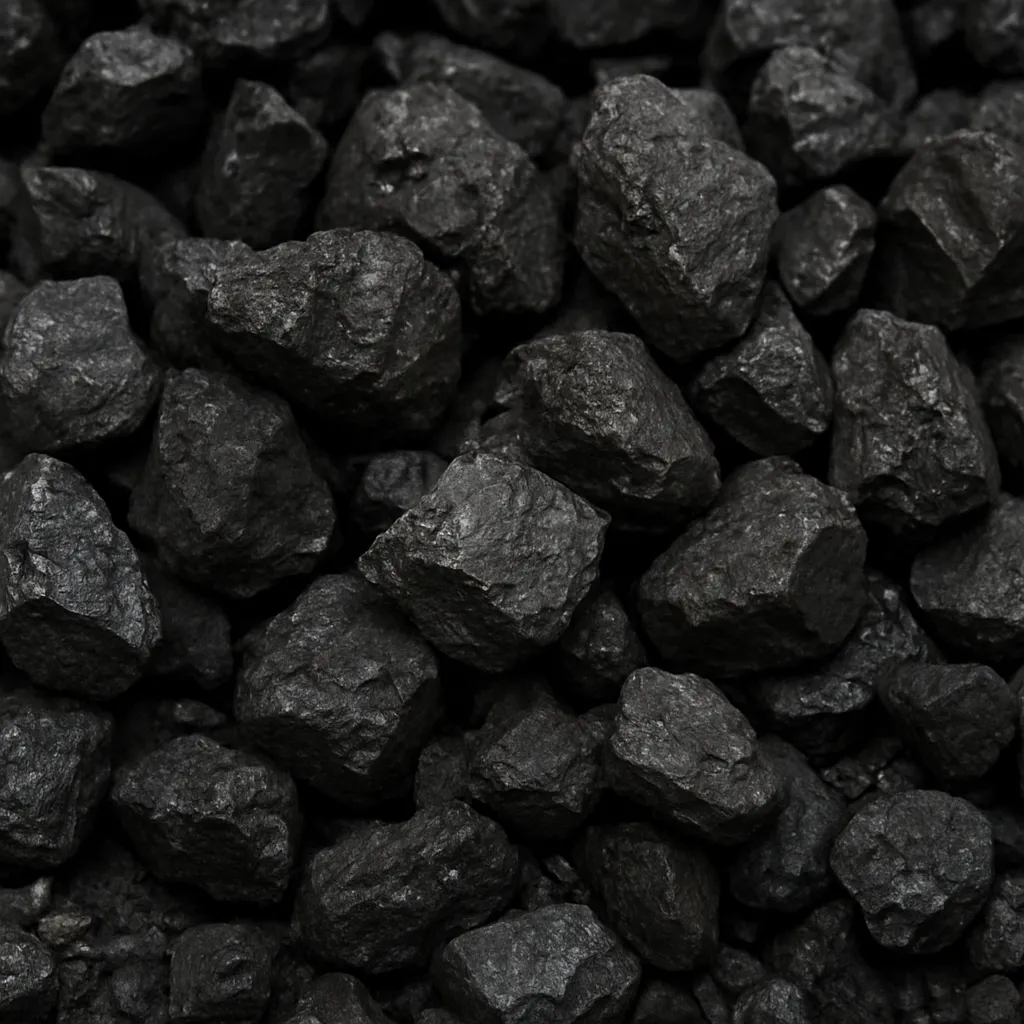
Anthracite is the highest rank of coal, prized for its high-grade energy content and distinctive physical properties. This dense, hard variety of coal has played an important role in industry, heating and specialized applications for more than two centuries. The following article examines what anthracite is, where it occurs and is mined, its economic and statistical context, industrial importance, environmental and social implications, and prospects for the future. The goal is to provide a detailed, practical resource for readers who want a deeper understanding of this unique fuel.
What is Anthracite? Properties, Formation and Classification
Anthracite is defined by its high fixed carbon content, low volatile matter and relatively low moisture when compared with lower ranks of coal such as bituminous or lignite. It is often described as a hard, glossy, black or steel-gray coal that burns with a short, smokeless flame. Typical chemical and physical characteristics include:
- High fixed carbon content, usually in the range of about 86–98% by weight in pure examples.
- Low volatile matter and moisture, which contribute to a cleaner and hotter burn per unit weight.
- Higher calorific value than most other coals, commonly reported in the range of 26–33 MJ/kg (roughly 6,200–7,900 kcal/kg), depending on grade and ash content.
- Hard, brittle texture and a submetallic luster; often produces a characteristic ringing sound when struck.
- Low to moderate ash and sulfur contents in many deposits, although composition varies widely by basin.
Geologically, anthracite forms through the metamorphism of bituminous coal under increased pressure and temperature, typically associated with tectonic compressional regimes. It is usually found in tightly folded or faulted belts where regional metamorphism has driven the coalification process to a higher rank. Some deposits originated in the Carboniferous or Permian periods, later transformed by mountain-building events.
Global Occurrence and Major Producers
Anthracite is not uniformly distributed around the globe; its presence is concentrated in a relatively limited number of basins where the right geological conditions were present. Notable occurrences and producing regions include:
- China — China holds substantial anthracite resources and is a major producer and consumer. Large deposits are found in northern and northeastern provinces. China’s anthracite supports both domestic industry and, in some periods, exports to neighboring markets.
- Russia and neighboring basins — Parts of Russia and the broader Eurasian coal belt include anthracite and meta-anthracite deposits, historically supplying industrial centers across the region.
- Ukraine — Before geopolitical disruptions, eastern Ukraine (Donbas region) was well known for anthracite, which remains strategically important in regional metallurgy and heating.
- Pennsylvania, United States — The Appalachian anthracite fields of Pennsylvania were among the first large anthracite-producing regions exploited industrially in the 19th century. Production today is much smaller but historically significant.
- Vietnam and Myanmar — Southeast Asia has several anthracite-bearing basins; Vietnam in particular has been an exporter of anthracite to East Asian markets.
- United Kingdom (Wales) — South Wales and a few other localized basins contain anthracite deposits that historically supported local industry and domestic heating needs.
- Poland, South Africa, Australia and Romania — These countries include limited anthracite resources or occurrences, though overall global production from these sources is modest compared with leading regions.
Anthracite reserves are concentrated and unevenly distributed, making the coal a relatively region-specific commodity. Some basins that historically yielded large volumes have declined in output due to depletion, economic shifts or environmental regulations, while others remain active or are being reassessed for renewed development.
Mining Methods, Processing and Quality Control
Most anthracite is mined by underground methods because anthracite seams are often deep, steeply dipping or located in structurally complex terrains. Typical extraction techniques include:
- Longwall mining in suitable continuous seams — used where seam geometry and safety considerations allow.
- Room-and-pillar or bord-and-pillar methods — common in irregular or dipped seams with complex geology.
- Selective small-scale underground mining — common in older fields, especially where seams are narrow or fractured.
- Open-pit mining — used only where seams are near surface and topography permits.
After extraction, anthracite often undergoes sorting and washing to remove impurities and non-coal material, improving both calorific value and marketability. Washed anthracite fetches higher prices because of lower ash and sulfur content and fewer clinkers on burning. Quality control includes proximate and ultimate analyses, calorific value measurement, and tests for sulfur, ash, moisture and trace elements. Specialized fractions are prepared for uses such as filtration media, activated carbon feedstock, and metallurgical applications.
Economic and Statistical Overview
Quantitative, long-term statistics on anthracite should be interpreted cautiously because anthracite represents a small share of total global coal production and because definitions and reporting vary by country. Nevertheless, several broad economic and statistical themes are notable:
- Share of global coal output: Anthracite generally accounts for a relatively small percentage of worldwide coal production, often reserves-constrained and concentrated in a handful of basins. It is typically a minority fraction of overall coal tonnage, with most world coal being bituminous or sub-bituminous.
- Production trends: Some historical anthracite basins have experienced long-term decline in output due to depletion, mine closures, or shifts to other energy sources. Conversely, demand in specific industrial niches has supported continued production in active basins.
- Trade patterns: Anthracite is traded internationally, primarily among neighboring markets or where local production cannot meet industry needs. Export volumes fluctuate with industrial demand, metallurgical needs and regional energy policies.
- Price characteristics: Anthracite typically commands a premium to lower-rank coals because of its higher energy content, cleaner burn and specialized uses. Prices vary widely by grade, location, shipping costs and competing fuels.
To give context without overstating precision: global coal production in recent years has been on the order of several billion tonnes per year. Anthracite’s share is modest — generally in the order of tens of millions of tonnes annually rather than hundreds of millions — and concentrated among a few producers. For researchers or procurement professionals needing exact figures, the best practice is to consult up-to-date national mining reports, international energy agencies, or commodity trade databases for the latest annual production and trade statistics by country and grade.
Industrial Uses and Significance
Anthracite’s combination of high-grade energy density, low volatile matter and low smoke makes it valuable in several industrial and municipal applications:
- Domestic and commercial heating: Where used, anthracite is valued as a smokeless domestic fuel with long-lasting, hot combustion. It has historically been popular in urban domestic heating where low-smoke performance was desirable.
- Water and wastewater filtration: Anthracite is widely used as a filtration medium in municipal water treatment plants. Its hardness, specific gravity and durability result in long-lived filter beds and effective removal of suspended solids.
- Metallurgy and process heating: Anthracite can serve as a reductant and high-temperature fuel in certain metallurgical processes, especially where a low-impurity, high-carbon feedstock is preferred.
- Activated carbon and specialty carbons: High-carbon-content anthracite is a feedstock for producing activated carbon and other carbon-based industrial materials. These products are important in chemical processing, air purification and adsorption technologies.
- Other specialty uses: In niche markets, anthracite is used in refractory applications, as a carbon additive, and in certain chemical processing roles. Its dense, inert ash and low sulfur make it attractive where contaminant minimization is crucial.
While anthracite’s total tonnage in energy markets is small relative to lower-rank coals, its per-ton value and specific roles in industry give it a disproportionately significant role in particular sectors, including water treatment and certain metallurgical processes.
Environmental, Social and Regulatory Considerations
Although anthracite burns cleaner in terms of visible smoke and volatile emissions than lower-rank coals, it remains a carbon-based fossil fuel with important environmental impacts:
- Greenhouse gases: Per unit of energy produced, anthracite still emits significant amounts of CO2. Thus, from a climate-change perspective, it offers no fundamental greenhouse-gas advantage over other coal grades when compared on an energy-equivalent basis.
- Local air quality: Anthracite’s low volatile content and cleaner combustion reduce particulate and soot relative to some other coals when burned under appropriate conditions, which can be beneficial for local air quality.
- Mining impacts: Underground anthracite mining can cause subsidence, groundwater disruption and legacy hazards in old mining regions. Acid mine drainage and spoil management remain challenges in some basins.
- Rehabilitation and social transition: Many traditional anthracite communities face economic decline as mining activity falls. Successful transitions require long-term planning, remediation funding and support for alternative employment.
- Regulation: Environmental and health regulations, particularly in developed markets, have reduced demand for coal-based domestic heating and created stricter limits on industrial emissions, affecting anthracite markets.
Policies aimed at decarbonization, electrification, and cleaner heating have reduced some markets for anthracite, while niche uses tied to water treatment and specific industrial processes remain more resilient. Sustainable management of former mining areas is a major policy priority in many countries with anthracite heritage.
Historical Context and Societal Impact
Anthracite has a long industrial history. In the 19th and early 20th centuries, anthracite’s reputation as a smokeless, hot-burning fuel made it a favored choice for urban heating and early industrial boilers in parts of Europe and North America. The anthracite regions of Pennsylvania powered early American industry and contributed to urbanization in the northeastern United States. In Wales and parts of continental Europe, anthracite mining supported regional economies and shaped cultural identities.
Over time, technological change, competition from oil and gas, and environmental regulation altered anthracite’s role. Yet the historical legacy of these mining communities remains visible in local economies, landscape scars and cultural heritage projects that preserve mining history.
Future Outlook, Innovation and Alternatives
The future of anthracite is shaped by several intersecting trends:
- Energy transition: Broad moves toward decarbonization and renewable energy reduce overall coal demand. Anthracite’s primary markets in heating and power face pressure from gas, electricity and renewables.
- Niche resilience: Specialized uses—particularly filtration, activated carbon production and certain metallurgical roles—are likely to maintain demand for anthracite or high-carbon feedstock even as general fuel use declines.
- Technological innovation: Advances in carbon capture, utilization and storage (CCUS) could, in principle, preserve some coal-based industrial processes. However, CCUS adoption faces economic and technical hurdles.
- Materials science: Research into novel carbon materials, including graphitic and engineered carbons, can create new markets for high-quality anthracite as a feedstock for high-value products.
- Supply concentration and geopolitics: Because anthracite reserves are geographically concentrated, supply security and geopolitical events can significantly affect regional markets and pricing.
In short, while anthracite is unlikely to return to a broad-based role as a residential or power fuel in many modern economies, its unique physical and chemical attributes ensure it will remain important in several industrial niches. Market evolution will depend on environmental policy, technological change and new industrial applications for high-carbon materials.
Key Takeaways and Interesting Facts
- Anthracite is the highest-rank coal with high-grade carbon content and high calorific value, prized for smokeless combustion and durability.
- Production is geographically concentrated: major centers include China, parts of Russia and eastern Europe, Ukraine historically, and specific basins such as Pennsylvania in the United States.
- Anthracite is more valuable per tonne than lower-rank coals and serves important niche markets: water filtration, activated carbon production, and certain industrial heating and metallurgical roles.
- Environmental and climate policies constrain broad uses for anthracite as a fuel, but specialized industrial demand provides a resilient market segment.
- Legacy impacts of anthracite mining—subsidence, contaminated sites and community transition—remain an important policy and social issue in many producing regions.
Final perspective
Anthracite occupies a distinctive position in the energy and materials landscape: not the most voluminous form of coal, but often among the most valuable by specific-use metrics. Its geological rarity, physical robustness and special industrial applications mean it will continue to be relevant where high fixed-carbon feedstock or durable, low-smoke combustion is required. At the same time, the long-term trajectory of anthracite is tied to broader societal choices about decarbonization, resource rehabilitation and the search for high-performance materials with lower environmental footprints.