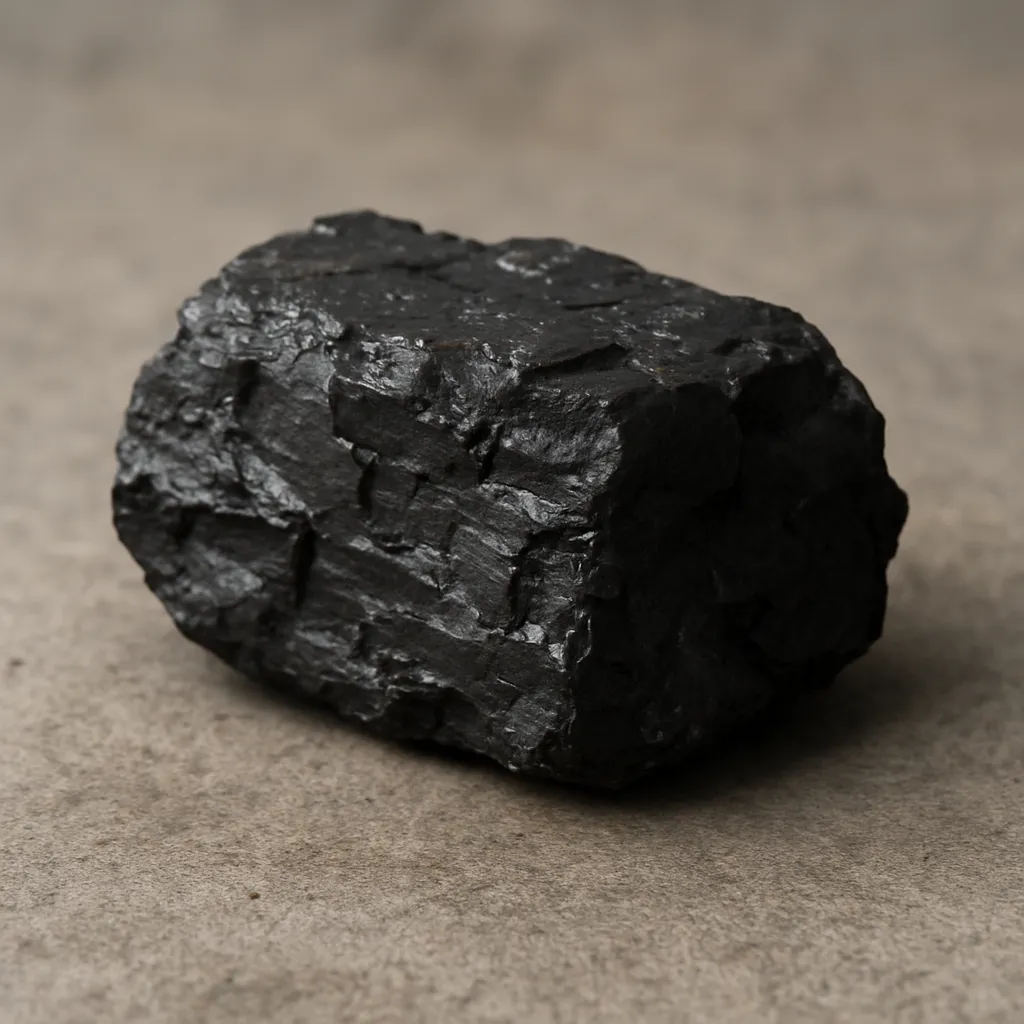
This article examines the concept commonly referred to as steam-enhanced coal — a term that can mean either the class of coal primarily used to produce steam (often called steam coal or thermal coal) or a range of industrial processes in which steam is intentionally used to modify, convert or recover value from coal (for example, steam gasification, steam-assisted methane recovery, and hydrothermal treatment). Below you will find an overview of geological occurrence, mining and production patterns, economic and industrial roles, technologies that involve steam and coal, environmental and policy implications, and recent statistics and trends. The goal is to provide a broad, useful portrait for readers interested in energy markets, industrial applications and the science behind coal-related steam processes.
Where steam coal occurs and its geological context
Coal is a sedimentary rock formed from the accumulation and long-term burial of plant material, often in swampy or coastal plain environments. Over geologic time, peat becomes buried, heated and compacted to form various ranks of coal: lignite, sub-bituminous, bituminous and anthracite. Steam coal — essentially coal sold for use in boilers, power plants and industrial steam generation — is most commonly drawn from the bituminous and sub-bituminous ranks, though lower-rank lignite is also widely used in regions near deposits.
Major coal-bearing basins are distributed across every continent except Antarctica. The most important deposits for steam coal historically and today include:
- East Asia: Large basins in China (e.g., Shanxi, Inner Mongolia) supply the world’s largest domestic consumption and production.
- South Asia: India’s Gondwana and tertiary basins provide extensive thermal coal resources for power generation.
- Oceania: Australia has vast high-quality thermal coal exported globally from Bowen Basin and Surat Basin in Queensland and the Hunter and Illawarra regions in New South Wales.
- North America: The United States and Canada contain sizable sub-bituminous and bituminous deposits in the Powder River Basin, Appalachian Basin and Western Canada.
- Europe and Russia: Russia’s Kuznetsk and Pechora basins, Poland’s Upper Silesia, Germany’s lignite basins and Ukraine’s Donbas are historically significant producers.
- Africa: South Africa’s high-grade coals and smaller basins in Botswana and Mozambique provide both domestic supply and export opportunities.
Geologically, coal quality (calorific value, ash, moisture, sulfur and volatile content) determines its suitability as steam coal. Power generators and industrial boilers select coal types based on heat value, combustion behavior and emissions characteristics, which in turn shape regional trade flows.
Where steam coal is mined and global production patterns
Global production and trade patterns for steam coal reflect the concentration of reserves, domestic demand for electricity and industrial heat, export infrastructure, and policy choices. Over the last two decades the global distribution has shifted but a few constants remain: China, India, Indonesia, Australia and the United States are among the largest producers, while Australia, Indonesia and Russia are major exporters of thermal coal.
Leading producing and exporting countries
- China: By far the largest producer and consumer of coal globally. China’s production primarily serves domestic power generation and industry, limiting its role as a thermal coal exporter.
- India: Large domestic production aimed at electricity generation. India is also a major importer to balance quality and logistics needs.
- Indonesia: A major exporter of lower- to mid-quality thermal coal, serving markets across Asia, particularly in India and China (when imported) and Southeast Asia.
- Australia: One of the world’s largest exporters of high-quality thermal coal, serving Asian markets and beyond.
- United States: Significant producer of sub-bituminous coal (notably from the Powder River Basin) and a diversified coal mix used both domestically and exported to select markets.
- Other regional producers: Russia, South Africa, Colombia and Kazakhstan also play important roles in regional and global thermal coal markets.
Statistical highlights and trends (approximate figures and context)
Exact annual figures vary by source and year; the values below are indicative, based on recent multi-year trends through the early 2020s:
- Global coal production: roughly 7–8 billion tonnes per year of hard coal equivalent (this includes both thermal and metallurgical coal in aggregate).
- Thermal (steam) coal share: thermal coal constitutes the majority of coal use globally — historically around 70–75% of coal consumption is for power generation and direct thermal uses.
- Top producers: China produced roughly 50% or more of global coal output in many recent years; India, the US, Indonesia and Australia follow at much smaller shares.
- Trade flows: Australia, Indonesia and Russia together account for a large proportion of seaborne thermal coal exports; seaborne trade typically ranges around 1–1.2 billion tonnes annually.
- Price volatility: thermal coal prices have experienced marked swings — spikes in certain years (for example when supply constraints coincide with demand surges) and deep troughs in others, influenced by energy policies, natural gas prices and economic cycles.
Because coal consumption is tightly linked to electricity demand and fuel-switching economics (coal vs natural gas, renewables and nuclear), annual production figures can change quickly. Recent policy shifts and market responses (for example post-2021 price dynamics and the European response to geopolitical shocks) have produced temporary increases in coal burn in some regions, complicating longer-term trend projections.
Economic and industrial significance of steam coal
Steam coal underpins a substantial share of global electricity generation and is a backbone of many industrial processes that need reliable, high-density heat. The economic role of thermal coal manifests in several ways:
- Electricity supply: In many countries coal-fired power plants remain the primary dispatchable source of baseload and mid-merit power, particularly where renewable penetration is still growing or grid flexibility is limited.
- Industrial heat and process steam: Cement, steel (for certain processes), chemical production, paper, food processing and district heating systems often rely on coal-fired boilers or co-fired systems to supply high-temperature steam and heat.
- Employment and regional economies: Coal mining and associated logistics (rail, ports) create jobs and economic activity in producing regions, sometimes forming the fiscal basis for regional development.
- Exports and trade balances: For export-oriented producers like Australia and Indonesia, thermal coal is a major foreign-exchange earner and driver of port and shipping industries.
- Energy security: Domestic coal reserves can provide nations with an affordable and storable fuel, reducing exposure to volatile international gas or oil markets.
Market dynamics for steam coal are shaped by:
- Fuel competition (especially cheap natural gas and rapidly falling costs for renewables and batteries).
- Policy measures (carbon pricing, emissions standards, plant retirement schedules).
- Logistics and shipping costs, which influence the competitiveness of seaborne coal.
- Quality concerns: high-ash, high-moisture coals increase costs for transport and burning and affect plant efficiency.
Steam-related coal technologies and industrial processes
The phrase “steam-enhanced coal” can also refer to technologies that intentionally combine coal and steam to produce energy carriers, recover methane, or upgrade coal. Key processes include:
Steam coal combustion for steam generation
The most common use of thermal coal is to generate steam in large boilers. High-pressure steam drives turbines to create electricity or provides process steam for industry. Modern pulverized coal boilers, fluidized bed combustors and supercritical/ultra-supercritical units boost efficiency and lower specific emissions per MWh compared to older designs.
Coal gasification with steam (steam gasification)
Coal gasification converts coal into a synthesis gas (syngas) composed primarily of hydrogen (H2) and carbon monoxide (CO) by reacting coal with steam and oxygen/air at high temperatures. Syngas can be used to:
- Produce electricity in integrated gasification combined cycle (IGCC) plants.
- Be a feedstock for chemical synthesis (methanol, ammonia) or liquid fuels via Fischer-Tropsch processes.
- Be shifted (water-gas shift reaction) to increase hydrogen content for hydrogen production (H2) if CO is reacted with steam.
Steam-enhanced coalbed methane and in-situ conversion
In some basins operators inject steam into coal seams to heat the coal, reduce gas sorption forces and enhance the recovery of coalbed methane (CBM). Steam can also be part of in-situ thermal conversion techniques aimed at extracting liquid or gaseous hydrocarbons from deep coal or oil-shale formations. These techniques are technically complex and carry specific environmental and water-management challenges.
Thermal upgrading and hydrothermal treatment
Hydrothermal carbonization and similar treatments using hot, pressurized water/steam can upgrade low-rank coals (or biomass–coal blends), reduce moisture, and improve grindability and calorific value. While not yet a large-scale commodity route, these processes show potential for value-adding in regions with abundant low-grade coal close to demand centers.
Environmental, health and policy considerations
Coal combustion and some coal conversion processes emit greenhouse gases (chiefly CO2), particulates, sulfur dioxide (SO2), nitrogen oxides (NOx) and trace metals (mercury, arsenic). Key issues include:
- Greenhouse gas emissions: Coal has among the highest CO2 emissions per unit energy of fossil fuels. This drives policy pressure to retire coal-fired plants or retrofit them with carbon capture and storage (CCS) technologies in jurisdictions pursuing deep decarbonization.
- Air quality: Particulate matter and sulfur emissions affect human health; emissions controls (ESP, fabric filters, flue-gas desulfurization) mitigate impacts but add cost.
- Water use and contamination: Mining, washing and steam-enhanced processes often require substantial water inputs; poor management can affect local water quality and availability.
- Land disturbance and legacy impacts: Surface mining (open pit, strip mining) alters landscapes and habitats; reclamation and remediation requirements are part of modern permitting frameworks.
Policy responses vary by country:
- Some nations are accelerating coal plant retirements and replacing capacity with renewables and gas (often aided by market reforms and subsidies).
- Other countries, especially where coal is domestically abundant and affordable, are sustaining or even expanding coal use to meet development goals.
- Investment in emissions abatement (scrubbers, selective catalytic reduction, CCS) aims to reduce local pollution and, where possible, CO2 emissions.
Economic statistics and market dynamics
The economics of steam coal are determined by production costs, transport and handling costs, plant efficiency, and regulatory costs (emission controls, carbon pricing). Important statistical and market observations include:
- Production costs vary widely: low-cost, high-quality deposits near export ports (e.g., some Australian mines) can be very profitable at global price levels, while inland, high-ash coals with long transport distances are less competitive.
- Seaborne premium thermal coal prices and benchmark indices have experienced long-term cycles. Price spikes may occur during supply constraints (labor disruptions, export restrictions) or when competing fuels are expensive; declines follow when demand softens or supply rises.
- Investment trends: Financial institutions and investors in many regions have tightened lending to coal-related projects citing climate risks and reputational concerns, affecting the ability of new mines and plants to secure capital.
- Electricity market design matters: in markets with capacity payments or regulated tariffs, coal plants may retain economic viability longer than in fully competitive markets where renewables and gas push coal down the dispatch order.
Role in industry and notable uses
Beyond bulk electricity generation, steam coal’s role in industry includes:
- Cement manufacturing: coal-fired kilns provide the high-temperature process heat required to form clinker.
- Paper and pulp: process steam for drying and chemical recovery systems.
- District heating and industrial steam supply: coal-fired boilers can provide continuous steam for urban heating and industrial processes.
- Feedstock routes: gasification and coal-to-liquids (CTL) systems can convert coal into synthesis gas and then into chemicals or liquid fuels where oil or gas is scarce.
Interesting technical and historical facts
- “Steam coal” as a market term distinguishes coal sold primarily for steam generation from “coking coal” used in metallurgical processes to produce coke for steelmaking. The two markets have different quality requirements and pricing dynamics.
- Supercritical and ultra-supercritical coal-fired units operate at higher temperatures and pressures and achieve greater thermal efficiency, which reduces CO2 emissions per MWh compared to older subcritical plants.
- Integrated gasification combined cycle (IGCC) plants can offer higher efficiencies and easier CO2 capture compared to traditional combustion, but they are capital-intensive and have seen limited deployment for large-scale thermal coal use.
- Historically, coal spurred the Industrial Revolution by powering steam engines; today, coal remains central to industrializing economies, but its long-term role is contested by climate policy.
Future outlook and transitions
The future of steam coal is shaped by competing forces:
- Decarbonization commitments: Countries with net-zero targets are planning coal phase-outs or are setting dates for retiring coal fleets, which reduces long-term demand for steam coal.
- Energy security concerns: Geopolitical events can prompt temporary increases in coal usage when alternative fuel supplies are constrained.
- Technology adoption: Progress and costs for CCS, hydrogen-from-coal (with capture), and coal-to-chemical conversion will affect viable pathways for continued coal use with lower emissions.
- Market diversification: Producers with export capacity may shift sales geographically in response to regional policy changes; some miners diversify into other commodities or reclamation and renewable projects.
In the near term, many analysts foresee a gradual reduction of coal’s share in electricity systems globally, accompanied by cyclical fluctuations driven by gas price dynamics, economic growth in emerging economies, and policy timing. In some regions, coal’s decline will be faster; in others, coal will remain an important transitional or backstop fuel for years or decades.
Concluding observations
Steam coal — whether thought of as the thermal coal used to produce steam for power and industry, or as coal manipulated with steam in various chemical and recovery processes — remains an important global commodity with significant economic, social and technological impacts. Its future will be determined by the interplay of market forces, technology (notably emissions control and carbon management), and policy decisions aimed at climate and public-health outcomes. For stakeholders — governments, companies, workers and communities — navigating the transition will require balancing immediate energy needs, economic realities and long-term environmental commitments.
Note: numeric and market figures cited above are indicative and rounded; for planning or policy purposes consult the latest published statistical reports from authoritative sources such as national energy agencies, the International Energy Agency (IEA), and industry market analyses to obtain precise, current values.