The Katras Coal Mine, located in the coal-rich district of Dhanbad in Jharkhand, India, is part of one of the country’s most historically and economically significant coal-producing regions. This article reviews the mine’s location and geology, the types of coal extracted, mining methods, economic and industrial importance, environmental and safety challenges, and prospects for the future. It combines contextual background on the wider Jharia/Katras coal area with focused commentary on operations, local impacts, and policy measures affecting the site.
Location, Geology and Historical Context
Katras lies within the larger Jharia coalfield complex in the Dhanbad region of Jharkhand, a state in eastern India known for its concentration of mineral resources. The Jharia field is one of India’s premier coal basins and has provided coal to heavy industries and thermal power plants for more than a century. Katras itself developed as a mining locality with both surface and underground workings historically operated by various private and later public-sector entities.
The geology of the Katras area is typical of the Jharia field: multiple benches of Permian-age coal seams interbedded with sandstones, shales and conglomerates. Coal seams here range in thickness and depth, and their structural complexity—folds, faults and seam splitting—has affected the choice of mining methods and the safety profile of operations. The coal in Katras and surrounding parts of the Jharia field is primarily of the bituminous rank, with significant quantities of coking coal that are particularly valued by the metallurgical sector.
Historically, mining in Katras evolved from small-scale, privately run underground mines in the pre-nationalization period to larger, mechanized operations after nationalization and consolidation under public sector entities. The nationalization of Indian coal mines in the early 1970s led to the creation of public utility organizations tasked with systematic production, safety, and regional development.
What Is Extracted — Coal Type and Quality
The principal product of the Katras coal mine is coal of the bituminous class, with a meaningful proportion being metallurgical (coking) coal. Coking coal is essential for steel production because it generates coke—an almost pure carbon material used in blast furnaces. The high fixed-carbon content and suitable volatile matter make Katras-area coal attractive for the metallurgical industry.
Key coal characteristics relevant to users and policymakers include:
- Calorific value: The coal from Katras typically offers moderate to high calorific values relative to low-grade lignites, supporting both industrial heat applications and utility use.
- Volatile matter and ash content: Variability exists seam-to-seam. Some seams suitable for coke-making have favorable volatile matter and ash percentages, while others require beneficiation or blending.
- Sulfur and trace elements: Generally manageable for industrial users, but quality control and washing are often employed to meet specific plant requirements.
Because of seam variability, the coal from Katras is frequently processed—washed and blended—to meet the technical specifications of steel plants, captive power units and cement manufacturers. Improved beneficiation helps reduce transport of low-quality material and optimizes economic returns for the operator.
Mining Methods and Operational Overview
Katras has historically hosted both underground and opencast (surface) mining, though the dominant traditional method in many parts was underground extraction. Over time, due to seam exposure, shallow seams and economic considerations, surface mining has increased in parts of the Jharia complex, enabling higher short-term production rates but raising land-use and environmental concerns.
Underground workings
Underground mining in Katras has included room-and-pillar and bord-and-pillar systems, with mechanization introduced progressively. These workings are complex because of the seam structure and legacy excavations. Problems such as roof instability, methane emission, water inflow and old workings’ collapse are technical challenges that require ongoing management.
Opencast operations
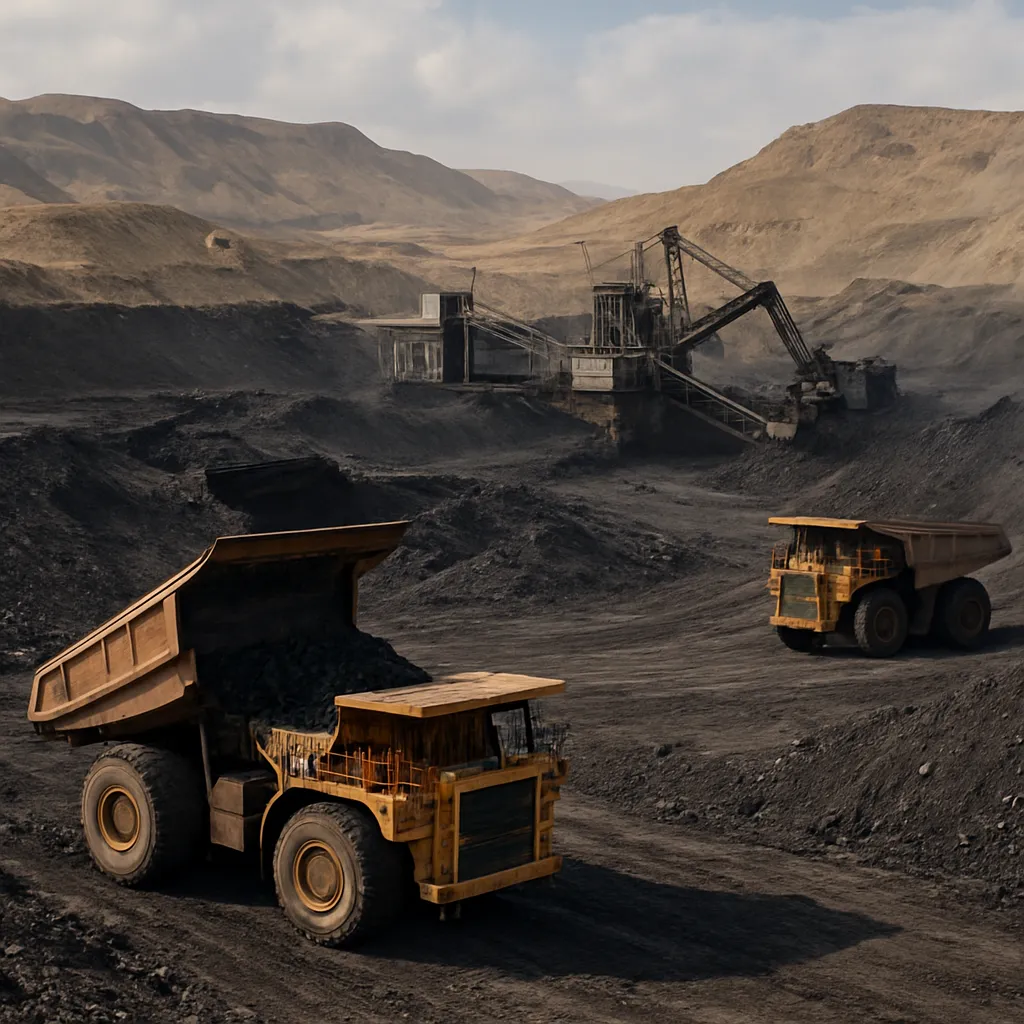
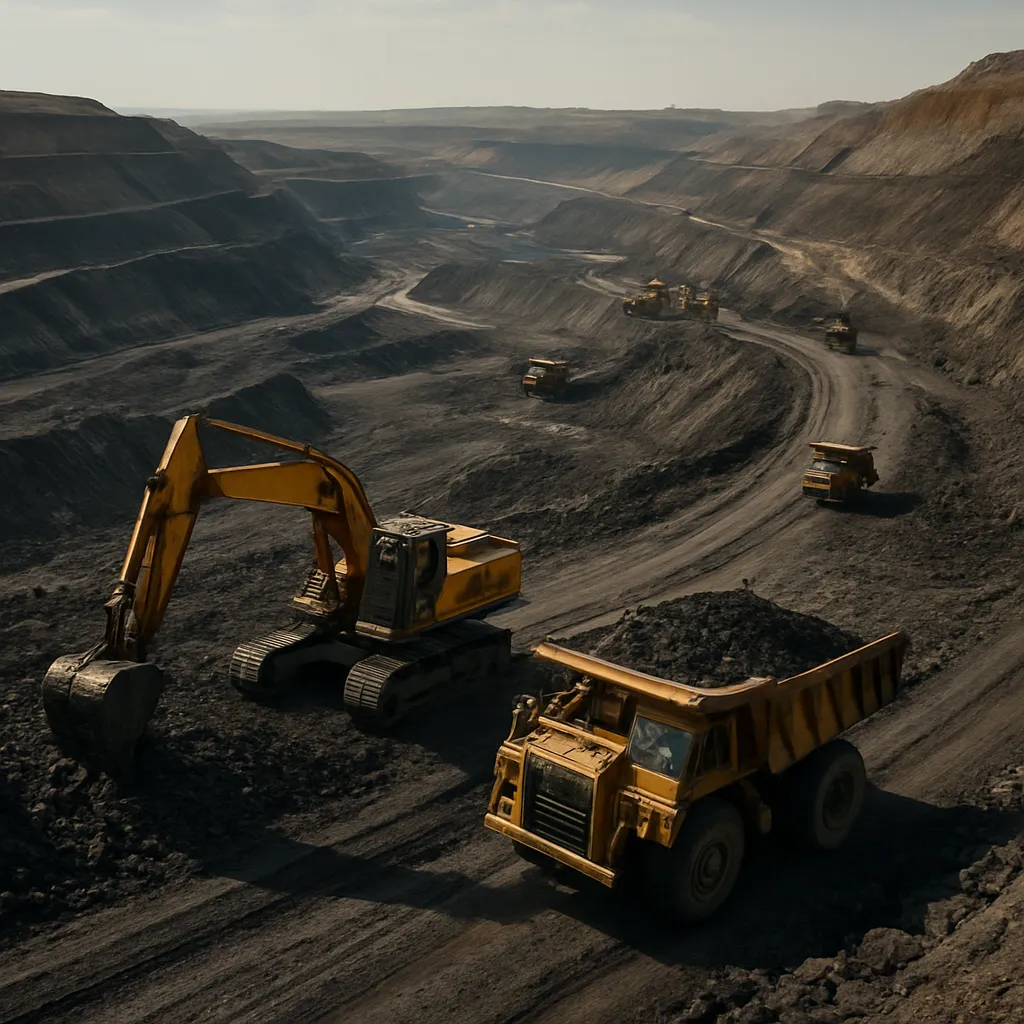
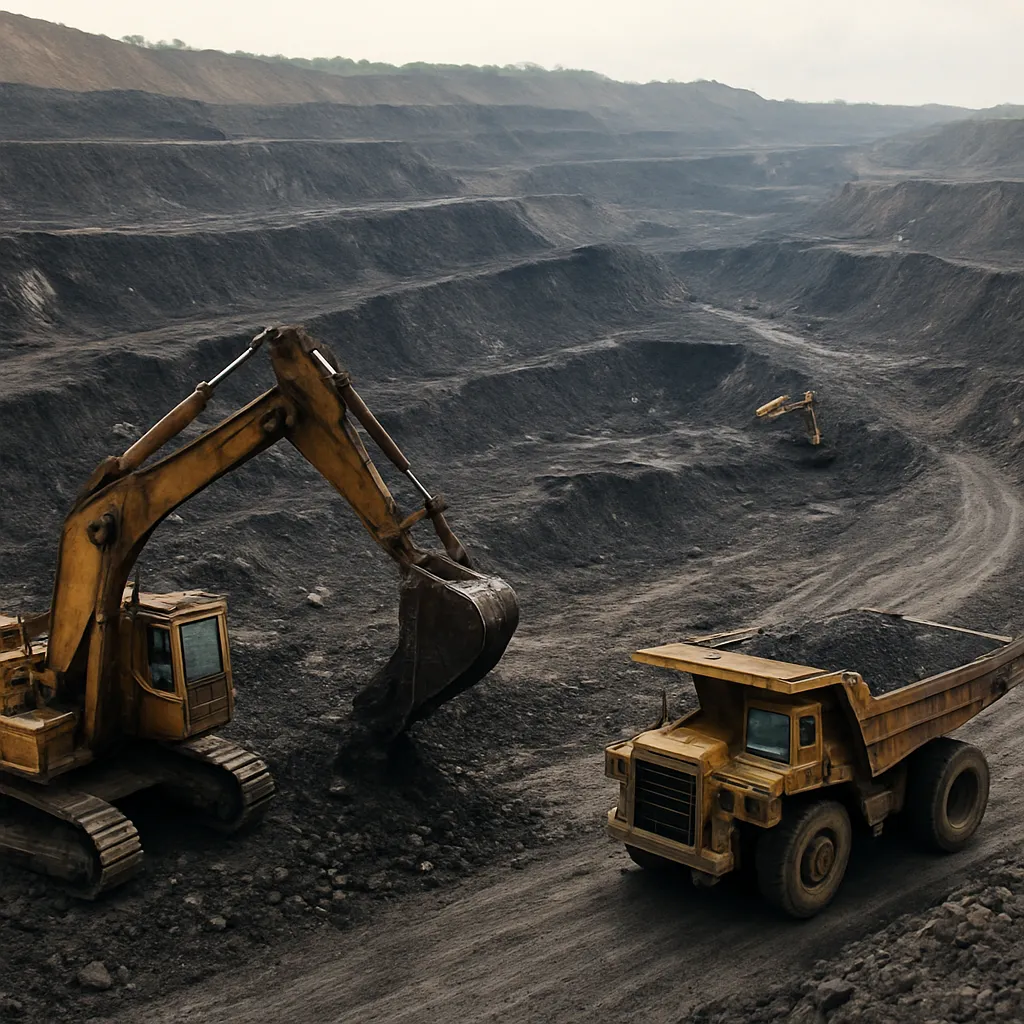
Opencast mining offers higher productivity and easier mechanization—large excavators, dumpers and conveyors—but it demands removal of significant overburden and land conversion. Where feasible, opencast conversion has allowed operators to sustain output while lowering mining costs, though it often necessitates rehabilitation of disturbed land and complex resettlement arrangements.
Modern practices in the region include progressive reclamation, mechanized coal handling, and efforts at improved mine safety. Yet, despite technological improvements, the Katras area must contend with legacy issues such as abandoned shafts, surface subsidence, and in places, uncontrolled fires beneath the ground.
Economic Importance and Industrial Linkages
The Katras Coal Mine and the broader Jharia-Katras mining belt play a vital role in India’s energy and industrial matrix. Several aspects of economic importance include:
- Supply to steel industry: The presence of coking coal supports metallurgical processes in nearby and national steel plants, contributing directly to domestic steel production and reducing dependence on imported coke and high-grade coal.
- Power generation: Coal from Katras supports captive and regional thermal power units, contributing to local and regional electricity supply and industrial activity.
- Employment and livelihoods: Mining provides direct and indirect employment to thousands of workers and supports ancillary industries—transport, equipment servicing, coal-washing plants, and local commerce.
- Revenue and taxation: Mining operations contribute to government revenues through royalties, taxes, and fees, and public-sector mines are also a source of social investment and infrastructure spending in mining districts.
Beyond direct coal sales, the region’s extraction economy supports a network of secondary industries and logistics that amplify the economic footprint of Katras. Rail links established for coal transport connect the mines to major industrial centers such as Jamshedpur (Tata Steel), Bokaro, and power stations across eastern and northern India.
Statistical and Quantitative Notes
While precise current-year production figures for an individual mine like Katras can vary with operational decisions, regulatory actions and market demand, the Jharia complex historically ranks among India’s largest coal-producing zones. It is widely cited as a major source of high-quality coking coal within India’s domestic reserves. Production and reserve figures for the wider Jharia area are often reported in official publications and company disclosures issued by the administrating organizations and the Government of India.
Important numerical considerations that influence planning and valuation include:
- Measured and inferred coal reserves in the Jharia coalfield are substantial and account for a significant share of India’s coking and bituminous coal resources.
- Annual production in the wider Dhanbad-Jharia region has historically ranged in the multiple millions of tonnes—serving both thermal and metallurgical markets.
- Employment linked to coal mining and allied services represents a major share of local livelihood options, though exact numbers depend on mechanization levels and production strategy.
For site-specific contemporary figures such as annual tonnage extracted at Katras, workforce size, or exact reserve estimates, consult the latest reports from the operating company (for example, Bharat Coking Coal Limited or other administrators in the area), the Ministry of Coal (Government of India), and Jharkhand state publications. These sources publish audited data by year and by operational area.
Environmental, Health and Safety Issues
The Katras mine shares in the broader environmental and safety challenges that characterize the Jharia coalfield. These concerns have long-term implications for sustainable development and human welfare:
- Underground fires: One of the most notorious problems in the Jharia region has been spontaneous combustion of exposed coal seams and old workings, causing long-burning underground fires. These fires lead to ground subsidence, air pollution and heat emissions, and they complicate safe mining operations and habitation of nearby areas.
- Subsidence and land instability: Collapse of old workings can result in sudden subsidence, rendering surface buildings and infrastructure unsafe. This has triggered resettlement programs and restrictions on surface development in affected zones.
- Air and water pollution: Dust from mining and coal handling, emissions from combustion, and contamination of surface and groundwater by mining runoff and acid mine drainage affect environmental quality and public health.
- Occupational safety: Historically, underground mining entails risks from roof falls, gas leaks (e.g., methane), and inundation. Improvements in equipment, training, and regulatory oversight have aimed to reduce accident rates, but risks persist.
Addressing these issues requires integrated interventions: fire-fighting and isolation of burning seams, sealing and filling of abandoned workings, controlled extraction to avoid destabilizing pillars, dust suppression, water treatment and long-term land reclamation. Regional plans have aimed to relocate communities from the most dangerous zones and to rehabilitate affected lands.
Social Impact and Community Dynamics
The Katras area is home to mining communities with multi-generational ties to coal extraction. Mining has shaped social structures, local economies, and settlement patterns. Key social dynamics include:
- Displacement and resettlement: Where surface operations expand or subsidence threatens habitation, resettlement programs have been implemented. These are socially sensitive processes with implications for livelihoods, cultural ties and urban planning.
- Health impacts: Respiratory illnesses and other health issues are more prevalent in mining areas. Occupational health programs and primary healthcare facilities are essential local services.
- Informal and illegal mining: Post-mining livelihoods in the region have sometimes included informal coal recovery and illegal surface or shallow mining, which pose grave safety risks and environmental degradation.
Community development efforts—education, healthcare, vocational training and local infrastructure—are typically part of corporate social responsibility (CSR) portfolios and government interventions in the region. Effective social policy must link mine closure planning with alternate livelihood creation to prevent long-term economic dislocation.
Regulatory Framework and Institutional Players
The Indian coal sector is governed by a mix of central and state regulations addressing mining rights, safety, environmental clearances and land acquisition. Key institutions include the Ministry of Coal, the Ministry of Environment, Forest and Climate Change, state mining departments, and operating companies such as public sector undertakings that manage many of the major collieries.
In the Katras/Jharia context, institutional priorities have included:
- Fire control and long-term rehabilitation planning coordinated among central and state agencies.
- Mine safety regulation and inspections to implement modern standards and training.
- Environmental clearance conditions linked to pollution control and rehabilitation plans.
- Programs for sustainable mining, progressive reclamation, and community development funding.
Future Prospects, Challenges and Mitigation Strategies
Katras faces a transitionary period typical of older coal districts: balancing continued extraction to meet industrial demand with pressing imperatives of safety, environmental restoration and social welfare. Some strategic elements shaping the future include:
- Controlled extraction and modernization: Increasing mechanization, real-time monitoring, and seam-specific mining plans can improve productivity while reducing long-term hazards.
- Fire-fighting and stabilization: Continued investment in viable technologies to seal burning seams and stabilize ground is crucial for preventing catastrophic subsidence and reducing greenhouse gas and particulate emissions from coal fires.
- Rehabilitation and land-use planning: Restoring mined lands, creating green belts, and converting disturbed areas for alternative uses (solar parks, industrial estates with remediation) can provide post-mining economic options.
- Community transition measures: Vocational training, alternative employment schemes and micro-enterprise support will be key to ensuring sustainable livelihoods as mining activity changes over time.
- Policy alignment: National energy strategies, carbon considerations and industrial demand for coking coal will influence how long areas like Katras remain central to India’s coal economy.
From a resource perspective, the Katras area will continue to be significant as long as there is demand for high-grade coking coal domestically and regionally. However, shifts in steelmaking technology, global markets, and national energy transitions may alter exploitation priorities. Even so, legacy environmental issues mean that responsibility for remediation and rehabilitation will persist beyond active mining life.
Interesting and Lesser-Known Facts
There are several notable aspects of Katras and the Jharia coalfield that are often overlooked:
- Centuries-long human adaptation: Mining communities in the area have adapted technologies and social practices over generations to cope with hazardous working conditions and changing ownership structures.
- Archaeology and settlement history: The region’s landscape shows layers of industrial archaeology—from old pithead structures and railway sidings to relic housing and colonial-era mining installations—reflecting the evolution of India’s coal industry.
- Interdisciplinary research interest: Katras and its environs are the subject of studies combining geology, fire science, urban planning and public health to design integrated rehabilitation models that can be applied in other legacy mining regions worldwide.
Conclusion
The Katras Coal Mine is emblematic of both the strengths and the complexities of India’s coal sector: rich in valuable coking coal, integral to regional industry and livelihoods, yet challenged by environmental risks such as underground fires and subsidence. Its role in supplying the metallurgical and energy sectors makes it an important node in the national economy, while its legacy problems demand concerted technical and social solutions. Sustainable management of Katras will require a combination of modern mining practice, rigorous environmental remediation, community-focused resettlement and redevelopment plans, and long-term strategic thinking about the role of coal in India’s energy and industrial future.