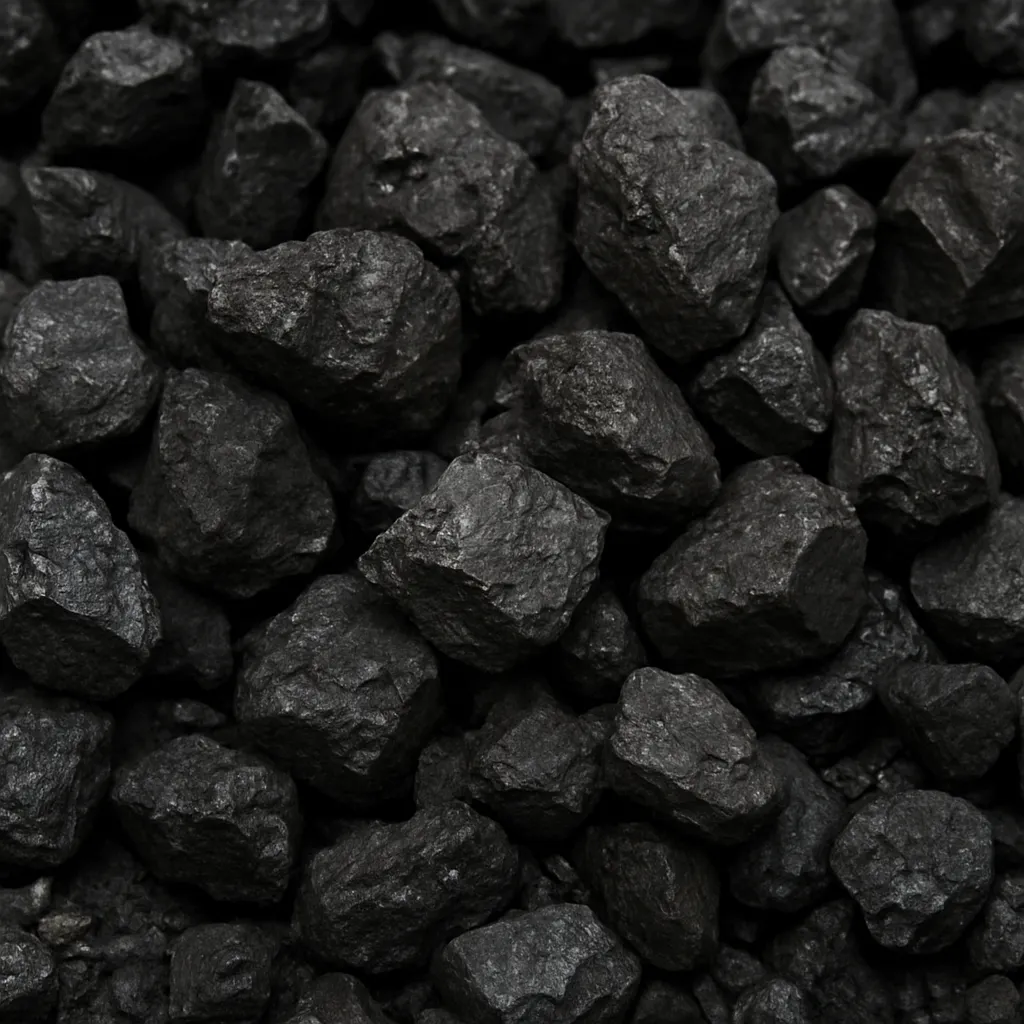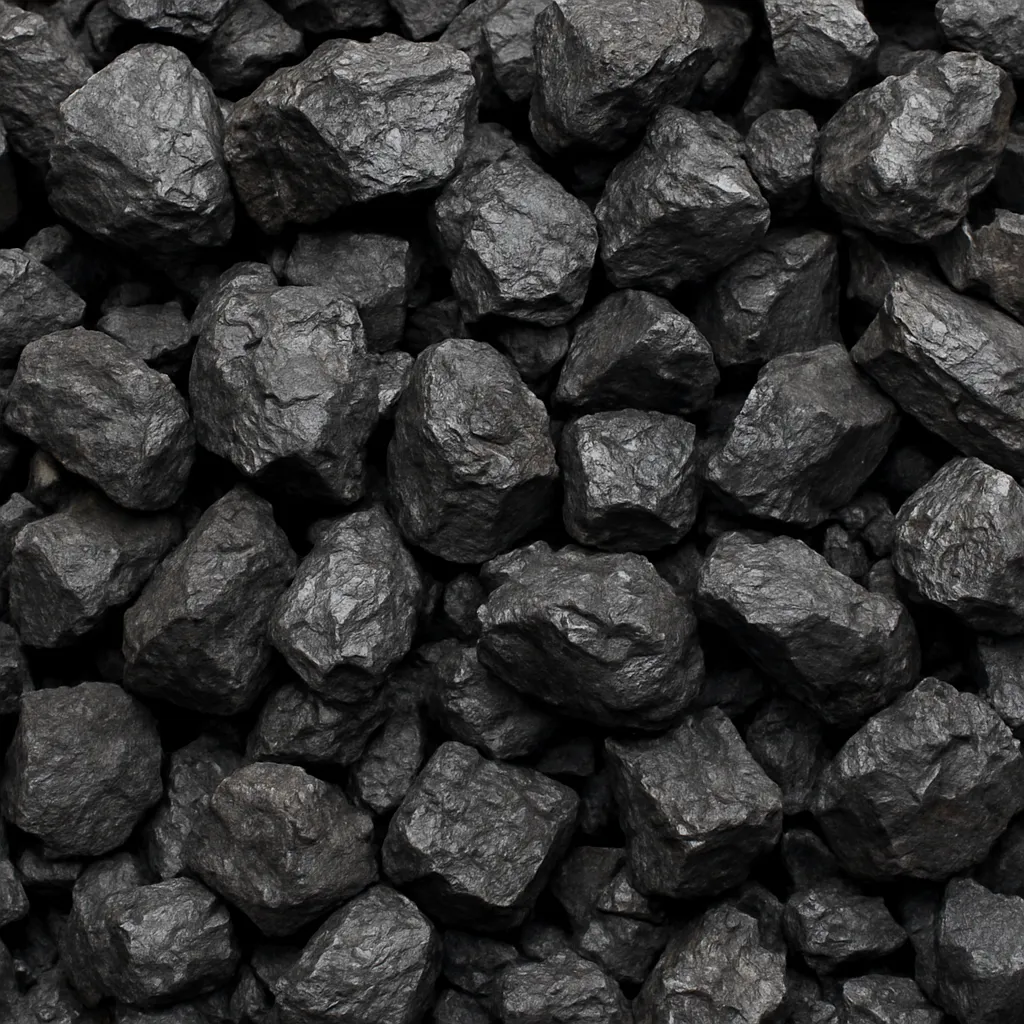
This article examines the characteristics, occurrence, extraction, economic role and industrial significance of hard coking-coal blends — the coals blended and used to produce high-quality metallurgical coke for iron and steel production. It explains why certain coals are preferred, how blends are designed and tested, where these coals are mined and traded, and how market, technological and environmental trends are shaping demand and supply. The text highlights technical properties important to coke-making and steelmaking, trade patterns and some representative statistics and trends as of the early 2020s.
Properties and classification of hard coking-coal blends
The term hard coking coal generally refers to coals that, when heated in the absence of air (coked), soften, undergo plastic flow, then resolidify to form a coherent, porous carbon mass — coke — with high mechanical strength. In industrial practice, metallurgical coke quality is achieved not usually from a single seam coal but from carefully formulated blends of different coals to meet furnace requirements. The blends are selected to develop required coke properties such as strength, reactivity and size distribution after carbonization.
Important coal and coke properties used in blending and specification include:
- Carbon and fixed carbon content — determines the energy and carbon contribution to coke and furnace reactions.
- Volatile matter — influences the plastic range and reactivity during coking; coals with the right volatile matter profile enable plasticity and charge shrinkage/expansion behavior.
- Plasticity and caking ability — measured with tests such as the Gieseler plastometer and dilatometer; plasticity is crucial for forming a coherent coke mass.
- Free Swelling Index (FSI) and Roga index — empirical measures of swelling and coke-making capability that aid blend design.
- Coke Reactivity Index (CRI) and Coke Strength after Reaction (CSR) — key measures of how coke behaves in the blast furnace environment (reactivity to CO2 and residual strength).
- Impurities such as sulfur, phosphorus and ash — high levels harm steel quality or require additional processing.
Coals used in blends fall into categories: premium metallurgical (hard coking) coals that supply plasticity and strength; semi-soft coking coals that contribute volume and reduce cost; and non-coking coals or thermal coals used in small proportions to adjust the overall charge. Foundry and blast-furnace cokes have different targets — foundry coke often needs higher mechanical abrasion resistance; blast-furnace coke needs appropriate strength and low reactivity.
Where hard coking-coal blends occur and how they are mined
High-quality coking coals are not evenly distributed geologically. They are associated with particular coal-bearing basins that underwent the right depositional and maturation conditions to create bituminous coals with caking properties. Major global sources include Australia, Russia, the United States (notably Appalachian basins), Canada (particularly British Columbia and Alberta), Colombia, South Africa and China. Each producing region offers coals with distinct properties, which is why international blending in coke plants is common.
Regional characteristics:
- Australia — among the world’s most important suppliers of hard coking coal. Bowen Basin in Queensland and the Surat Basin are key. Australian HCCs are prized for consistent quality, low sulfur and favorable plasticity characteristics.
- Russia — large reserves in Kuzbass (Kemerovo) and other Siberian basins supply a wide range of coking coals; Russian coals are major export commodities to Europe and Asia.
- United States — Appalachian coals historically provided premium metallurgical coals; production has shifted and new producing areas contribute specialized coals used in blends.
- Colombia — significant exporter of coking and semi-soft coking coals to North America and Europe; Colombian coals often have distinct ash and sulfur profiles.
- China — large domestic coking-coal production to supply its integrated steel industry; quality varies and blending is common within the domestic market.
- South Africa and Canada — produce metallurgical coals with particular attributes that make them useful in blends.
Mining methods vary from large-scale open-pit operations for shallow seams to underground longwall or room-and-pillar mining for deeper deposits. High-quality coking coal extraction often demands careful mine planning to avoid contamination, control ash yields and preserve seam continuity. Washing and preparation plants remove impurities and tailor coal particle size; fines and middlings are managed through sintering, briquetting or use in other processes.
Blending practice and technical testing
Coke ovens require a feed (coal charge) that will produce coke with predictable strength and reactivity. Blending is the art and science of combining coals to meet target coke properties at minimum cost while respecting supply constraints. A typical industrial approach includes:
- Characterizing candidate coals by laboratory tests: proximate/ultimate analysis, Gieseler plastometer, dilatation, FSI, Gray-King, ash fusion, sulfur content.
- Designing blends using trial carbonization tests to measure resultant coke CSR and CRI.
- Adjusting proportions to meet mechanical and chemical specifications for the intended furnace application.
Advanced facilities use statistical modeling and plant-scale pilot ovens to predict how changes in supply or price affect blend performance. The goal is to maintain consistent coke quality for the blast furnace, because variability can reduce furnace productivity and increase operational costs.
Economic and industrial significance
High-quality coke is indispensable for traditional blast-furnace ironmaking. The global steel industry depends heavily on coke for both chemical reduction (carbon monoxide from coke reacts with iron ore) and as a structural material in the furnace burden. Therefore, availability and price of coking coal directly influence steelmaking economics, profitability and supply security.
Key economic aspects:
- Price sensitivity — Metallurgical coal and coke prices are volatile. They are influenced by steel demand, mine disruptions, trade policies, logistics and exchange rates. Price spikes can quickly raise steelmaking costs.
- Trade flows — Because high-quality hard coking coals are scarce in some regions, international trade is robust. Exporting countries with consistent supplies and logistical advantages (e.g., port capacity, shipping distance to major steel markets) enjoy premium market positions; Australia has been the largest exporter of metallurgical coal.
- Downstream dependence — Integrated steel plants with blast furnaces are captive consumers; independent coke producers also supply metallurgical and foundry customers. Disruptions at major coke-oven complexes can affect regional steel supply chains.
- Investment cycles — Development of new coking-coal mines and coal-washing plants can take years and require significant capital; long lead times create market tightness when demand surges.
In financial terms, coking-coal and coke markets have seen cycles of tightness and oversupply. For example, maritime disruptions, floods in producing basins or policy shifts can reduce exports and push prices up sharply; conversely, industrial slowdowns or increased scrap usage in electric-arc furnaces can depress demand.
Production, trade and statistical perspective
Exact numbers vary year by year, but some broad patterns held in the early 2020s:
- Global steel production remains the main driver of metallurgical coal demand. Over half of global crude-steel output is concentrated in a few countries, chiefly China, which also consumes the largest share of coke and coking coal domestically.
- Australia dominates metallurgical coal exports, typically accounting for a major share (often more than 40–50%) of global seaborne coking-coal shipments. Russia, Colombia, the United States and Canada are other significant exporters.
- China produces most of its coking coal domestically but also imports to balance quality and volume needs — imports are a mix of hard coking coal and semi-soft coals used in blends.
Representative price behavior: benchmark prices for premium hard coking coal (Australian HCC) have shown significant swings — multi-year periods of low prices (under USD 150/tonne) and episodes of sharp increases (several hundred USD/tonne) driven by supply constraints or surging steel demand. Similarly, coke prices in major consuming regions track the interplay of supply of both coal and metallurgical-grade coke.
Employment and regional economics: coking-coal mining supports local economies (employment, services, royalties) but also faces social and regulatory pressures. Investment in infrastructure (rail, ports) and mine safety is critical in major producing regions.
Environmental, regulatory and technology trends
The metallurgical coal and coke value chain faces intense scrutiny because of greenhouse gas emissions and local pollution from coking ovens (PAHs, sulfur compounds, particulates). Key trends affecting the sector include:
- Decarbonization of steel — shifts toward electric-arc-furnace (EAF) steelmaking (driven by scrap availability and renewable electricity), and direct reduced iron (DRI) using natural gas or hydrogen, reduce reliance on coke. However, large integrated blast-furnace operations still account for a major share of global steel output, so demand for coke persists.
- Substitution and supplementation — technologies such as pulverized coal injection (PCI) reduce the amount of coke required per tonne of hot metal by substituting pulverized coal; biomass co-injection and the use of metallurgical coke substitutes are subject to technical limits and cost considerations.
- Coke-oven modernization and emissions control — modern coke plants incorporate recovery of coke-oven gas (used for power and chemical feedstocks), sulfur removal, and particulate controls to reduce the environmental footprint and recover value from by-products.
- Carbon capture and storage (CCS) — pilot projects in steelmaking aim to capture CO2 from blast-furnace gas streams; adoption could alter the life-cycle emissions of coke-intensive steel production but requires major investment.
Because of these pressures, many steelmakers are pursuing multi-path strategies: improving blast-furnace efficiency, increasing scrap and EAF capacity where possible, investing in hydrogen DRI pilots, and promoting circularity through scrap collection.
Logistics and supply-chain considerations
The economics of hard coking-coal blends are affected not just by mine-gate quality and price but also by logistics:
- Rail and port capacity — bulk export of metallurgical coal relies on reliable rail networks and port throughput. Bottlenecks can cause regional price premiums or discounts.
- Shipping distances — cost and transit time determine which suppliers serve which markets. Australia’s proximity to Asia gives it a strategic advantage to supply East and Southeast Asian steelmakers; Russia and Colombia serve different trade corridors.
- Quality segregation — keeping different coal qualities separate in logistics is essential; contamination with high-ash or high-sulfur material degrades blend performance.
Inventory management at steelworks — blast furnaces typically require continuous, predictable coke supply. Disruptions in shipping or mine operations force plants to use alternative blends or adjust production schedules, sometimes using higher levels of PCI or scrap to maintain output.
Interesting technical and historical facts
– The classical method of producing coke — by destructive distillation of coal in coke ovens — has been practiced for well over a century. Early industrial regions developed specific coking-coal markets based on local coal seams, and historical blend recipes were guarded as commercial secrets.
– Coke not only supplies carbon for chemical reduction but also provides the mechanical strength that supports the burden inside the blast furnace. Poor-quality coke can cause furnace instabilities and reduce productivity.
– Modern integrated steelworks often operate proprietary coal-blend laboratories where potential coals are tested and pilot cokes are produced to verify performance before shipment of large consignments.
– Coke-oven by-product gas historically supported local chemical industries (ammonia, benzole) and provided fuel for onsite power generation; capturing and monetizing these streams improves overall plant economics and emissions profile.
Outlook and strategic considerations
Near- and medium-term demand for high-quality hard coking-coal blends will continue to be driven by the pace of steel demand recovery, regional investments in new integrated steel capacity, and the rate at which alternative steelmaking technologies (EAF, DRI with hydrogen) scale. Some likely developments:
- Continued reliance on blends — even as new technologies emerge, many plants will continue to require coking coal for years or decades, creating stable niches for premium coal producers.
- Price volatility risk — tight markets and concentrated export supply can produce rapid price swings; consumers and miners manage this through long-term contracts, hedging and diversified sourcing strategies.
- Green premiums — as steelmakers aim to lower carbon footprints, demand could arise for coke produced with lower life-cycle emissions (e.g., using CCS, clean power for coking operations), potentially commanding price premiums.
- Investment in mine and logistic resilience — to ensure supply security, steelmakers and coal suppliers may invest in captive mines, port facilities and strategic stocks of critical coals used in blends.
Concluding remarks
Hard coking-coal blends occupy a strategic position in the traditional steel value chain. Their geological scarcity in some regions, technical role in producing high-quality coke, and sensitivity to market and policy shifts make them a focal point for industry planning. Advances in testing, blending science and emissions-control technologies continue to shape how these coals are used, while long-term decarbonization trends will progressively alter the balance between coke-dependent and coke-free steel production routes. For the foreseeable future, however, high-quality coking-coal blends will remain critical inputs for a substantial share of global steelmaking.