The Bełchatów open-pit coal complex in central Poland is one of the most prominent and consequential mining operations in Europe. Located in the central part of the country, the site has shaped local economies, Poland’s energy mix and environmental debates for decades. This article describes the mine’s location and geology, mining and production practices, economic and social importance, environmental footprint and transition prospects. It includes available statistical and operational information where known and highlights the broader significance of the site for Poland and the region.
Location and geological setting
The Bełchatów mining area lies in the Łódź Voivodeship in central Poland, near the town of Bełchatów and within the administrative district of Gmina Kleszczów. The deposit is part of a larger Miocene lignite basin that stretches across central Poland. The lignite seams exploited at Bełchatów were formed in the Neogene period (Miocene) and are characterized by relatively shallow burial, which makes them amenable to large-scale open-pit extraction.
The deposit is exploited as an open-pit mine, one of the largest of its type in Europe. The lignite (commonly referred to as brown coal) has typical properties of low rank coal: high moisture content, relatively low calorific value and significant volatile matter. These characteristics make the coal particularly suitable for conversion into thermal energy in nearby power stations rather than for export as steam or coking coal. Typical calorific values for lignite in similar deposits range from roughly 8 to 12 MJ/kg depending on moisture and ash content; Bełchatów’s coal is used primarily for bulk, on-site combustion to supply a nearby thermal power complex.
Mining operations, technologies and logistics
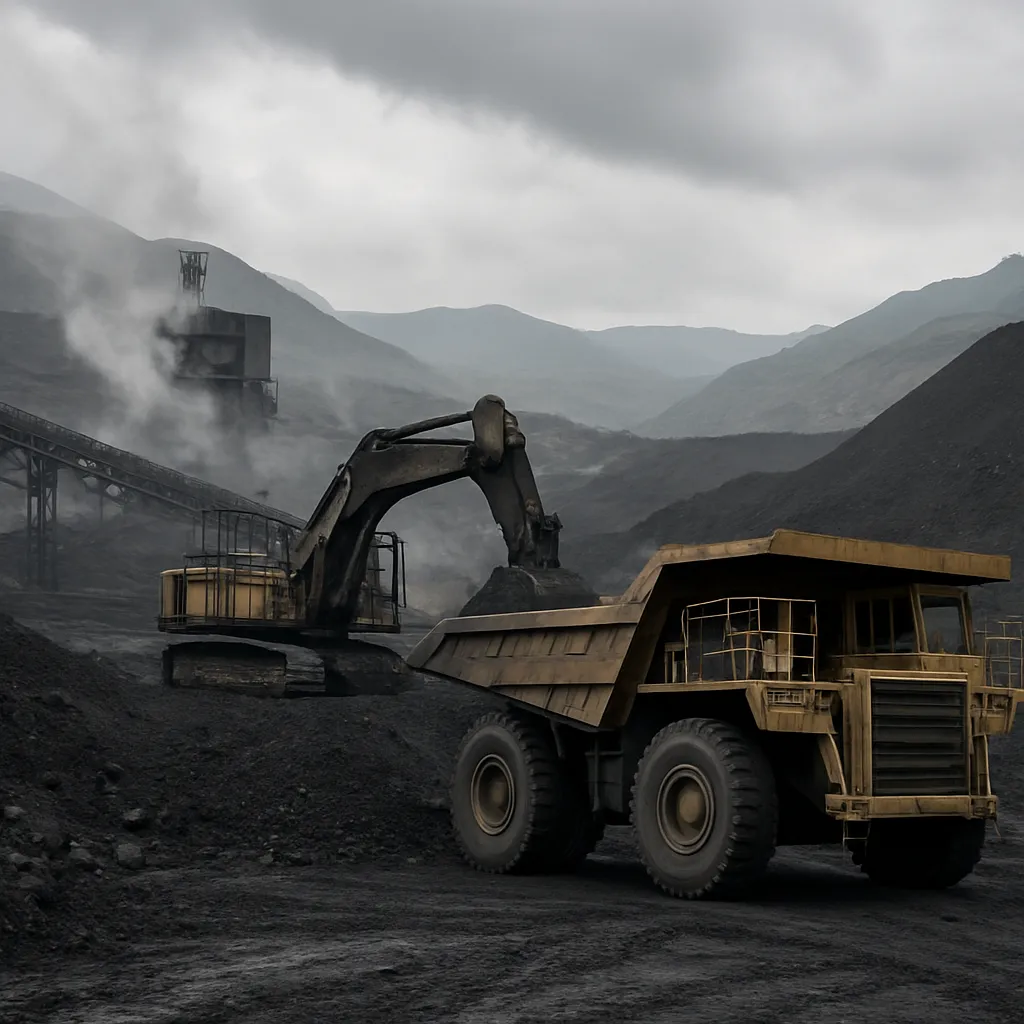
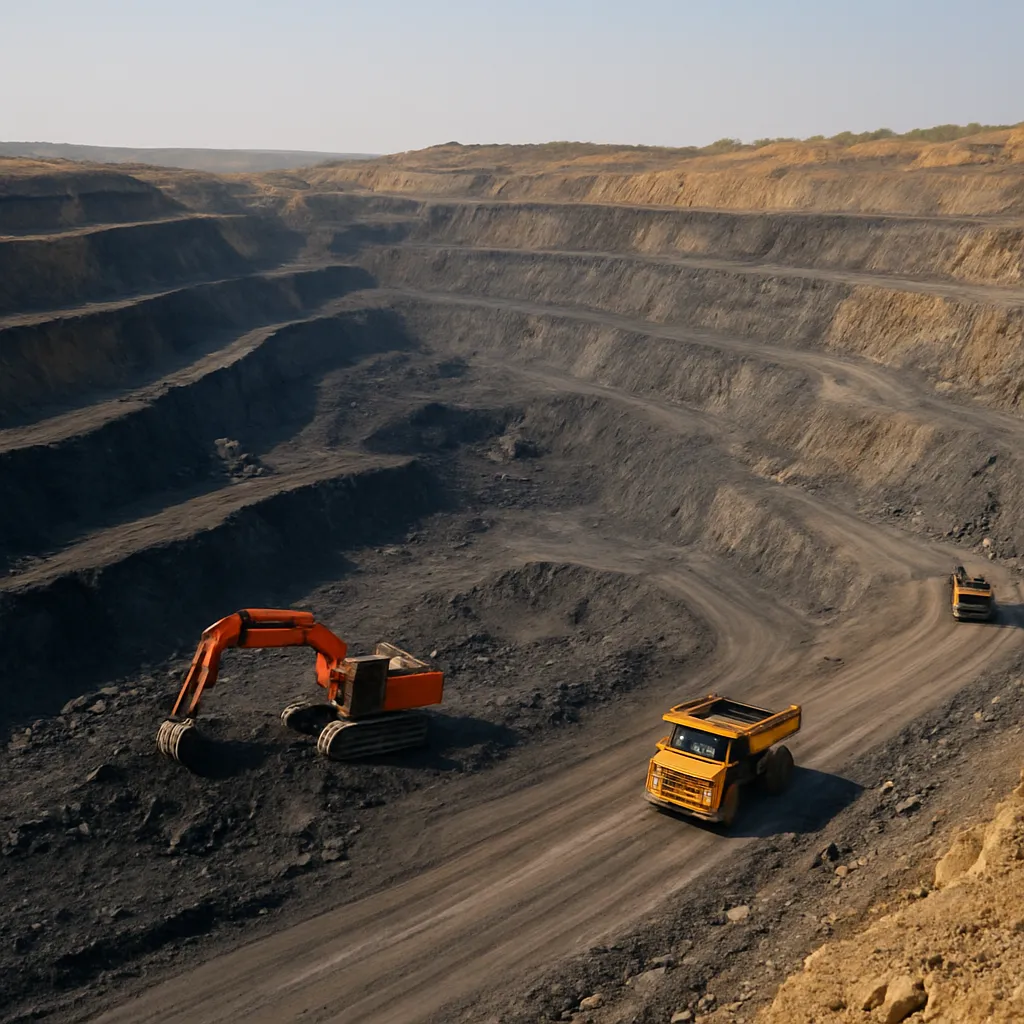
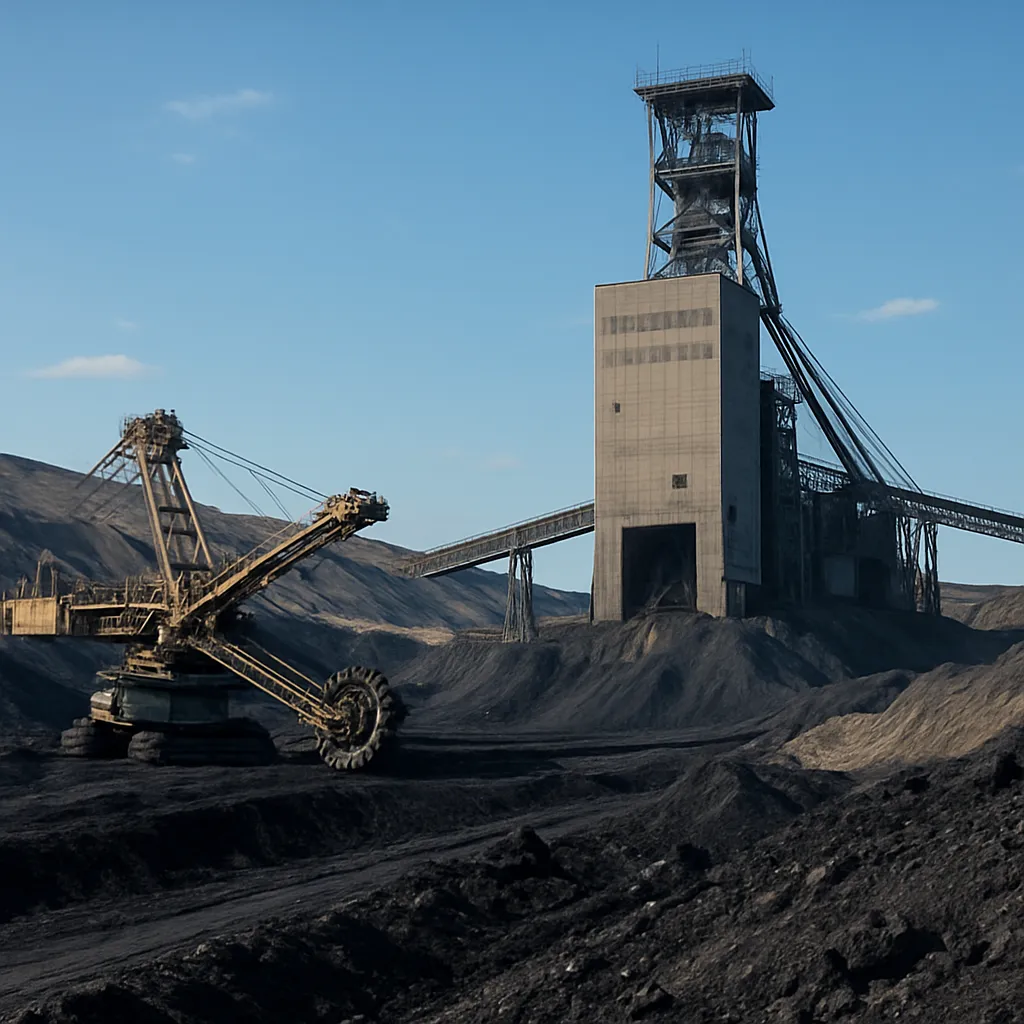
Mining at Bełchatów is carried out using large-scale strip mining methods adapted for deep and extensive lignite seams. The operation relies on a fleet of heavy earth-moving machines: bucket-wheel excavators (BWE), conveyor systems and large dump trucks for overburden removal. Continuous conveyor belts move the mined lignite directly from the extraction face to the processing and transfer points that feed the adjacent power station.
The mine’s logistics are built around an integrated supply chain: extraction → short-distance transport → direct fuel delivery to the power plant. This integration reduces costs associated with long-distance transportation, allowing the plant and mine to operate as a coupled energy complex. The open-pit footprint and the conveyor corridors form a highly engineered landscape that combines heavy industry with surface rehabilitation planning in sectors not currently mined.
Scale and capacity
- Bełchatów is widely recognized as one of the largest single lignite deposits actively mined in Europe. The mine’s annual production has historically been in the range of tens of millions of tonnes.
- The adjacent power complex consumes the majority of the lignite produced, which reduces the need for coal transport beyond the local region and concentrates economic effects locally.
- Equipment scale is comparable to the largest open-pit mines worldwide: multi-megawatt excavators, continuous conveyors stretching several kilometers, and large waste dumps for overburden.
Economic, fiscal and social significance
The Bełchatów mining-power complex is a major economic engine in the region and plays a substantial role in Poland’s national energy sector. Ownership and operation are managed by the national energy group PGE (Polska Grupa Energetyczna) through its generation subsidiary. The combined mining and power operations create direct and indirect economic effects:
- Employment: The mine and associated power plant directly employ several thousand people; when indirect jobs in services, maintenance, transport and local supply chains are included, the employment impact grows substantially. Estimates commonly referenced in public discussion place combined employment in the thousands (often quoted ranges are in the order of 5,000–7,000 for direct workforce across both facility and mine), though numbers fluctuate with mechanization and operational changes.
- Municipal revenues: Local municipalities hosting the mine and plant, such as Gmina Kleszczów, receive significant tax and fee revenues from the energy complex. These inflows have transformed local public finances; some communities near Bełchatów rank among the wealthiest in Poland on a per-capita basis due to industry-related fiscal transfers.
- Energy security and electricity supply: The Bełchatów complex provides a steady baseload supply of electricity for the national grid. The adjacent thermal power plant is often cited as supplying a large proportion of Poland’s electricity, having been a major single-site producer that reduced Poland’s dependence on imported fuels for that portion of demand.
- Industrial linkages: Local supply chains for equipment manufacturing, maintenance, chemical and ash-management services are anchored by the mine and plant, supporting regional industry clusters and service providers.
Because of this economic footprint, any operational changes at Bełchatów have outsized effects on local public budgets, employment and regional development planning.
Statistical overview and energy metrics
While figures vary year to year, the following statistical points summarize the scale and performance of the Bełchatów complex as observed over recent decades and into the 2020s:
- Installed capacity: The nearby thermal power complex associated with the mine has an installed electrical capacity typically reported as approximately 5,000–5,200 MW, making it one of the largest lignite-fired power plants in Europe.
- Annual lignite consumption: Historically, the plant has consumed on the order of tens of millions of tonnes of lignite each year—commonly cited ranges are around 30–50 million tonnes per year, depending on generation levels and plant outages.
- Contribution to national generation: At times of high output, the Bełchatów complex has provided roughly one fifth (around 20%) of Poland’s electricity generation, making it a strategic single-site supplier to the national grid.
- Reserves: The deposit contains hundreds of millions to over a billion tonnes of lignite in proven and probable categories depending on technical and economic cut-offs used; these reserve estimates define the mine life under different production scenarios.
- Fiscal flows: Taxation, land lease payments and other fiscal contributions from the mine and power plant have created sizable local budgets; some municipal budgets in the area are among the highest per capita in Poland due to these revenues.
These numbers are indicative and have varied with market conditions, efficiency improvements, environmental regulations and operational decisions made by the owners.
Environmental impact and mitigation
Bełchatów’s scale makes its environmental footprint significant and multi-faceted. The most consequential environmental issues include greenhouse gas emissions, local air quality, water use, land transformation and biodiversity impacts.
- CO2 emissions: The power complex has been among the largest single-site emitters of CO2 in Europe. Emissions have been measured in the order of tens of millions of tonnes per year (historically exceeding 20–30 million tonnes in periods of high output). This has made the site central to national and international debates over decarbonization and Poland’s climate commitments.
- Local air pollutants such as particulates, sulfur and nitrogen oxides have been managed through large-scale flue-gas cleaning installations, but emissions remain a concern for local air quality indices.
- Land and water: The open-pit excavation substantially alters landscapes and groundwater regimes. Excavation requires dewatering and changes to local hydrology, which have consequences for agriculture and ecosystems unless carefully mitigated. Overburden management and progressive reclamation are long-term tasks that accompany mining operations.
- Reclamation efforts: Areas no longer used for mining are subject to reclamation plans. These include proposals and projects to convert some post-mining areas into lakes, parks, forested land or sites for renewable energy installations (for example, photovoltaic arrays on reclaimed benches or tailing areas).
- Relocation and social effects: In the past, the expansion of the mine required the relocation of settlements and infrastructure. Social compensation and the re-settlement process are complex and often emotionally charged aspects of large mining operations.
Decarbonization, future scenarios and repurposing options
As Poland and the EU press forward with climate goals and energy transition strategies, the future of Bełchatów is subject to a range of technical, economic and political choices. Key transition pathways under discussion include the following:
- Gradual phase-out of lignite: Policy choices could reduce lignite extraction over time, with a planned shift away from coal-fired generation across the grid. National timelines and company strategies will determine the exact sequence and pace; public statements and EU policy increasingly push toward decreasing coal dependence through the 2030s and 2040s.
- Carbon capture and storage (CCS/CCUS): Technical pilots and feasibility studies have been discussed that would attempt to capture flue-gas CO2 for storage or utilization. CCS would be technically complex and costly at the scale of Bełchatów, requiring significant investment and regulatory support.
- Co-firing and fuel switching: Blending biomass or alternative fuels with lignite or retrofitting to gas-based units are options to reduce carbon intensity. These approaches are usually transitional rather than long-term decarbonization solutions.
- Post-mining repurposing: Several creative proposals have been advanced for the post-mining landscape, including converting the pit into a reservoir suitable for pumped-storage hydropower, establishing large-scale photovoltaic farms on reclaimed benches, or developing industrial parks which could utilize existing grid connections and infrastructure. Each option requires feasibility studies and consideration of hydrology, geotechnics and economics.
- Socio-economic transition: Given the mine’s role in local budgets and employment, transition planning emphasizes retraining, local economic diversification and investments to offset revenue losses for municipalities when mining activity reduces.
Interesting facts and broader significance
The Bełchatów complex has several attributes that make it noteworthy beyond raw production numbers:
- Scale: The integrated mine-plus-plant model provides an instructive case study in how fuel supply geometry (short-distance supply) can lower operational costs and centralize economic benefits.
- Local wealth: Some communities near the operation are unusually affluent by Polish standards due to concentrated tax revenues—a paradoxical outcome given the industrial nature of the site.
- Role in national debates: Bełchatów is often cited in Polish and European discussions about the affordability, security and decarbonization of energy systems because changes there have outsized effects on national energy statistics and emissions.
- Technical demonstrations: The site has been used for trials of emission control, ash utilization (e.g., construction materials) and renewable installations on reclaimed land, demonstrating options for post-mining economic uses.
Challenges and pathways for stakeholders
Key challenges faced by stakeholders include balancing energy security with climate commitments, maintaining regional economic stability during transitions, and implementing technically sound reclamation and repurposing plans. Practical steps and considerations include:
- Developing clear, phased timelines for reducing lignite use with stakeholder engagement (workers, local government, national regulators).
- Financing retraining programs and economic diversification projects through transition funds, EU cohesion funds and repurposing revenues.
- Evaluating large infrastructure reuse, such as converting grid connections and industrial sites for renewable energy projects or new industrial uses to retain local employment.
- Investing in environmental remediation and long-term monitoring to repair hydrological and ecological damage while preparing land for new uses.
Summary and outlook
The Bełchatów coal mine and its adjacent power complex represent an industrial giant whose influence extends from local municipal budgets to Poland’s national energy profile and Europe’s climate discussions. As an integrated lignite-fueled system run by PGE, it has delivered large volumes of electricity, created local jobs and fiscal benefits, and reshaped the landscape through extensive open-pit operations. At the same time, the complex is a major source of CO2 emissions and presents significant environmental and social challenges that are central to Poland’s broader energy transition.
Future paths for Bełchatów range from continued operation with emissions mitigation measures to staged phase-out and large-scale repurposing of the mine area. Key outcomes will be determined by national policy on coal, EU climate regulations, economic incentives for clean energy and the success of local transition planning. Regardless of the scenario, the site will remain an important case study in how large, legacy fossil-fuel operations can be managed through the technical, economic and social challenges of the 21st century.
Selected highlighted terms: Bełchatów, PGE, lignite, open-pit, power plant, electricity, CO2 emissions, Kleszczów, jobs, reserves.