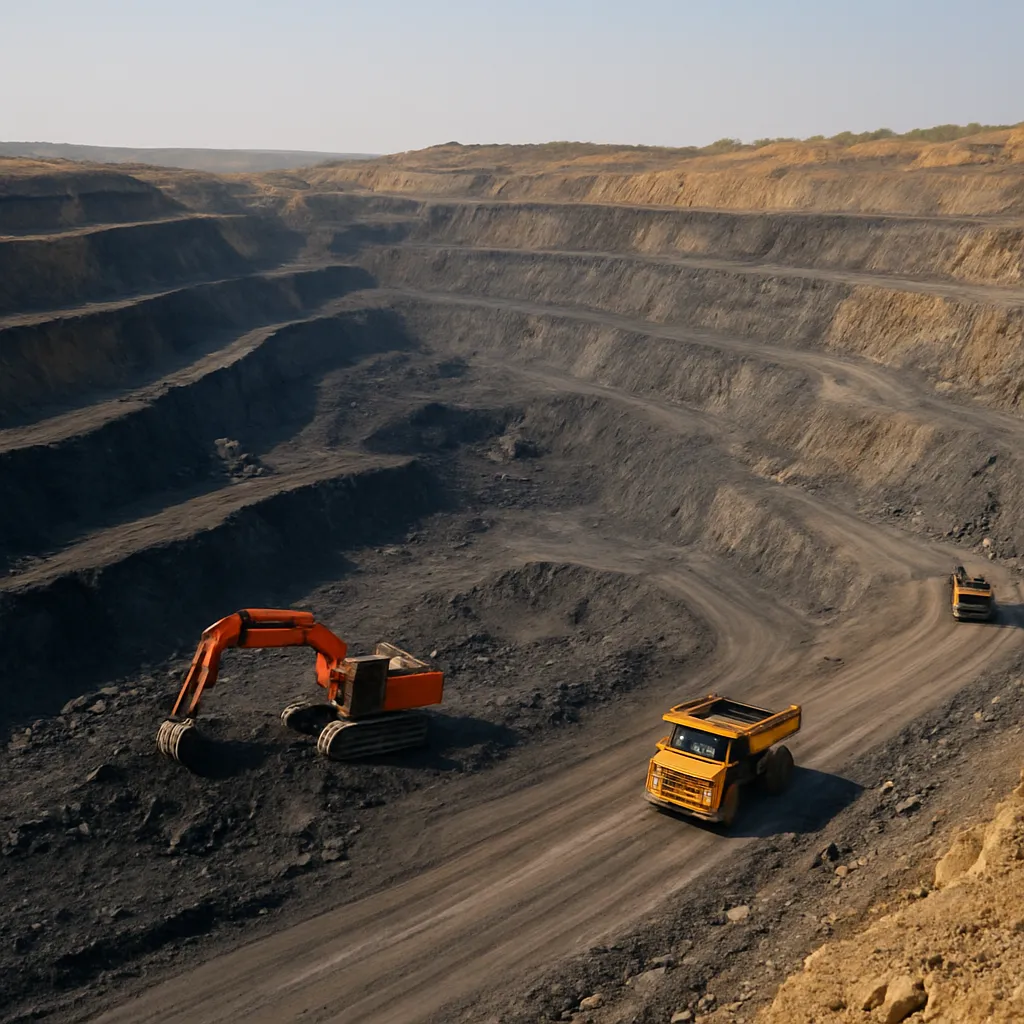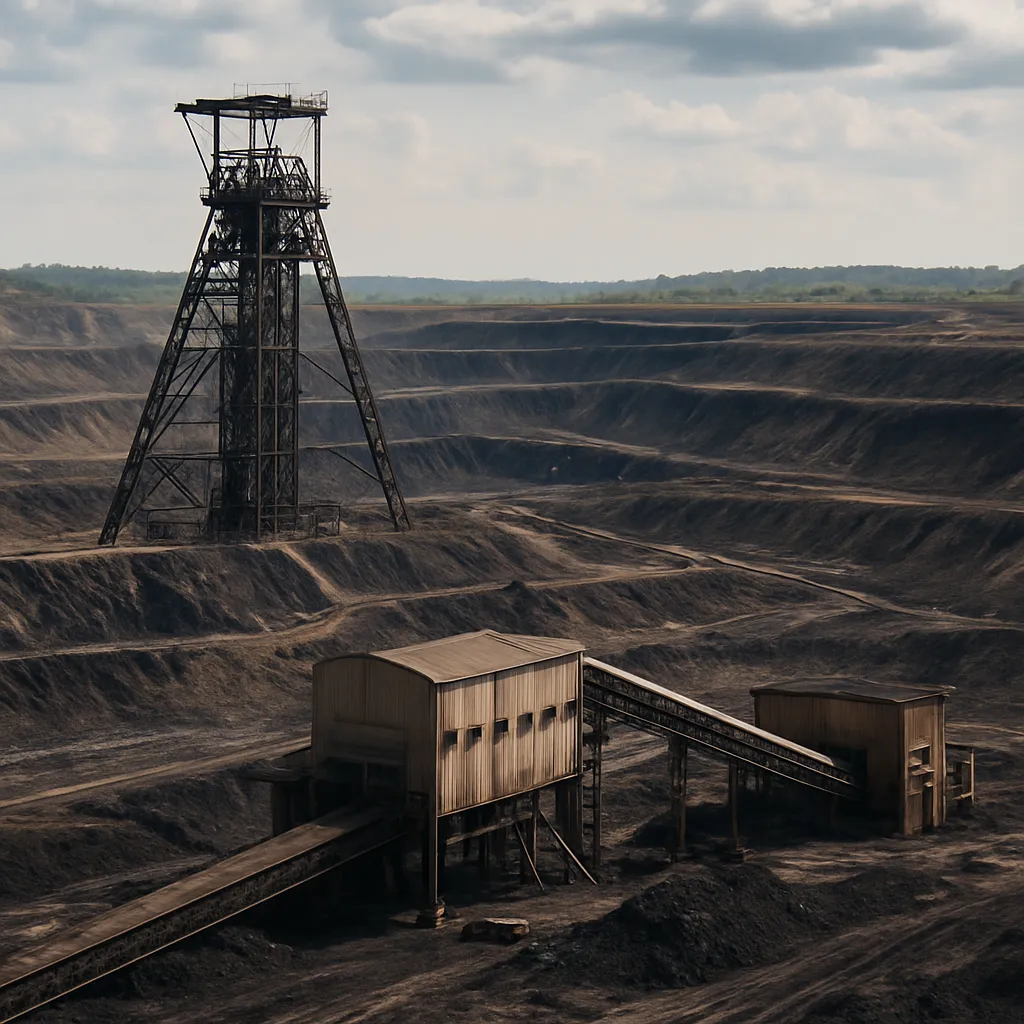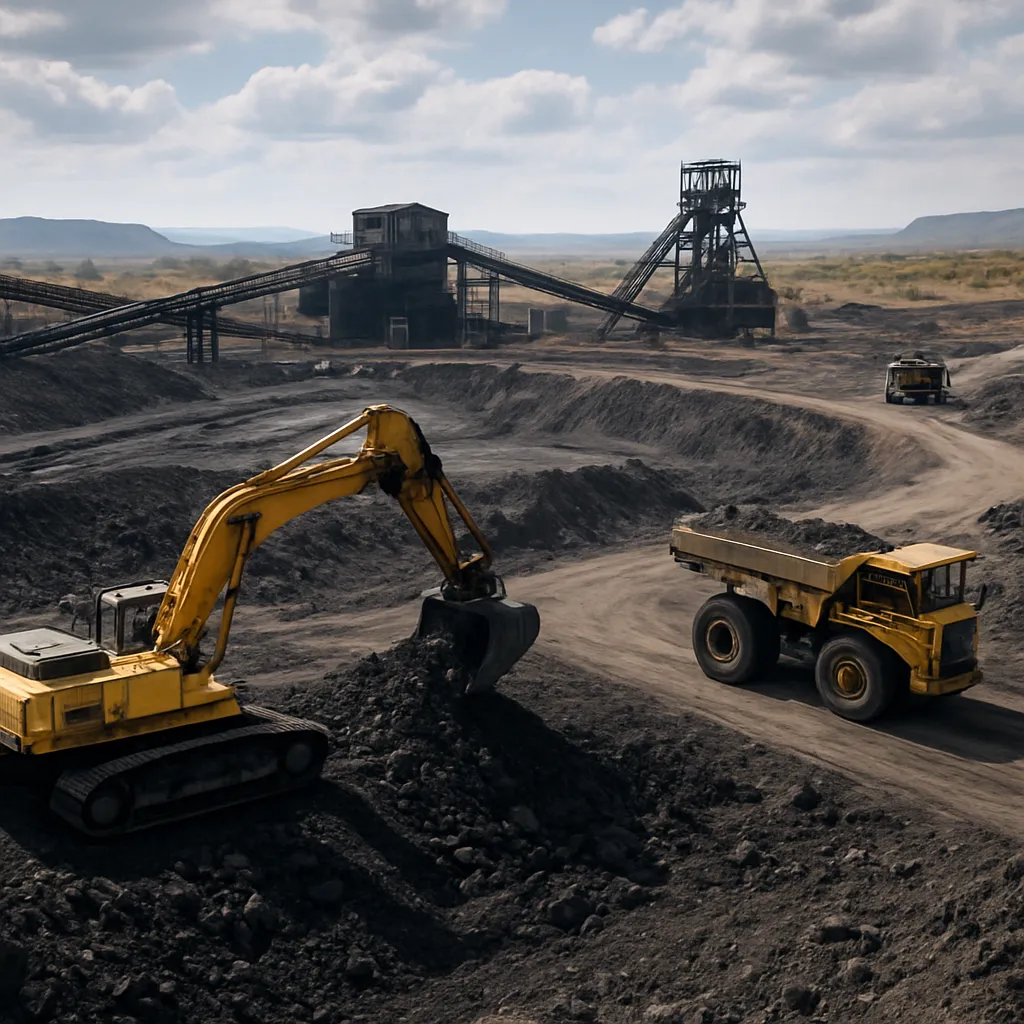
The Belfast coal mine, situated in South Africa’s Mpumalanga province near the town of Belfast, is part of one of the country’s most important coal-producing districts. This article examines the mine’s geological setting, the kinds of coal produced, mining methods, economic and industrial significance, environmental and social impacts, and the likely future trajectory of coal activity in the region. The discussion combines local context with regional statistics and industry patterns to give a comprehensive picture for readers interested in energy, mining, and regional development.
Location and geological setting
The Belfast mine lies within the broader Highveld coalfields of Mpumalanga, a region often described under the historic coalfield names of Witbank (Emalahleni), Belfast and Ermelo basins. The area is part of the Karoo Supergroup strata, specifically coal-bearing sequences that geologists commonly associate with the Vryheid Formation. Coal seams in this part of South Africa developed during the Permian period and are typically found within sedimentary layers that also contain shales, mudstones and sandstones.
Geological characteristics
- Coal seams: Multiple seams occur, with variable thickness; many workable seams are continuous across wide areas in the basin.
- Coal rank: The coals are generally medium- to high-rank bituminous coals suitable primarily for thermal applications (power generation) and, in some instances, for industrial uses after beneficiation.
- Mineralogy: Typical constituents include organic carbon with variable levels of mineral matter (ash), sulfide minerals such as pyrite, and traces of other elements (e.g., sulfur, trace metals) that influence quality and environmental management.
- Hydrogeology: The mined strata are interbedded with aquifers and aquitard layers, meaning dewatering and groundwater management are relevant operational considerations.
The Belfast area is geologically representative of the broader Mpumalanga coalfields, where coal deposition occurred in extensive fluvial-deltaic to peat-forming environments. The coal seams are overlain and underlain by sedimentary rocks that influence seam stability and mining method choice.
Mining operations and coal characteristics
Mining at Belfast-like operations typically involves a mixture of underground workings and opencast (open-pit) methods, depending on seam depth, thickness, and continuity. Over the decades, technological improvements have increased mechanization and productivity in the region while also changing the engineering and environmental profile of operations.
Mining methods
- Opencast mining: Where seams are near surface, large-scale opencast operations are used; these allow for high daily throughput and economies of scale but require extensive land disturbance and rehabilitation.
- Underground mining: For deeper seams or those with complex overburden, room-and-pillar or bord-and-pillar and longwall methods are used depending on seam geometry and safety considerations.
- Processing: Raw coal is typically crushed, screened and, where necessary, beneficiated to reduce ash and sulfur and to upgrade calorific value for specific markets.
Coal from the Belfast area is generally marketed as thermal coal. Typical analyses for Highveld/Witbank-area coal place calorific values in a range roughly between 18 and 28 MJ/kg on an as-received basis, with ash content varying widely (commonly 10–35%) and sulfur contents that can be moderate. These characteristics make the product attractive for domestic power generation and for export after beneficiation and blending.
Logistics and value chain
- Transport: Coal is transported by road or rail to domestic customers or export terminals. The main export outlet for Mpumalanga coal historically has been the Richards Bay Coal Terminal (RBCT), accessible via South Africa’s rail network.
- Customers: Major consumers include Eskom (the national power utility), domestic industrial users (cement, steel, chemicals), and international buyers via export shipments.
- Value-adding: Coal can be sold raw for power generation or beneficiated into higher-grade thermal or semisoft coke products for industrial processes.
Economic and industrial significance
The Belfast coal mine and the surrounding Highveld coalfields play a central role in South Africa’s energy and industrial systems. Coal is the backbone of South African electricity generation and a significant export commodity, and mines in Mpumalanga supply a large portion of national demand.
Contribution to electricity and industry
- Electricity: A very substantial share of Eskom’s coal supply historically originated in Mpumalanga. Coal-fired power stations rely on consistent supplies of thermal coal with predictable calorific value and quality.
- Industrial feedstock: Some coal from the region is used by local industries for heat, process energy, and as a feedstock for chemical processes.
- Exports: Regional coal contributes to South Africa’s coal export volumes, which are an important source of foreign exchange earnings.
At a national level, coal has been responsible for roughly 70–90% of South Africa’s electricity mix over the last few decades, though that share has begun to change with the growth of renewables. Mpumalanga’s output is especially critical: the province produces the majority of national coal output and hosts many of the country’s coal-fired power stations. For local economies, mines like Belfast provide direct and indirect employment and are a major source of regional fiscal revenues through taxes, royalties and service contracts.
Employment and regional development
Mining operations support local employment in direct roles (miners, engineers, geologists, machine operators) and in indirect roles (transport, maintenance, retail services). While precise employment numbers for a specific mine can vary with commodity cycles and operational scale, medium-sized collieries in the region commonly employ several hundred to a few thousand workers when including contractors and associated services. The sector’s multiplier effects support schools, clinics and local businesses, but they also create dependence on a single commodity-driven economy.
Statistics and data (regional and national context)
Detailed, mine-level production figures for specific collieries such as Belfast are sometimes proprietary or change frequently. However, a summary of regional and national figures provides useful context.
- National production: South Africa’s annual coal production has historically ranged between about 220 and 260 million tonnes per year in the late 2010s and early 2020s, though annual volumes fluctuate with demand, export opportunities and operational constraints.
- Regional share: Mpumalanga produces the bulk of South Africa’s coal—commonly cited at around 70–80% of national output—because of the concentration of large, accessible seams in the Highveld/Witbank basins.
- Exports: Coal exports from South Africa have been in the order of 70–80 million tonnes per year in active years, though export levels vary with global demand, shipping capacity, and domestic consumption needs.
- Domestic supply: Eskom consumes a substantial domestic share of annual production; in many years Eskom’s coal consumption has exceeded 150 million tonnes annually, though this number fluctuates with plant retirements, operational availability and shifts to other energy sources.
- Typical mine scale: Individual large opencast collieries in Mpumalanga can produce several million tonnes per annum, while smaller or underground operations might produce hundreds of thousands to one million tonnes per annum. Exact figures for Belfast depend on the site’s operational status, ownership and life-of-mine planning.
These figures show why Belfast-type mines are strategically important: even modest production at a single mine contributes both to local livelihoods and to national energy security.
Environmental and social impacts
Coal mining in the Belfast area shares many of the environmental and social challenges common across coal-producing regions globally. Addressing these issues is central to responsible mine management and to meeting national regulatory requirements.
Environmental considerations
- Land disturbance and rehabilitation: Opencast operations require removal of overburden, reshaping of landforms and progressive rehabilitation to reduce long-term impacts.
- Water impacts: Mining can affect local groundwater levels; dewatering, effluent discharge and opportunities for acid mine drainage (AMD) require continuous monitoring and treatment systems to protect rivers and downstream users.
- Air quality: Dust from haul roads, stockpiles and processing can affect air quality; particulate matter control is an operational focus.
- Greenhouse gases: Coal extraction, processing and use contribute to CO2 and methane emissions, making coal mines and coal-fired power generation central to national climate discussions.
Social and community issues
- Employment volatility: Mines can be a major employer, but closure or production cutbacks cause acute local economic stress.
- Health and safety: Mining is intrinsically hazardous; occupational health programs and safety practices are essential for worker welfare.
- Land use conflicts: Agricultural uses, residential expansion and conservation values can be affected by mine footprints and infrastructure.
- Community engagement: Best practice involves meaningful consultation, community development programs and transparent benefit-sharing arrangements.
Regulatory frameworks in South Africa require environmental impact assessments, water-use licenses and mine closure planning, and recent years have seen stronger public scrutiny and legal enforcement around post-mining rehabilitation and AMD remediation.
Interesting historical and technical notes
The Belfast coalfield is part of a long history of South African coal mining that underpinned early industrialisation and continues to shape regional settlement patterns. Historically, small-scale mining and local colliery towns developed where seams were shallow; later, mechanization and rail-based logistics supported much larger-scale extraction and the rise of interconnected regional supply chains.
- Rail and port integration: The integration of rail, road and port (especially RBCT) logistics enabled South Africa to become a competitive global coal exporter for many decades.
- Beneficiation and technology: Advances in coal washing and beneficiation have allowed lower-quality coals to be upgraded for higher-value markets, increasing flexibilty for mines in the Belfast/Witbank area.
- Mine life: Many collieries have complex long-term plans based on reserves, seam quality and economic factors; life-of-mine planning includes staged rehabilitation and progressive environmental management.
Future outlook: economics, policy and transitions
The future of coal mining in Belfast and Mpumalanga will be shaped by several interacting trends: global energy market dynamics, domestic policy on energy security and climate commitments, technological change in coal use and emissions control, and local socio-economic priorities.
Key drivers
- Energy transition: As South Africa pursues renewable energy and considers reductions in coal dependence, demand for thermal coal could decline over decades, affecting long-term mine planning.
- Domestic energy security: Despite the energy transition, coal remains critical to current electricity supply; managing a reliable transition that maintains energy security is a core policy challenge.
- Carbon pricing and regulation: International and domestic carbon policies could raise operating costs for coal-fired generation and for coal producers, increasing pressure to reduce emissions or shift to cleaner alternatives.
- Rehabilitation and just transition: Policies that support worker retraining, local economic diversification and funded mine rehabilitation are increasingly prominent to ensure socially equitable outcomes.
From an investor and operator perspective, the economic viability of Belfast-area mining will depend on coal quality, extraction costs, logistics reliability, environmental compliance costs and market prices. Short- to medium-term demand for South African thermal coal may persist through domestic consumption and export markets, but longer-term trajectories are less certain and will be influenced strongly by global decarbonisation pathways.
Concluding observations
The Belfast coal mine and its regional peers remain central to Mpumalanga’s economy and to South Africa’s energy system. Characterised by bituminous thermal coal within the Karoo-related strata, operations in the area supply domestic power stations, industrial consumers and export markets. While specific production figures for an individual mine like Belfast can vary, the broader region produces the majority of South Africa’s coal—supporting electricity generation and earning export revenue.
Environmental management, community engagement and strategic planning for a low-carbon future are the principal challenges facing Belfast-area operations. Successful adaptation will involve improving operational efficiency and environmental performance today, while also preparing for an economic transition that supports workers and communities. The Belfast mine thus exemplifies both the historic importance of coal to South Africa and the complex choices ahead as the country balances energy needs, economic development and environmental responsibility.