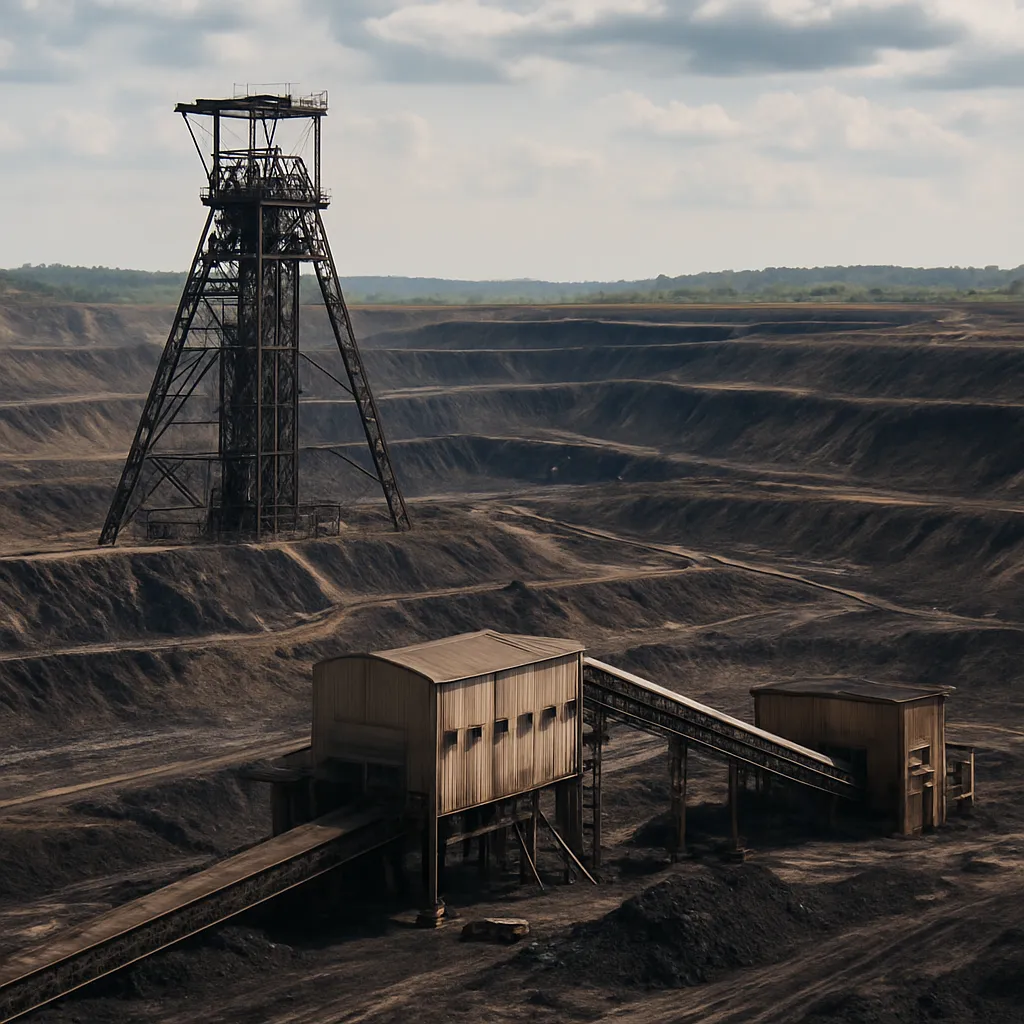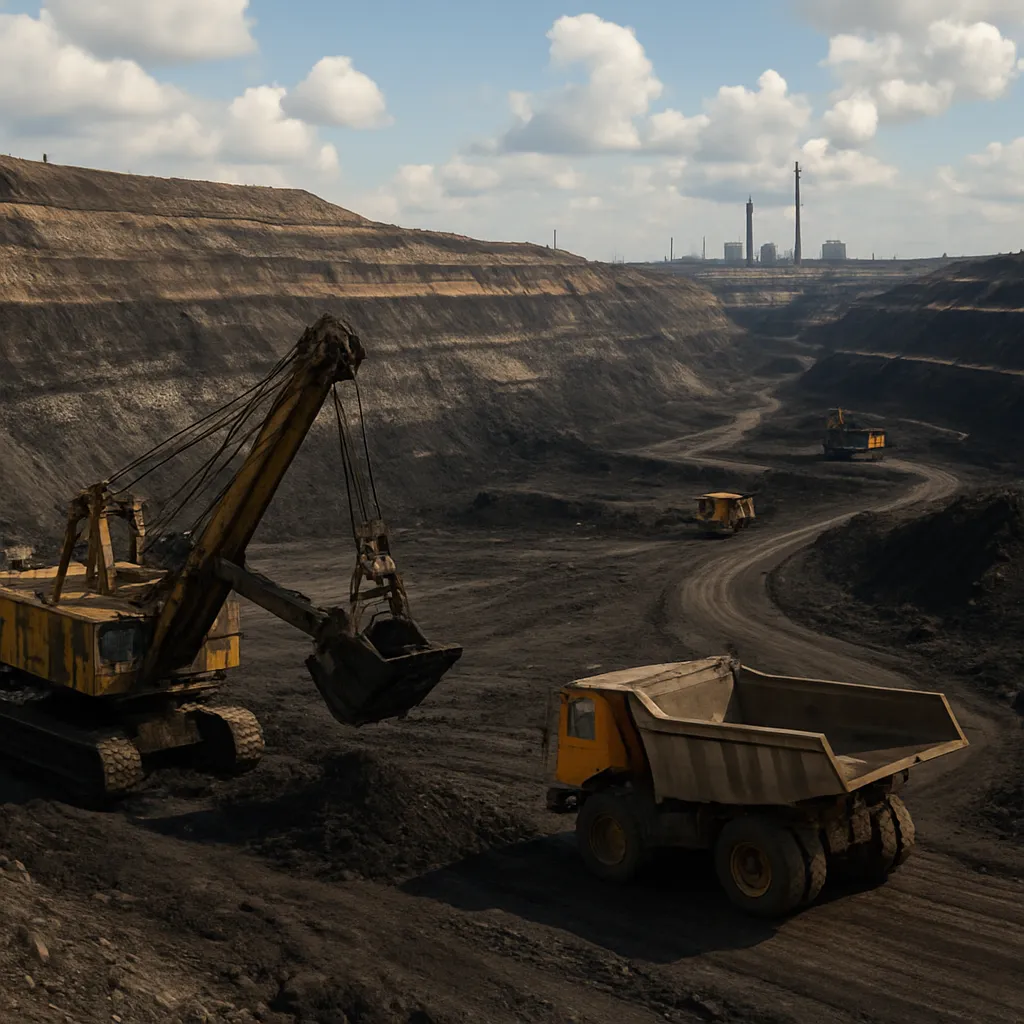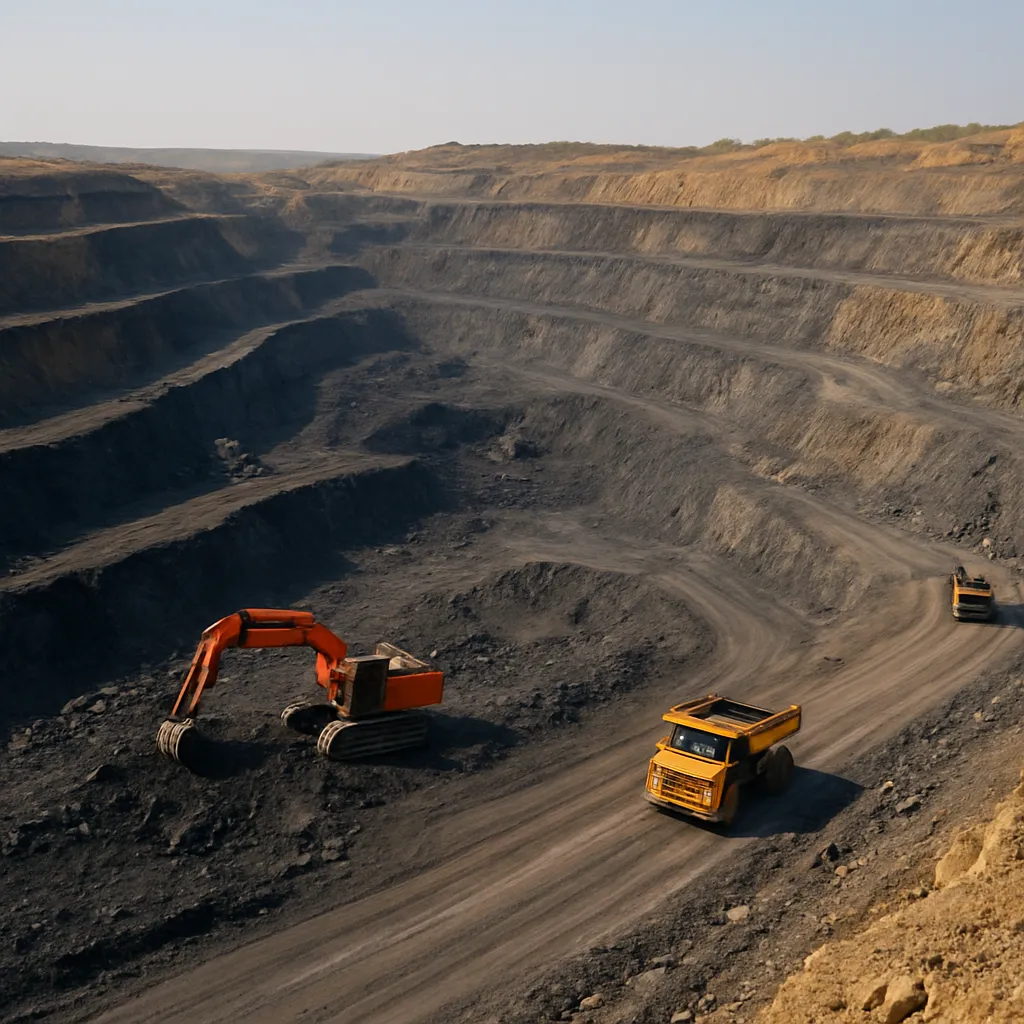
The Jhimpir mining area in southern Pakistan occupies a niche but important place in the country’s mineral and energy landscape. Located within the broader sedimentary basins of Sindh, Jhimpir features coal occurrences that have been exploited on a local scale and that intersect with Pakistan’s broader debates about energy security, industrial fuel supply, and environmental management. This article reviews the location, geology, mining methods, coal properties, economic role, environmental impacts, infrastructure links and future prospects of the Jhimpir coal resource. Throughout the text several central concepts are highlighted to guide the reader toward the most significant points.
Location and Geological Setting
The Jhimpir area lies in the southern province of Sindh, Pakistan, within or near Thatta District and relatively close to the coastal belt and the major urban center of Karachi. The site is more widely known for the nearby Jhimpir Wind Corridor — a concentrated cluster of wind farms that illustrates the region’s importance to Pakistan’s growing renewable sector. However, the sedimentary geology of the region also hosts small to moderate coal deposits, which are part of the larger thermal-coal bearing sequences of the Lower Indus Basin.
Geologically the coal in and around Jhimpir belongs to younger Cenozoic to late Mesozoic sedimentary sequences in the Indus Basin. These deposits are typical of low- to medium-rank coal fields across Sindh: seams of lignite to sub-bituminous quality, interlayered with clays, sandstones and other shallow marine to fluvial sediments. Coal seams in this part of Sindh commonly appear at shallow depth and are amenable to surface or shallow excavations rather than deep underground mining.
Compared with Pakistan’s flagship deposit — the vast Thar coalfield in Tharparkar (often cited with reserves in the hundreds of billions of tonnes) — Jhimpir’s coal endowment is modest. Publicly accessible, detailed reserve estimates specifically for Jhimpir are limited. The deposit is best described as a localized resource with potential to supply nearby industrial and power consumers rather than a national-scale bulk supplier.
Mining Operations and Methods
Mining in Jhimpir has historically been small- to medium-scale and primarily surface-based. Typical extraction methods include:
- Open-pit or strip mining where seam geometry and shallow depth permit economical removal using excavators, dozers and trucks.
- Small-scale mechanized or semi-mechanized operations servicing local customers (brick kilns, small thermal plants, cement and lime industries).
- In limited sections, shallow underground mining may be used if surface overburden makes open cast uneconomical, but such operations are less common in the Jhimpir area.
Operationally, Jhimpir mines focus on quick removal of seam material, basic coal washing or sizing where needed to reduce impurities, and direct transport to local industries. Because of the proximity to coastal and urban markets, transport tends to be by road; in some cases rail connection options exist or are considered depending on scale. Safety and mechanization levels vary across operators, reflecting the mixture of private smallholders and occasional larger contractors.
Production volumes at Jhimpir have historically been limited in comparison with major national mines. While there is no consistent public production series specifically for Jhimpir available in open literature, small Sindh coal mines of this type often produce in the low hundreds of thousands of tonnes per year or less at peak, with many years of intermittent output linked to local demand cycles.
Coal Characteristics and Uses
Coal from Jhimpir falls within the lower-rank categories commonly found in southern Pakistan. Key characteristics include:
- Rank: predominantly lignite to sub-bituminous. These coals have relatively low calorific value compared to high-grade bituminous or anthracite coal.
- Calorific Value: generally in the range of approximately 8–20 MJ/kg (this is an approximate band reflecting the transition from lignite to sub-bituminous quality).
- Moisture and Volatile Matter: elevated moisture and high volatile content are typical of low-rank coals, which affects combustion behavior and handling.
- Ash and Sulfur: ash content can be variable; some lower-rank Sindh coals have high ash, while sulfur content may range from low to moderate depending on stratigraphy and local geology.
Because of these properties, Jhimpir coal finds its most efficient applications in near-field uses where transportation losses and impurity penalties are minimized. Common end-uses include:
- Fuel for brick kilns and local industrial boilers.
- Fuel input for small or captive thermal power units sized to local demand.
- Use in cement and lime kilns where certain impurities are less critical or can be tolerated in blends.
When economic and technical conditions permit, Jhimpir coal can be blended with higher-grade coals to improve combustion characteristics in larger thermal plants, but such blending requires logistics and quality control that small-scale operations may not always provide.
Economic and Industrial Significance
Though reserves at Jhimpir are not equivalent to major national deposits, the mine contributes to both the local economy and Pakistan’s broader objective of increasing indigenous energy resources. Key economic points:
- Local employment: mining operations and downstream activities (transport, processing, brick making) provide direct and indirect jobs in a region with otherwise limited industrial employment opportunities.
- Fuel security: Jhimpir supplies industrial fuel that reduces the immediate need for imported fuels such as furnace oil for nearby consumers, translating into local cost savings and reduced import pressure.
- Value chain effects: the coal industry supports ancillary services — equipment maintenance, transport operators, small-scale coal trading and processing facilities.
At the national level, Pakistan’s energy matrix has historically depended heavily on imported oil and liquefied natural gas; therefore, even modest domestic coal production contributes to diversification and potential price stabilization. However, Jhimpir’s scale means its contribution is marginal relative to very large projects under development in Thar and other larger collieries.
Some economic studies emphasize that harnessing local coal resources effectively requires investment in processing and emissions control technologies, predictable mining regulations, and integration with local industry to maximize socioeconomic benefits.
Infrastructure, Transport and Market Linkages
Jhimpir’s relative advantage lies in location — closeness to coastal transport routes and major industrial hubs like Karachi. This proximity gives Jhimpir potential logistical benefits:
- Shorter road transport distances to local cement plants, brickworks and small power units.
- Possibility of linking to regional rail lines for larger-scale dispatches, subject to investment and rail availability.
- Access to ports for limited export opportunities if coal quality and market conditions justify it, though most Jhimpir coal is best used locally.
Market dynamics for Jhimpir coal are determined by local demand, price competitiveness against imported fuels, and the capacity of buyers to handle lower-rank coal (requiring suitable boiler and furnace technology). In the longer term, improvements in logistics, quality control and aggregation of supply from nearby small mines could create a more robust commercial corridor for Sindh coals serving provincial industries.
Environmental and Social Impacts
As with all fossil-fuel extraction, coal mining in Jhimpir presents environmental and social challenges that merit careful management. Primary concerns include:
- Air quality impacts: dust from blasting, loading and transport, plus emissions from coal combustion at end-user sites.
- Water management: surface disturbance, groundwater table changes and the potential for runoff carrying fine coal particles or sediment into local waterways.
- Land use: removal of overburden changes local landforms; reclamation must be planned to restore or repurpose mined areas.
- Health and livelihoods: mining can introduce respiratory risks and other occupational hazards; simultaneously, it can support livelihoods and local commerce.
Mitigation and best practices include dust suppression (spraying and covered conveyance), progressive reclamation of mined areas, strict water management and treatment systems, community engagement and investment in local health and education programs. In Pakistan’s policy debates, balancing the short-term economic benefits of coal production with long-term environmental sustainability remains central.
Regulation, Governance and Policy Context
Mining operations in Jhimpir are subject to provincial and federal regulations governing mineral extraction, environmental protection and labor standards. Policy trends affecting Jhimpir include:
- Pakistan’s push to exploit indigenous coal resources to improve energy security, most visibly manifested in major Thar development projects.
- Increased environmental scrutiny and calls for emissions controls and reclamation standards in line with international best practice.
- Consideration of social safeguards and local development obligations for mining companies operating in rural districts.
Effective governance requires transparency in permitting, enforcement of environmental norms, and mechanisms to ensure that local communities obtain tangible benefits from mining activity — such as employment, infrastructure upgrades and community development projects.
Challenges, Opportunities and Future Prospects
Jhimpir coal faces a number of obstacles but also offers opportunities for constructive development:
- Challenges:
- Quality limitations: lower calorific value and variable ash content restrict markets to nearby industrial users or require blending and upgrading for wider use.
- Environmental constraints: rising expectations for emissions control and land reclamation increase costs for operators.
- Data and investment: limited detailed reserve and production data can hinder large-scale investment and planning.
- Opportunities:
- Local supply niche: continued demand from brick and cement industries provides a stable, near-term market.
- Integration with regional energy planning: Jhimpir could supplement local captive power or combined heat and power systems that prioritize fuel proximity and reliability.
- Technology adoption: modest investment in coal-washing, briquetting or emissions reductions could add value, open new markets and improve environmental outcomes.
Furthermore, Jhimpir is located in a region where renewable energy growth (notably wind farms in the Jhimpir corridor) is accelerating. This creates both competitive pressure and potential synergy: while renewables reduce the long-term attractiveness of coal for power generation, they also highlight the need for flexible, cleaner fossil technologies in the near term and offer opportunities for hybrid systems (e.g., using local coal for peak or backup generation while relying on wind and solar for baseload).
Key Statistical and Comparative Context
Precise, up-to-date statistics for Jhimpir-specific reserves and annual production are not widely published in centralized sources. Nonetheless, the following contextual figures help situate Jhimpir within Pakistan’s broader coal sector:
- Thar coalfield (comparative benchmark): often cited as containing on the order of hundreds of billions of tonnes of lignite-class coal — a national strategic reserve.
- Local production profile: small Sindh mines commonly operate at annual outputs ranging from tens to several hundreds of thousands of tonnes; Jhimpir is typically regarded as a local-scale producer within this band.
- Coal type comparison: Jhimpir coal aligns with lignite/sub-bituminous categories — lower calorific value than imported thermal coals but cheaper in transport for nearby users.
Analysts emphasize that, while Jhimpir cannot substitute for large-scale national projects, it plays a meaningful role in localized energy delivery, industrial fuel supply and employment.
Interesting and Notable Facts
- Jhimpir’s juxtaposition of coal resources and a thriving wind corridor makes it an instructive location to study energy transition dynamics in a single region where fossil and renewable resources coexist.
- Small coal operations like Jhimpir often serve as testing grounds for coal beneficiation techniques, community engagement models and low-cost environmental controls tailored for low-rank coal.
- Because many industrial users near Jhimpir require reliable, affordable thermal fuel, the mine’s role is as much about logistics and supply assurance as it is about raw resource size.
Concluding Remarks
Jhimpir’s coal resource should be seen as a locally significant asset rather than a major national game-changer. It supports nearby industry, contributes to rural employment, and reduces some dependence on imported fuels for consumers in its immediate market. The coal’s low- to medium-rank character makes it most useful for proximate applications unless upgraded or blended. Moving forward, responsible development of Jhimpir requires careful attention to environmental mitigation, meaningful community benefit, and integration with broader provincial and national energy policies that increasingly emphasize renewable expansion while managing legacy fossil-fuel needs.
Key terms highlighted in this article — including Jhimpir, Pakistan, coal, lignite, Sindh, Thar, reserves, energy, mining and economy — summarize the focal points readers should retain when considering the strategic and practical dimensions of this mining area.