This article examines industrial coal — its types, geological distribution, mining methods, economic importance, statistical patterns, and industrial roles. Coal remains one of the planet’s most consequential energy and raw-material resources, powering industries, enabling steel production, and shaping regional economies. Below you will find a comprehensive overview of where coal occurs, how it is produced and traded, its significance for industry and energy systems, environmental and technological challenges, and likely future pathways.
Geology, Types and Where Coal Occurs
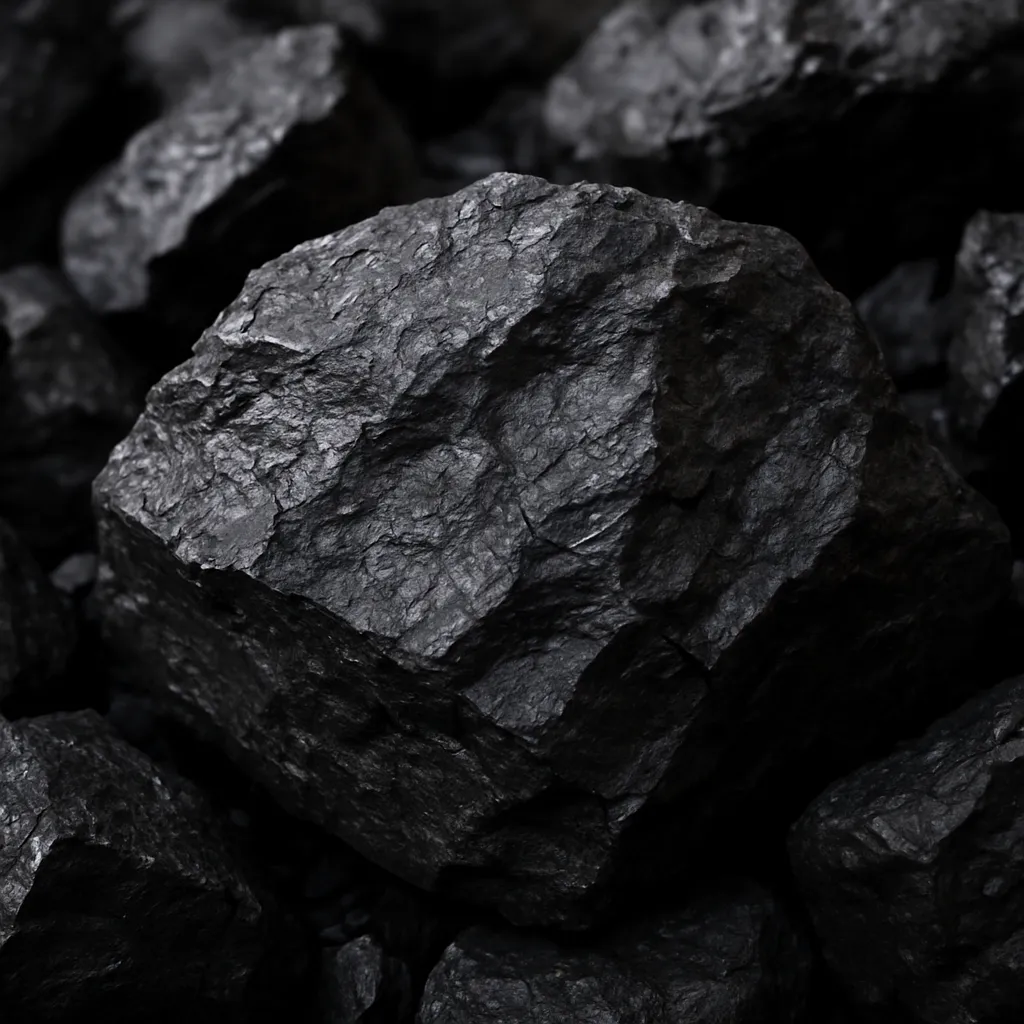
Coal is a sedimentary rock composed primarily of carbon, hydrogen, oxygen, nitrogen and inorganic mineral matter. Its properties vary by rank — from low-density lignite through sub-bituminous, bituminous, to high-carbon anthracite. Another practical distinction for industry is between thermal (steam) coal used mostly for power generation and metallurgical (coking) coal used to make coke for iron and steel production.
Global distribution and major coal-bearing regions
- Coal forms in ancient peat-forming environments and is widely distributed in sedimentary basins globally. Significant coal-bearing basins occur in East Asia, South Asia, North America, Europe, Australia, South Africa, and parts of South America.
- China contains some of the world’s largest coal basins (e.g., Shanxi, Inner Mongolia), and is the largest producer and consumer of coal globally.
- Important deposits in the United States are concentrated in the Appalachian, Powder River (Wyoming and Montana), and Illinois basins. Australia’s Bowen and Surat basins (Queensland) and the Sydney and Hunter basins (New South Wales) host large resources, especially of high-quality metallurgical coal.
- India’s major coalfields are in Jharkhand, Odisha, Chhattisgarh and West Bengal. Indonesia has large low-rank and sub-bituminous deposits that have become major sources for the seaborne market.
Proven reserves are substantial: at present-day extraction rates, global proven recoverable coal reserves are measured in many centuries of consumption if looked at in a simplistic static sense, but economically and logistically recoverable reserves are constrained by geology, technology and policy. Estimates of proven coal reserves worldwide commonly cited by energy agencies are on the order of hundreds of billions to around one trillion tonnes; these figures should be understood as order-of-magnitude metrics rather than precise predictions.
Mining Methods, Processing and Product Types
Coal mining uses two main methods: surface (open-pit) and underground mining. The choice depends on seam depth, thickness, geology and economics. Surface mining dominates in basins with shallow coal seams and large, contiguous deposits, while underground mining is used where seams are deep or complex.
Surface mining
- Open-pit and strip mining remove overburden to extract large volumes of coal quickly and at relatively lower cost per tonne. The Powder River Basin in the U.S. is a classic example where surface mining produces low-rank, low-sulfur coal used primarily for power generation.
- Surface mining can enable mechanized continuous operations with high productivity, but has pronounced landscape and ecological impacts.
Underground mining
- Room-and-pillar and longwall mining are common underground methods. Longwall mining achieves high recovery rates by mechanically shearing long panels of coal while roof supports advance.
- Underground mining involves more complex safety and ventilation challenges, and historically has higher per-tonne costs than many surface operations.
After extraction, coal is often washed and beneficiated to remove ash and impurities, improving calorific value and preparation characteristics. Metallurgical coal is sorted and graded for coking properties, while thermal coal is graded by calorific value and ash content for power-plant specifications.
Economic and Trade Patterns
Coal continues to be a material backbone of energy systems and heavy industry in many countries. Its economics are influenced by mining costs, transportation logistics, international demand (especially in Asia), policies on emissions, and competition from natural gas, renewables and nuclear energy.
Production and consumption
- Global coal production in recent years has been in the multi-billion tonne range annually. China is the largest producer, accounting for roughly half of world output, followed by countries such as India, the United States, Indonesia and Australia.
- Coal remains a major source of electricity generation globally, supplying a substantial share — typically between one-quarter and two-fifths of global electricity depending on the year and region. In many non-OECD countries, coal’s share of power remains high and even growing.
Seaborne trade and market concentration
- The seaborne coal market is concentrated: Australia and Indonesia are the dominant exporters of thermal and metallurgical coal to Asia, while countries like Russia, Colombia and the United States also play important roles in international trade.
- Major importers include China, India, Japan, South Korea and several Southeast Asian countries. Movements in seaborne prices and shipping costs significantly affect regional energy costs and industrial competitiveness.
Prices, revenues and employment
Coal prices are volatile and sensitive to supply disruptions, demand shifts, seasonal patterns and policy changes. For producing regions, coal mining can be a significant source of employment, fiscal revenue (royalties and taxes) and foreign exchange from exports. Conversely, regions heavily dependent on coal face economic transition challenges as global energy systems decarbonize.
Industrial Significance — Steel, Chemicals and Beyond
Beyond electricity, coal is a critical industrial feedstock. Its most important industrial role is in steelmaking: metallurgical coal is converted into coke, a porous, carbon-rich material used in blast furnaces to reduce iron ore to iron. The quality of coke depends on coal rank and volatile content — high-quality coking coals command price premiums and underpin metallurgical sectors.
Steel production
- Traditional integrated steel plants using blast furnaces require metallurgical coal to produce coke. Typical coal requirements vary by process and technology: crude approximations indicate that each tonne of blast-furnace steel may require on the order of 0.6–0.8 tonnes of coking coal (including coals used directly as coke feed and coal charged for pulverized coal injection), though exact factors vary with plant efficiency and ore quality.
- Hydrogen-based reduction and direct-reduced iron (DRI) technologies offer pathways to lower coal use in steelmaking, but adoption rates are uneven and many steel plants will continue to rely on coke-based routes for years to come.
Chemicals, carbon products and speciality uses
- Coal is also a feedstock for chemicals: coal to chemicals (including methanol and various aromatic compounds), coal tar, pitch and activated carbon manufacture are important industrial applications.
- By-products of coking — coal tar, ammonium compounds, benzene and phenols — support chemical industries that produce resins, dyes and pharmaceuticals.
- Specialty carbon products derived from coal, such as needle coke, are crucial inputs for industries like graphite electrode production, which in turn supports electric arc furnace (EAF) steelmaking and aluminium smelting.
Environmental and Health Considerations
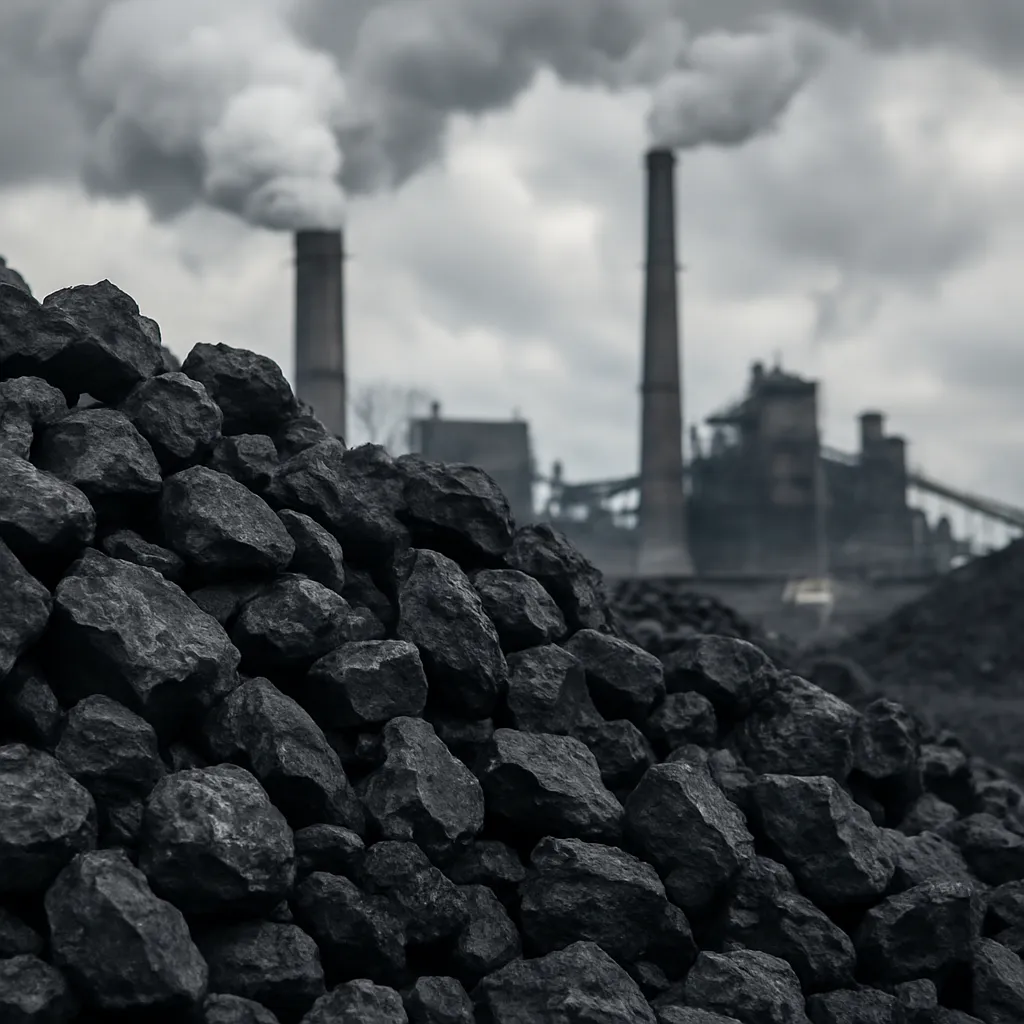
Coal combustion and mining have significant environmental and public-health impacts. Air pollutants (particulates, sulfur dioxide, nitrogen oxides, mercury), land disturbance from mining, acid mine drainage, and substantial greenhouse gas emissions are central concerns.
Carbon dioxide and climate
Coal is the most carbon-intensive fossil fuel on a per-energy basis. Depending on its rank and composition, burning one tonne of coal typically emits roughly between 2.4 and 3.7 tonnes of CO2 (these ranges depend on moisture and carbon content). Coal’s role in energy systems is therefore a primary target of national and international climate policies.
Health impacts
- Exposure to particulate matter from coal combustion contributes to respiratory and cardiovascular diseases. Mercury and other heavy metals from coal can bioaccumulate in food chains.
- Mine safety is a historic and continuing concern for underground operations; modern regulations and technologies have reduced accident rates in many jurisdictions but mining-related health risks remain important for workforce safety and community well-being.
Mitigation and cleaner technologies
Technologies aimed at reducing environmental impacts include washing and beneficiation to lower ash, flue-gas desulfurization, particulate capture (electrostatic precipitators, baghouses), and mercury control. Carbon capture and storage (CCS) and carbon capture, utilization and storage (CCUS) are often proposed to mitigate CO2 emissions from coal plants and industrial facilities, but large-scale deployment faces economic and regulatory hurdles.
Statistical Snapshot and Trends
Below is a compact overview of key statistical tendencies and trends observed in the coal sector over the last decade:
- Worldwide coal production has generally been in the multi-billion tonne range annually. Production and consumption patterns are dominated by Asia, led by China and India.
- Coal remains a major contributor to global electricity generation — typically providing somewhere between one-quarter and two-fifths of electricity globally depending on the year, with higher shares in certain Asian countries.
- Seaborne trading concentrates around a few exporters (notably Australia and Indonesia) and a few large importers (China, India, Japan, South Korea). Seaborne volumes represent a minority of global production but are crucial for regional supply balances and price formation.
- While coal use has declined in many OECD countries thanks to renewables, energy efficiency and gas switching, global emissions and consumption have not fallen proportionally due to increases in non-OECD demand.
- Metallurgical coal demand is closely tied to global steel production, which in turn links coal markets to construction and manufacturing cycles worldwide.
Economic and Social Dimensions
Coal industry economics extend beyond commodity prices to include regional employment, infrastructure development (rail, ports), and fiscal policy. Many coal-producing regions are economically dependent on mining tax revenue, royalties and associated industries (equipment manufacturing, transport). Transition away from coal, whether due to market drivers or policy, therefore has significant social and political implications.
Employment and communities
- Coal mining historically provided stable, often well-paying jobs in remote regions. Declines in local coal activity can create structural unemployment, requiring targeted policies for retraining, economic diversification, and social support.
- Community and indigenous rights, land use and reclamation obligations are increasingly central to permitting and licensing decisions for new coal projects.
Fiscal impacts and trade balances
Exporting countries may derive large shares of foreign exchange from coal exports, while importing countries incur energy security and balance-of-payments considerations. Price volatility in global coal markets can therefore have ripple effects through national budgets and corporate cash flows.
Technological and Market Developments — Pathways Forward
Several technological and policy trends will shape the role of coal in coming decades:
- Energy transition pressures: Decarbonisation commitments and carbon pricing make coal-fired power less competitive in many markets, accelerating retirement of older plants and incentivizing fuel switching.
- Clean-coal technology and CCS: Deployment of CCS could allow continued use of coal in a lower-carbon pathway for power and industry, but economics and infrastructure remain limiting factors.
- Steel sector transformation: A shift to DRI with hydrogen and increased recycling through EAFs can reduce metallurgical coal demand, but timing and capital investment needs mean change will be phased and regionally uneven.
- Market integration and logistics: Improvements in port capacity, rail logistics and ship charter markets influence the competitiveness of different coal suppliers globally.
Challenges, Risks and Opportunities
Coal faces multifaceted challenges: environmental constraints, competition from cheaper low-carbon alternatives, capital allocation preferences of financial markets, and regulatory uncertainty. Yet opportunities exist in value-added coal products, specialty carbons, mine reclamation coupled with renewable projects, and regions where coal remains the most reliable or affordable fuel for development in the near term.
Transition planning
Policymakers and companies increasingly focus on managed transitions: phasing out high-emissions assets while protecting jobs, investing in retraining, and deploying new industries in former coal regions. International finance, just-transition frameworks and technology investments will be decisive in shaping outcomes.
Conclusion
Coal remains a major industrial and energy commodity with complex roles in modern economies. Its geological abundance, existing infrastructure base, and centrality to steelmaking ensure that coal will not disappear overnight. At the same time, environmental imperatives and evolving technologies are steadily reshaping demand, prices and policy. How quickly coal’s share of global energy and industrial feedstock use declines will depend on technology deployment (notably CCS and low-carbon steel processes), policy choices, and economic developments across Asia and other coal-dependent regions. The coming decades are likely to see regional divergence: rapid declines in some markets and continued reliance in others, making coal’s future a nuanced, regionally specific story rather than a simple global phase-out.