The Witbank Coalfield, located in the Mpumalanga province of South Africa, is one of the country’s most important and productive coal mining areas. Often referred to by its modern municipal name, Emalahleni (literally “place of coal“), the field has powered South Africa’s industrialization for more than a century. This article reviews the field’s geology and location, the history and present-day pattern of extraction, the types of coal mined and their uses, economic and social significance, environmental and regulatory challenges, and prospects for the future. Throughout, key technical and economic terms are highlighted to help readers identify the most critical concepts.
Location and geological setting
The Witbank Coalfield sits on the Highveld region of northeastern South Africa in the province of Mpumalanga, roughly between the towns of Witbank/Emalahleni, Ogies and Middelburg. Geographically it lies on the inland plateau known as the Highveld and is served by major transport corridors — rail lines that connect to ports (notably the Richards Bay Coal Terminal) and a network of regional roads that supply power stations and industrial users.
Geology and seam characteristics
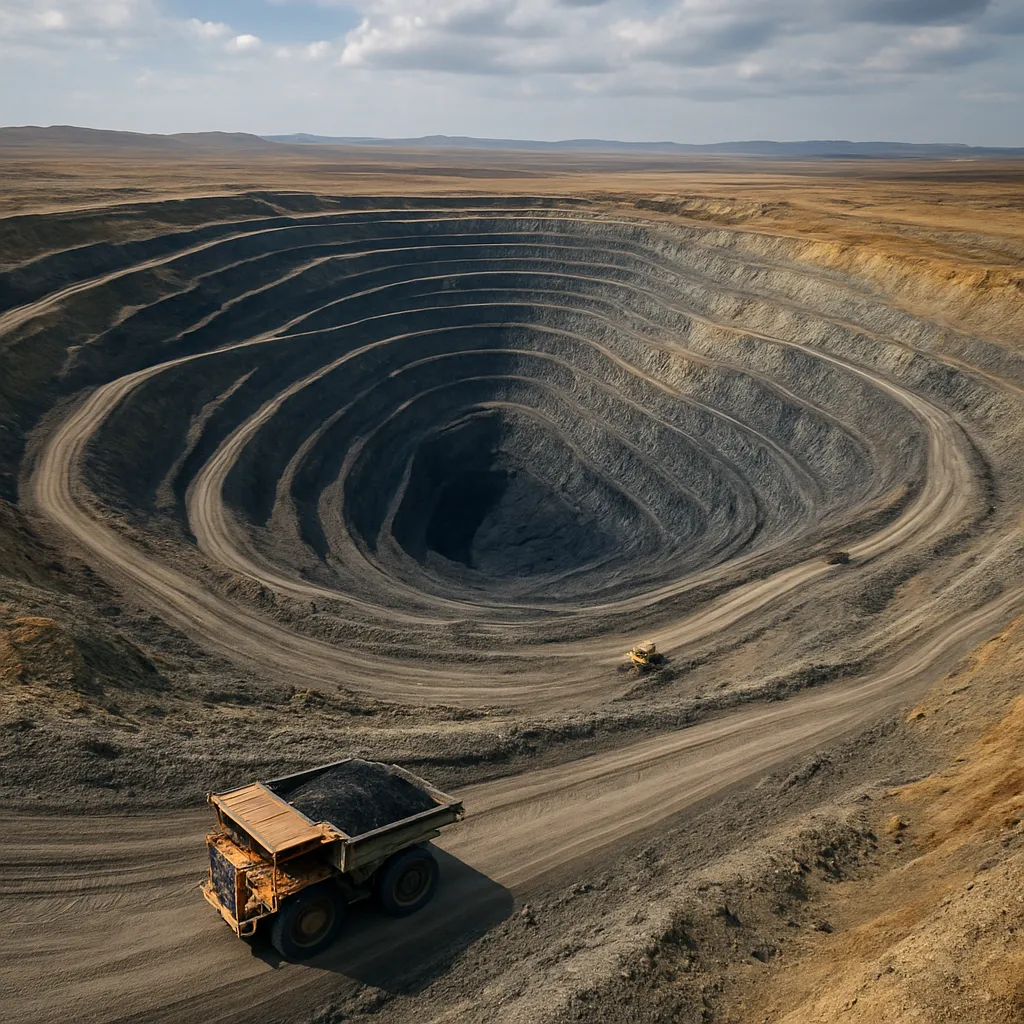
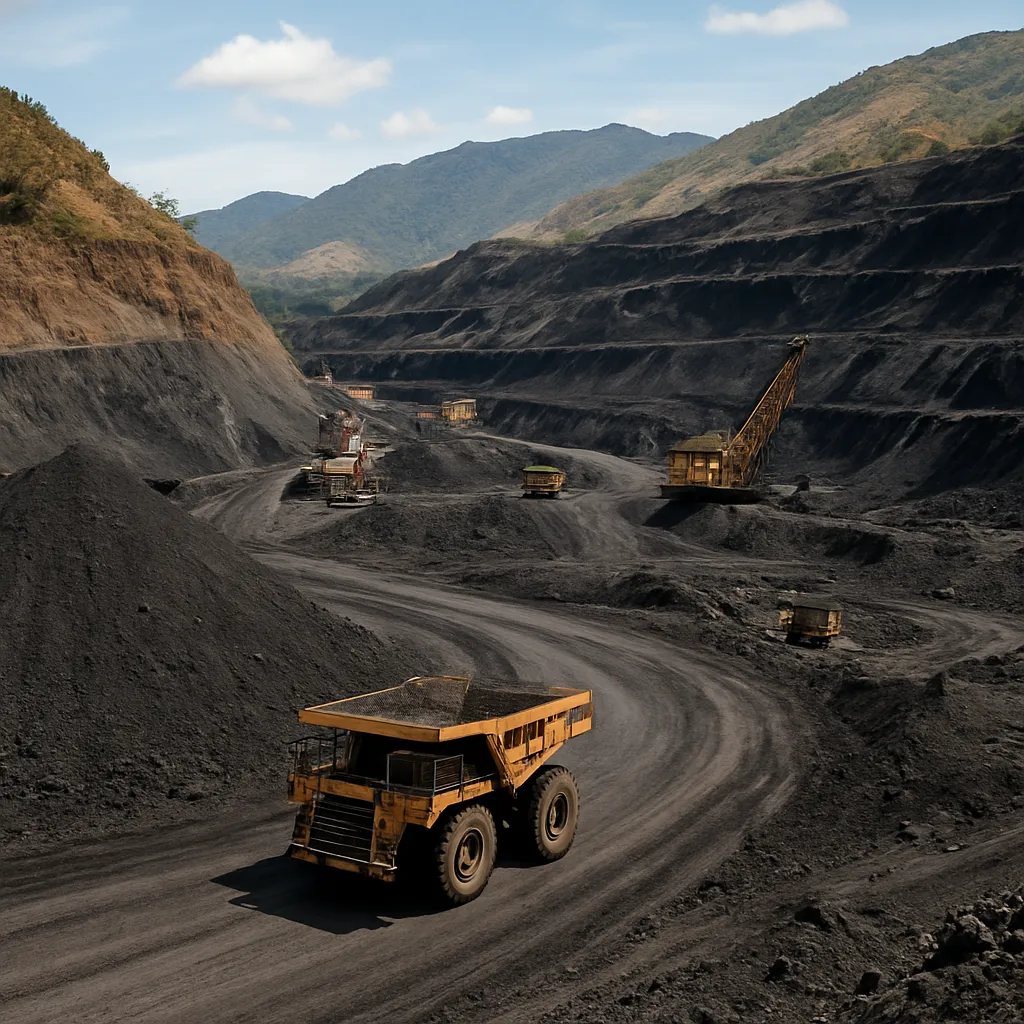
The coal seams of the Witbank Coalfield are part of the Karoo Supergroup, specifically the Vryheid Formation of the Ecca Group. These are largely Late Permian deposits formed in ancient fluvial and deltaic environments. The seams are typically thick and laterally extensive, which has permitted large-scale opencast (surface) mining as well as underground operations.
- Coal rank: predominately bituminous to sub-bituminous; the field is principally a source of thermal coal used for electricity generation and industrial heat processes.
- Seam thickness: many seams exceed several meters in thickness and may be grouped into multi-seam packages amenable to bulk extraction.
- Depth and mining method: deposits range from near-surface (favoring opencast mining) to deeper seams mined by underground bord-and-pillar and mechanized longwall systems in some areas.
The combination of seam thickness, lateral continuity and proximity to markets and rail infrastructure has made Witbank one of the most cost-effective coalfields in South Africa for large-scale extraction.
History and development of the mining district
Commercial mining in the Witbank basin dates to the late 19th and early 20th centuries, expanding substantially in the 20th century as South Africa’s industrial base, rail network and power needs grew. The development of central power stations and later coal-to-liquids and petrochemical facilities increased demand from the field.
Key historical milestones
- Early exploitation: small-scale shafts and adits gave way to mechanized operations as demand rose for steam, rail and industrial uses.
- Mid-20th century expansion: the growth of national electrification, the construction of major thermal power stations in Mpumalanga and the development of towns such as Witbank/Emalahleni accelerated coal extraction.
- Late 20th and early 21st centuries: consolidation of mining assets into larger corporate players, increased opencast expansion, and the establishment of infrastructure linking the field to export terminals like Richards Bay.
- Recent decades: a shift toward larger-scale, mechanized opencast mines, and the emergence of environmental and community concerns alongside global pressures on coal demand.
The town of Witbank was officially renamed Emalahleni in the 2000s to reflect its identity as a coal-mining center; the name change is emblematic of the region’s economic ties to mineral extraction.
Mining operations, coal types and logistics
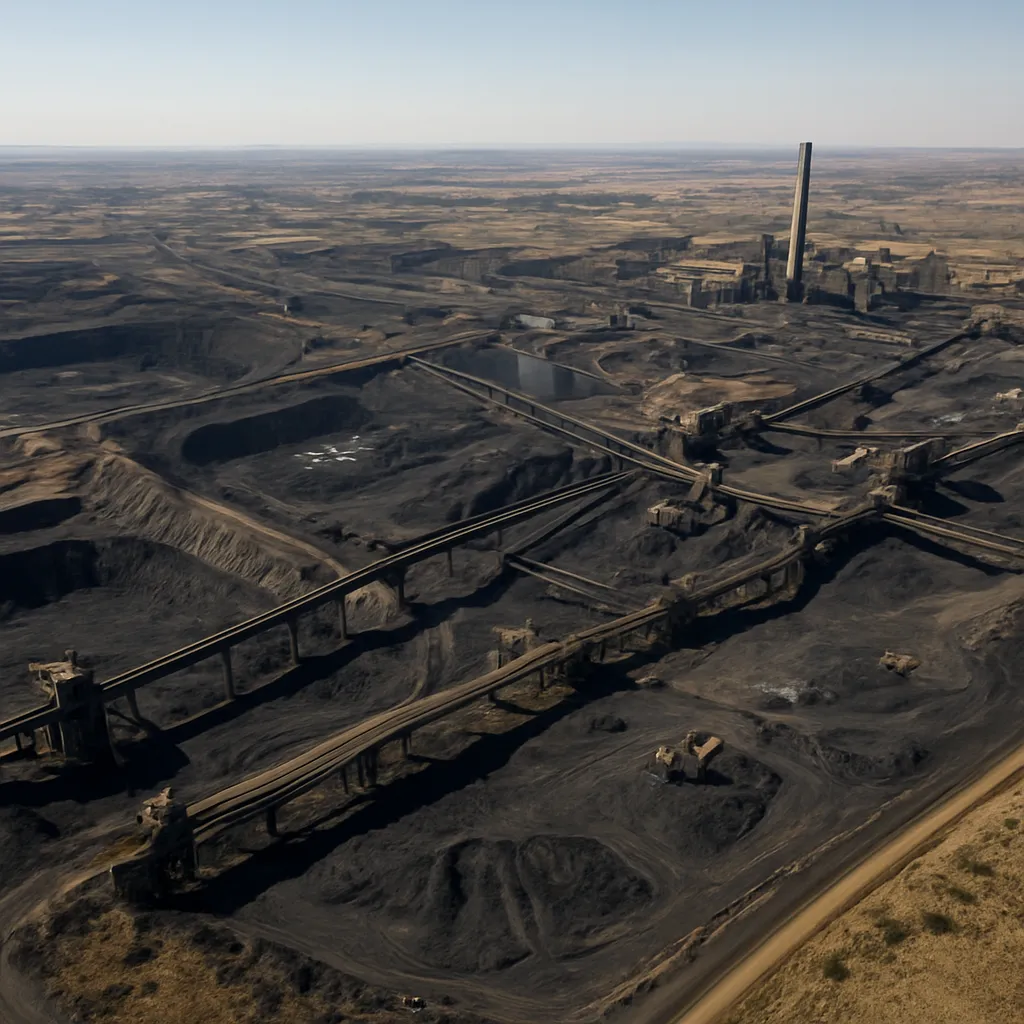
Mining operations in the Witbank Coalfield are a mix of large opencast collieries and underground mines. Several national and international mining companies operate in the area, while some collieries supply dedicated industrial clients (such as power stations and petrochemical plants).
Types of coal and primary uses
- Thermal coal: The dominant product. Burned in power stations owned by Eskom and others to generate electricity; also used in industrial boilers.
- Low- to medium-volatile bituminous coal: Found in many seams and often blended to meet plant specifications.
- Metallurgical / coking coal: Present in smaller quantities; the field is not primarily known for premium hard coking coal but higher-grade pockets occasionally find industrial uses beyond power generation.
Major operators and clients
Large mining groups and locally focused producers have a presence in the Witbank field. Notable names active historically and in recent years include Exxaro, Thungela (spun out of Anglo American’s thermal coal business), Glencore, and Sasol (through its mining operations supplying the Secunda coal-to-liquids complex). Some assets have changed hands over time, and independent mid-tier operators and black-empowered consortia also operate collieries.
Transport, logistics and markets
- Domestic supply: a large share of production supplies inland power stations (Eskom) and industrial consumers including Sasol’s plants near Secunda.
- Exports: coal destined for international markets is railed to the Richards Bay Coal Terminal and other export facilities. The port link is critical to the viability of export-oriented collieries.
- Logistics challenges: rail capacity constraints, maintenance of rolling stock and line integrity, and congestion at export terminals have periodically constrained deliveries and influenced mine planning.
At peak production, the Witbank Coalfield supplied a substantial proportion of South Africa’s coal — both for domestic energy security and for export revenues — though exact shares have varied year to year with market demand and operational factors.
Economic, fiscal and social significance
The Witbank Coalfield is central to the regional economy of Mpumalanga and plays an outsized role in national energy supply. Its contributions are manifested in employment, government revenues, foreign exchange from exports, and inputs to industrial production.
Employment and regional economy
- Direct employment: Tens of thousands of workers are directly employed in mining, haulage and support services in the field. When indirect jobs in transport, maintenance, services and supply chains are included, the number of livelihoods dependent on the coal industry is significantly higher.
- Local economic multiplier: Mining pays wages, taxes and royalties, and supports towns and small businesses around Emalahleni and neighbouring communities.
Fiscal contributions and trade
- Taxes and royalties: Companies operating in the Witbank area generate corporate taxes, royalty payments on mineral extraction and local municipal revenues. This fiscal input is important for national and provincial budgets.
- Exports and foreign exchange: Coal exports routed through Richards Bay and other terminals contribute to South Africa’s export earnings. Historically, coal has been one of South Africa’s key mineral export commodities.
Energy security and industrial feedstock
The field is integral to South Africa’s electricity system. A large proportion of Eskom’s coal-fired generation fleet is supplied from Mpumalanga coalfields, including Witbank. In addition, Sasol’s coal-to-liquids operations — among the world’s largest — are heavily dependent on reliable coal supply, underlining the field’s strategic importance for national energy and industrial policy.
Production statistics and estimates
Exact annual production figures for the Witbank Coalfield fluctuate with market cycles, operational changes and regulatory factors. While national coal production historically ranged from roughly 200 to 280 million tonnes per year in recent decades, production dipped during periods of low demand and infrastructure bottlenecks.
- Contribution to national output: At its peak, Witbank and surrounding Mpumalanga fields accounted for a very large share of South Africa’s coal output — historically more than one-third of national production when combined with neighbouring coalfields.
- Export volumes: South Africa’s seaborne coal exports have reached 60–90 million tonnes per year in prior periods; the Witbank area has been a material supplier to that export pool via rail links to Richards Bay.
- Reserves: The Witbank Coalfield contains very large in-situ reserves — typically described in the literature as being in the order of multiple billions to tens of billions of tonnes of coal when measured by geological resources. Recoverable reserves depend on economic and technical factors and are therefore smaller than in-situ totals.
Because of changing market conditions, rail logistics, and domestic power station requirements, production volumes for specific collieries and for the field as a whole are dynamic rather than static. Companies publish annual reports with mine-level tonnages; for the most up-to-date numerical figures, those reports and national mining statistics are the recommended sources.
Environmental, social and regulatory challenges
Large-scale coal mining inevitably creates environmental impacts and social challenges. The Witbank Coalfield is no exception: environmental management, community relations and regulatory compliance are enduring and evolving issues for operators and authorities.
Water and pollution
- Acid mine drainage (AMD): Abandoned and active mines can generate AMD where sulfide minerals oxidize and produce acidic, metal-rich waters. This has had impacts on river systems in parts of Mpumalanga, complicating water management for agriculture and communities downstream.
- Surface water and sedimentation: Opencast operations disturb large land areas and can increase sediment loads in local streams without proper controls.
- Air quality: Dust (particulate matter) from blasts, haul roads and stockpiles contributes to local air quality issues; combustion of coal also contributes to greenhouse gas emissions and regional air pollution from power generation.
Land use, rehabilitation and biodiversity
Opencast mining alters landscapes significantly. Modern South African mining law requires environmental impact assessment, closure planning and progressive rehabilitation, but implementation quality varies. Rehabilitation includes backfilling pits, restoring topsoil and re-vegetation; long-term water management and monitoring are frequently necessary.
Community and social impacts
- Jobs and livelihoods: Mining provides livelihoods but is a boom-bust industry. Workforce reductions, mechanization and mine closures pose social risks.
- Health: Mining communities face occupational health risks (e.g., pneumoconiosis for underground workers) and public health challenges related to air and water quality.
- Equity and ownership: Post-apartheid policy has emphasized black economic empowerment and community beneficiation; the distribution of mining benefits remains a central social and political topic.
Regulatory framework and oversight
Mines in the Witbank area operate under South African laws and regulations governing minerals, environmental protection, water use and labor. Key regulators include the Department of Mineral Resources and Energy and the Department of Water and Sanitation, among others. Compliance with environmental authorizations, water-use licenses and rehabilitation obligations is monitored but enforcement and capacity can be challenging.
Industrial significance and links to national infrastructure
The industrial linkages of the Witbank Coalfield extend across the national economy:
- Electricity generation: Coal from Witbank supplies large thermal power stations, which are central to South Africa’s grid stability and industrial power supply.
- Coal-to-liquids and petrochemicals: Sasol’s Secunda complex is heavily dependent on Mpumalanga coal for its coal-to-liquids processes — a strategic industry for the country.
- Export logistics: Rail and port networks that serve the field are integral to the country’s mineral export infrastructure; constraints in these systems affect both domestic energy and export revenues.
Future prospects, transition risks and opportunities
The Witbank Coalfield faces a complex future shaped by global and domestic trends toward decarbonization, technology change, and local socioeconomic priorities.
Challenges
- Energy transition: Global pressure to reduce coal-based emissions and the increasing competitiveness of renewables challenge long-term coal demand.
- Infrastructure reliability: Rail congestion and aging power plants influence how much coal is required and where it is delivered.
- Regulatory and social expectations: Tighter environmental regulations and community demands for lasting benefits can raise operating costs and require more robust social and environmental performance.
Opportunities
- Adaptive reuse and rehabilitation: Reclaimed mine lands can be repurposed for agriculture, industry or conservation, providing post-mining economic pathways.
- Value-added processing: Opportunities exist to diversify the local economy through value-added processing and industrial clustering that use coal-derived feedstocks responsibly.
- Just transition planning: With adequate policy support and investment, worker retraining, renewable energy development and infrastructure projects can mitigate job losses and catalyze new economic activities in coal-dependent communities.
Interesting facts and regional context
Several notable points give context to the Witbank Coalfield’s place in South Africa’s mining landscape:
- Name and identity: The town of Witbank was renamed Emalahleni to reflect the region’s identity as a primary coal-producing area.
- Strategic clients: Large, energy-intensive industrial sites — particularly Sasol and Eskom power stations — are reliant on coal from Mpumalanga fields.
- Infrastructure: Proximity to the Richards Bay export terminal has historically enabled Witbank producers to compete in international thermal coal markets.
- Scale: The Witbank field is among South Africa’s largest in terms of both resource volume and historical production, underpinning decades of industrial development.
In sum, the Witbank Coalfield is a region of profound geological wealth and deep economic significance for South Africa. It has been central to the country’s electrification and industrialization, while at the same time presenting pressing environmental and social challenges. The field’s future will be shaped by how industry, government and communities manage the twin imperatives of sustaining livelihoods and addressing environmental sustainability during a global shift in energy systems.