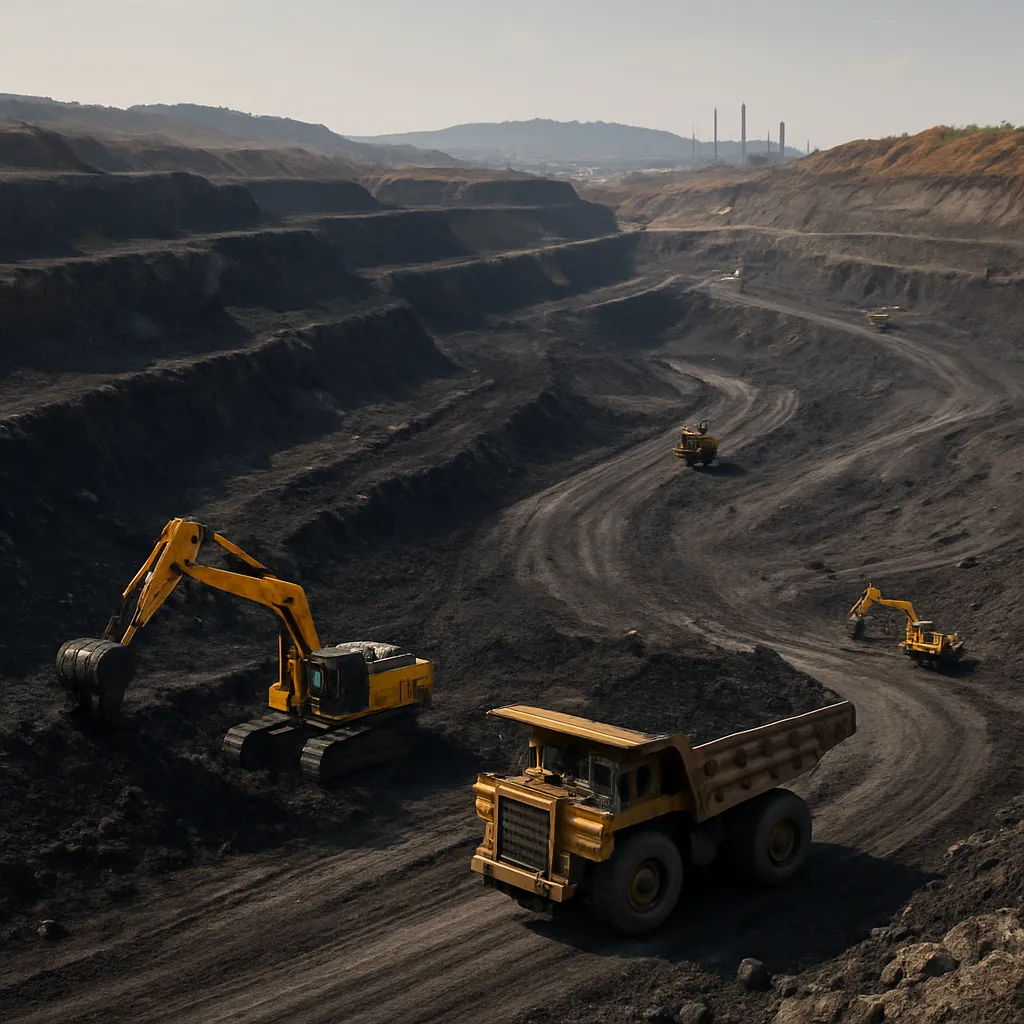
The following article provides an in-depth overview of the Wardha Valley coal mining region in India, its geology, mining practices, economic importance and wider industrial and environmental contexts. The text synthesizes general knowledge about the field and places it within the contemporary Indian coal sector, highlighting key technical, social and strategic aspects.
Location and Geological Setting
The Wardha Valley coal-bearing region lies in the central-eastern part of the Indian state of Maharashtra, within the larger Vidarbha region. Geographically, the coalfield stretches across parts of districts that include Wardha, Chandrapur-adjacent areas and neighboring tracts, forming part of a chain of Gondwana coal basins that extend across central India. The deposits belong to the Gondwana sequence, a set of Permian to Triassic-aged sedimentary formations that host most of India’s economically mineable coal.
Geologically, coal seams in the Wardha Valley are typically found within Lower Gondwana formations, where multiple seams occur at variable depths. Seams range from isolated thin bands to intervals of several meters in thickness, overlain by alluvium and other younger formations in places. The setting is structurally moderate: there are gentle folds, some faulting and local variations in seam continuity, which influence mine planning and choice of extraction method.
Coal Type and Quality
Coal from the Wardha Valley is predominantly non-coking, formed under the Gondwana depositional regime. The principal characteristics of coal in the region include:
- Rank: Mostly low- to medium-volatile bituminous rank, with areas of sub-bituminous facies depending on depth and thermal history.
- Use: Primarily used for power generation and industrial heating rather than as coking coal for steelmaking.
- Ash content: Moderate to relatively high ash in many seams, which is typical of several central Indian coalfields and affects calorific value and handling practices.
- Moisture and sulphur: Moisture contents can vary, and sulphur is generally moderate. These factors are important for combustion management and environmental controls at power plants.
Because of these characteristics, coal from the Wardha Valley is often blended with other coal types to meet boiler specifications or subjected to beneficiation where economically feasible.
Mining Methods and Operations
Mining in the Wardha Valley combines both surface (open-cast) and underground methods, though modern development tends toward open-cast operations where seam geometry and overburden conditions permit. The dominant drivers for method selection are seam depth, thickness, dip, and economic considerations such as stripping ratios and access to markets.
Open-cast mining
Open-cast mines in the Wardha Valley employ large-scale excavation using high-capacity shovels, hydraulic excavators and haul trucks. Overburden removal, progressive reclamation and the use of haul roads are standard practices. Open-cast mining permits high production rates and cost efficiencies, making it suitable for supplying thermal power stations and other bulk consumers.
Underground mining
Industrially, underground techniques—room-and-pillar, bord-and-pillar and selective longwall methods where applicable—have been used historically in areas where seams are deeper or where surface disturbance must be minimized. Underground operations are generally more labour- and skill-intensive, and they carry risks such as subsidence and gas management, requiring robust safety and ventilation systems.
Mechanization and technology
In recent decades the region has seen increased mechanization, GPS-enabled mine planning, and computer-assisted resource modelling. Practices such as continuous miner deployment in suitable seams, fleet management systems for surface operations, and remote monitoring have been progressively adopted to improve productivity and safety.
Economic and Industrial Significance
The Wardha Valley coalfield plays a relevant role in the regional economy of Vidarbha and contributes to India’s larger coal supply network. Key economic aspects include:
- Employment: Coal operations provide direct mining jobs and indirect employment in logistics, machinery maintenance, and local services, often acting as a significant employer in rural districts.
- Energy security: Coal from the field supports nearby thermal power stations and industries, contributing to local electricity supply security and reducing dependence on long-distance transport from distant coalfields.
- Industrial supply: Local industries—cement, brick-making, small-scale steel rolling and mineral processing—benefit from proximity to coal supplies, lowering raw material costs and supporting industrialization.
- Government revenue: Royalties, taxes and land leases associated with mining provide fiscal income at state and local levels, funding infrastructure and social services.
Although Wardha Valley is not among India’s largest single coal production centers (when compared to Jharia, Dhanbad, Singrauli, or Raniganj basins), it contributes meaningful tonnages to Maharashtra’s energy mix and supports regional economic development.
Transport, Infrastructure and Market Linkages
Efficient transport connectivity is vital for coalfields. The Wardha Valley benefits from a network of rail and road links that connect mines to regional railheads, power stations and industrial consumers. Rail remains the primary mode for bulk coal transport to large power plants and distant customers; specialized wagons, marshalling yards and conveyor belts for some surface mines are common features.
Infrastructure development around mining areas often includes expansion of local roads, warehousing, weighbridges and ancillary services. Access to the national grid and proximity to thermal generating plants in Maharashtra and neighboring states make the Wardha Valley strategically useful for dispatching coal to areas of high demand.
Environmental and Social Considerations
Coal mining entails significant environmental and social challenges, which are actively managed through regulation and corporate practice. Important themes for the Wardha Valley include:
- Land use and rehabilitation: Surface mining converts agricultural and forest land to industrial use. Progressive reclamation, topsoil preservation and post-mining land-use planning are critical to reduce long-term impacts.
- Water resources: Mining affects groundwater levels and surface water quality through changes in drainage, run-off and potential contamination. Water management, sediment control and treatment of mine effluents are necessary mitigation measures.
- Air quality: Dust from blasting, haul roads and coal handling, and emissions from combustion at nearby plants, can affect air quality. Dust suppression, covered conveyors and ash handling systems are commonly used interventions.
- Biodiversity and forests: The Vidarbha region includes pockets of forest and wildlife habitats. Environmental Impact Assessments (EIA), compensatory afforestation and biodiversity action plans are regulatory requirements for new projects.
- Social impacts: Displacement, land acquisition and changes to local livelihoods require planned resettlement, compensation and community development programs. Mining firms and authorities typically engage in socio-economic initiatives including health, education and vocational training.
Regulatory Framework and Governance
Mining in India operates under a framework of central and state regulations, covering mineral concessions, environmental clearances, and labour laws. Key elements affecting the Wardha Valley include:
- Mineral lease approvals and auctions administered by central and state authorities.
- Environmental clearances based on EIA and public hearing processes.
- Forest clearances and compensatory afforestation where forest land is involved.
- Occupational safety standards for miners and statutory wage and welfare provisions.
Recent policy shifts toward liberalization of coal block allocation and increased private sector participation have influenced investment flows and modernization in regional coalfields.
Statistical Overview and Data Context
Specific publicly available statistics on Wardha Valley coal reserves and production have varied across different geological surveys and company reports. Reserves are frequently reported in categories such as proved, indicated and inferred, and estimates evolve with new exploration. While the Wardha Valley does not rank among India’s topmost single-field producers, it represents an important regional resource.
At a national scale, coal remains India’s dominant primary energy source, supplying a large share of electricity generation. The Wardha Valley contributes to this national picture primarily through regional supply chains to thermal power plants and industrial users within Maharashtra and adjoining areas.
Technological Trends and Future Prospects
Several trends are shaping the future of coal mining and utilization in the Wardha Valley:
- Mechanization and automation: Continued adoption of high-capacity equipment, fleet telematics and remote monitoring improves productivity and safety.
- Beneficiation: Where economically justified, coal beneficiation (washing and upgrading) can improve calorific value and reduce ash content, making coal more competitive and environmentally manageable.
- Coal bed methane (CBM) potential: Some Gondwana basins have CBM prospects. Exploration for methane recovery represents an opportunity to extract additional energy value while reducing greenhouse gas release from coal seams.
- Rehabilitation and multi-use post-mining landscapes: Progressive reclamation and conversion of exhausted sites for agriculture, forestry, water storage or industrial parks are gaining traction as sustainable end-uses.
- Energy transition pressures: National and global decarbonization goals imply long-term shifts in energy policy. While coal will remain significant in the near term for India’s energy security, investments in emissions control, efficiency and cleaner technologies will be important for the sector’s sustainability.
Challenges and Strategic Considerations
The Wardha Valley coalfield faces several interrelated challenges:
- Resource quality: Moderate ash and variable calorific values necessitate blending, beneficiation or investments in advanced combustion technologies at end-use facilities.
- Environmental compliance: Stricter environmental norms require investments in dust control, effluent treatment, ash management and reclamation programs, raising operating costs.
- Social license to operate: Ensuring the support of local communities through fair resettlement, employment opportunities and development projects is critical to smooth operations.
- Market dynamics: Competition from other coalfields, logistical bottlenecks and changing power-generation portfolios influence demand and pricing dynamics for regional coal.
Interesting Facts and Lesser-Known Aspects
Some intriguing points about coalfields like Wardha Valley:
- Gondwana coal basins preserve plant fossils and palaeoenvironmental records that are valuable for geological research and understanding Earth’s past climates.
- Local artisanal and small-scale industries often develop around mining communities, producing goods and services tailored to miners and mine operations.
- Innovations in mine closure planning in India increasingly incorporate community-led rehabilitation and renewable energy projects on former mine lands.
Concluding Remarks
The Wardha Valley coalfield is a regionally important component of India’s coal resource base. Its deposits of Gondwana coal support regional power generation, industry and employment in Maharashtra’s Vidarbha region. While not as globally prominent as some larger Indian coalfields, Wardha Valley’s combination of geological potential, logistical position and evolving mining practices make it a relevant subject in discussions of India’s energy supply, regional development and the environmental transition challenges facing fossil fuel sectors.
Future trajectories for the Wardha Valley will depend on exploration outcomes, investments in beneficiation and cleaner technologies, the balance of national energy policy, and the effectiveness of environmental and social governance measures. For stakeholders—from miners and local communities to policymakers and utilities—the region exemplifies the multifaceted role of coal in India’s economic and energy landscape.


