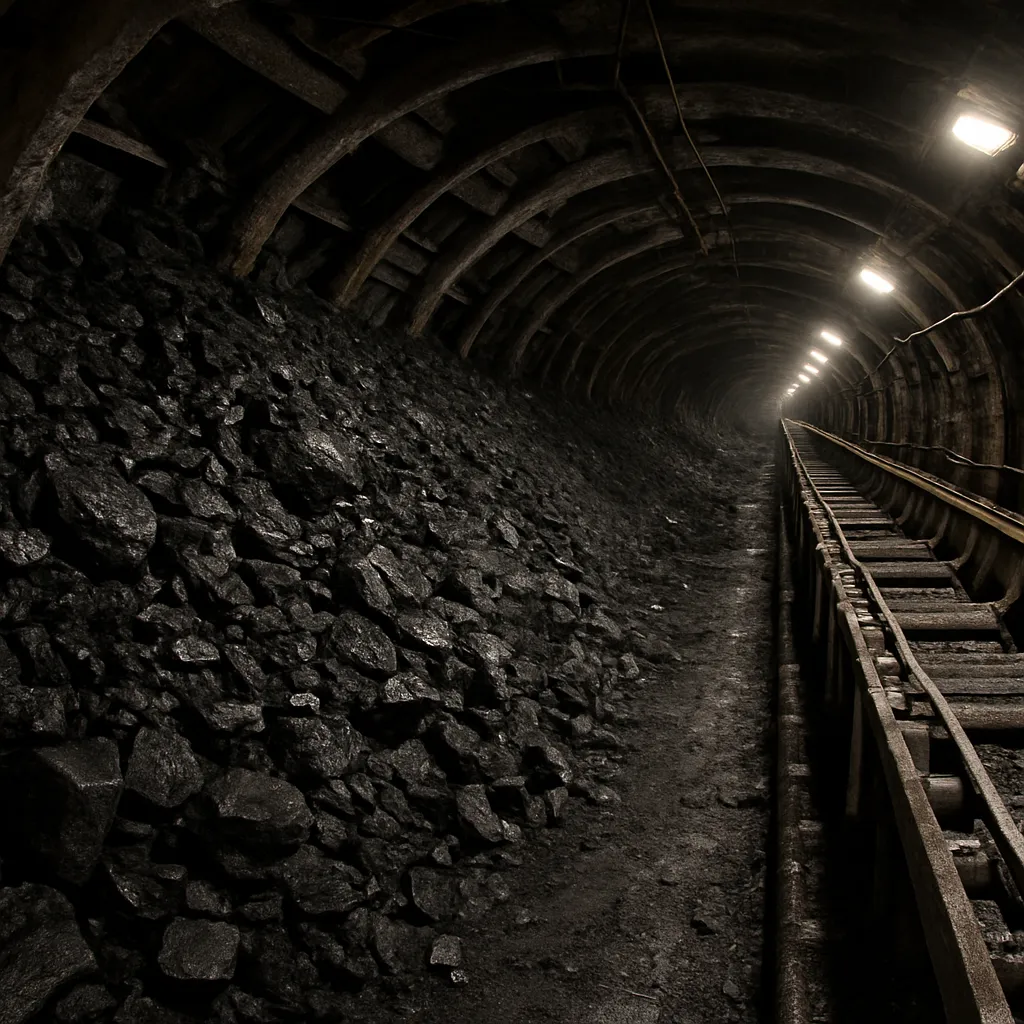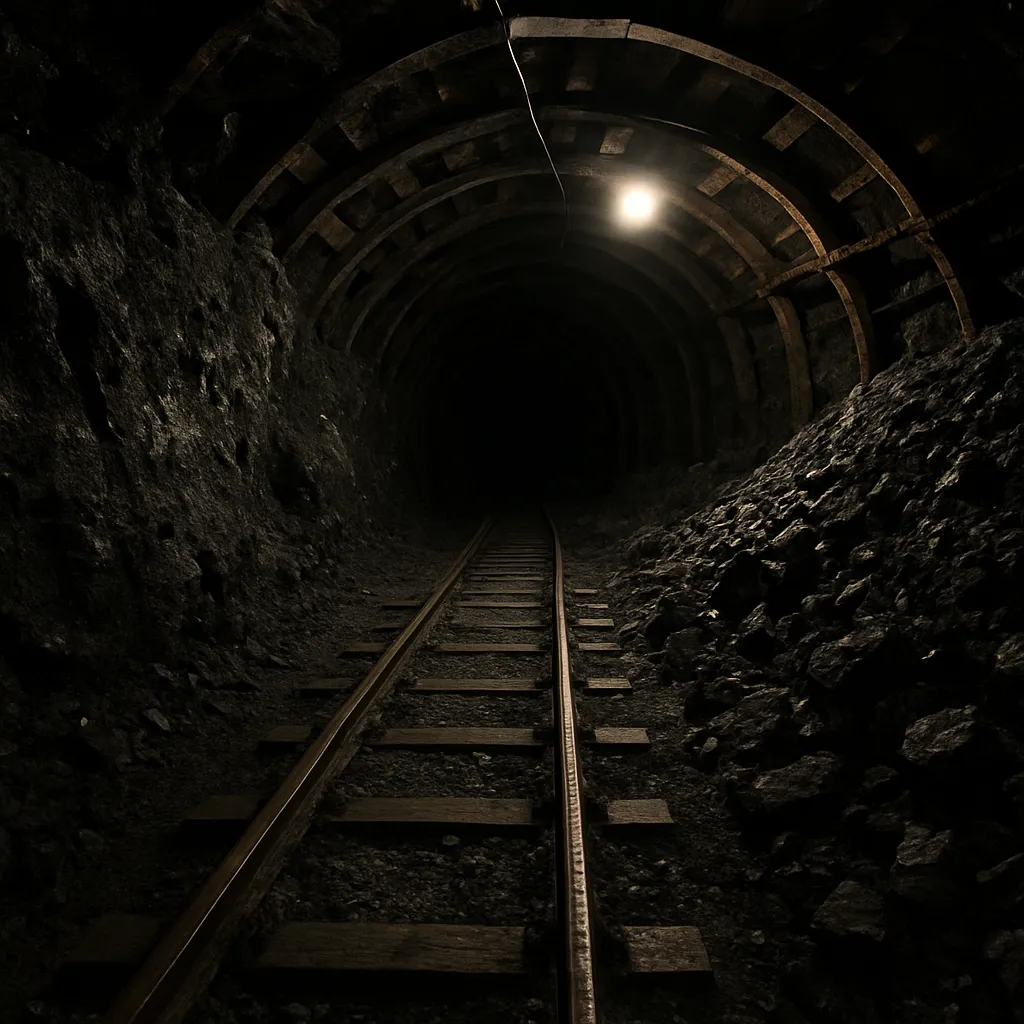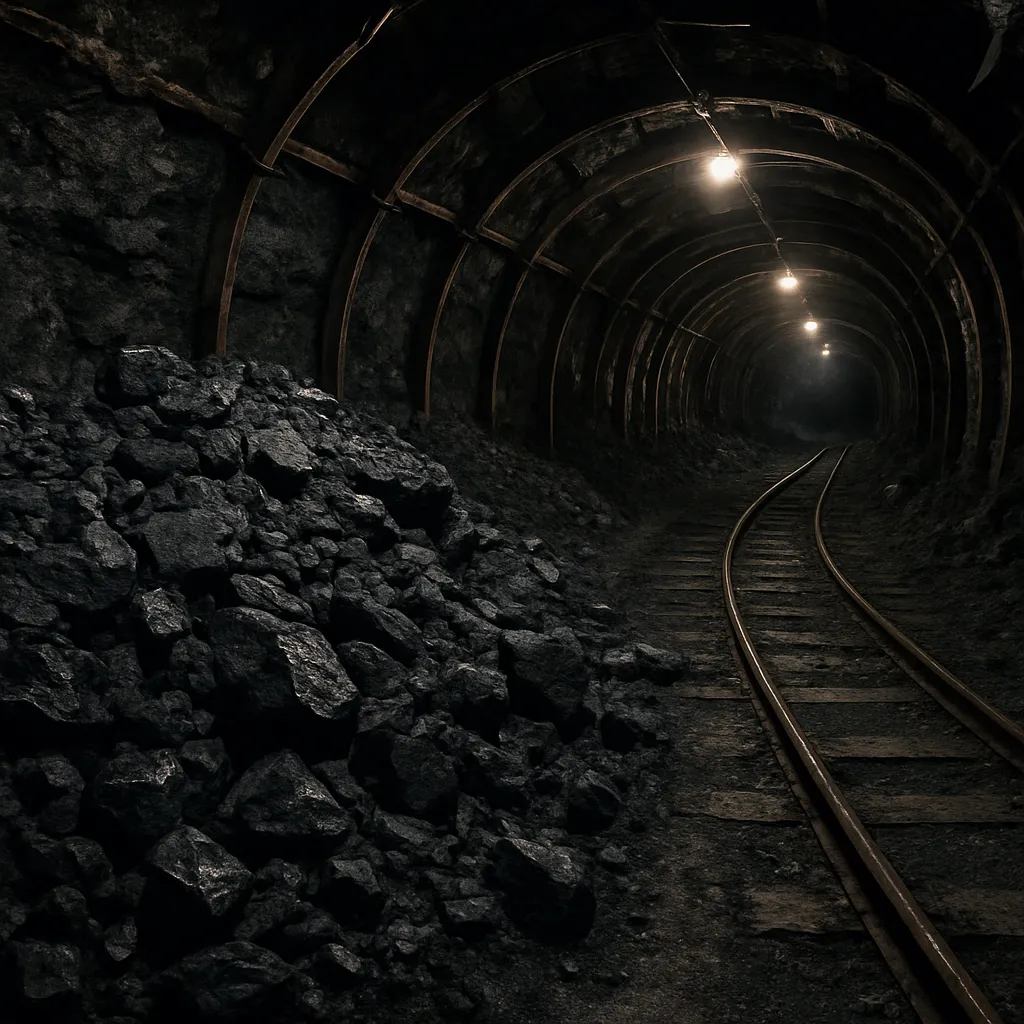
Deep-mine coal—coal extracted from underground seams by deep or underground mining methods—remains a crucial but complex component of the global energy and materials system. This article examines what deep-mine coal is, where it occurs and is extracted, how it is mined, its economic and statistical significance, environmental and social consequences, and emerging trends that will shape its future. Throughout the text, several key terms are emphasized to aid quick recognition of the most important concepts.
Definitions, geology and global occurrence
Deep-mine coal refers to coal recovered from seams that are accessed by underground workings rather than by surface (open-pit or strip) mining. The depth that defines a “deep” mine varies by country and technology, but in practice it includes workings from a few dozen meters down to more than a thousand meters below surface. Coal forming these seams is the result of ancient organic accumulation and burial, followed by diagenesis and, in some cases, low-grade metamorphism. Coal rank can range from lignite through sub-bituminous and bituminous to anthracite; both low- and high-rank coals can be found in deep deposits depending on the geology and thermal history.
Major geological provinces hosting deep coal seams include:
- the Upper Silesian and Lower Silesian basins in Central Europe (Poland, Czechia, Germany), historically known for extensive underground mines;
- the Kuzbass (Kemerovo region) and Donets (Donbas) basins in Russia and Ukraine, with thick, deep seams exploited underground;
- the Appalachian coalfields in the eastern United States, where underground methods such as room-and-pillar and longwall have been common;
- many Chinese basins—Shanxi, Shaanxi, Inner Mongolia and surrounding provinces—where both shallow and very deep underground mines exist;
- South Africa’s and Australia’s coalfields, which include areas where deep underground mining is practiced to access high-quality seams, particularly metallurgical coal in some regions.
Geological complexity—faulting, seam thickness, roof and floor rock competency, and methane content—largely determines whether a deposit is worked from surface or by underground methods. In intensely faulted or urbanized regions, underground mining may be the only feasible option to access economically valuable coal seams.
Methods and technology of deep coal mining
Underground coal extraction has evolved dramatically since the era of hand tools. Two principal large-scale methods dominate modern deep coal mining:
- Longwall mining: A highly mechanized method where a long face (hundreds of meters long) of coal is sheared by a machine, and hydraulic supports protect the roof until the coal is removed. The area behind the supports is allowed to collapse in a controlled manner (goaf). Longwall is noted for high productivity and safety advantages when implemented correctly.
- Room-and-pillar (or bord-and-pillar): Coal is mined leaving pillars to support the roof. Pillars can be later partially or wholly extracted in a retreat phase. This method is flexible and suitable for variable seam geometries but can leave significant coal in pillars unless pillar recovery is undertaken.
Other specialized techniques include bord-and-pillar with mechanized continuous miners, highwall mining (for near-surface steep seams), and various hybrid approaches adapted to local geology.
Critical technologies and systems that enable deep mining include:
- Longwall shearers and powered roof supports for face extraction;
- underground conveyors and shuttle cars for material handling;
- ventilation systems to control methane and dust and to provide fresh air to working faces;
- gas monitoring and drainage systems: methane (coal-bed gas) must be actively managed—through drainage boreholes, degasification, and monitoring—to reduce explosion risk;
- ground control and rock mechanics technologies to prevent roof falls and manage subsidence;
- automation, remote operation, and digital monitoring, increasingly applied to improve safety and productivity in deep, high-risk environments.
Operational challenges at depth include increased ground pressure and rockburst risk, elevated temperatures, water inflows, and higher concentrations of methane and other hazardous gases. These factors raise both the technical complexity and the cost per tonne for deep-mined coal relative to many surface-mined deposits.
Economic role and statistical overview
Coal continues to play a major role in global energy and industrial systems. While precise figures change year-to-year, a few robust patterns are clear:
- Global primary coal production (including lignite and hard coal) has been on the order of several billion tonnes per year in the early 2020s—commonly cited figures are in the range of roughly 7–8 billion tonnes per year for total production (all grades combined), though annual totals fluctuate by economic cycle and energy demand.
- Coal accounts for an important share of global electricity generation—typically around one-third of the world’s electricity supply—making it a central fuel for baseload generation in many countries, especially in Asia.
- Production and consumption are geographically concentrated. China is by far the largest producer and consumer of coal, accounting for a very large share—often cited at roughly 40–50%—of global coal output. Other major producers include India, the United States, Indonesia, Australia, and Russia. Indonesia and Australia are particularly significant as exporters, while China and India are major domestic consumers.
- The split between underground (deep) and surface mining varies strongly by region. Globally, surface mining has increased in many regions due to the economics of open-pit operations, but underground mining still supplies a substantial fraction of hard-coal production—estimates typically place the underground share in the range of roughly one-third to nearly one-half of hard-coal output depending on the dataset and year.
- Economics: deep-mine coal typically commands higher production costs per tonne than surface-mined coal because of greater capital expenditures, ventilation, safety systems, and slower extraction rates. However, high-quality metallurgical coal extracted from underground mines can command premium prices on global markets because of its role in steelmaking.
Employment and social economics: Historically, deep coal mining supported dense networks of mining towns and provided stable employment in coal regions. Although mechanization and closures of small, uneconomic underground workings have reduced employment in many countries, mining still provides millions of direct and indirect jobs worldwide. Estimates of direct employment in coal mining globally vary—often cited ranges are a few million people—while the broader coal economy supports many more through transport, services, power generation, and steelmaking.
Trade flows: countries with abundant and cheap coal for export—primarily Australia (high-quality coking coal and thermal coal exports) and Indonesia (major thermal coal exporter)—dominate international markets. Deep-mine coal often feeds domestic markets in countries with large underground mining traditions and/or where high-quality coking coal is produced underground.
Industrial uses and significance
Deep-mine coal supplies both thermal coal (used mainly for electricity generation and heat) and metallurgical or coking coal (used in the steelmaking process). The industrial significance of deep-mined coal includes:
- Power generation: coal-fired power stations remain a cornerstone of baseload electricity supply in many economies, especially where domestic coal resources reduce import dependency.
- Steel production: coking coal is essential in traditional blast-furnace ironmaking. High-quality coking coal—often mined from deeper seams—is a valuable commodity; global steel production depends heavily on reliable coking coal supplies.
- Chemical feedstocks: coal can be processed into coke, coal tar, synthetic ammonia and other chemical products, and in some jurisdictions it is used to produce hydrogen (with and without carbon capture solutions).
- Industrial heating and cement production: coal remains an important fuel for high-temperature industrial processes.
Because metallurgical coal is less fungible than thermal coal (quality matters for coking behavior), underground mines that produce high-grade coking coal can be strategically and economically important, attracting investment even in markets trending away from thermal coal.
Environmental, safety and social impacts
Deep coal mining brings a combination of environmental and social challenges:
- Mine safety: underground operations must manage roof falls, firedamp (methane), coal dust explosions, and long-term hazards like spontaneous combustion in old workings. Modern ventilation, gas drainage, and remote monitoring have reduced accidents in many advanced operations, but risks remain substantial.
- Health impacts: miners face occupational hazards such as pneumoconiosis (black lung disease), musculoskeletal strain, and exposure to dust and gases. Community health may be affected by air pollution from coal use in power plants and industry.
- Subsidence: collapsing worked-out panels leads to surface subsidence that can damage buildings, infrastructure, and groundwater systems—this is particularly important in urbanized coalfields.
- Greenhouse gas emissions: burning coal for power and industrial heat is a major source of CO2 emissions, and methane released from underground coal seams is a potent greenhouse gas. Deep mining can release methane both during mining and from mine ventilation.
- Water impacts: underground mines can alter groundwater flows, cause contamination by dissolved metals and acidity in some contexts, and create long-term water management liabilities for closed sites.
Socially, the closure of deep mines has had severe consequences in many regions—loss of employment, decline of local economies, and complex legacies of abandoned infrastructure. Conversely, mines that remain productive can support local economies but often create long-term environmental management obligations.
Regulation, mitigation and technology responses
Governments and industry have implemented numerous measures to manage the risks and externalities of deep-mined coal:
- Health and safety regulation: mandatory ventilation standards, gas monitoring, training, and emergency response requirements reduce accident rates.
- Methane capture and use: where feasible, pre-drainage of methane or capture of ventilation air methane can reduce greenhouse gas emissions and provide an energy resource; in some coalfields methane is used locally or sold as a commercial gas.
- Subsidence zoning and land-use planning: limiting construction over shallow worked-out panels and implementing engineered backfill or controlled collapse strategies.
- Rehabilitation and mine closure planning: modern permitting typically requires closure plans and financial assurance to ensure post-mining land use and environmental remediation.
- Decarbonization technologies: carbon capture, utilization and storage (CCUS) applied to coal-fired power plants and industrial plants is being piloted to reduce CO2 emissions, though economics and scaling remain challenging.
Regional case studies and practical examples
Several regions illustrate the diversity of deep coal mining contexts:
- China: A mixture of small and very large deep mines exists across multiple provinces. Chinese operations have pursued mechanization aggressively; China also faces serious safety and environmental challenges in many older underground workings.
- Poland: The Silesian Basin has a long tradition of deep mining with dense networks of shafts and galleries. Coal remains central to Poland’s energy mix and regional economy, though the country faces EU decarbonization pressures.
- Russia: The Kuzbass and Donets basins contain extensive underground workings; Russian coal supports both domestic industry and export markets.
- United States (Appalachia): Historically dominated by underground mines, Appalachia has experienced mine closures and job losses, but high-value metallurgical coal from some mines continues to be important for steelmaking.
- Australia: While Australia relies heavily on large open-cut mines for thermal coal, it also has underground mines that produce high-grade coking coal, vital to export markets and steelmaking supply chains.
Trends, market dynamics and the future of deep-mine coal
Deep-mine coal is affected by several interacting trends:
- Energy transition: policies and market forces promoting renewables, energy efficiency, and gas-fired generation have reduced coal’s share of electricity in some regions (notably Europe and parts of North America). However, ongoing industrialization in Asia and limited alternatives for some industrial heat and steelmaking processes have maintained strong demand in others.
- Steelmaking transitions: low-emission steel production pathways (electrification, hydrogen-based direct reduced iron, and recycled steel) could reduce demand for coking coal over decades, but the transition pace will determine future metallurgical coal markets and whether deep mines remain economically viable.
- Technological evolution: automation, remote operation, and improved ground-control systems can make deep mining safer and more cost-effective; these technologies also change labor needs and skill requirements in mining communities.
- Carbon management: deployment of CCUS and methane mitigation could extend the role of coal in a lower-emissions system if economically feasible and scaled; otherwise, coal consumption may decline more rapidly.
- Supply security and geopolitics: nations with large domestic coal reserves sometimes continue to prioritize coal for energy security reasons, buffering demand even as global markets shift.
Interesting facts and technical notes
- Deep coal seams can be highly variable over short distances; mining planners rely on detailed geological models developed from boreholes, geophysical surveys and mined exposures.
- In many underground mines, methane is both a risk and a resource—projects to commercially use mine methane have been implemented where capture is feasible.
- Some of the most productive longwall faces can extract thousands of tonnes per hour under optimal conditions, demonstrating how mechanization dramatically changed underground mine productivity.
- Historical deep mines have left cultural and built heritage in many regions—pitheads, colliery baths, and miners’ housing are part of industrial history and community identity.
Concluding perspective
Deep-mine coal occupies a transitional position at the intersection of geology, technology, economics and policy. It supplies essential industrial feedstocks and electricity in many regions, sometimes at a premium when high-quality coking coal is involved. At the same time, the environmental footprint and carbon intensity of coal create powerful drivers for change. How deep-mined coal figures in energy and industrial systems going forward will depend on the pace of decarbonization technologies, market dynamics in steel production, the success of methane and emission mitigation strategies, and regional energy-security choices. In short, deep mining remains technically and economically important today, even as its long-term role evolves in response to global sustainability challenges.