The following article examines the Mucanha-Vuzi mining area within the broader coal-mining landscape of central Mozambique. It covers location and geology, the types of coal encountered, economic and industrial significance, available statistics and data, environmental and social dimensions, and prospective developments. Where firm, public data exist they are cited in a descriptive way; where information is limited or varies between sources, ranges and qualifiers are used. The goal is to provide a comprehensive, balanced overview useful for readers interested in geology, mining economics, and regional development.
Location and geological setting
Mucanha-Vuzi is situated within the greater coal-bearing province of central-western Mozambique, commonly associated with the western part of Tete Province. The area lies in the same tectonostratigraphic basin system that hosts the better-known Moatize deposits and other concessions that rose to prominence in the 2000s and 2010s. Geologically, the deposits form part of the Karoo-related sedimentary sequences that preserve Late Carboniferous to Early Permian coals in rift-related basins across southern Africa.
The local stratigraphy generally comprises sequences of sandstones, siltstones and coal seams. Coal seams vary in thickness and continuity; in the Tete basin more generally, individual seams can range from sub-meter to several meters in thickness, with composite intervals of workable coal sometimes exceeding tens of meters. The Mucanha-Vuzi area, like adjacent concessions, reflects structural complexity with faulting and variable seam continuity, which has a direct influence on mining method selection and economic recoverability.
Coal types and quality
Coal types in Mucanha-Vuzi and the surrounding Tete region include a spectrum from low- to medium-rank coals. The dominant commercial categories relevant to the basin are:
- Thermal coal: primarily used for power generation and industrial heat. Coals in this class typically exhibit moderate calorific values and higher moisture and ash compared with higher-rank coals.
- Coking (metallurgical) coal potential: certain horizons in the broader Tete basin have been reported to contain coals with properties that, after beneficiation, may be suitable for metallurgical uses. However, high-quality, low-ash coking coals are less common than thermal varieties.
Typical coal quality parameters reported for the Tete basin (and by extension possibly relevant to Mucanha-Vuzi) include gross calorific values in the approximate range of 4,500–6,500 kcal/kg (arbitrary reference basis), total moisture and inherent ash that vary widely depending on seam and washing potential, and sulphur contents typically low to moderate, which is favorable for export markets. Actual quality for any specific pit like Mucanha-Vuzi is dependent on detailed exploration and laboratory analyses; publicly available data for small or early-stage sites are often limited.
Mining methods and on-site operations
Mining activity in the region employs a combination of conventional open-pit and underground techniques depending on seam depth, geometry and overburden characteristics. For many Tete-area deposits, including smaller satellite zones such as Mucanha-Vuzi, the following operational models are typical:
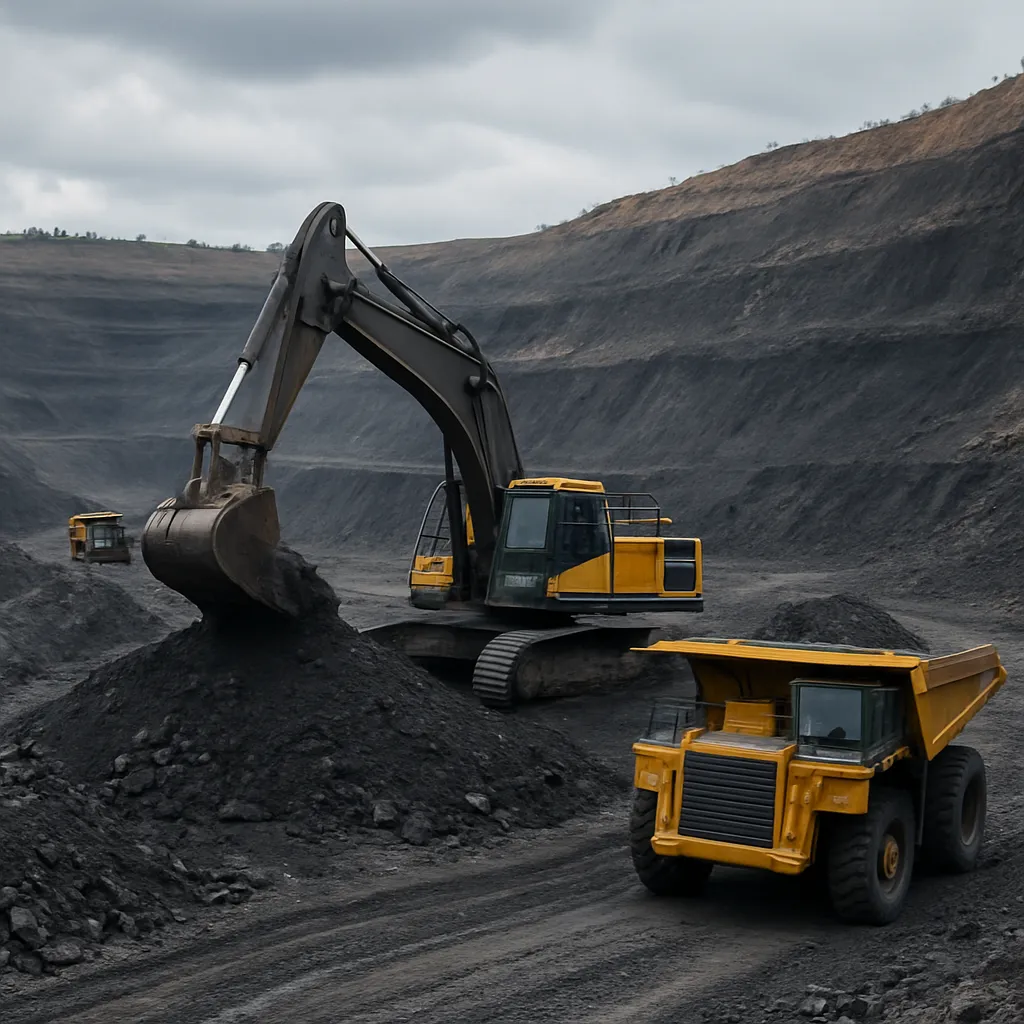
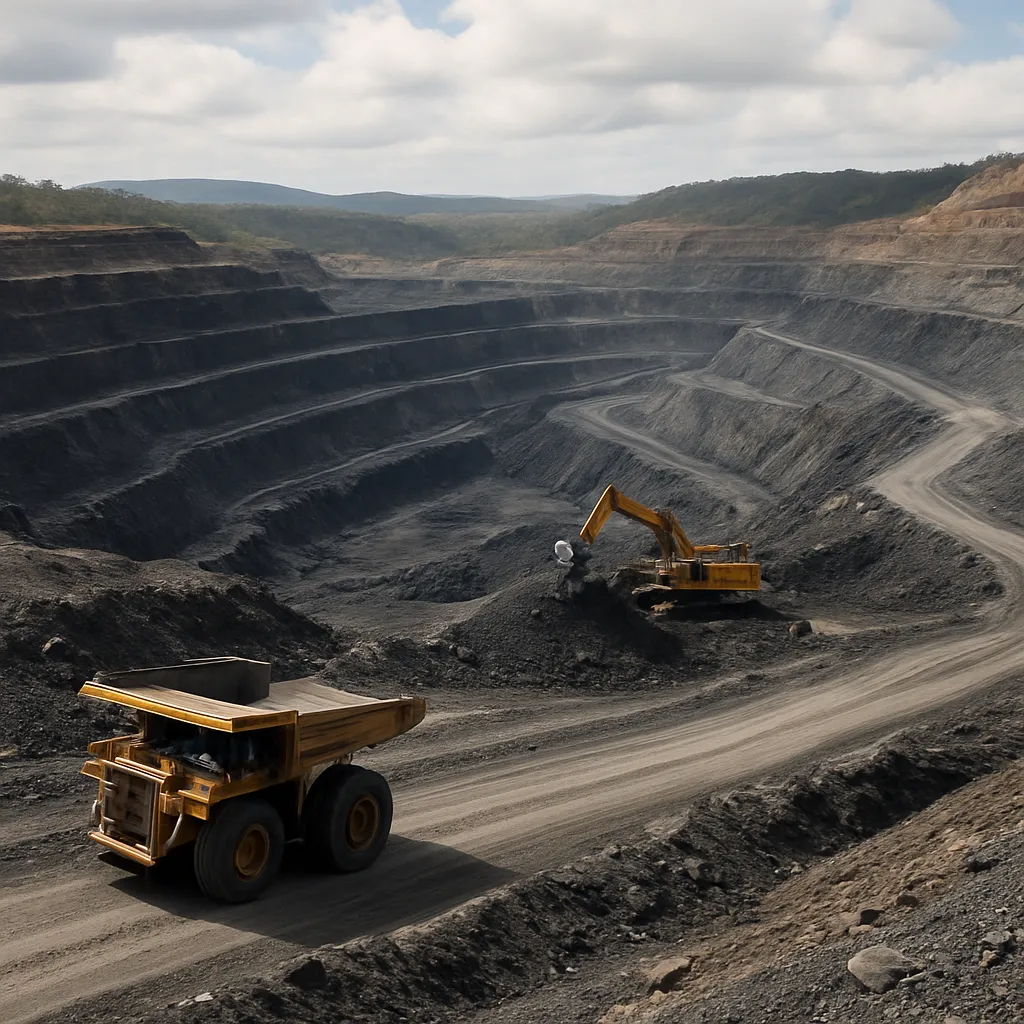
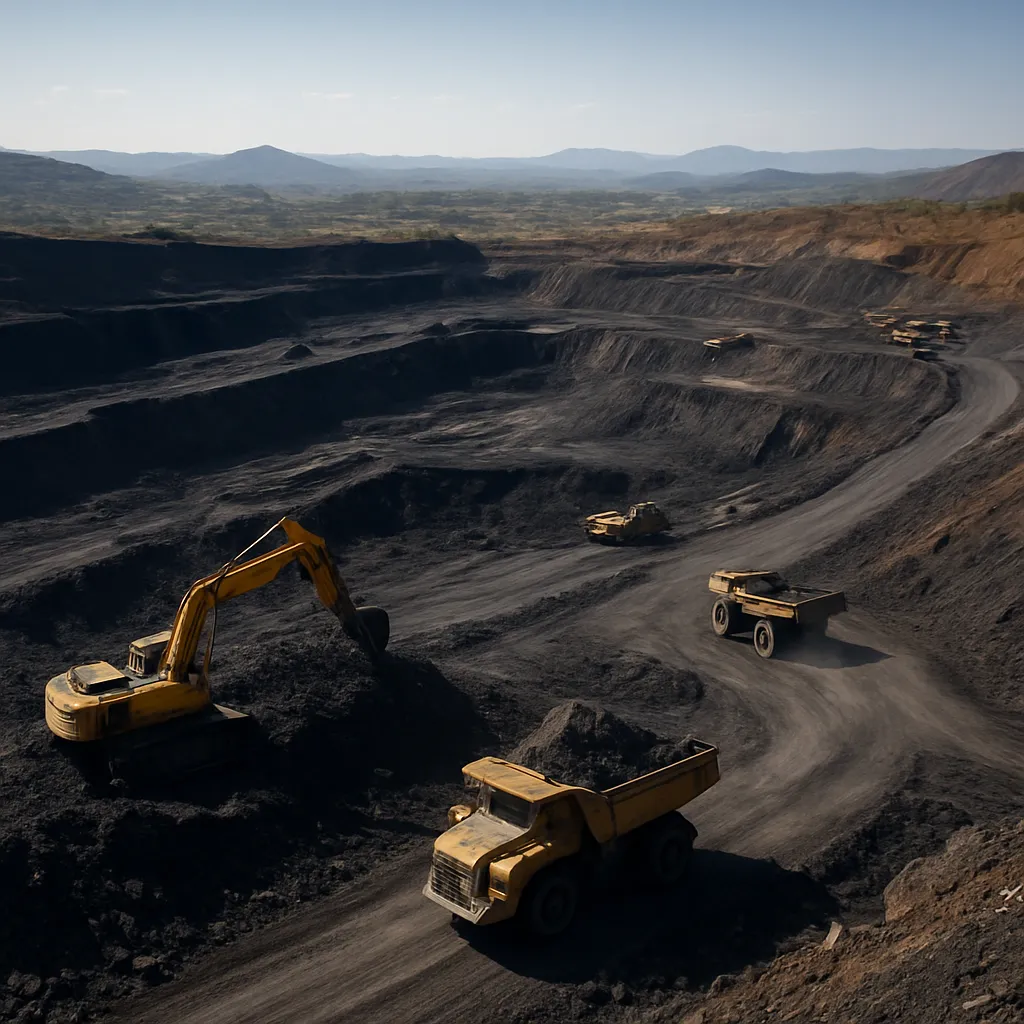
- Open-pit mining where seams are near-surface, allowing for mechanised strip-mining with large shovels and haul trucks;
- Selective underground extraction for deeper, thinner seams or where environmental and land-use constraints favor less surface disturbance;
- Surface and plant-based beneficiation (washing and density separation) to improve product quality for high-value markets and to meet contractual specifications.
Site infrastructure often includes access roads, small maintenance yards, water management systems, tailings or slurry facilities for wash plants, and stockpiles. For export-oriented projects, linkage to rail and port systems is a critical part of the commercial model.
Economic and industrial significance
Mucanha-Vuzi should be viewed within a regional economic context in which coal has been one of the major drivers of mineral-led development in Mozambique. The discovery and development of coal in the Tete basin triggered substantial investment in exploration, mining infrastructure, and logistics, and attracted international mining companies. Key economic roles of coal in the region include:
- Export earnings generation: coal has been an important commodity for Mozambican export revenues, earning foreign exchange that supports national budgets and balance-of-payments needs.
- Employment and local economies: mining operations create direct and indirect jobs, spur services and construction activity, and lead to localized economic multipliers in host districts.
- Industrial feedstock and domestic energy potential: though much of the historic focus has been on export, coal reserves also present potential supply options for thermal power generation and industrial needs within southern Africa.
While Mucanha-Vuzi itself may not be among the largest single producers in Mozambique, its development can complement larger complexes by supplying feedstock, increasing regional employment, and strengthening transport corridor utilisation (rail and port).
Statistics, reserves and production context
Precise, independently verifiable data for the Mucanha-Vuzi site are limited in public domain sources, particularly if the area is explored but not yet fully commercialised. However, useful context is provided by aggregated and concession-level figures for the Tete coal basin and national coal-sector indicators:
- Reserve estimates for the wider Tete coal basin have been quoted in a range from several hundred million tonnes of measured and indicated resources up to multi-billion-tonne (commonly cited up to around 6 billion tonnes) total in various classifications, depending on the inclusion of inferred resources and different reporting standards.
- National production and export volumes for Mozambican coal have varied over time due to market conditions, project start-ups and ramp-ups, and operational disruptions. Annual export figures for Mozambique in strong years have reached into the multiple millions of tonnes (single-digit to low double-digit Mt/year), though precise year-by-year totals depend on the operations active at that time.
- Quality and product mix: exports have historically been dominated by thermal coal, with seaborne shipments mainly destined for Asian markets. A smaller proportion, when available and quality permits, has targeted metallurgical markets.
For stakeholders considering Mucanha-Vuzi, exploration data (geological mapping, drilling, seam correlations and laboratory analyses) are the primary basis for establishing mineable reserves. Publicly available feasibility and scoping study figures are necessary to move from resource estimates to economically recoverable reserves and planned production rates.
Infrastructure and logistics
One of the defining factors for commercial success in the Tete coal province is connectivity to global markets. The Mucanha-Vuzi area’s value is therefore closely linked to regional infrastructure:
- Rail corridors: connections to the Sena line and other upgrades were historically pursued to link mines to the port of Beira or to the port of Nacala via development corridors. Rail capacity constraints and the cost of rail access are frequently decisive in project economics.
- Ports: the choice of export port (Beira, Nacala, or Maputo via transshipment) affects shipping distances, costs, and seasonal operability.
- Roads and power: for early-stage or domestic-focused projects, reliable roads and access to power are necessary for operations and processing plants.
Improvements to public and private transport infrastructure in the region have historically unlocked higher levels of coal export capacity. Conversely, lack of reliable logistics can bottleneck production even for deposits with substantial physical resources.
Environmental and social considerations
Mining development in the Mucanha-Vuzi area raises the suite of environmental and social issues common to coal projects worldwide. Key concerns and mitigation approaches include:
- Land use, displacement and livelihoods: operations may require land clearance and, in some cases, resettlement. Responsible projects implement social baseline studies, compensation frameworks and livelihood restoration programs.
- Water management: coal washing, dust suppression and pit dewatering create demands for careful water stewardship, particularly in dry-season contexts and where communities rely on local water sources.
- Air quality and dust: mining and hauling generate particulate emissions; mitigation typically involves dust suppression measures, covered conveyance, and amenity monitoring.
- Rehabilitation and closure planning: progressive land rehabilitation, biodiversity offsets and clear closure provisions are increasingly expected by financiers and regulators.
International financiers and buyers increasingly expect compliance with environmental, social and governance (ESG) standards, and projects that can demonstrate strong performance in these areas are more likely to secure long-term commercial relationships. For Mucanha-Vuzi, early and transparent stakeholder engagement, accompanied by environmental baseline studies, would be crucial.
Local impacts and community relations
Beyond macroeconomic benefits, the local-level impacts of mining include job creation, business opportunities for local suppliers, and investment in community infrastructure (schools, clinics, water systems). However, risks include social disruption, unequal benefit distribution, and resource-induced inflation in local markets. Best-practice community relations focus on:
- Inclusive employment and procurement strategies;
- Clear communication and grievance mechanisms;
- Long-term planning for continuity and post-closure livelihoods.
For projects like Mucanha-Vuzi, effective community engagement is a material factor for permitting and long-term operational stability.
Market dynamics and price drivers
The commercial value of coal from Mucanha-Vuzi is influenced by global and regional market dynamics. Key drivers include:
- Global thermal coal demand, particularly from major Asian importers;
- Price fluctuations linked to alternative fuels (gas, renewables) and policy shifts targeting greenhouse-gas emissions;
- Quality specifications demanded by buyers (calorific value, ash, moisture, sulphur), which may necessitate additional processing to meet higher-price contracts;
- Logistics and freight cost volatility, which can materially affect delivered cost competitiveness.
As the international energy transition advances, long-term demand assumptions for coal have become more uncertain. Nevertheless, for certain markets and industrial applications, thermal coal remains a near-term and medium-term energy source, and metallurgical coal continues to underpin parts of the steel industry.
Regulatory framework and governance
Mozambique’s regulatory environment for mining encompasses licensing, environmental permitting, community consultation, and taxation and royalties. Fiscal regimes typically involve royalties on production, corporate taxes, and obligations related to local procurement and social investments. Regulatory clarity and consistent application play a central role in attracting and retaining investors. Transparency and adherence to national laws, as well as alignment with international best practice, are increasingly important for access to capital.
Future prospects and challenges
Mucanha-Vuzi’s future prospects depend on a combination of resource certainty, project economics, and broader market and policy trends. Opportunities include:
- Integration into regional supply chains if rail and port access is secured;
- Value-addition through beneficiation to reach higher-value markets;
- Domestic market supply for power generation or industrial users as Mozambique expands its energy infrastructure.
Challenges include capital intensity for mine development, sensitivity to commodity price cycles, competition from larger, established mines, and the need to meet evolving ESG expectations. Projects that proactively manage environmental impacts, secure social license, and demonstrate cost-efficient logistics are better positioned to survive market headwinds.
Practical indicators of project viability
- Confirmed geological reserves and resource classification (Measured, Indicated, Inferred) established through systematic drilling and QA/QC;
- Realistic capital expenditure (CAPEX) and operating expenditure (OPEX) estimates taking local conditions into account;
- Committed offtake agreements or letters of intent from buyers, which can underpin financing;
- Access to reliable transport and port capacity for export; alternative domestic demand pathways if export markets are constrained.
Interesting facts and regional context
– The discovery of coal in the Tete region transformed a relatively undeveloped interior area into a focal point for mining investment in southern Africa, attracting international mining houses and substantial infrastructure projects.
– Coal geology in the region is connected to wider Gondwanan and Karoo-age depositional systems that host economically significant coal seams across southern Africa.
– Because of the strategic nature of corridor links, even small-to-medium deposits such as Mucanha-Vuzi can become commercially important when they can be aggregated with nearby concessions to form a supply base that justifies rail and port investments.
– The interplay between local community benefits and national export ambitions creates a dynamic policy environment where stakeholder expectations and government objectives must be carefully balanced.
Concluding perspective
The Mucanha-Vuzi area exemplifies the opportunities and complexities of coal development in central Mozambique. It sits within a region that contains significant coal resources, where project viability turns on geology, quality, and the all-important logistics connections to market. While concrete, site-specific statistics for Mucanha-Vuzi may be limited in public sources, the broader Tete basin context provides indicators of potential scale and significance. Going forward, responsible development that aligns resource extraction with environmental stewardship, community benefit and robust infrastructure planning will determine whether sites like Mucanha-Vuzi deliver sustainable local and national value.