The La Guajira coal mining complex in Colombia is one of the most significant and controversial mining areas in Latin America. Located in the far northeast of the country on the Caribbean coast, the mining operations—most prominently the El Cerrejón mine—have shaped regional economies, national export balances, and global coal supply chains for decades. This article outlines the geographic setting, the type and scale of coal produced, economic and statistical data, industrial importance, environmental and social impacts, and other notable facts relevant to understanding the role and future of coal mining in La Guajira.
Location, Geology and Mining Operations
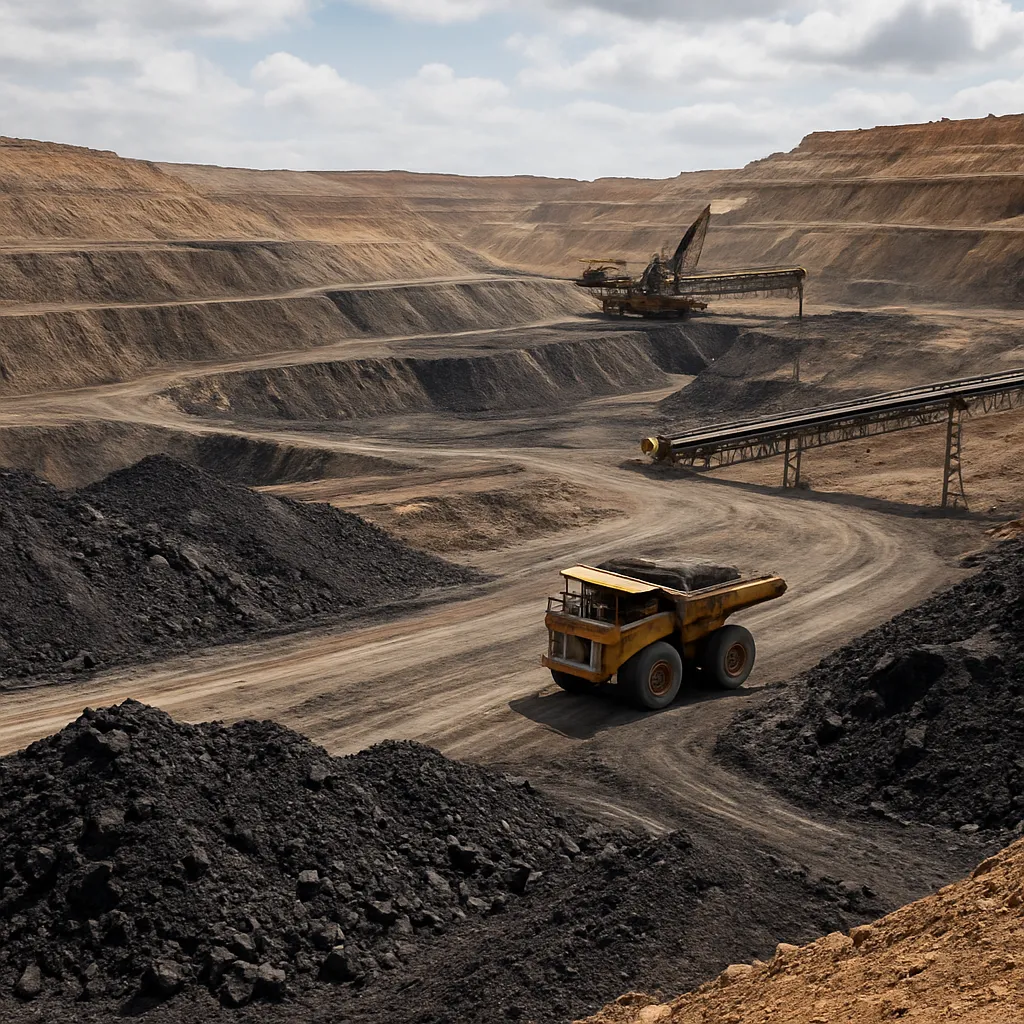
The La Guajira Peninsula sits at the northeastern tip of Colombia, bordering the Caribbean Sea to the north and Venezuela to the east. The principal coal deposits are found in the department of La Guajira, with the largest single operation historically known as El Cerrejón. The mine is an opencast (open-pit) operation carved into the extensive Carboniferous and Cretaceous coal-bearing formations that extend across northern Colombia.
Geologically, the coal seams in La Guajira are part of thick, laterally extensive basins where ancient plant material was buried and transformed under pressure over millions of years. The region yields primarily thermal coal (also called steam coal), which is used mainly for electricity generation. The coal from Cerrejón is generally characterized by relatively low sulfur and moderate ash content, making it attractive to many international power utilities concerned with emissions standards.
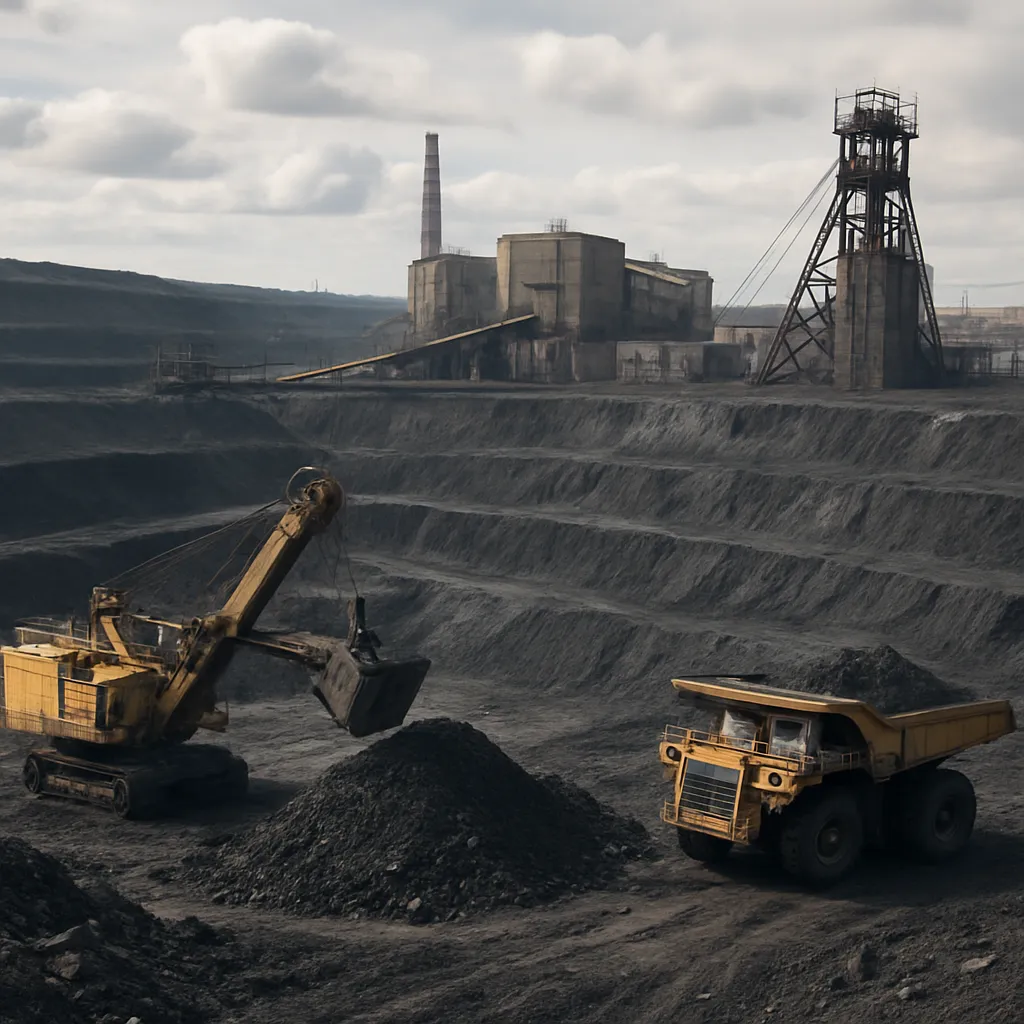
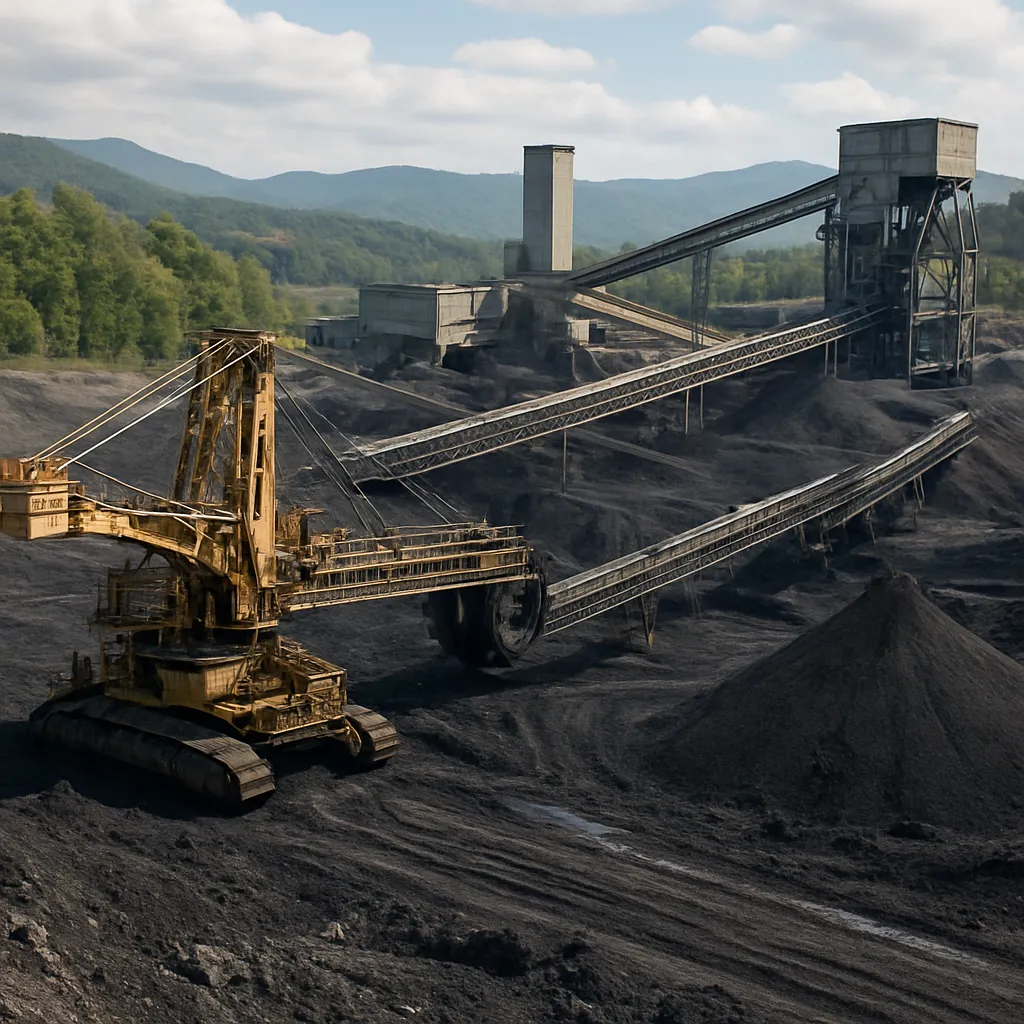
Mining methods at El Cerrejón and surrounding sites involve large-scale open-pit extraction. The operation uses massive shovels, haul trucks, draglines and dozers to remove overburden and extract coal seams. Extracted coal is processed on-site to remove impurities, then transported by rail or conveyor to the export port at Puerto Bolívar on the Caribbean coast.
Production, Reserves and Statistical Profile
El Cerrejón has been one of the largest single coal mines in the world by volume. Over the past two decades the mine’s annual production has typically ranged in the tens of millions of tonnes. Annual outputs have fluctuated due to market conditions, operational adjustments, and regulatory or social events, but the mine has historically been able to produce in excess of 20–30 million tonnes in stronger market years.
- Reserves and resources: The region hosts substantial coal reserves, with proven and probable reserves commonly quoted in the order of over 1 billion tonnes and total resources that may extend into multiple billions of tonnes when inferred resources are included. These figures have allowed multi-decade mine-life planning.
- Export share: Cerrejón has represented a prominent share of Colombia’s total coal exports—at times accounting for around one quarter to one third of the country’s exported coal volume—making it strategically important to national trade balances.
- Contribution to national output: Colombia is one of the world’s leading thermal coal exporters, and the La Guajira complex has historically been a bedrock of that position.
Exact year-by-year figures vary; readers consulting recent annual reports of the mining companies involved or Colombian national statistics (such as the Ministry of Mines and Energy and the National Administrative Department of Statistics, DANE) will find the most current tonnage, reserve, production and export breakdowns. Nonetheless, the scale is unmistakable: La Guajira’s coal operations are measured in tens of millions of tonnes per year and billions of tonnes in accessible resources.
Ownership, Infrastructure and Logistics
For many years the El Cerrejón complex was jointly held by major international mining companies, reflecting the project’s scale and capital intensity. Historically, ownership involved large global mining groups each holding near-equal stakes. Such partnerships facilitated the investment in the extensive infrastructure required for efficient large-scale coal export.
Key infrastructure elements include:
- Railway: A dedicated railway links the mine to the export terminal, designed to move high volumes of coal reliably to the coast. The railway length from the mining pits to Puerto Bolívar spans roughly on the order of a hundred-plus kilometers, traversing semi-arid landscapes and serving as a vital logistics artery.
- Port facilities: Puerto Bolívar is among the region’s principal coal-export ports, equipped with ship-loading facilities capable of handling Panamax-class bulk carriers. Coal is stockpiled and blended at port to meet buyer specifications.
- On-site processing: Coal washing and sizing plants at the mine improve product quality and reduce impurities prior to shipment.
These integrated systems—mine, rail, and port—allowed Cerrejón to reach global markets competitively. The port and rail infrastructure are also critical pieces of regional transport and employment, though they raise environmental and social considerations discussed later.
Economic and Regional Importance
Coal from La Guajira has been a cornerstone of both local and national economies. At the national level, coal constitutes one of Colombia’s top export commodities by value (alongside oil and certain agricultural products), generating foreign exchange and contributing to national GDP. For the La Guajira department, the mine has supplied direct and indirect employment, municipal and departmental revenues via royalties and taxes, and investments in local infrastructure such as roads, water projects and social programs.
Direct employment at large mines like El Cerrejón has included several thousand workers on payroll, with additional contractors and service providers numbering many thousands more. Indirectly, mining supports logistics, maintenance, hospitality and community supply chains. Royalty payments and corporate social investment programs have funded schools, health clinics and community projects in surrounding municipalities.
Nevertheless, the economic footprint is complex. While mining has generated sizable revenues and jobs, critics and local stakeholders have long argued about distributional equity, labor conditions, sustainable development prospects, and whether mining wealth has translated into broad-based improvements for indigenous and rural communities.
Environmental and Social Issues
The scale of open-pit mining inevitably brings environmental impacts and social tensions. Prominent concerns in La Guajira include:
- Land use and displacement: The expansion of open pits has required the relocation of communities and the reconfiguration of traditional territories, affecting indigenous groups such as the Wayuu. Land loss and changes in livelihood patterns (from pastoralism and small-scale farming to wage-related work) are recurring themes.
- Water and hydrology: La Guajira has an arid to semi-arid climate in many areas, making water resources scarce and highly valued. Mining can affect aquifers, surface water availability, and groundwater recharge patterns, intensifying competition for water with local communities.
- Air quality and dust: Blasting, haulage, stockpiles and ship loading generate dust and particulate emissions that can affect health and visibility. Mitigation measures such as dust suppression systems, vegetation buffers, and monitoring have been implemented to varying degrees.
- Biodiversity and ecosystem impacts: Habitat disturbance from pits, transport corridors and port activity has modified coastal and inland ecosystems, with consequences for flora and fauna uniqueness in the region.
- Social conflict and rights: Disputes over compensation, consultation, and the rights of indigenous peoples and Afro-Colombian communities have led to protests, legal challenges and calls for greater corporate accountability and government oversight.
International NGOs, human rights groups and local activists have highlighted cases where affected communities seek improved consultation, restitution and sustainable alternatives. Mining companies and government agencies have responded with social programs, environmental management plans, and community engagement efforts—though tensions often persist.
Industrial Importance and Global Market Role
La Guajira’s coal has played a strategic role in global thermal coal supply. Key aspects of this industrial importance include:
- Energy security for importing nations: Coal from Colombia has been used to fuel power plants in Europe, North America and Latin America. Its relatively low-sulfur profile made it attractive to utilities seeking compliance with environmental regulations.
- Supply chain integration: The global coal trade relies on stable, high-volume exporters. El Cerrejón’s large-scale, concentrated production provided consistent cargoes of standardized coal products, simplifying procurement for large buyers.
- Price and competition impacts: Colombian thermal coal competes with coal from other major exporters such as Australia, South Africa, the United States and Indonesia. Logistical advantages to certain markets, product quality and contractual relationships have influenced market shares over time.
However, the global energy transition—political commitments to decarbonization, increasing renewable generation and fluctuating natural gas prices—has introduced uncertainty into long-term coal demand. Mines in La Guajira face questions about future demand, potential asset write-downs, and the need to plan for eventual closure or economic diversification.
Social Programs, Mitigation and Rehabilitation Efforts
Recognizing the potential for lasting impacts, mining operators and government authorities have implemented various mitigation and community development initiatives. Examples include:
- Investment in local infrastructure (schools, clinics, water systems) financed through company programs and national royalties.
- Environmental management plans that set standards for water use, tailings and waste handling, dust suppression and biodiversity offsets.
- Resettlement programs intended to provide adequate housing, compensation and livelihood support for relocated families—though the adequacy and fairness of such programs remain debated.
- Progressive mine rehabilitation plans that seek to reshape exhausted pits into stable landscapes, including recontouring, topsoil replacement and revegetation with native species where feasible.
Monitoring by government agencies and independent auditors is an ongoing feature of the regulatory framework, aimed at ensuring that commitments are met and that environmental performance improves over time.
Legal, Political and Human Rights Context
Mining in La Guajira is not only an economic activity but also a focal point for political debate and legal action. Issues have included:
- Litigation related to land titles, community consultations and alleged environmental damages.
- National and regional political debates over royalty distribution, regulatory oversight and the balance between extractive industries and other economic activities like tourism and fisheries.
- Calls for improved corporate transparency and adherence to international frameworks on human rights and free, prior, and informed consent for indigenous peoples.
Colombian institutions and international stakeholders continue to engage around frameworks to balance resource extraction with social justice and sustainable development goals.
Future Outlook and Transition Challenges
The future of coal mining in La Guajira hinges on several interrelated trends:
- Global demand trajectory: Continued declines in coal consumption in some markets due to decarbonization could reduce export volumes; conversely, persistent demand in other regions might sustain operations for a number of years.
- Economic diversification: For La Guajira to achieve resilience, local economies will likely need to diversify beyond reliance on large-scale extraction—through tourism, renewable energy, fisheries, and small-scale agriculture adapted to the local climate.
- Closure and reclamation planning: Given finite reserves, rigorous planning for mine closure and community transition will be essential to avoid economic collapse once extraction becomes uneconomic or exhausted.
- Investment in low-carbon alternatives: National and regional strategies may consider investments in renewables—given La Guajira’s high solar and wind potential—as long-term pathways for employment and energy production.
Forward-looking approaches emphasize stakeholder engagement, transparent revenue management, upskilling of local labor forces, and environmental restoration as pillars for sustainable regional development.
Notable and Lesser-Known Facts
Several interesting points help underscore the uniqueness and complexity of La Guajira’s coal sector:
- El Cerrejón ranks among the largest single open-pit coal mines globally in terms of area and historical output. The scale of earthmoving operations and the size of equipment used are notable.
- The export terminal at Puerto Bolívar is a critical maritime gateway for Colombian coal and has been expanded over time to handle larger vessels and volumes.
- The Wayuu indigenous culture, endemic to La Guajira, is one of the most visible local societies affected by mining. Wayuu communities have engaged in negotiations, protests and legal advocacy to protect lands and livelihoods.
- Because of the semi-arid climate in parts of La Guajira, water resource management is a central operational concern and a key point of contention with local communities reliant on scarce water supplies.
- Corporate social responsibility programs and royalties have funded some community projects, but debates continue about the long-term equivalence of investment versus the permanent alteration of landscapes and livelihoods.
Concluding Perspective
The La Guajira coal mining complex is emblematic of contemporary extractive-industry challenges: immense economic importance and capacity to generate export earnings and jobs on one hand, and complex environmental, social and governance dilemmas on the other. While the mine has underpinned Colombia’s position in the global thermal coal market for decades, the future will be shaped by shifting global energy policies, commodity price dynamics, and the ability of regional stakeholders to manage transition, compensation, and rehabilitation in ways that are equitable and sustainable.
El Cerrejón and related operations will likely remain a subject of close scrutiny—commercially, politically and socially—in the coming years as Colombia and the world negotiate the balance between current energy needs and long-term climate and development goals.