This article provides a comprehensive overview of the Jembayan Coal Mine in Indonesia, covering its location, geological and technical characteristics, economic and statistical context, and broader significance to the Indonesian coal sector and regional development. Where specific public data for Jembayan are limited, the discussion situates the mine within the larger patterns of coal geology, production, trade and environmental challenges in Indonesia to give a balanced, well-rounded picture for industry observers, students, and policymakers.
Location and geological setting
The Jembayan coal concession is located on the island of Kalimantan (Indonesian Borneo), one of the main coal-bearing regions of Indonesia. The Kalimantan provinces (East, South, Central and West Kalimantan) together host the largest contiguous coalfields in the country and have been the focus of large-scale open-pit mining since the late 20th century. Jembayan lies within this regional context of sedimentary basins formed during the Neogene and Paleogene, where shallow marine and fluvial deposition created extensive peat and swamp sequences that later coalified into exploitable seams.
Geologically, coal deposits in Kalimantan are typically of Tertiary age and are characterized by multiple seams of variable thickness, often interbedded with sandstones and shales. The coal types are commonly low-rank coals (lignite to sub-bituminous grades), with typical properties including moderate to low calorific value, variable moisture and ash content, and generally low sulphur. These characteristics make Kalimantan coal particularly suitable for use as thermal coal in power generation and for export markets that require relatively low-sulphur fuel.
What is mined at Jembayan: coal type and quality
Jembayan’s product is primarily coal destined for thermal use in power plants and industrial boilers. Based on regional analogues in Kalimantan, the coal mined at Jembayan is expected to be dominantly sub-bituminous to high-moisture low-rank thermal coal. Typical quality parameters for similar mines in the region include:
- Calorific value often in the range of 4,000–6,000 kcal/kg (GAR or NAR depend on reporting),
- Moisture and volatile matter relatively high compared with higher-rank coals,
- Ash content that can vary widely (from moderate to high, often influenced by rock contamination),
- Generally low sulphur content, which is favorable for export to markets with sulphur restrictions.
Coal from Jembayan is therefore mainly marketed as a thermal fuel for both domestic power generation and export. Depending on beneficiation steps, stockpiling and blending practices, the mine’s product can be tailored to meet the specifications of different buyers in Asia, where demand has traditionally been strongest.
Mining methods, processing and infrastructure
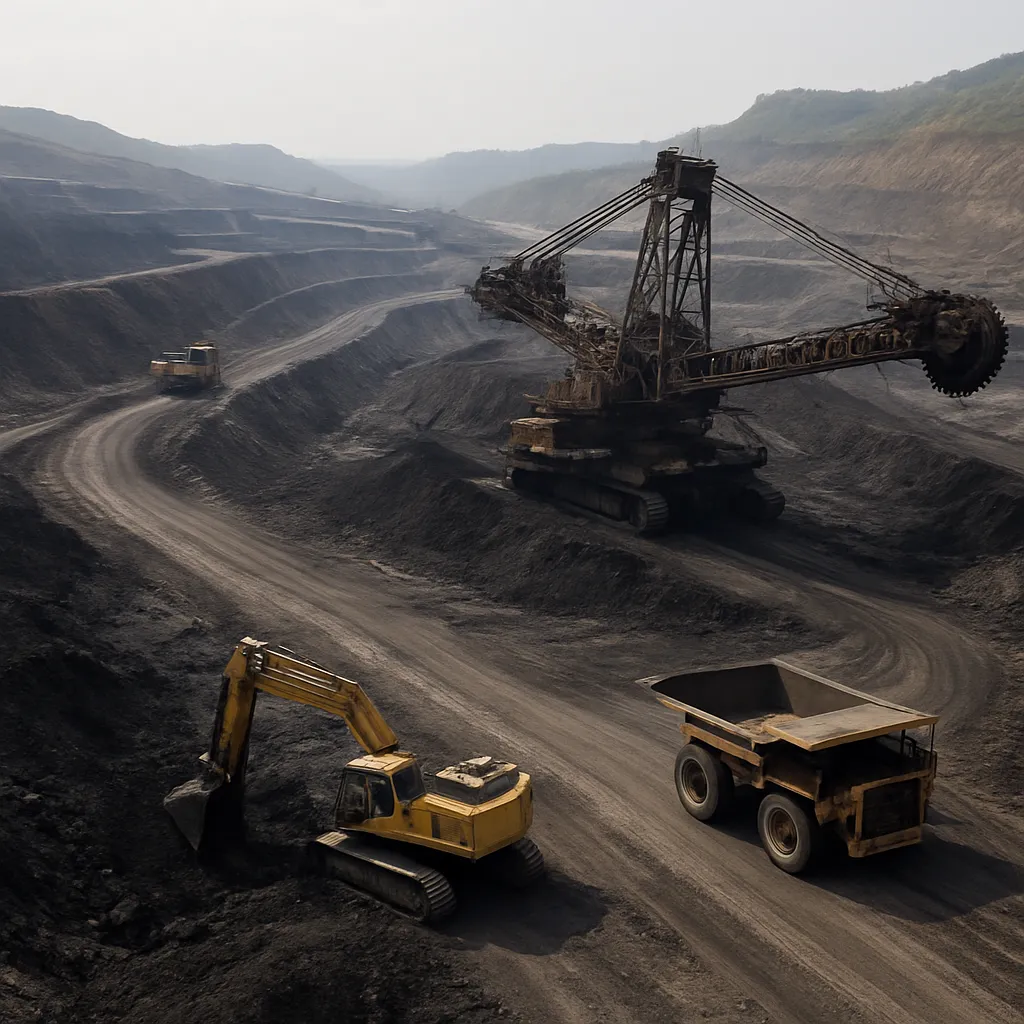
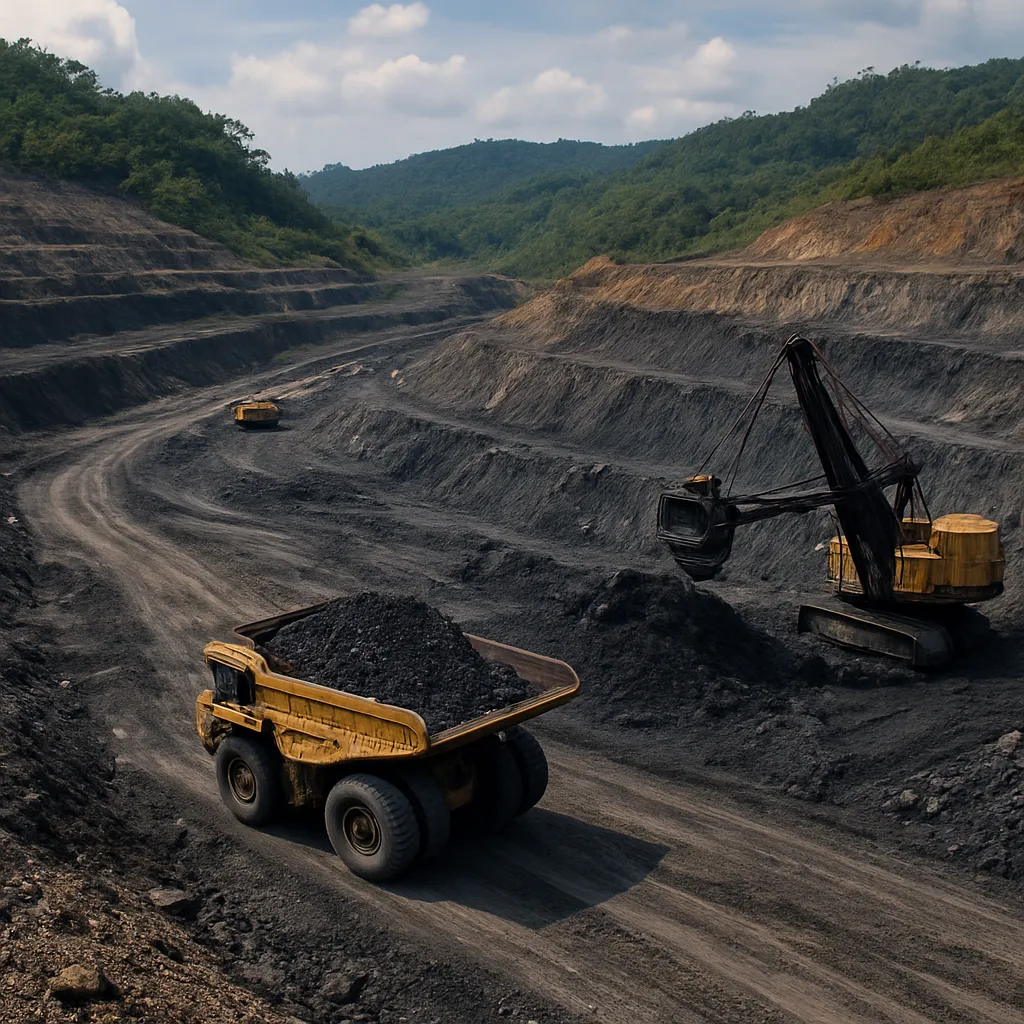
Most surface coal operations in Kalimantan use open-pit mining because of shallow seam depths and large lateral extents. Jembayan is operated using similar approaches: clearing of vegetation, overburden removal by excavators and haul trucks, and staged extraction of coal benches. The scale of equipment ranges from mid-size earthmoving fleets to larger draglines and shovels depending on the mine’s production target.
After extraction, coal may undergo simple processing such as screening, crushing and washing (where water availability and economics permit) to improve calorific value and reduce ash. Because river systems and coastal ports are important logistical arteries in Kalimantan, Jembayan relies on a combination of internal haul roads, trucking networks, barging on rivers and port facilities for export. The proximity to coastal terminals or transshipment points strongly influences operating costs and competitiveness on international markets.
Logistics and export routes
- Road haulage from pit to stockpile and local processing plant,
- Barge transport for inland river terminals where navigable waterways exist,
- Shipment via nearby coastal ports—either dedicated private jetties or shared bulk terminals at provincial ports,
- Potential use of transshipment at anchorage or larger hub ports for longer-haul exports.
Economic, fiscal and statistical context
Precise public statistics specific to the Jembayan mine—such as annual production volumes, reserve estimates and detailed fiscal contributions—are not always fully disclosed in publicly accessible databases for every concession. However, Jembayan should be viewed within the broader economic matrix of Indonesian coal mining. Key points for context:
- Indonesia has been one of the world’s largest coal producers and exporters for decades. Coal revenue represents a substantial source of foreign exchange, regional employment and government royalties.
- Regional mines in Kalimantan often support local economies via direct employment (mine operations, maintenance, administrative roles), indirect jobs (contractors, logistics, services) and public revenues (royalties, taxes, land use fees).
- Fiscal regimes in Indonesia typically include royalties based on coal price and calorific value, corporate income tax, and regional levies that provide revenue to provincial and district governments.
- Export markets for Indonesian thermal coal have historically been dominated by East and South Asia—namely India, China, Japan, South Korea, Taiwan, and Southeast Asian neighbors.
For perspective on scale, national-level data show that Indonesian coal output and exports have been highly variable year-to-year depending on global demand, domestic policy (including export bans/restrictions in some years), and price cycles. Many mid-tier mines like Jembayan produce from hundreds of thousands up to several million tonnes per year depending on concession size and company strategy. Where Jembayan sits within that range depends on its proven and probable reserves and the operator’s investment level.
Employment, local economy and royalties
Mines the size of Jembayan typically provide the following economic contributions:
- Direct employment for a few hundred to several thousand workers depending on mechanisation;
- Contractor opportunities for haulage, plant maintenance, catering and civil works;
- Payments to local governments through royalties and land use arrangements;
- Investment in local infrastructure such as roads, power and social programs as part of corporate social responsibility (CSR) commitments.
Production statistics and market profile
Publicly available, mine-level statistics vary according to reporting rules and corporate disclosures. For readership purposes, typical statistics you might encounter for a mine like Jembayan include:
- Proven + probable reserves quoted in the range of several million to tens or low hundreds of million tonnes for established concessions in Kalimantan;
- Annual production profiles from under 0.5 Mtpa (million tonnes per annum) for small operations up to several Mtpa for medium operations;
- Product quality specifications (GAR/NAR or kcal/kg, ash %, moisture %, sulphur %), which determine pricing and blending strategy for customers;
- Port throughput and average shipment size (usually 25–65 kt per Panamax or smaller vessel for regional routes).
Because exact figures for Jembayan may be commercially sensitive or reported only in annual statements, interested parties typically consult company disclosures, Indonesian government mining registries, or subscription-based industry databases for up-to-date production and reserve numbers.
Significance in the coal industry and regional development
Although Jembayan may not be one of the global megaprojects, mines of its class are strategically important for several reasons:
- They contribute to national coal output and thus to Indonesia’s role as a major thermal coal supplier to Asia;
- They underpin local employment and small-town economies in Kalimantan, where alternative industrial opportunities may be limited;
- They provide feedstock for nearby power plants or for export contracts that diversify Indonesia’s customer base;
- Smaller to mid-sized concessions are often more nimble and can adapt production rates to short-term market opportunities, which supports flexibility in supply chains.
From an investment perspective, Jembayan-type assets are evaluated for reserve size, mining costs per tonne, transportation cost to port, coal quality and the contractual landscape for off-take. Collectively, these factors determine the mine’s competitiveness and contribution to the company’s portfolio.
Environmental and social considerations
Coal mining in Indonesia, including at Jembayan, faces environmental and social challenges that are increasingly important to operators, financiers and regulators.
Environmental impacts
- Land clearing and habitat loss: open-pit mining requires vegetation removal and can fragment ecosystems, particularly in biodiverse Kalimantan forests;
- Water management: mining and washing operations can affect local water quality through suspended solids and changes in hydrology if not properly controlled;
- Acid mine drainage risks are typically lower for low-sulphur Indonesian coals, but any exposed sulphide-bearing strata need monitoring;
- Greenhouse gas emissions: coal combustion is carbon-intensive. Scope 1 emissions at the mine (diesel use, fugitive methane) and the much larger Scope 3 emissions (when coal is burned) are part of the climate conversation;
- Peatland disturbance: in parts of Indonesia, mining or infrastructure development on peatlands causes large CO2 releases—operators must avoid these sensitive environments or implement costly mitigation.
Social impacts and community engagement
Responsible operators undertake community engagement, land acquisition protocols, livelihood programs and local hiring commitments. Key social topics for Jembayan and similar mines include:
- Fair compensation and resettlement where land is acquired;
- Health and safety standards to protect workers and local communities;
- Investment in local services (schools, clinics, roads) as part of CSR;
- Managing expectations around short mine life vs. long-term community development.
Regulation, permitting and sustainability trends
Indonesia has strengthened regulatory oversight of mining in recent years, with a focus on:
- Clearer licensing and concession mapping to reduce overlaps and illegal mining,
- Improved environmental permitting and mine closure planning,
- Requirements for progressive rehabilitation and post-mining land use,
- Fiscal policy refinement (royalty structures linked to calorific value and price) and occasional export policy interventions to safeguard domestic supply.
Sustainability trends affecting Jembayan and its peers include increasing pressure from financiers and customers to disclose environmental, social and governance (ESG) performance, and a gradual shift in some markets away from coal toward lower-carbon energy. At the same time, near-term energy demand in many Asian markets has sustained a role for Indonesian thermal coal, creating a complex policy and commercial environment for mines.
Market dynamics and future prospects
The short- to medium-term outlook for specific coal mines depends on several interacting factors:
- Global thermal coal demand—driven by power generation needs in Asia and fuel-switching economics;
- Coal price volatility, which affects producer margins and investment decisions;
- Logistics costs—distance to port, barging versus trucking, and port fees;
- Domestic policy—Indonesia has periodically adjusted export rules, domestic market obligations and licensing conditions;
- Access to capital and market offtake agreements—long-term contracts with utilities or traders reduce market risk for mines.
For Jembayan, strategic options include optimizing mining plans for cost reduction, investing in modest beneficiation to improve product value, forming long-term offtake partnerships with regional buyers, and pursuing continuous improvement in environmental management to maintain social license to operate. In the longer term, the global energy transition will influence the timing of peak demand for thermal coal; mines with lower production costs and better logistics will typically be more resilient.
Interesting technical and historical notes
Several ancillary points help to understand the broader context around mines like Jembayan:
- Multi-bench open-pit operations in Kalimantan sometimes expose thick seam intervals that can be mined efficiently with modern fleets.
- Coal beneficiation is not universally applied—many Indonesian exporters rely on blending different coal qualities rather than full-scale washing plants, due to water constraints or capital costs.
- Indonesia’s geography has produced an industry adapted to river and coastal logistics; barging operations are a distinctive feature of Kalimantan mining compared to inland rail logistics used in some other coal provinces globally.
- Community expectations for jobs and infrastructure can shape the social footprint of mining companies and determine long-term legacy outcomes once mining ceases.
Research, data sources and where to find more information
For readers seeking detailed, up-to-date statistics on the Jembayan mine specifically, recommended sources include:
- Company annual reports and investor presentations if the concession is owned by a publicly reporting entity,
- Indonesian Ministry of Energy and Mineral Resources (ESDM) databases and annual mining reports,
- Provincial mining and forestry agencies in Kalimantan for environmental permits and local development data,
- Specialised industry databases and consultants that track mine-level production, reserves and shipments,
- Academic and think-tank studies on Indonesian coal geology, regional development, and environmental impacts.
Given the evolving policy and market environment for coal globally, continuous monitoring of both local disclosures and broader market indicators is advised for stakeholders interested in the Jembayan mine’s future performance or in comparative analysis with other Indonesian coal sites.
Concluding observations
Jembayan is an example of a Kalimantan coal concession that embodies the key characteristics of Indonesia’s thermal coal industry: sedimentary low-rank coal geology, open-pit mining methods, a mix of domestic and export market orientation, and complex environmental and social dynamics. While specific publicly available production and reserve statistics for Jembayan may be limited in open sources, the mine contributes to provincial economies through jobs, royalties and infrastructure. Going forward, its commercial viability will hinge on cost competitiveness, logistical access to ports, contractual arrangements with buyers, and the operator’s ability to meet rising expectations on governance and sustainability. For stakeholders, balancing the immediate economic benefits of coal extraction with longer-term environmental stewardship and community development remains the central challenge.