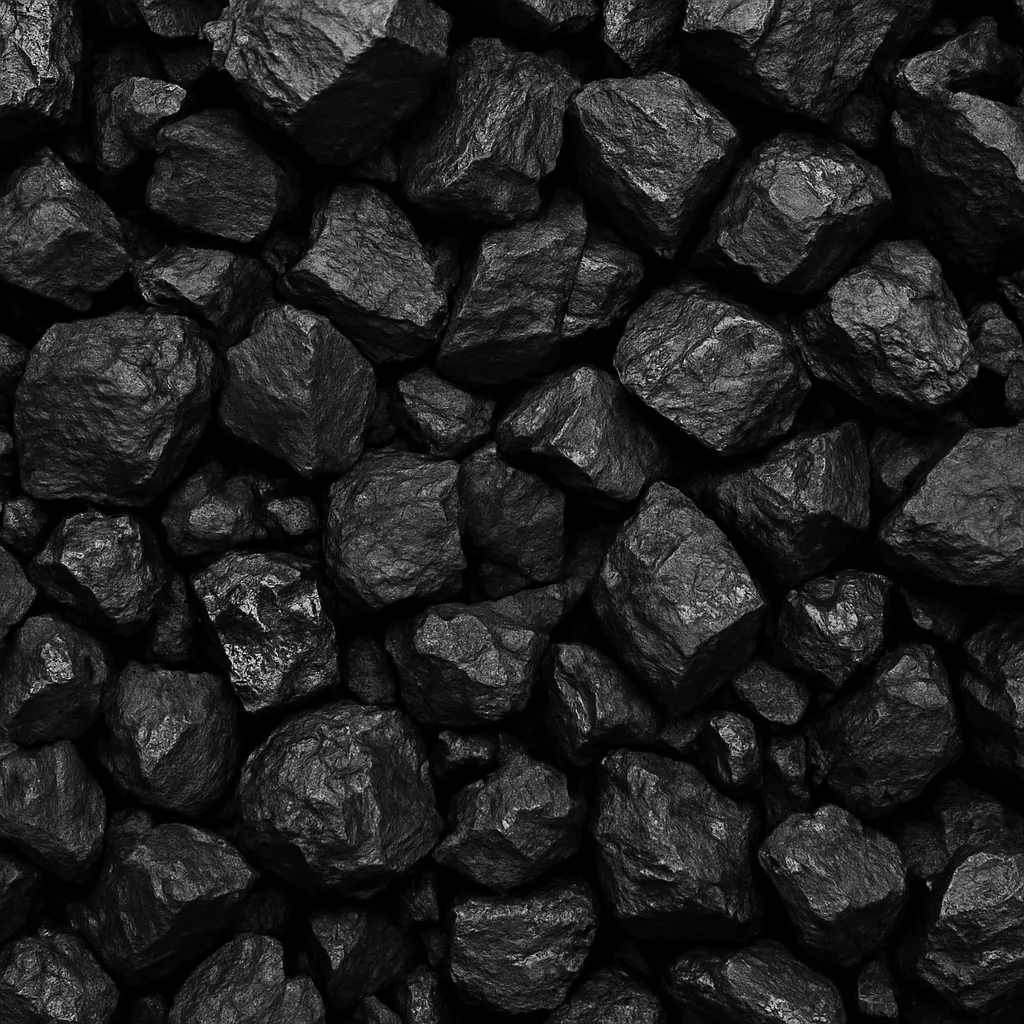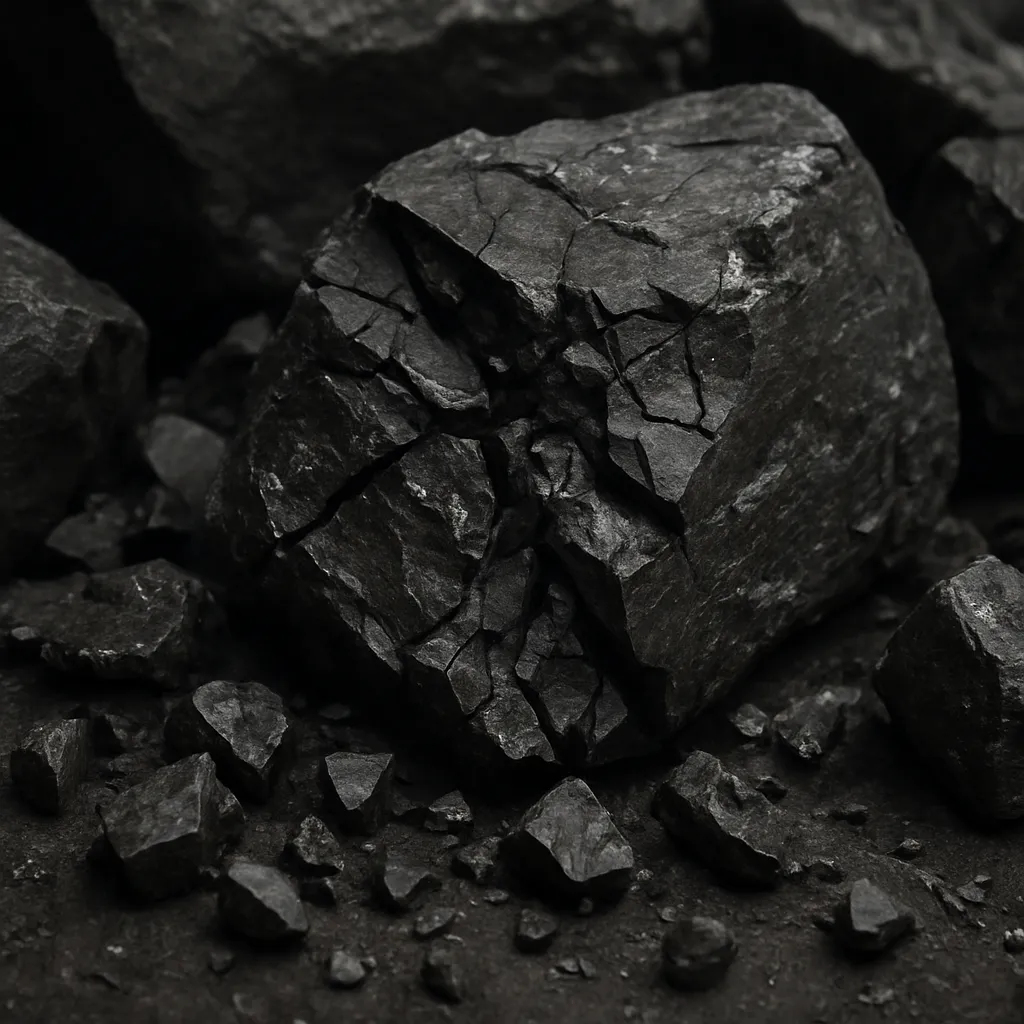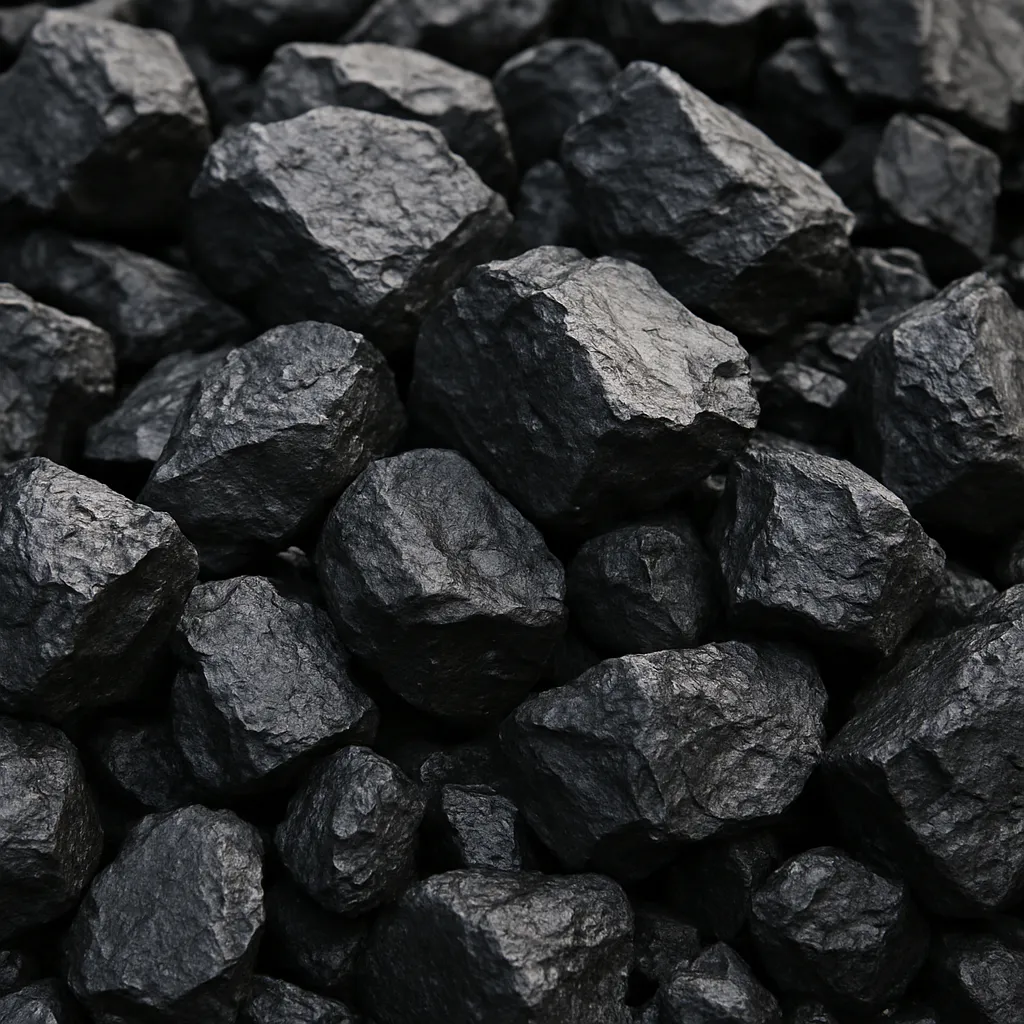
This article examines mining-grade coal: its geology, types, where it occurs and is extracted, economic and statistical dimensions, industrial importance, and ongoing technological and environmental developments. The discussion covers both the high-quality coals used in steelmaking and the bulk coals burned for power, placing them in global context and highlighting the key issues facing the sector today.
Geology, Grades and Technical Characteristics
Coal is a sedimentary rock formed by the accumulation and compaction of plant material over geological time. The physical and chemical properties of coal vary widely depending on the original vegetation, burial conditions, and subsequent geological processes such as heat and pressure. For practical and commercial purposes, coal is commonly classified into several ranks: lignite (brown coal), sub‑bituminous, bituminous, and anthracite. Another useful commercial distinction is between metallurgical (or coking) coal and thermal (or steam) coal.
- Lignite: lowest rank, high moisture, low energy density, used mainly for local power generation near mines.
- Sub‑bituminous and bituminous: widely used for electricity generation; certain bituminous coals are suitable for coking after preparation.
- Anthracite: highest rank, high carbon, high energy content, low volatile matter; used for specialized industrial applications and blending.
- Metallurgical or coking coal: selected for properties that allow it to produce coke—porous, strong carbon material—when heated in the absence of air. Coke is essential in blast-furnace steelmaking.
- Thermal or steam coal: optimized for combustion properties in power plants—heat content, burn characteristics, and emissions profile.
Key coal quality parameters include calorific value (energy per unit mass), volatile matter, fixed carbon, ash content, sulfur content, and moisture. Lower ash and sulfur and higher fixed carbon are generally desirable for industrial applications. High-quality metallurgical coal must also have specific plasticity and caking characteristics to form a strong coke.
Where Coal Occurs and Where It Is Mined
Coal deposits are distributed across all continents except Antarctica, forming in basins where plant-rich sediments accumulated in past geological eras (primarily Carboniferous, Permian, and Tertiary periods). Mining-grade coal deposits occur in sedimentary basins that can be shallow or several kilometers deep. Extraction techniques and mine economics depend on deposit depth, seam thickness, geology, and surrounding land use.
Major Coal Basins and Producing Regions
- Asia: China and India host extensive coal deposits and account for a large share of global production and consumption. Major basins include the Shanxi and Xinjiang basins in China and the Jharia and Damodar basins in India.
- Oceania: Australia has rich coalfields in Queensland and New South Wales and is the world’s largest exporter of high-quality metallurgical coal and a major thermal coal supplier.
- North America: In the United States, the Powder River Basin (Wyoming, Montana) is a major source of low‑sulfur thermal coal, while Appalachian basins produce higher-rank coals including bituminous and anthracite. Canada and Mexico also have significant deposits.
- Russia and Central Asia: Russia has extensive coal reserves across Siberia and the Far East and is a major producer and exporter of both thermal and coking coals.
- Africa: South Africa’s coalfields (e.g., Mpumalanga) supply domestic power and metallurgical coal for export; other countries like Mozambique and Botswana have active or developing coal sectors.
- South America: Colombia is a large exporter of thermal coal, while countries such as Brazil have significant domestic coal production for industry and power.
Mining Methods
Two primary mining methods dominate: surface (opencast) mining and underground mining. Surface mining is used where coal seams are relatively close to the surface and allows large-scale, lower-cost extraction. Underground mining is necessary for deeper seams and uses techniques such as longwall mining and room-and-pillar. Both have distinct cost structures, capital needs, safety risks, and environmental footprints.
Mining, Processing and Quality Assurance
Mining-grade coal destined for industrial processes typically undergoes several stages beyond extraction to meet specification: crushing, screening, coal washing (beneficiation), and blending. Washing removes impurities like rock and ash and improves calorific value and coking characteristics. Coal for steelmaking undergoes stringent testing for caking properties, ash composition, sulfur, phosphorus, and trace elements that can affect furnace performance.
- Coal washing plants increase saleable yield and reduce transport costs by removing inert material.
- Coke ovens convert metallurgical coals into coke through heat-driven carbonization; coke quality is critical for blast furnace efficiency.
- Sampling and laboratory analysis are integral to maintaining product consistency and meeting contract specifications for power plants, steel mills, or exporters and importers.
Economic and Statistical Overview
Coal remains a major global commodity with deep economic importance in many countries. While some advanced economies have reduced coal use amid decarbonization efforts, coal continues to supply large shares of electricity and industrial heat in Asia, Africa, and parts of Latin America. Below are key economic and statistical themes describing the contemporary coal landscape.
Production, Consumption and Reserves (approximate figures)
- Global production of coal (hard coal and lignite combined) has historically ranged around 7 to 8 billion tonnes per year in the early 2020s. Annual totals can fluctuate with demand, energy policies, and commodity prices.
- Global proven coal reserves are large relative to current production. Estimates from major energy reviews put total proved reserves on the order of roughly 1 trillion tonnes of oil-equivalent coal (a commonly cited figure is about 1,000–1,100 billion tonnes of proven recoverable coal worldwide), giving a long reserves-to-production horizon in aggregate terms.
- Top producers and consumers: China is both the largest producer and consumer of coal, accounting for a substantial share of global output and use. Other major producers include India, the United States, Australia, and Indonesia. Australia and Indonesia are among the largest exporters, while China, India, Japan, South Korea, and Taiwan are major importers of coal.
Because coal markets are segmented between metallurgical and thermal products, prices and trade flows differ. Metallurgical coal commands a premium due to its role in steelmaking and the limited number of high-quality deposits. Thermal coal markets are large and more price-sensitive to cyclical demand for electricity and fuel switching to gas and renewables.
Employment and Economic Impact
Coal mining and associated industries provide employment and fiscal revenue through wages, royalties, taxes, and export earnings. In regions with large coal sectors, the industry underpins local economies and infrastructure. However, mechanization and productivity improvements have reduced direct mining employment per tonne produced over time. The fiscal contribution of coal-rich regions can be substantial, supporting government budgets and regional development—especially in major exporting countries.
Trade and Prices
International coal trade drives regional specialization: exporters with abundant, high-quality deposits (notably Australia) dominate coking coal exports, while countries with lower-cost thermal coal or favorable logistics (Indonesia) serve large Asian power markets. Coal prices are volatile and driven by demand for electricity and steel, shipping costs, and geopolitical factors. Price spikes occur when supply is constrained or when energy demand surges in cold winters or economic recoveries.
Industrial Importance and Uses
Coal’s dominant historical roles are twofold: providing fuel for electricity generation and serving as the principal source of carbon for steelmaking. These uses underpin coal’s industrial value.
- Electricity generation: Coal-fired power plants remain a backbone of many national grids because of dispatchability and low fuel cost per unit energy in places with domestic coal.
- Steel production: The blast-furnace/basic-oxygen furnace route relies on coke made from metallurgical coal to reduce iron ore into pig iron. About 70–80% of steel is still produced via coal-dependent blast-furnace methods globally, though alternative direct reduced iron (DRI) routes using natural gas or hydrogen are growing.
- Industrial heat and process applications: Cement kilns, chemical production, and metallurgical processes use coal as fuel or feedstock.
- Coal-derived products: Coal-to-liquids (CTL) and coal gasification technologies can produce synthetic fuels, chemicals, and methanol—options used primarily where oil and gas are scarce or prices are high.
Environmental, Health and Social Impacts
Coal’s environmental footprint is a central concern shaping policy and investment. From extraction to combustion, coal creates impacts that include greenhouse gas emissions, air pollution, water use and contamination, land disturbance, and community health effects.
- Greenhouse gas emissions: Coal combustion is among the most carbon-intensive energy options. Globally, coal use for electricity and industry contributes a large share of energy-related CO2 emissions, making coal-phase-down a target in climate mitigation strategies.
- Air pollution: Burning coal emits particulate matter, sulfur dioxide, nitrogen oxides, and mercury, with direct health impacts on respiratory and cardiovascular health. Emission control technologies such as flue gas desulfurization and particulate filters reduce but do not eliminate these pollutants.
- Mine impacts: Surface mining alters landscapes and ecosystems, while underground mining can cause subsidence and water table changes. Coal mining regions have historically faced occupational health risks such as pneumoconiosis among miners.
- Social dimensions: Coal-generated wealth can foster infrastructure and development but also create economic dependency, making transitions difficult when mines close or demand declines. Community engagement, just-transition planning, and retraining programs are essential for equitable outcomes.
Mitigation, Technologies and the Future of Mining-Grade Coal
Efforts to reconcile coal’s industrial role with climate and environmental goals have led to technical and policy responses aimed at reducing impacts and extending the utility of coal in a lower-carbon world.
Cleaner Combustion and Efficiency
Upgrading existing coal plants, building high-efficiency low-emission (HELE) plants, and improving combustion efficiency reduce CO2 per unit of electricity. While these measures lower emissions intensity, absolute emissions depend on overall coal use.
Carbon Capture, Utilization and Storage (CCUS)
CCUS technologies can capture CO2 from coal-fired plants or industrial processes and either store it geologically or utilize it in industrial processes. CCUS is considered necessary by many energy models to achieve deep decarbonization while retaining some coal and industrial operations, especially steelmaking. However, CCUS faces challenges of cost, scale-up, and policy support.
Alternative Steelmaking Routes
The steel sector is experimenting with and adopting DRI using natural gas or hydrogen, electric arc furnaces (EAF) recycling scrap, and innovative metallurgy that reduces reliance on coke. These pathways can progressively decrease demand for metallurgical coal, although full transition timelines depend on raw material availability, electricity decarbonization, and capital turnover rates in steel plants.
Coal Mine Methane and Circular Approaches
Mitigating methane emissions from mining (coal mine methane capture) provides a near-term climate win, as methane is a potent greenhouse gas. Captured methane can be used for power or industrial heat. Beneficiation wastes can be reclaimed or used in construction materials, and progressive land rehabilitation reduces long-term environmental liabilities.
Policy, Markets and Transition Challenges
Policy settings—carbon pricing, emissions standards, renewable energy targets, and industrial decarbonization incentives—strongly influence the future trajectory of mining-grade coal markets. Coal-dependent regions face the twin challenges of maintaining energy security and protecting livelihoods while reducing carbon intensity.
- Carbon pricing and regulatory limits on emissions will raise the cost of unabated coal use and favor cleaner alternatives or investments in CCUS.
- Market signals, including volatility in coal prices and shipping costs, can accelerate fuel switching where alternatives are available and affordable.
- International climate commitments and finance flows increasingly condition investment in new coal infrastructure, making project financing more complex in many jurisdictions.
Interesting and Lesser-Known Facts
- Coal is not a single uniform commodity but a family of fuels with widely differing chemical properties; the right coal for steel is not the same as the right coal for a coastal power plant.
- Some of the highest-quality metallurgical coals are geographically concentrated, giving exporting countries with those deposits a strategic advantage in steel supply chains.
- In many countries coal mining has driven the creation of towns, railways and ports—making the industry deeply integrated into national infrastructure networks.
- Historical coal seams are records of past climates and vegetation; coal beds are studied by geologists and paleobotanists to reconstruct ancient ecosystems.
- Advanced materials research explores using coal-derived carbon in high-value products, such as carbon fibers or battery anode materials, opening potential new markets for certain coal fractions.
Conclusions and Strategic Considerations
Mining-grade coal remains a major global commodity with complex roles in energy systems and industrial value chains. On the one hand, coal provides affordable, dispatchable energy and an indispensable feedstock for conventional steelmaking. On the other, its environmental and health externalities and the urgency of climate change are driving transitions that will reshape demand patterns, investment, and policy. Strategic decisions for governments and companies involve balancing short-term energy security and economic interests with long-term decarbonization goals, investing in cleaner technologies where feasible, and designing socially fair transitions for coal-dependent communities.
Key themes for stakeholders: maintaining operational and environmental standards in mining and processing; accelerating innovation in emissions reduction, CCUS and alternative steel routes; ensuring transparent markets and robust supply chains for metallurgical coal during transition periods; and prioritizing just-transition measures so that workers and regions affected by structural decline in coal are supported with jobs, retraining and economic diversification.
Together, these technical, economic and policy dimensions will determine whether mining-grade coal transitions into a managed, lower-carbon role within a diversified energy and industrial system or whether demand contracts more rapidly as alternatives and stricter climate policies prevail.