The following article offers a comprehensive profile of the Huojitu Coal Mine in China, placing it in geological, economic and industrial context. It describes the type of coal extracted, operational characteristics, infrastructure and logistical connections, as well as broader implications for regional development, employment and the environment. Where specific, verifiable statistics for Huojitu itself are available they are included; where data are scarce, the article draws on regional and national industry figures to illustrate the mine’s likely scale and significance.
Location and Geological Setting
The Huojitu Coal Mine is a coal extraction site located within the People’s Republic of China. Publicly available, mine-level documentation about Huojitu is limited, but regional mining inventories and geological surveys commonly associate it with the northern provinces that host large coal basins. These basins are part of China’s extensive coal-bearing strata that formed in late Paleozoic to Mesozoic depositional environments. The coal seams in these areas typically occur in multi-seam complexes, with variability in depth, thickness and rank across the basin.
Geologically, coal deposits in northern China are commonly stratified within sedimentary basins that include interbedded shales, sandstones and occasional coal measures. The character of coal at Huojitu is consistent with coal from many northern Chinese mines: namely a mixture of medium- to high-volatile bituminous coal and lower-rank sub-bituminous or lignite layers in shallower seams. Where deeper seams are developed and subjected to higher burial and thermal alteration, coal grades can approach coking coal quality suitable for metallurgical use.
Mining Operations and Coal Quality
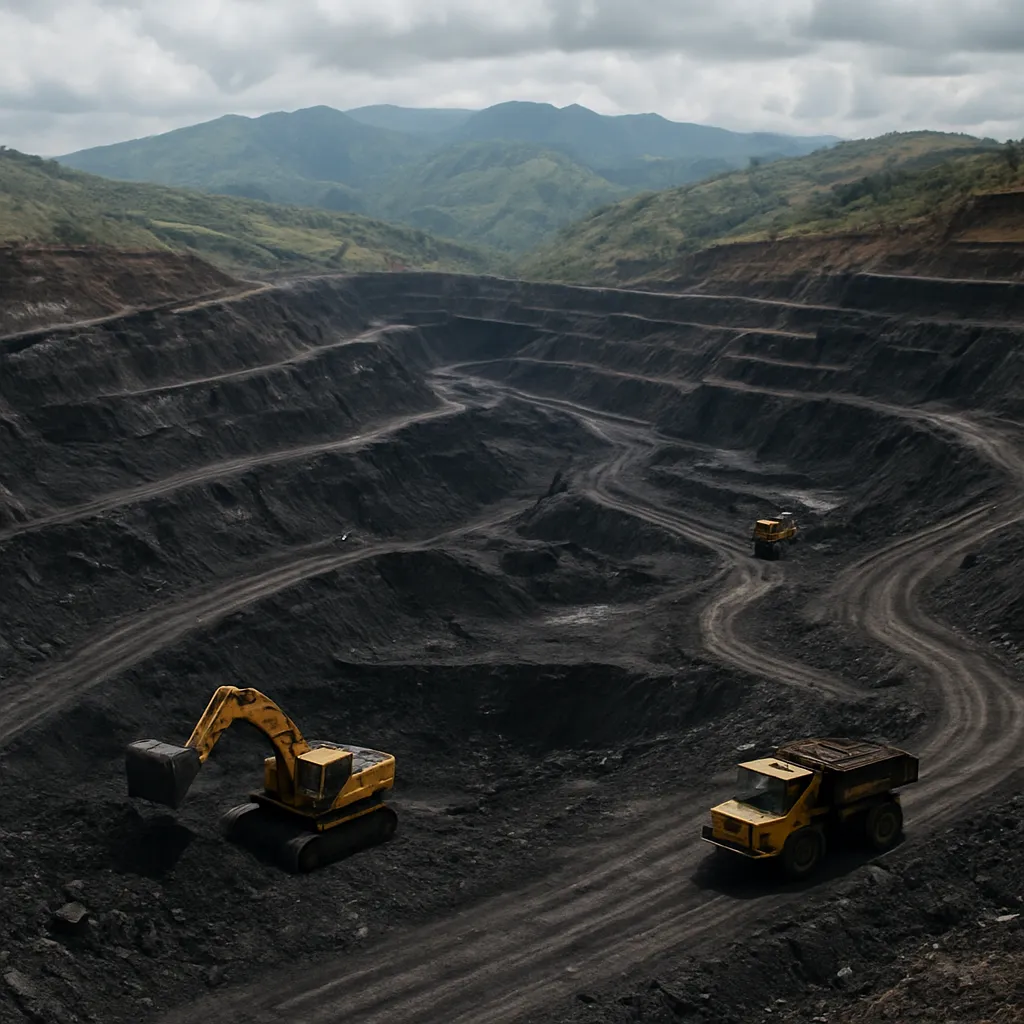
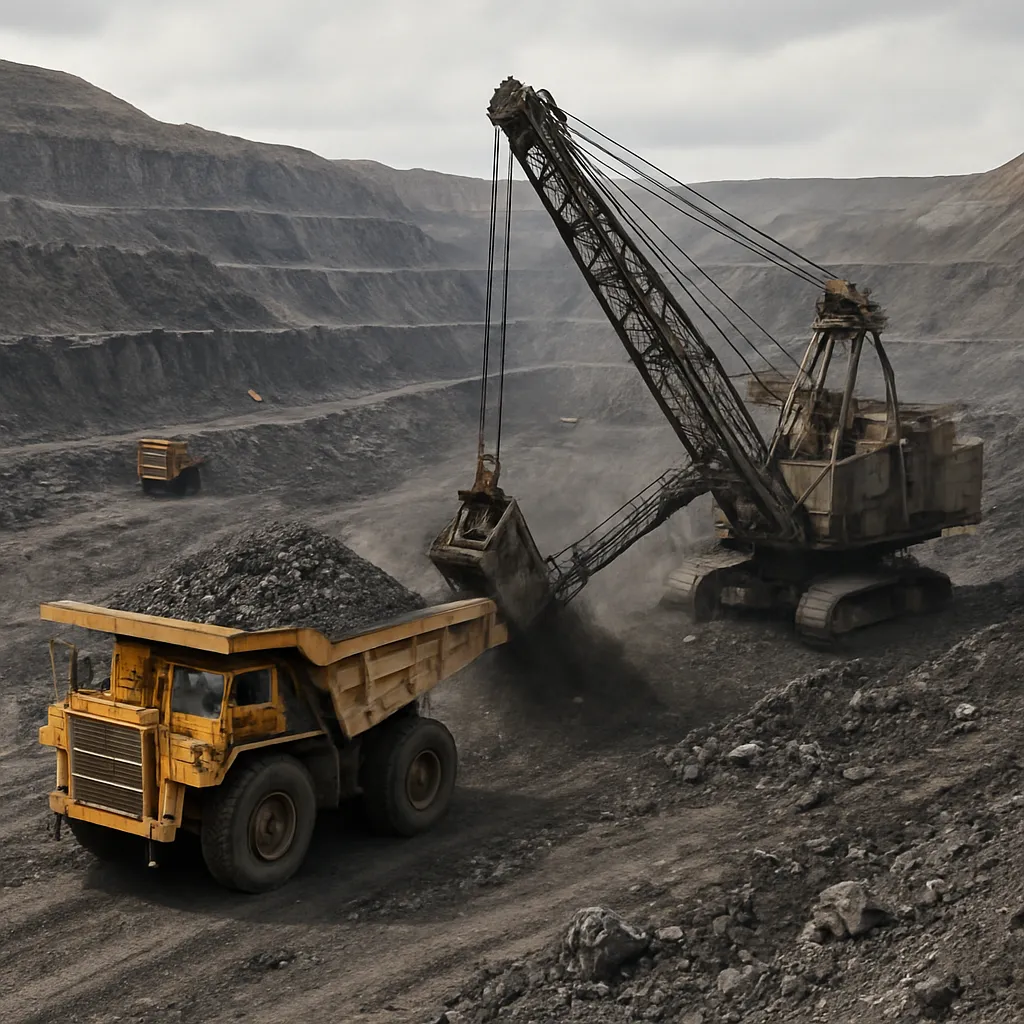
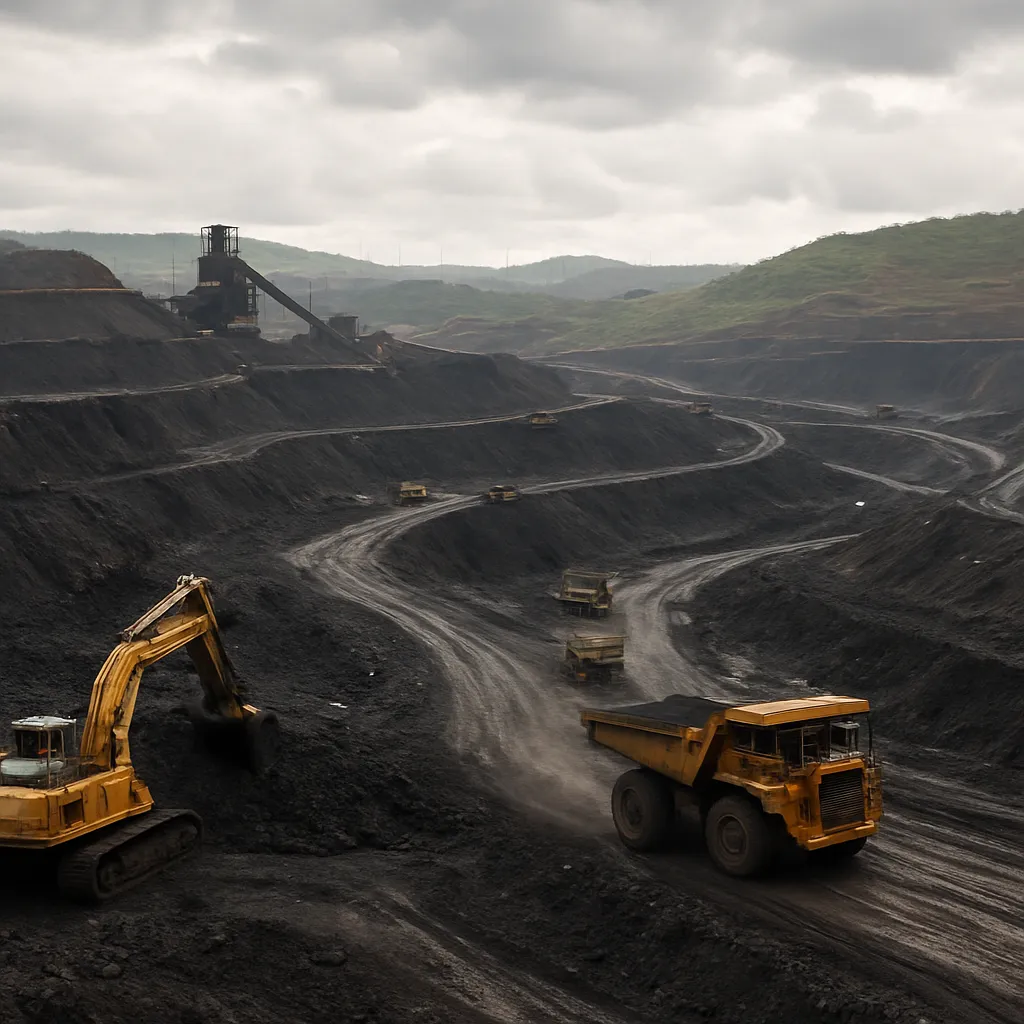
Huojitu functions as a typical modern coal mining operation combining open-pit and underground methods depending on seam depth and economic factors. The mine’s operational footprint includes extraction areas, processing and preparation plants, waste rock dumps, water management systems and on-site rail or road loading facilities connecting to regional logistics networks.
Type and Quality of Coal
- Coal grade: Available descriptions suggest Huojitu produces a mix of predominantly thermal coal with zones that can yield coking coal-grade material. Thermal coal is used mainly for power generation and industrial heat, while coking coal is valued by the steelmaking industry.
- Energy content: Regional coal from northern China often shows gross calorific values ranging from roughly 4,000 to 6,500 kcal/kg depending on rank and washability. Ash and sulfur contents vary; lower ash and sulfur coals command premium prices in domestic and export markets.
- Processing: The mine reportedly operates coal preparation facilities to wash and separate coal fractions, improving calorific value and reducing ash content to meet market specifications and emission-control standards for power plants and industrial customers.
Coal quality determines market channels: higher-volatile bituminous and coking-coal fractions flow to steel mills and higher-value industrial consumers, while lower-rank and more abundant thermal coal supplies power plants and local industries. Having on-site preparation capabilities increases the mine’s ability to tailor products to customer requirements and to comply with environmental regulations regarding emissions.
Economic Role and Local Impact
Huojitu plays a multi-dimensional economic role in its region. As a source of primary energy and raw material, the mine contributes to local fiscal revenue, employment and secondary economic activity that supports suppliers, logistics companies and service sectors.
Direct and Indirect Employment
Employment at a coal mine comprises direct operational staff—miners, engineers, geologists, plant operators, maintenance and administrative personnel—and indirect jobs in transportation, equipment supply, catering and other support services. While comprehensive, mine-level employment figures for Huojitu are not broadly published, similar-sized mines in northern China commonly employ several hundred to a few thousand workers depending on mechanization level and production capacity. In addition to operational payrolls, the mine’s capital investments stimulate local contracting and construction employment during development phases.
Fiscal and Regional Development Contributions
Local governments receive revenue through royalties, taxes and fees linked to coal extraction. Ancillary investments in roads, electricity and community services related to mining activity often accelerate regional development. Huojitu’s contributions are typical of mining projects that form a significant share of municipal budgets in coal-producing counties, financing public services and infrastructure.
Supply Chain and Industrial Linkages
Huojitu’s coal feeds into broader industrial supply chains. If the mine produces coking coal fractions, it supports steelmaking facilities either directly through short-haul deliveries or indirectly via blending and trading. Thermal coal shipments contribute to the stable fuel supply for power plants, district heating and industrial boilers. The mine’s presence supports local logistics providers, rail and road maintenance companies, and coal trading firms that manage distribution and quality certification.
Production Statistics and Reserves
Specific, independently verified production and reserve numbers for Huojitu are limited in public sources. Company-level disclosure, government mine registries and geological survey publications occasionally provide figures for some mines but many remain behind corporate or provincial reporting channels.
In lieu of precise mine-level data, it is useful to place Huojitu in the national context. China remains the world’s largest coal producer and consumer. Recent national figures indicate annual coal production on the order of approximately 3.8–4.1 billion tonnes in the early 2020s. Coal accounted for a major share of the domestic energy mix—more than 50% of primary energy consumption and even higher in electricity generation in many years. Against that backdrop, even modest mines in northern coalfields can supply hundreds of thousands to several million tonnes per year to national and regional markets.
Reserves near Huojitu are likely to be expressed in the regional geological assessments as tens to hundreds of millions of tonnes across a mining concession, depending on seam continuity, thickness and depth. The term reserves here implies economically extractable coal after accounting for mining recovery, market conditions and regulatory approvals. Proven reserve reporting requires detailed exploration data, and such reporting varies by operator, so readers should treat any unverified reserve number with caution.
Infrastructure, Logistics and Market Access
Logistical connectivity is critical to the mine’s commercial viability. Huojitu’s access to regional rail lines, highways and possibly river transport determines the cost competitiveness of its coal in domestic markets and for export where applicable. Many northern Chinese mines leverage an integrated logistics chain:
- Rail linkages to major industrial centers and port facilities for export.
- Dedicated conveyor systems and loading yards to minimize handling losses.
- On-site preparation plants to produce saleable coal sizes and to meet emission-related product specifications.
Modernization efforts in China have prioritized rail capacity expansion and dedicated coal lines to improve coal transport efficiency, reduce bottlenecks and lower freight costs. Mines connected to high-capacity rail corridors benefit from broader market access and better pricing options.
Environmental and Safety Considerations
Coal mining carries significant environmental and safety implications. At Huojitu, as in other Chinese mines, key concerns include land disturbance, water use and pollution, air emissions from processing and combustion, spontaneous combustion risks in waste stockpiles, and greenhouse gas emissions including methane.
Water and Land Management
Mining and coal washing require water; responsible operations implement water recycling and treatment to limit discharge. Land reclamation—reshaping spoil tips, restoring topsoil and replanting vegetation—reduces long-term environmental footprints and is increasingly mandated under provincial and national regulations.
Air Quality and Emissions
Processing and combustion of coal generate particulate matter and gaseous emissions. Preparation plants at Huojitu are expected to use dust-control systems, wet suppression and enclosed transfer systems to reduce fugitive dust. For downstream coal combustion, the quality of washed coal (reduced ash and sulfur) supports lower emissions at power plants and industrial users.
Methane and Safety Risks
Methane drainage and monitoring are crucial where coal seams contain gas. Methane management improves safety and, where feasible, captured methane (coalbed methane) can be used as an energy source, reducing greenhouse gas impact. Safety practices such as mechanized longwall mining, rigorous ventilation, and modern monitoring systems reduce accident rates, though risks remain and require continual investment in training and equipment.
Regulatory Context and Compliance
China’s regulatory landscape for coal mining has tightened progressively over the past two decades. Environmental impact assessments, mine safety audits, and stricter emissions standards for coal-fired power plants have influenced operators to adopt cleaner production technologies and to phase out small, unsafe mines. Larger mines like Huojitu must meet provincial and national certification for safety and environmental performance, and they are subject to spot inspections and regulatory reviews.
Industry Trends and Technological Developments
Several industry-wide trends affect Huojitu’s operations and prospects:
- Mechanization and automation: Increasing use of automated longwall systems, remote monitoring and digital mine management platforms improves productivity and safety.
- Coal washing and beneficiation: Advanced processing yields higher-grade saleable products and reduces emissions at end-user facilities.
- Carbon management: While coal demand remains significant, there is growing emphasis on carbon-mitigation measures—efficiency improvements, methane capture and, where feasible, carbon capture utilization and storage (CCUS) at large point sources.
- Market diversification: Mines seek to supply higher-value coking coal fractions to steelmakers or specialty coal markets to improve margins as domestic thermal demand patterns shift.
Socioeconomic and Community Aspects
Mining projects affect communities through changes in employment, local commerce and environmental quality. Huojitu’s operations contribute wage income and municipal revenue, but can also create challenges such as increased pressure on local services, changed land use patterns and the need for social programs addressing health and reskilling as mines mature or reduce operations.
Community engagement and corporate social responsibility initiatives—local hiring, support for healthcare and education, and transparent environmental monitoring—are important for maintaining social license to operate. Rehabilitation and mine-closure planning are also critical to ensure long-term post-mining land usability and economic transition.
Future Outlook
The outlook for Huojitu reflects broader dynamics in China’s energy and industrial policy. Short- to medium-term demand for coal is likely to remain solid in certain sectors—particularly steelmaking and some industrial heat applications. At the same time, national policy imperatives to reduce carbon intensity and to accelerate renewable energy and electrification could moderate long-term thermal coal demand.
Key factors shaping Huojitu’s future include:
- Operational efficiency improvements and modernization investments that lower unit costs and improve environmental performance.
- Market positioning—whether the mine can increase the share of higher-value coking coal sold to steel producers.
- Regulatory changes and carbon constraints that could affect domestic coal consumption patterns and pricing.
- Access to logistical upgrades (rail and port capacity) that determine competitiveness in domestic versus export markets.
Conclusion
Huojitu Coal Mine is one of the many operators contributing to China’s vast coal resource exploitation, with operations that support local employment, regional industry and national energy security. While specific production and reserve figures for Huojitu are not widely published in open-source registers, the mine’s functional characteristics—coal washing facilities, likely mixtures of thermal and coking coal, and connections to regional logistics—align with standard practices in northern Chinese coalfields.
As the Chinese energy landscape evolves, mines such as Huojitu face the dual challenge of maintaining economic viability and meeting rising environmental and safety standards. Investments in modernization, efficient resource use, emissions control and community engagement will determine the mine’s long-term role in the domestic market and its contribution to regional development.