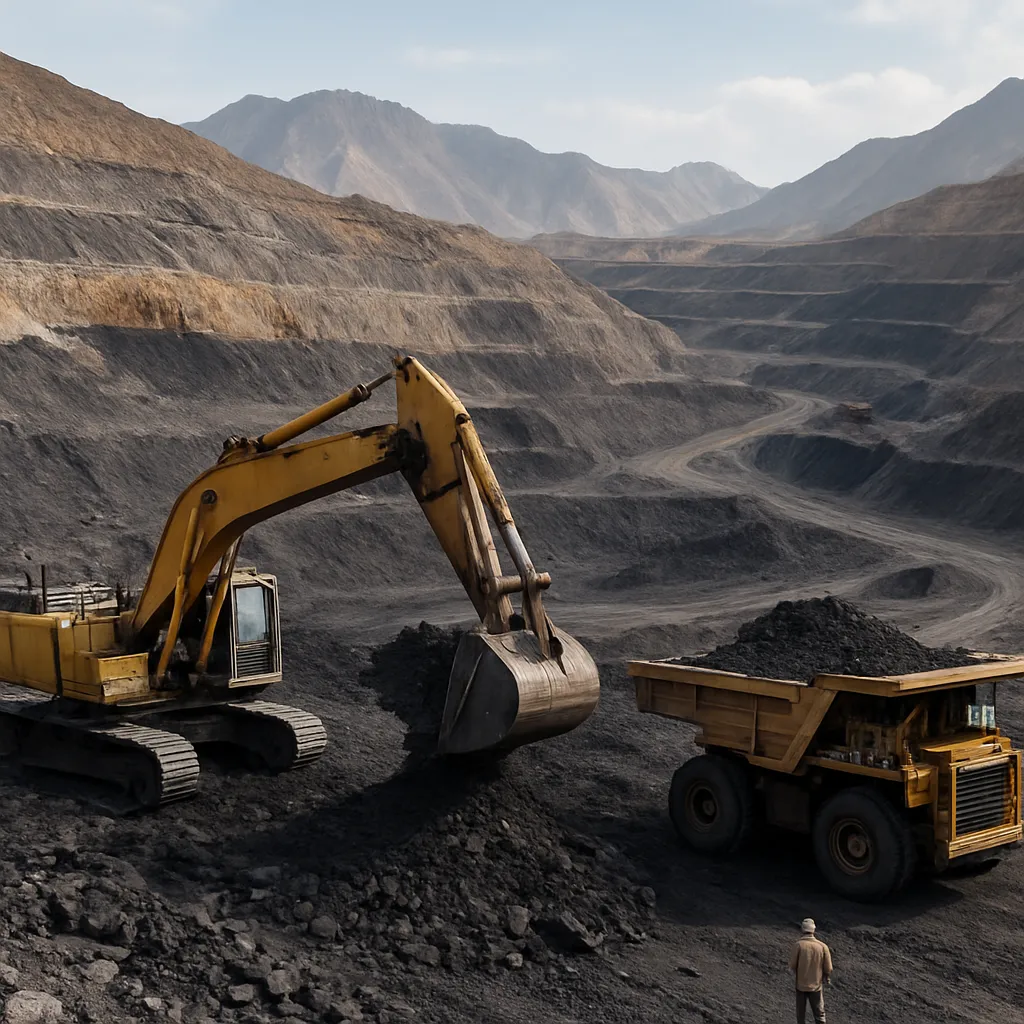
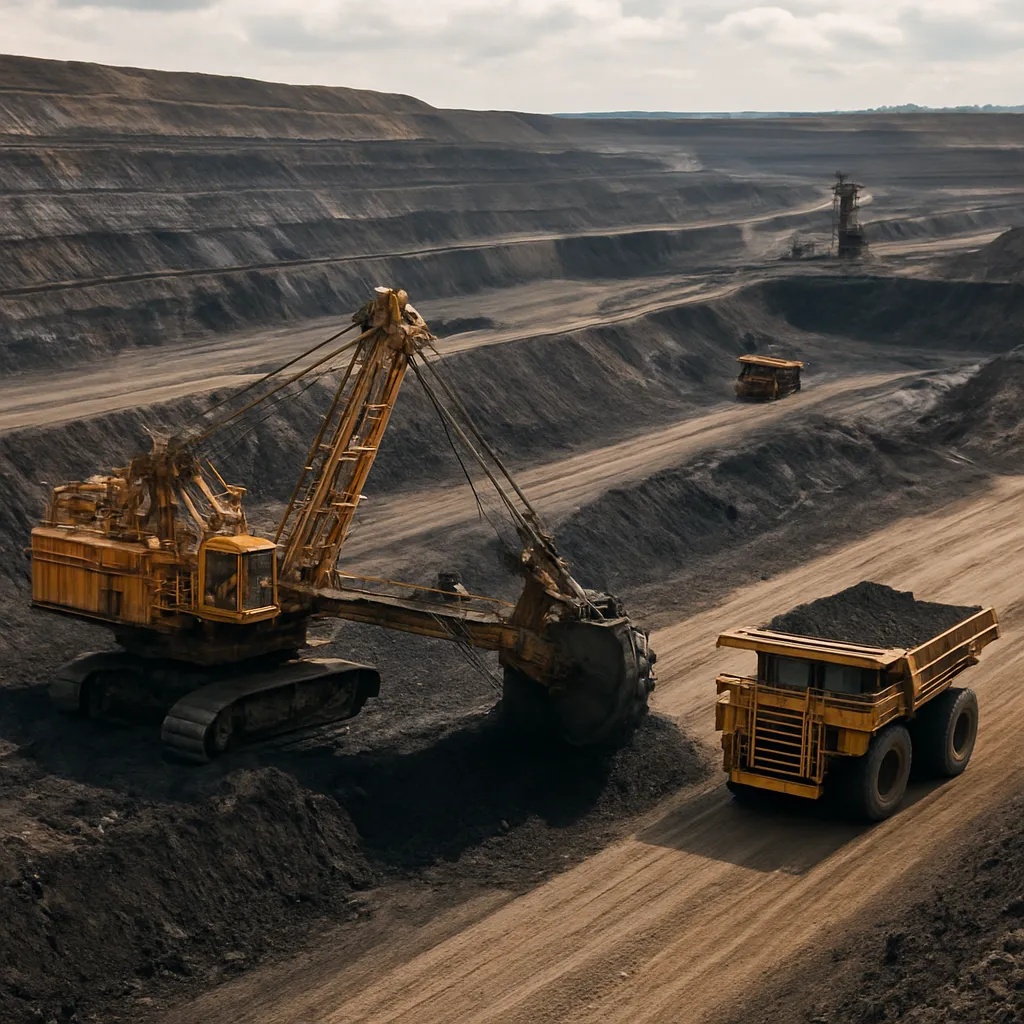
The Benga Coal Mine, located in the heart of Mozambique’s Tete Province, is one of the better-known operations within the broader Moatize coal basin. Over the past two decades the site has drawn international attention for its substantial coal resources, its role in regional infrastructure development and export logistics, and the economic and social impacts it has produced locally and nationally. This article provides a detailed overview of the mine’s location, geology, products, production history and volumes (where publicly available), infrastructure links, economic significance, environmental and social considerations, and future prospects for the operation and the wider basin.
Location and geological setting
The Benga deposit sits within the Moatize coal basin in western Mozambique’s Tete Province, a region that has emerged as the country’s main coal-producing area. The Moatize basin is part of a larger Karoo-age coal-bearing sequence that stretches across parts of southern Africa. Geologically, the area consists of multiple coal seams of varying thickness and quality, laid down in Permian to Triassic sedimentary environments.
The mine itself is an open-pit operation, located a short distance from the township of Moatize. Proximity to other deposits in the basin has encouraged integrated development of mines, rail corridors and port facilities. The deposit is accessible by road and rail infrastructure that connects to export corridors toward the Indian Ocean, most notably the Nacala and Sena corridors.
Coal type, quality and mining methods
Coal from the Moatize basin, including Benga, ranges from thermal coal suitable for power generation to higher-grade coking coal (metallurgical coal) that can be used in steelmaking. The exact quality varies seam by seam. Industry reports describe parts of the Moatize basin as containing coal with relatively low ash and sulfur when compared to some other regional coals, making it attractive for certain markets. Benga’s output has historically included both steam (thermal) and metallurgical grades, depending on seam exploitation and beneficiation processes applied at the mine.
Mining at Benga has predominantly been by large-scale open-pit methods, using excavators, haul trucks and on-site processing (crushing, screening and washing) to upgrade product quality. Washing and beneficiation are important for reducing ash and improving calorific value, particularly if the coal is destined for higher-value export markets.
Production volumes and reserves (estimates)
Precise, up-to-date production and reserve figures for Benga can vary by source and by year as ownership and reporting frameworks have changed. Broadly speaking:
- Moatize basin-wide coal resources are commonly reported in the order of hundreds of millions to a few billion tonnes, depending on classification (measured, indicated, inferred).
- Benga’s attributable reserves and resources have been reported in industry assessments as significant—often in the hundreds of millions of tonnes range when including measured and inferred categories, though exact figures vary by technical report and cut-off grade.
- Annual production from mines in the Moatize area has fluctuated over time. Peak combined production from the basin’s main operations has reached several million tonnes per year, with individual mines producing multiple millions of tonnes in higher-output years.
Because operators sometimes report on a combined “Moatize complex” basis and because ownership has changed over time, the most reliable production and reserve data are best sourced from company technical reports and national mining authorities. Nonetheless, the Benga operation has been considered a material asset within the basin because of its accessible seams and strategic location relative to export logistics.
Infrastructure and logistics
One of the defining aspects of Benga’s importance has been how it ties into larger transport corridors that enable coal exports from landlocked or interior basins to seaports. The two most relevant logistics systems for the Moatize/Benga area are the:
- Nacala Corridor — a major rail and port development that connects Tete Province to Nacala-a-Velha on the northern Mozambican coast. The corridor includes upgraded rail links, port facilities and associated transshipment infrastructure. Investment in this corridor has been driven by mining companies seeking dependable export routes.
- Sena Corridor — an older rail line connecting Tete to the port of Beira. Rehabilitation and upgrades of the Sena line have periodically been necessary to maintain coal export volumes, and the corridor provides an alternative to Nacala depending on capacity and commercial arrangements.
These corridors have broader economic effects beyond the mine itself: they enable regional trade, can lower logistics costs for other commodities, and attract investment in ancillary services (maintenance, warehousing, fuel, and services for workers). Efficient rail-to-port infrastructure is particularly critical for bulk commodities like coal, where transport costs are a significant share of delivered price.
Economic and fiscal significance
The Benga Coal Mine has contributed to Mozambique’s economy in several ways:
- Export earnings: Coal from the Moatize basin has been an important source of foreign exchange for Mozambique, commanding substantial export revenues during high production years. Coal exports help balance trade and support government revenues through taxes, royalties and, in some cases, equity participations.
- Employment: The mine and related infrastructure projects have created direct jobs at the operation and indirect employment in construction, transport, port operations and services. While mechanized open-pit operations do not employ as many people as small-scale mines do, they still provide skilled and semi-skilled employment opportunities and stimulate local economies.
- Local development: Investment in roads, electricity, water and social programs associated with mining operations can benefit host communities. Mining companies often implement community development agreements that include health, education and infrastructure projects.
- Government revenue: Mining royalties, corporate taxes, employment-related taxes and other fiscal flows from coal operations help central and provincial budgets. These revenues are significant in a country seeking to diversify its economy and improve public services.
It is worth noting that actual fiscal benefits depend on contract terms, profit margins, commodity prices, and effective tax collection. In some cases, debates have arisen over whether host countries realise the full potential value of their resources, especially when commodity prices fall or when contractual terms favour private investors.
Social and environmental considerations
Large-scale coal mining like that at Benga brings both opportunities and challenges for local communities and the environment. Key considerations include:
- Resettlement and land use: Development of open-pit mines can require resettlement of households and changes in land use for agriculture and grazing. Properly managed resettlement programs are essential to maintain livelihoods and social cohesion.
- Water and hydrology: Mining can affect local water tables, water quality and river flows. Coal processing (washing) also requires water, making resource management and monitoring critical in semi-arid or water-stressed regions.
- Air quality and dust: Blasting, hauling and stockpiling can generate dust and emissions that affect nearby communities. Dust suppression and monitoring are common mitigation measures.
- Biodiversity and land restoration: Clearing for mining can impact flora and fauna. Progressive rehabilitation, post-mining land use planning and biodiversity offsets are part of modern environmental management plans.
- Greenhouse gas emissions: Coal is a carbon-intensive fuel. Beyond local environmental impacts, the production and combustion of coal contribute to global greenhouse gas emissions, a significant consideration given global decarbonization trends.
Community relations, transparent compensation frameworks and independent environmental monitoring have been central to ensuring that mining projects deliver sustainable benefits and reduce negative impacts. The quality and enforcement of environmental and social governance measures vary across projects and operators.
Industry significance and market dynamics
Benga’s strategic value stems from several factors that are relevant to the regional and global coal market:
- Proximity to export routes — Benga’s location in the Moatize basin makes it a practical source for exports to Asian, European and other markets that source thermal and metallurgical coal from southern Africa.
- Variety of product grades — The ability to produce both thermal and coking coal (subject to seam quality and beneficiation) allows operators some flexibility in responding to market demand and price signals.
- Scale — Larger, mechanized operations can achieve economies of scale that reduce unit costs, making Mozambican coal competitive despite long ocean freight distances to some markets.
However, the coal industry globally faces structural pressures: long-term climate policy aimed at reducing coal use in power generation, competition from natural gas and renewable energy, and shifts in steelmaking (e.g., hydrogen-based or electric arc furnace technology) that may reduce demand for metallurgical coal in the future. These dynamics affect project finance, long-term contracts and the investment appetite of international mining companies.
Historical notes, ownership and operational history
Over the years, the Moatize basin and its constituent mines—Benga included—have seen various investors and operators, including both multinational mining companies and smaller regional players. Development of the area accelerated in the early 2000s and 2010s as exploration confirmed large coal endowments and as investors sought to develop export infrastructure. Infrastructure projects such as rail rehabilitation and port upgrades have often been undertaken in partnership with mining operators and international financiers.
Operational history has included phases of construction, ramp-up, commercial production, temporary suspensions and restarts, reflecting fluctuations in commodity prices, logistical constraints and, in some cases, difficulties related to heavy rains or local social issues. These operational cycles are common in large mining complexes where capital-intensive infrastructure and volatile global markets intersect.
Future prospects and challenges
The long-term future of Benga, like many coal assets worldwide, depends on a mixture of geological, economic and policy factors:
- Commodity prices: Sustained higher prices for thermal or metallurgical coal support continued investment and higher production. Lower prices can lead to scaled-back operations or delayed expansions.
- Infrastructure capacity: Continued improvements and reliable operations of rail and port corridors will determine how much coal can be exported competitively.
- Environmental policy: Global and regional efforts to reduce greenhouse gas emissions may dampen long-term demand for coal. Conversely, near-term energy security concerns or industrial demand can sustain markets for a period.
- Local governance and community relations: Positive outcomes for host communities and transparent governance are necessary to avoid disputes that can disrupt production.
- Technology and markets: Shifts in steelmaking technology and the pace of global energy transition will influence demand for both thermal and coking coal.
Potential diversification strategies for the region include leveraging mining-driven infrastructure for other economic activities, investing in value-added processing, or repurposing mining infrastructure for alternative industries when coal demand declines.
Interesting facts and contextual information
Some noteworthy points about Benga and the Moatize basin include:
- Regional transformation: The development of the Moatize coal projects has been one of the largest industrial undertakings in Mozambique in recent decades, spurring investments in transport and energy logistics that have cross-sectoral benefits.
- Corridor development: The Nacala Corridor, developed in part to serve coal exports, has also improved access for other commodities and provided a spur for regional trade connectivity.
- Workforce skills: Large mines like Benga have been a focal point for skills transfer—training local workers in heavy equipment operation, maintenance and mine management roles.
- Volatility and resilience: The history of coal projects in Tete illustrates both the volatility of commodity cycles and the resilience of large projects that can adapt through operational changes, market diversification and logistics optimization.
Conclusion
The Benga Coal Mine is a substantive asset within Mozambique’s Moatize coal basin, representing the intersection of geology, international capital, infrastructure development and socio-economic change. While exact reserve and production figures depend on the latest technical reports and operator disclosures, the mine has been an important contributor to export earnings, employment and regional development. Going forward, Benga’s prospects will be shaped by global energy trends, market demand for coal products, infrastructure performance and the ability of stakeholders to manage environmental and social impacts effectively. Its development underscores the broader challenge that resource-rich regions face: converting mineral wealth into sustainable, long-term benefits while navigating environmental constraints and shifting market realities.