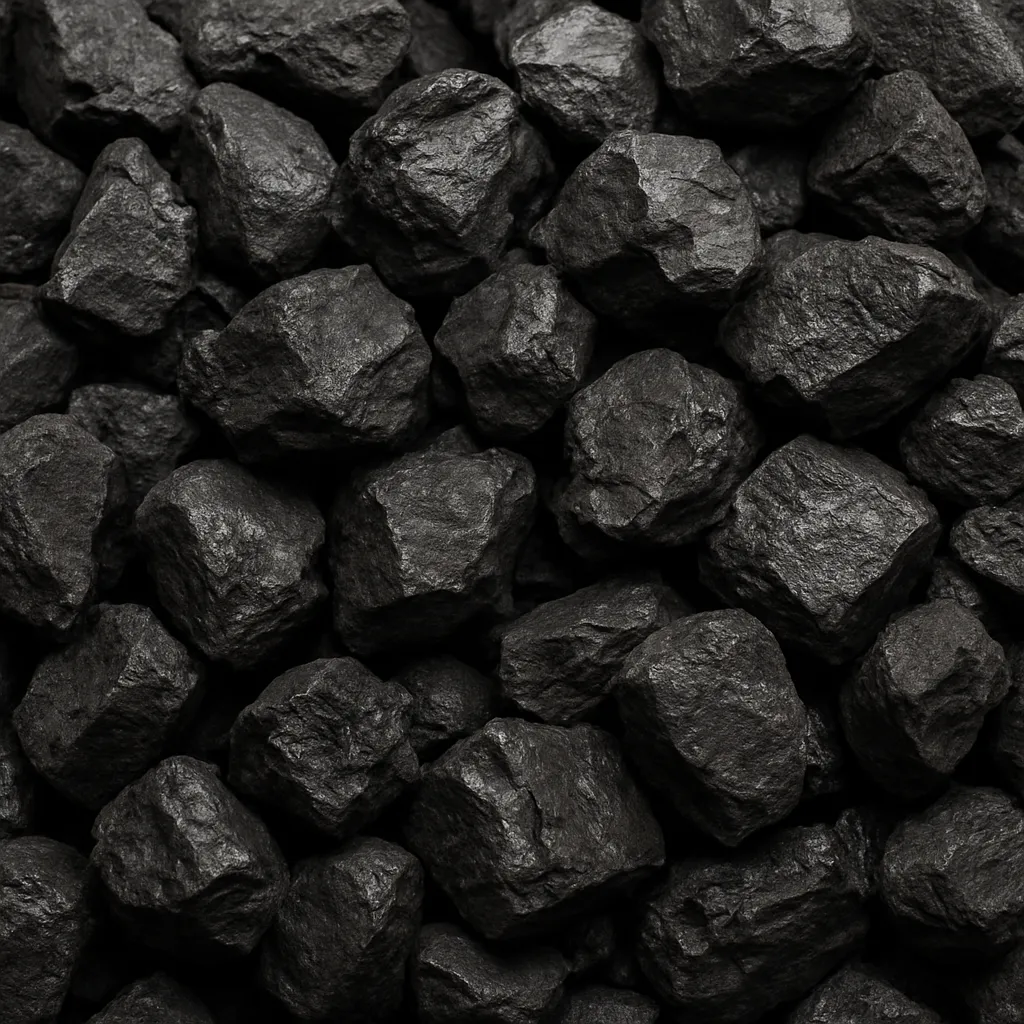
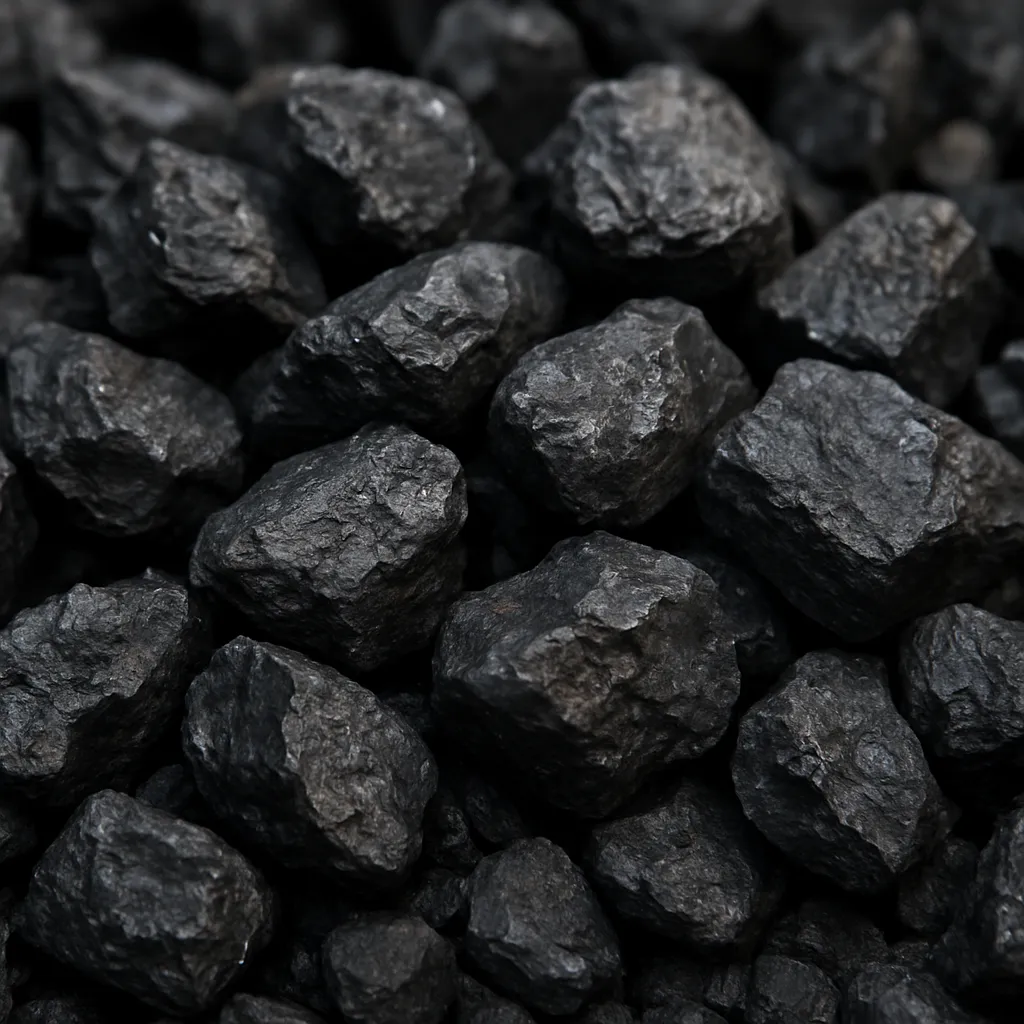
Semi-anthracite is a distinct rank of coal that occupies a middle ground between high-grade anthracite and the more common bituminous coals. It combines many of the advantageous physical and chemical characteristics of anthracite — such as high fixed carbon content and a relatively high energy density — with slightly greater volatile matter than true anthracite, giving it properties that are attractive for certain industrial applications. This article examines where semi-anthracite is found, how and where it is mined, its geological origin, economic and statistical context, industrial significance, environmental considerations, and potential future roles. The following sections provide a detailed review aimed at readers interested in energy minerals, industrial metallurgy, economic geology and resource management.
Occurrence and geological background
Semi-anthracite forms under conditions of very high-grade coalification — where organic peat deposits have been subjected to elevated temperatures and pressures for long geological timescales. The process, known as metamorphism in the coalification context, drives off moisture and volatile compounds and increases the proportion of fixed carbon. While full anthracite represents the highest rank, semi-anthracite is commonly considered a transitional form characterized by lower volatile matter and a higher proportion of fixed carbon than bituminous coal, but not quite reaching the lowest volatile fractions of true anthracite.
Geologically, semi-anthracite is typically associated with orogenic belts and areas where regional metamorphism or deep burial has affected Carboniferous and older coal-bearing sequences. Typical environments of occurrence include:
- Folded and faulted basins adjacent to mountain belts, where burial and tectonic heating were significant.
- Deeply buried coal seams that have undergone long-term thermal maturation.
- Basins with long geological histories that include multiple episodes of burial and uplift.
Notable regions where high-rank coals, including semi-anthracite and anthracite, are found include:
- The Appalachian region of the United States, especially the Pennsylvania anthracite fields, which contain zones of varying coal rank including semi-anthracite seams.
- Parts of China (northern and northeastern provinces), where anthracite and semi-anthracite deposits are widespread and economically important.
- Eastern Europe and the Donets Basin region (Ukraine and adjacent Russian areas), which have pockets of higher-rank coals.
- South Africa, Vietnam and some deposits in the United Kingdom (Wales) and Australia where metamorphism has locally elevated coal rank.
Coal rank boundaries are not fixed globally and are defined differently by various standards (ASTM, ISO, national geological surveys), so the label “semi-anthracite” is applied variably. In general, semi-anthracite exhibits a glossy luster, fine fracture, and a hard, dense structure that is less dusty and more brittle than lower-rank coals.
Physical and chemical properties
Understanding the properties of semi-anthracite is essential for assessing its suitability for specific industrial uses and for evaluating economic value. Typical ranges and characteristics are described below; values vary by deposit and classification method.
- Fixed carbon: Semi-anthracite usually has a high fixed carbon content, often in the range of about 75–90% on a dry, mineral-matter-free basis. This high carbon fraction is what gives the coal a high heating value per unit mass.
- Volatile matter: Lower than bituminous coals, volatile matter in semi-anthracite typically ranges from roughly 6–14% (dry basis), which influences ignition and combustion behavior.
- Calorific value: Higher heating values are typically in the range of approximately 26–33 MJ/kg (7,000–8,900 kcal/kg), depending on moisture and ash; again figures vary by classification and sample.
- Moisture and ash: Moisture tends to be low relative to lower-rank coals; ash content varies considerably depending on the mineral content of the seam, typically from a few percent up to 15–20% or higher in some seams.
- Sulfur: Sulfur content is highly variable and depends on depositional environment. It can be low in upland, detrital-seated coals or higher in marine-influenced sequences.
- Physical appearance: Hard, dense, often with a submetallic luster and conchoidal fracture. Burns with a short flame and produces little smoke compared to lower-rank coals.
These properties make semi-anthracite attractive where a compact, high-carbon feedstock is required and where low smoke and clean combustion characteristics are preferred.
Mining, beneficiation and processing
Semi-anthracite is mined using methods similar to those for anthracite and other high-rank coals, with considerable variation depending on seam depth, thickness and local geology.
Mining methods:
- Underground mining dominates where deposits occur at depth. Techniques include room-and-pillar, longwall mining in sufficiently thick seams, drift and slope mines in hilly terrain, and selective mining methods in structurally complex seams.
- Surface mining (open-pit) can be used where high-rank seams outcrop or are shallow; however, many semi-anthracite deposits are deeply buried and thus primarily accessed underground.
- Historically, many anthracite and semi-anthracite mines were smaller and more labor-intensive than large-scale bituminous operations; modern mechanization, however, has increased productivity in many regions.
Beneficiation and processing:
- Washing and gravity separation are common to reduce ash and mineral matter and to improve calorific value and heating quality.
- Crushing, screening, and sizing produce markets such as stoker, nut, steam, and pea sizes for various heating and industrial uses.
- Briquetting and pelletizing of fines create compact, low-volatile fuels suitable for metallurgical and domestic markets.
- Further processing can produce specialty carbon products—calcination, activation and graphitization steps are used to manufacture high-value materials from selected anthracitic coals.
Production costs for semi-anthracite reflect many factors: depth and complexity of mining, seam thickness and continuity, need for extensive washing or desulfurization, labor costs, regulatory compliance (safety, environmental controls), and logistics for transport to end users.
Major producing regions and statistical context
Large, well-known anthracite and semi-anthracite producing regions give context to where this coal rank is important. While reliable, detailed production statistics specifically for semi-anthracite are not always separately reported (many statistics aggregate anthracite and other hard coals), the following points provide a realistic overview:
- China is the world’s largest producer of anthracite and semi-anthracite type coals, with many northern provinces supplying both domestic industrial needs and export markets. Chinese output dominates global anthracite production volumes.
- Other important producing countries include Russia, Ukraine, Vietnam, and South Africa in terms of anthracitic coal types, with the United States (notably Pennsylvania) holding significant historic and remaining reserves of anthracite and semi-anthracite.
- Globally, anthracite and semi-anthracite together represent a small fraction of total coal production—generally a single-digit percentage of world coal output—because most coal mined globally is bituminous, sub-bituminous or lignite. Nevertheless, the niche role of high-rank coals gives them disproportionate economic value per tonne.
- Regional markets and trade: Anthracite and semi-anthracite are traded internationally but often serve local and national industrial customers due to transport costs and the existence of localized end-use industries (metallurgy, specialty manufacturing, domestic heating in some countries).
Exact figures change year by year; many national agencies and international organizations publish aggregated coal statistics. For investors or researchers seeking precise annual production tonnages by coal rank, consulting national geological surveys, the International Energy Agency (IEA) and national mining ministries is recommended.
Economic roles and market dynamics
Semi-anthracite commands a premium in many markets because of its desirable properties: high carbon content, higher energy density per mass, and cleaner combustion relative to lower-rank coals. Economic roles include:
- Industrial feedstock: Its consistent, high carbon content makes semi-anthracite valuable as a direct fuel for industrial boilers and furnaces and as a feedstock for carbon products.
- Metallurgical applications: In some steelmaking processes anthracite and semi-anthracite are used for pulverized coal injection (PCI) and as an alternative carbon source in certain smelting operations. While coke from coking coals remains central to blast furnace ironmaking, high-rank coals can supplement or partially substitute in some processes.
- Domestic and commercial heating: In regions with a tradition of domestic anthracite use, semi-anthracite is prized for its low smoke, long burn and steady heat output—suitable for stove heating and centralized heating systems.
- Specialty carbon products: Selected semi-anthracite can be the precursor for activated carbon, electrode materials, carbon plastics, and for high-temperature industrial applications where low impurities and high fixed carbon are necessary.
Market dynamics are influenced by:
- Competition from alternative fuels (natural gas, oil, renewables), which affect price and demand particularly in power generation and heating markets.
- Environmental regulations that penalize high-emission fuels or require stricter pollution controls, favoring cleaner-burning coals but also sometimes pushing consumers toward non-fossil alternatives.
- Transport logistics and proximity to customers; bulk transport costs mean that semi-anthracite may be concentrated in regional supply chains.
- Technological shifts in metallurgy and materials science—if new processes reduce reliance on coal-derived carbon, demand patterns may change.
Because semi-anthracite often serves niche markets, the economics of individual mines are strongly affected by the presence of nearby industrial users, the ability to lower ash or sulfur through washing, and the strategic value of supplying stable, high-quality carbon feedstock.
Industrial significance and applications
Semi-anthracite’s industrial importance stems from both energy and material properties. Main applications include:
- Metallurgy: As noted, semi-anthracite is used in various steel and ferroalloy production processes, sometimes in pulverized form for injection into furnaces. Its low volatile content and steady burn can be advantageous in processes where temperature stability and low impurities are important.
- Fuel for high-temperature processes: Glassmaking, ceramics, and other high-temperature industries occasionally use anthracitic coals when a high-quality, low-impurity carbon source is required.
- Activated carbon and carbon products: With appropriate processing, high-rank coals are precursors to activated carbon, which is widely used in water and air purification, chemical purification, and in medical applications.
- Residential and commercial heating: In markets with legacy heating systems designed for anthracite, semi-anthracite provides a smokeless, efficient alternative to lower-grade domestic fuels.
- Specialty manufacturing: Certain carbon-based products—electrodes, carbon-matrix materials, and specialized refractory components—can be derived from anthracitic feedstocks.
Because semi-anthracite is often cleaner-burning and denser in energy than bituminous coal, it can reduce maintenance and pollution-control costs for some end users, although capital costs and availability constrain broader substitution.
Environmental considerations and regulation
While semi-anthracite burns cleaner than lower-rank coals in some respects (lower particulate emissions, less smoke, and often reduced volatile organic emissions), it remains a fossil fuel and contributes significantly to greenhouse gas emissions when combusted.
Key environmental points:
- CO2 emissions: Burning semi-anthracite emits carbon dioxide proportional to the amount of carbon oxidized. Per unit of energy output, high-rank coals can be slightly more carbon-efficient than lower-rank coals because of higher fixed carbon and lower moisture; however, absolute CO2 emissions remain material and are subject to climate policy scrutiny.
- Local pollutants: Sulfur dioxide (SO2), nitrogen oxides (NOx), particulate matter and mercury are potential pollutants if the coal contains such impurities. Washing and cleaning can reduce mineral-associated contaminants, but emissions controls at combustion sites remain essential.
- Mining impacts: Underground mining poses risks related to subsidence, groundwater effects, mine drainage and occupational safety. Proper reclamation, mine water treatment and modern safety practices mitigate some impacts but add to operational costs.
- Regulatory pressures: Tightening emissions standards, carbon pricing and the global shift toward decarbonization apply pressure on markets for coal in general, including semi-anthracite. This drives investment in emissions controls, co-firing with biomass, and exploration of carbon capture and storage (CCS) solutions where economically feasible.
In many countries the trend is toward reduced reliance on coal for electricity generation. However, the niche industrial roles of semi-anthracite — particularly in specialty metallurgy and carbon product manufacture — mean that some demand may persist even under stringent climate policies.
Statistical outlook and future perspectives
Quantitative data specifically isolating semi-anthracite from broader anthracite statistics are often limited because reporting tends to aggregate hard coal types. Nevertheless, several general statistical trends and outlooks are worth noting:
- Global production of anthracite and similar high-rank coals represents a relatively small share of total coal production—often cited as a low single-digit percentage—so while geographically significant, the overall contribution to energy markets is modest.
- Regions with metallurgical industries that rely on stable carbon feeds are likely to sustain demand for semi-anthracite in the near to medium term, particularly where substitutes are either more expensive or technically challenging to adopt.
- Trade flows of anthracite and semi-anthracite are geographically concentrated; for example, much Chinese production serves domestic industry, while markets in East Asia and Europe import select anthracite grades depending on price and quality needs.
- Technological developments—such as greater availability of low-carbon steelmaking techniques (hydrogen-based reduction, increased recycling), expansion of CCS, and enhanced materials recycling—could transform demand profiles over the next several decades.
For investors or policymakers interested in semi-anthracite, it is essential to consider local industrial demand, transport economics, regulatory trends on emissions and carbon, and the feasibility of upgrading coal into higher-value carbon products.
Interesting historical and cultural notes
Semi-anthracite and anthracite have played significant roles in regional histories. The Pennsylvania anthracite fields fueled early industrialization of the northeastern United States and shaped communities, labor movements and local economies. In other regions, anthracitic coals supported textile mills, steelworks and domestic heating for centuries. The relative scarcity and high quality of semi-anthracite have made it a prized resource for local economies and a subject of technical experimentation in fuel and materials engineering.
Concluding observations
Semi-anthracite occupies a specialized but important niche in the coal spectrum. With a combination of high fixed carbon content, relatively low volatiles, and favorable combustion characteristics, it supports important industrial processes — notably in metallurgy and specialty carbon production — and offers advantages for certain heating applications. Market dynamics are shaped by resource geography, local industrial demand, environmental regulation and technological shifts toward lower-carbon processes. While overall global coal use faces long-term decline in many sectors due to climate policy and renewable energy growth, semi-anthracite’s unique properties and niche industrial roles are likely to sustain targeted demand for years to come, particularly where it serves as a feedstock for high-value carbon materials or where alternatives are unavailable or cost-prohibitive.
Key words emphasized in the text: semi-anthracite, anthracite, carbon, calorific, metallurgy, China, Pennsylvania, emissions, activated carbon, price.